Quality Assurance (QA) engineers are responsible for ensuring that the code that other developers write is up to a certain standard. Companies pay high salaries to talented QA engineers to continually advance high-quality software. With QA engineers in such high demand, many organizations are teaching people how to become quality assurance engineers.

What Is Quality Assurance?
Quality assurance engineers make sure other developers meet their deadlines and notify other developers about issues in their code. Quality Assurance is the process of monitoring every step of the software development process. This ensures that the company’s software complies with its standards.
What Is Quality Assurance Used For?
The main purpose of quality assurance is to identify bugs and potential problems within the software. QA engineers then report these to other members of a software development team.
- Code automated testing
- Create software test plan
- Detect bugs or problems in a program
- Developing standards and policies to ensure high-quality code
- Identify any issues users are facing
- Do automated and manual testing
Types of QA:
Quality assurance engineers typically oversee system testing and feature testing. Here is the list of different types of QA engineers.
- System Testing: System testing is a form of quality assurance performed on a completed project. It is usually conducted at the end of the development process.
- Integration Testing: Integration quality assurance testing explores the different components of an application. First, it evaluates how the individual components. Then, each component is tested to see how the application as whole works.
- Feature Testing: Feature testing is a form of QA engineering that is performed before updating an application. This type of QA engineering examines how a new update affects an application.
- Usability Testing: QA engineers test the usability of a product before its release. Usability tests ensure that the product performs as per customer expectations.
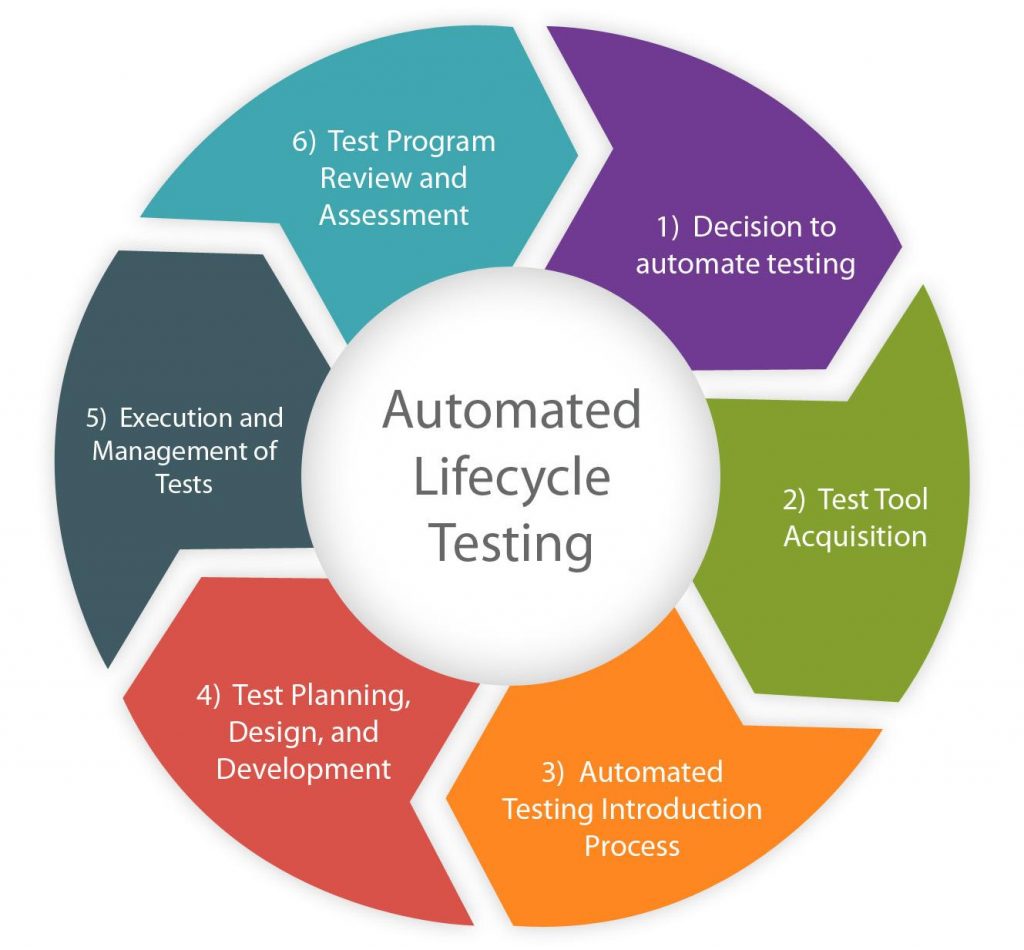
The Life Cycle of automation QA Process:
QA Engineers Skills:
- Time management
- Problem-solving
- Multitasking
- Written and verbal communication
- Ability to work as part of a team
- Knowledge of quality standards
How to improve your quality assurance skills?
- Stay focused.
- Take ownership of your work.
- Undertake additional training
- Track areas of concern
- Schedule time for checks
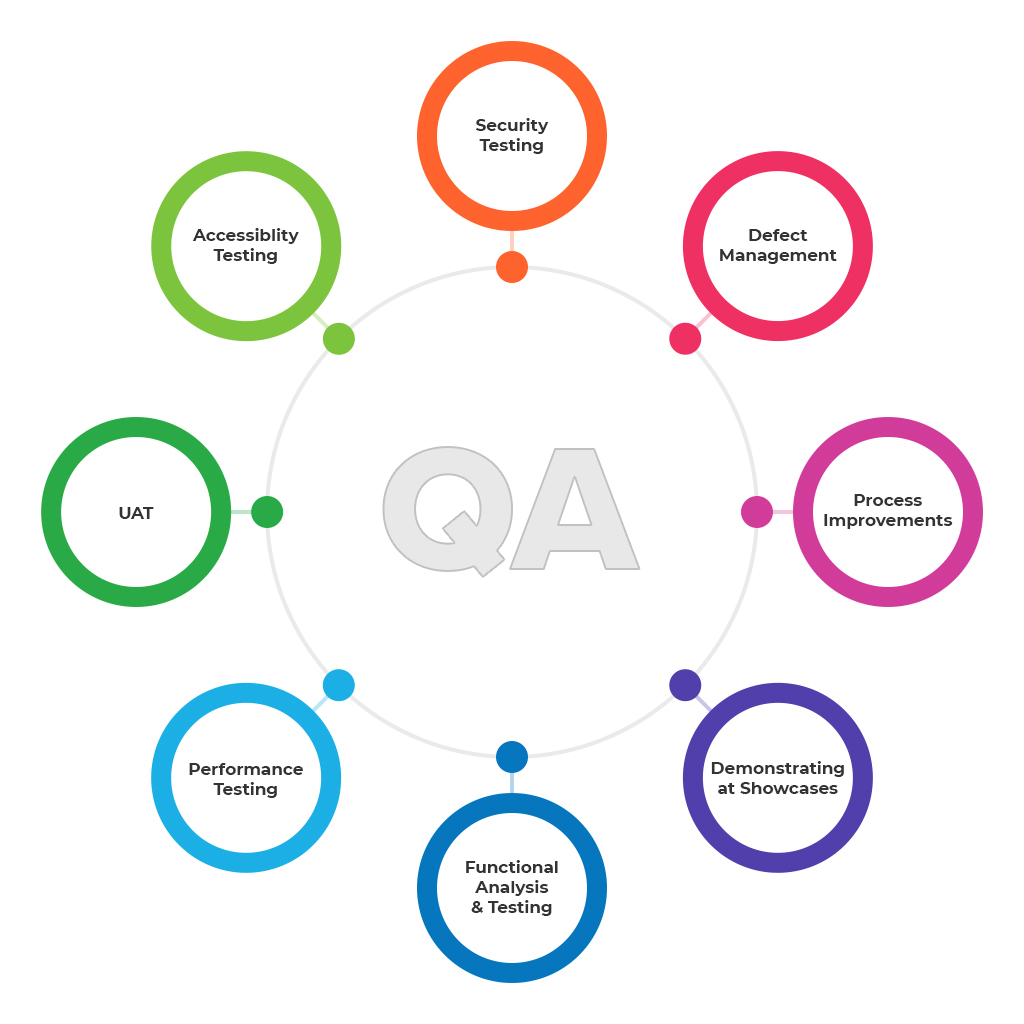
QA Roles and Responsibilities:
The main role of quality assurance is quality assurance. A QA engineer focuses on improving software development processes and preventing defects in production.
Roles:
- Test Analyst: The test analyst is engaged in static testing of requirements and checks them for completeness and consistency.
- Test Designer: The Test Designer creates a set of tests based on the requirements and plan configuration required for the test.
- Test Executor: The test executor performs pre-planned tests, describes and documents errors found and takes steps to reproduce them.
- Test Manager: The test manager plans and monitors tasks related to testing such as adhering to deadlines, adhering to a schedule, controlling requirements for tests, scheduling tasks for team members, and communicating with stakeholders.
Responsibilities:
- Analyze and clarification of requirements with a customer or a business analyst
- Plan the process of testing
- Write test cases (test scripts)
- Conduct functional testing
- Identify problem areas, add them to a tracking system
- Discuss fixes with developers
- Track the life cycle of errors
- Re-test fixed defects
- Analyze testing
What Does a QA Engineer Do?
- Checking if the product complies with the requirements
- Assessing risks
- Planning ideas to improve product quality
- Planning tests
- Analyzing the test results
QA specialization includes many tasks so there are some sub-specializations such as quality control, software testing, and others.
The Best QA Courses and Training:
Online courses, which typically last between three and nine months, are intensive training programs. They offer students the skills necessary to pursue a career in the technology industry.
DevOpsSchool offers online and classroom programs in Quality Assurance Engineering. Participants take part in a rigorous curriculum that is aligned with the demands of the market. For those who are looking for a change in their testing career and also for those who are planning to start their career in software testing.
