Introduction
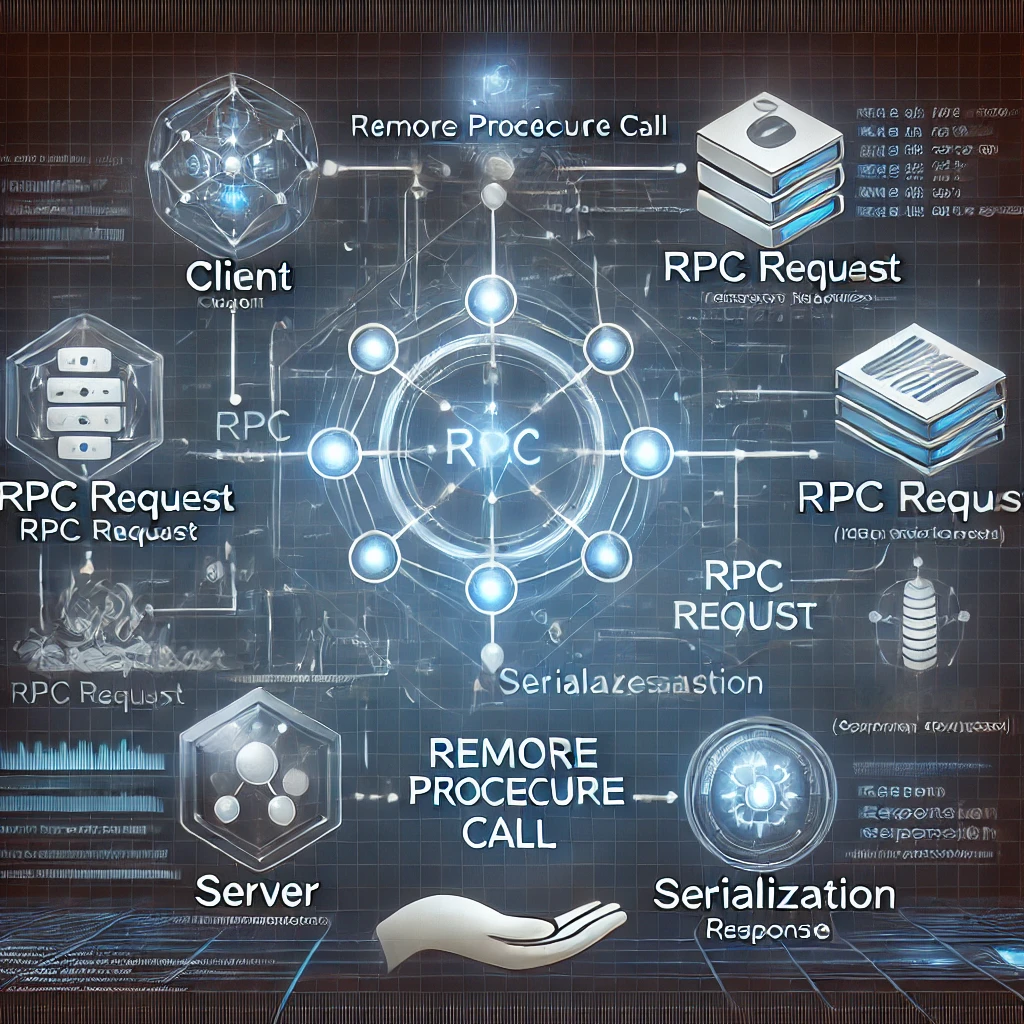
In today’s distributed computing environment, systems often need to communicate across networks efficiently. Remote Procedure Call (RPC) frameworks provide a mechanism for one system to execute functions or methods on another, abstracting the complexities of network communication, serialization, and data exchange. This guide explores RPC frameworks, their benefits, and the most popular options available.
What is an RPC Framework?
An RPC framework allows applications to invoke functions on remote systems as if they were local, enabling seamless communication between different services or microservices. These frameworks handle:
- Network communication (request and response handling)
- Serialization (data encoding/decoding)
- Error handling (timeouts, retries, exceptions)
- Security (authentication, encryption, and authorization)
Benefits of Using RPC Frameworks
- Simplifies communication between distributed systems
- Enhances performance with efficient serialization and transport mechanisms
- Supports multiple languages, making it ideal for heterogeneous environments
- Reduces development complexity by abstracting network operations
Popular RPC Frameworks
1. gRPC (Google RPC)
- Developed by Google, based on Protocol Buffers (protobufs)
- Uses HTTP/2, enabling efficient communication
- Supports bi-directional streaming and authentication
- Ideal for microservices and high-performance applications
2. Apache Thrift
- Created by Facebook to enable cross-language service communication
- Supports multiple serialization formats and transport protocols
- Uses an IDL (Interface Definition Language) for defining services
- Good for polyglot environments where multiple languages interact
3. JSON-RPC
- A lightweight RPC protocol using JSON for message exchange
- Enables batch processing (multiple requests in a single call)
- Commonly used in web applications and blockchain (Ethereum API)
4. XML-RPC
- Uses XML for message encoding
- Simpler than SOAP but less efficient than gRPC or JSON-RPC
- Often used in legacy systems and CMS applications (e.g., WordPress)
5. D-Bus
- Used for Inter-Process Communication (IPC) in Linux-based environments
- Enables communication between system components like GNOME and KDE
6. RPyC (Remote Python Call)
- A Python-specific RPC framework
- Allows remote object sharing and method execution
- Useful for Python-based distributed applications
7. SOAP (Simple Object Access Protocol)
- XML-based enterprise-level RPC framework
- Provides built-in security and standardization
- Commonly used in banking, finance, and legacy enterprise systems
Comparing RPC Frameworks
| Feature | gRPC | Thrift | JSON-RPC | XML-RPC | SOAP |
|---|---|---|---|---|---|
| Performance | High | High | Medium | Low | Low |
| Serialization | Protobuf | Binary | JSON | XML | XML |
| Streaming Support | Yes | No | No | No | No |
| Language Support | Multi | Multi | Multi | Multi | Multi |
| Ease of Use | Moderate | Moderate | Easy | Easy | Complex |
Choosing the Right RPC Framework
- If you need high-performance microservices, use gRPC.
- For multi-language service communication, consider Apache Thrift.
- If your app requires lightweight JSON-based RPC, go with JSON-RPC.
- D-Bus is best for Linux IPC.
- If you are developing enterprise solutions, SOAP is a reliable choice.
Conclusion
RPC frameworks are essential for modern distributed applications, enabling efficient and scalable communication. Choosing the right framework depends on your use case, language support, and performance needs. Whether you’re working on microservices, web applications, or enterprise systems, there’s an RPC framework suited for your requirements.
