Source: analyticsinsight.net
We usually hear a lot about human-level AI or artificial intelligence but little do we realize that the human mind and AI are actually quite interlinked. The brain’s neural network and artificial neural network possess some similarities between themselves. Both are trained on data, while the brain learns from real-life data and experiences involuntarily, AI neural networks are trained purposely with gathered data voluntarily. Both respond in accordance with the learnings they have received. Moreover, with the advancement in technology AI has begun to learn and evolve on its own which is quite similar to the regular evolution of the human brain.
However, they do have tons of differentiation as well, but when it comes to neuroscience and AI, they are way more connected than one could ever wonder.
AI is more linked to dopamine-reinforced learning than you may think. DeepMind AI published a blog post on their discovery that the human brain and AI learning methods are closely linked when it comes to learning through reward.
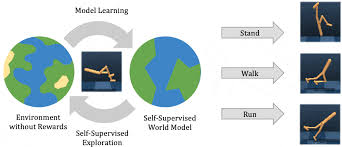
Computer scientists have developed algorithms for reinforcement learning in artificial systems. These algorithms enable AI systems to learn complex strategies without external instruction, guided instead by reward predictions.
As noted by the post, a recent development in computer science – which yields significant improvements in performance on reinforcement learning problems – may provide a deep, parsimonious explanation for several previously unexplained features of reward learning in the brain, and opens up new avenues of research into the brain’s dopamine system, with potential implications for learning and motivation disorders.
DeepMind found that dopamine neurons in the brain were each tuned to different levels of pessimism or optimism. If they were a choir, they wouldn’t all be singing the same note, but harmonizing – each with a consistent vocal register, like bass and soprano singers. In artificial reinforcement learning systems, this diverse tuning creates a richer training signal that greatly speeds learning in neural networks, and researchers speculate that the brain might use it for the same reason.
The existence of distributional reinforcement learning in the brain has interesting implications both for AI and neuroscience. Firstly, this discovery validates distributional reinforcement learning – it gives researchers increased confidence that AI research is on the right track since this algorithm is already being used in the most intelligent entity they are aware of: the brain.
Secondly, it raises new questions for neuroscience and new insights for understanding mental health and motivation. What happens if an individual’s brain “listens” selectively to optimistic versus pessimistic dopamine neurons? Does this give rise to impulsivity or depression? A strength of the brain is its powerful representations – how are these sculpted by distributional learning? Once an animal learns about the distribution of rewards, how is that representation used downstream? How does the variability of optimism across dopamine cells relate to other known forms of diversity in the brain?
Finally, DeepMind hopes that asking and answering these questions will stimulate progress in neuroscience that will feed back to benefit AI research, completing the virtuous circle.