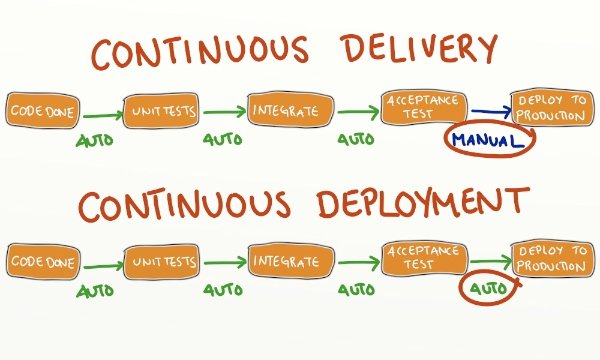
Continuous deployment (CD) is a software engineering practice where code changes are automatically deployed to production after they have been tested and approved. This means that new features and bug fixes can be released to users very quickly, often multiple times per day.
Why We Need Continuous Deployment?
Continuous deployment is needed to help organizations deliver software faster, with fewer errors and reduced time-to-market. It enables developers to continuously and reliably release the software, resulting in shorter feedback loops, faster innovation, and quicker response to customer needs.
What is the Advantage of Continuous Deployment?
Advantages of continuous deployment include:
1. Faster time-to-market: Continuous deployment allows organizations to rapidly release new features and iterations, enabling them to be more competitive in the market.
2. Reduced risk: Continuous deployment involves automated testing, ensuring that changes are thoroughly validated before deployment, minimizing the risk of introducing bugs or errors into the production environment.
3. Improved reliability: By developing and deploying in small, incremental steps, it becomes easier to identify and address any issues that may arise, leading to a more stable and reliable application.
4. Better collaboration: Continuous deployment encourages frequent communication and collaboration within development teams, promoting a sense of shared responsibility and better code quality.
5. Continuous feedback: With regular deployments, organizations can gather feedback from users and quickly incorporate it into future iterations, leading to more customer-centric software.
What is the feature of Continuous Deployment?
The key features of continuous deployment include:
- Automated testing: Code changes are automatically tested before they are deployed to production.
- Automated deployment: Code changes are automatically deployed to production after they have been tested and approved.
- A rollback mechanism: A rollback mechanism is in place to allow teams to quickly and easily revert to a previous version of the software if a deployment fails.
- Monitoring and alerting: The software is monitored to ensure that it is running smoothly after each deployment. Alerts are sent if any problems are detected.
What are the Top 10 Use Cases of Continuous Deployment?
Top 10 use cases of continuous deployment include:
1. Web and mobile applications: Continuous deployment is widely used in developing and updating web and mobile applications to ensure quick iterations and superior user experiences.
2. Saas platforms: Software-as-a-Service (SaaS) providers leverage continuous deployment to constantly add new features and improve their offerings for customers.
3. E-commerce platforms: Continuous deployment helps e-commerce platforms rapidly respond to market trends, launch new promotions, and optimize their user interfaces.
4. IoT devices and applications: Continuous deployment enables ongoing updates and enhancements to IoT devices and applications, improving functionality and security.
5. Gaming industry: Continuous deployment allows game developers to release frequent updates, bug fixes, and new content to keep players engaged and satisfied.
6. Banking and financial services: Continuous deployment is used to rapidly release new features, comply with regulatory changes, and improve security in financial systems.
7. Online marketplaces: Continuous deployment supports the regular addition of new features and services to online marketplaces, enhancing the user experience and increasing revenue.
8. Healthcare applications: Continuous deployment ensures that healthcare applications can rapidly incorporate new health guidelines, improve patient care, and enhance data privacy and security.
9. Telecom industry: Continuous deployment helps telecom companies quickly roll out new services, adapt to changing network requirements, and improve network functionality.
10. Open-source projects: Continuous deployment is used by open-source projects to continuously improve the software, address bugs, and incorporate contributions from the community.
How to Implement Continuous Deployment?
To implement continuous deployment, teams need to have a solid foundation in continuous integration (CI). CI is the practice of automating the build and test process for each code change. Once CI is in place, teams can start to automate the deployment process.
There are a number of tools and frameworks that can help teams implement continuous deployment. Some popular tools include Jenkins, Travis CI, and CircleCI.
How to Get Certified in Continuous Deployment?
There are several certifications available for Continuous Deployment professionals. Here are some most popular website for providing Certification courses visit this website: DevOpsSchool.com , scmGalaxy.com , BestDevOps.com , Cotocus.com
How to Learn Continuous Deployment?
There are a number of ways to learn continuous deployment. Some popular resources include:
- The Continuous Delivery Handbook by Jez Humble and David Farley
- The Accelerate State of DevOps Report by Google
- The Continuous Delivery Blog by DevOpsSchool.com
- The Continuous Deployment Tutorial by BestDevOps.com
Here are some most popular website for providing Certification courses: DevOpsSchool.com , scmGalaxy.com , BestDevOps.com , Cotocus.com
