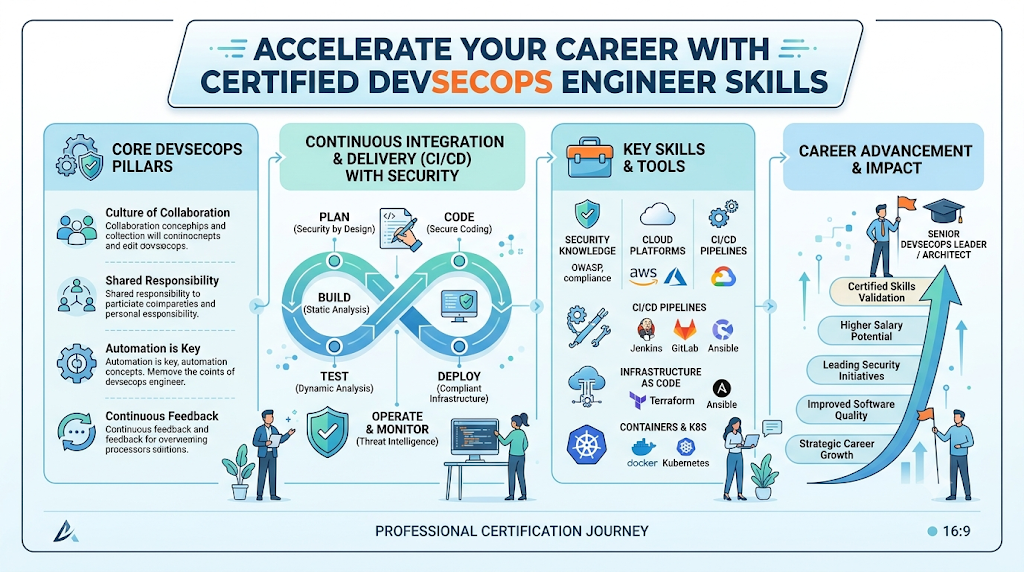
Modern enterprises cannot compete on speed and reliability with legacy delivery models that were never designed for today’s always-on, cloud-first world. A specialized DevOps consulting company cotocus helps organizations redesign their delivery engines, modernize infrastructure, and uplift teams so they can ship secure, resilient software at scale.
What a Modern DevOps Consulting Company Really Does
A DevOps consulting company goes far beyond “tool installation” and focuses on building a sustainable delivery operating model across people, process, and platforms. It aligns product, engineering, operations, and security teams around shared outcomes such as lead time, deployment frequency, reliability, and risk.
Typical service pillars include:
- DevOps consulting services and transformation roadmap design
- Cloud consulting services and cloud migration services across major hyperscalers
- Kubernetes consulting services and platform engineering consulting
- SRE consulting services and site reliability engineering consulting
- DevSecOps consulting services and GitOps consulting services for secure automation
- DevOps corporate training and DevOps training for companies to uplift skills
By combining consulting, implementation, and DevOps corporate training, a partner like Cotocus can guide enterprises from strategy to execution without losing momentum.
Why Enterprises Need DevOps and Cloud-Native Transformation
Traditional IT models struggle with long release cycles, siloed teams, and brittle infrastructure that cannot keep up with modern digital demands. DevOps and cloud-native practices address these issues by embedding automation, collaboration, and observability into the delivery lifecycle.
Key enterprise drivers include:
- Pressure from customers for faster feature delivery and better digital experiences
- The need for reliable, secure services across multiple regions and platforms
- Rising complexity from microservices, APIs, and hybrid/multi-cloud architectures
- Regulatory and security expectations that require repeatable, auditable processes
A digital transformation consulting company with strong DevOps consulting services helps leadership move from ad hoc initiatives to a cohesive operating model that scales with business growth.
Core Building Blocks of a DevOps Consulting Strategy
A strong DevOps consulting engagement typically bundles several complementary capabilities so organizations don’t end up with disconnected initiatives. For Cotocus, this often means orchestrating DevOps, cloud, security, reliability, and data practices into one coherent roadmap.
DevOps and CI/CD Pipeline Consulting
CI/CD pipeline consulting focuses on designing and implementing automated build, test, and deployment workflows that are consistent, traceable, and secure. This includes pipeline design patterns, governance, and integration with version control, artifact repositories, and security tools.
Key outcomes:
- Reduced lead time from commit to production
- Fewer manual steps and handoffs
- Stronger quality gates with automated testing and compliance checks
Cotocus combines CI/CD pipeline consulting with infrastructure automation consulting so delivery pipelines and environments evolve together.
Cloud and Kubernetes Consulting Services
Cloud consulting services and cloud migration services help enterprises move from on‑premises or ad hoc cloud usage to optimized architectures aligned with cost, performance, and resilience goals. Kubernetes consulting services extend this by providing a robust platform for containerized workloads.
Typical focus areas:
- Cloud migration planning and execution
- Kubernetes cluster design, security, and multi-tenant governance
- Platform engineering consulting to standardize environments and self-service
By pairing Kubernetes consulting services with Kubernetes corporate training, companies can avoid “black box” platforms and make internal teams confident owners of their cloud-native stack.
SRE and DevSecOps Consulting Services
SRE consulting services and site reliability engineering consulting bring a product mindset to reliability, focusing on error budgets, SLIs, SLOs, and incident response. DevSecOps consulting services embed security into pipelines and platforms so compliance is enforced continuously rather than as a late-stage gate.
Key dimensions:
- Observability, alerting, and on-call practices
- Threat modeling and security-as-code
- Integration of scanning, SBOM, and policy checks into CI/CD
Cotocus uses DevSecOps corporate training to ensure developers, operations, and security understand how to collaborate without blocking delivery.
AIOps, MLOps, and DataOps Consulting
As enterprises collect more telemetry and data, AIOps consulting services, MLOps consulting services, and DataOps consulting services help turn that data into actionable insights and production-grade ML pipelines. This is critical for proactive incident management, personalization, fraud detection, and other data-driven use cases.
Focus points:
- Data pipelines and observability for logs, metrics, and traces
- End-to-end MLOps workflows from experimentation to deployment
- AIOps platforms that automate anomaly detection and remediation
A digital transformation consulting company that connects DevOps with AIOps and MLOps can help organizations move from reactive firefighting to predictive operations.
Table: Traditional IT vs DevOps Operating Model
| Aspect | Traditional Approach | DevOps Operating Model | Limitations (Traditional) | Best Choice |
|---|---|---|---|---|
| Release cycles | Quarterly or yearly releases | Daily or weekly deployments with small batches | Slow feedback, large risky releases | DevOps for fast, low-risk change |
| Team structure | Siloed dev, ops, security | Cross-functional product teams | Handoffs, misaligned incentives | DevOps for shared ownership |
| Infrastructure | Manual provisioning | Infrastructure automation consulting, IaC | Inconsistent environments, config drift | DevOps with automation |
| Risk and quality | Heavy manual testing, late approvals | Automated tests, quality gates in CI/CD pipeline consulting | Late defect discovery, human error | DevOps for continuous quality |
| Security and compliance | Afterthought, manual reviews | DevSecOps consulting services with security-as-code | Delays, insecure releases | DevSecOps integrated in DevOps |
| Reliability | Best-effort monitoring, reactive incident response | SRE consulting services with SLIs, SLOs, and error budgets | Longer outages, unclear reliability targets | SRE-led DevOps model |
Business Benefits of DevOps Consulting Services
Enterprises often justify DevOps transformations through clear, measurable business outcomes. A well-executed DevOps strategy touches revenue, cost, risk, and employee satisfaction.
Key benefits include:
- Faster time‑to‑market: Shorter lead times and more frequent, reliable releases
- Improved reliability: Stronger SRE practices and robust incident management
- Enhanced security posture: Integrated DevSecOps pipelines and hardened platforms
- Lower operational overhead: Automation reduces manual toil and rework
- Better talent engagement: Engineers spend more time on value-adding work
A digital transformation consulting company that also specializes in DevOps corporate training can help you sustain these benefits by continuously upskilling teams.
Table: Consulting Partner vs In‑House-Only Approach
| Dimension | In‑House Only | DevOps Consulting Company | Limitations (In‑House) | Best Choice |
|---|---|---|---|---|
| Expertise breadth | Limited to existing staff experience | Cross-industry patterns, multi-tool and multi-cloud experience | Narrow patterns, risk of reinventing the wheel | Consulting-led with in-house collaboration |
| Speed to value | Slow discovery, trial-and-error | Proven blueprints, accelerators, and reusable templates | Longer experiments, sunk cost | Consulting for faster outcomes |
| Training capability | Ad hoc internal sessions | Structured DevOps training for companies, Kubernetes corporate training | Inconsistent quality and coverage | Consulting plus corporate training |
| Change management | Often informal or tactical | Formal transformation, coaching, and stakeholder alignment | Resistance, initiative fatigue | Consulting-led change |
| Cost structure | Lower visible cost but higher hidden delays and rework | Clear engagement scope and predictable milestones | Difficult to attribute ROI | Hybrid: core internal + expert consulting |
Partners like Cotocus aim to build internal capability rather than creating long-term dependency, combining DevOps consulting services with tailored training programs.
Enterprise Use Cases: From Legacy to Cloud-Native
Real-world DevOps transformations rarely start from a greenfield; they must coexist with complex legacy systems. A DevOps consulting company builds pragmatic roadmaps that respect existing investments while moving towards cloud-native and platform-based models.
Common enterprise scenarios:
- Modernizing monoliths: Introduce CI/CD, observability, and feature flags before decomposing into microservices
- Cloud migration services: Rehost initial workloads while planning replatforming and refactoring phases
- Platform engineering consulting: Building internal developer platforms on Kubernetes for self-service environments
- Regulated industries: Aligning DevSecOps and SRE practices with audit, compliance, and data residency requirements
Cotocus works with sectors like banking, healthcare, education, and professional services, tailoring DevOps patterns to regulatory and operational realities.
Table: Lift-and-Shift vs Cloud-Native Modernization
| Aspect | Lift-and-Shift Migration | Cloud-Native Modernization | Limitations (Lift-and-Shift) | Best Choice |
|---|---|---|---|---|
| Approach | Move workloads as-is to cloud | Redesign for microservices, containers, managed services | Limited cost and resilience benefits | Start with lift-and-shift, plan modernize |
| Time to execute | Faster initial migration | Longer but more strategic | Deferred technical debt | Combined roadmap |
| Operations model | Similar to on-prem practices | DevOps, SRE, GitOps-based operations | Missed cloud-native efficiencies | DevOps-centric cloud-native model |
| Tooling | Minimal change | New CI/CD, observability, IaC, security tooling | Lack of automation and observability | Modern tooling with consulting support |
| Skill requirements | Lower immediate upskilling | Requires DevOps training for companies and cloud skills | Teams may stay in legacy patterns | Guided, staged upskilling |
Cotocus uses cloud consulting services and cloud migration services to help organizations phase this journey, balancing quick wins with long-term modernization.
Best Practices for Enterprise DevOps Transformation
Implementing DevOps at enterprise scale requires structure, prioritization, and disciplined execution. These best practices can significantly improve success rates when combined with expert guidance.
Recommended practices:
- Start with value-stream mapping: Identify high-impact products or services and eliminate bottlenecks before scaling
- Standardize on reference architectures: Use reusable templates for CI/CD, environments, and security controls
- Embed SRE and DevSecOps early: Define SLIs, SLOs, error budgets, and security policies at the outset
- Invest in DevOps training for companies: Build shared vocabulary, practices, and expectations across teams
- Measure what matters: Track deployment frequency, lead time, change failure rate, and MTTR
A DevOps consulting company like Cotocus can operationalize these best practices through workshops, playbooks, and hands-on implementation support.
Common Mistakes and How to Avoid Them
Many DevOps programs stall because they focus on superficial changes rather than fundamental operating model shifts. Recognizing common pitfalls helps leaders steer their initiatives more effectively.
Frequent mistakes include:
- Treating DevOps as a tool project instead of an organizational change
- Skipping foundational work like value-stream analysis and environment standardization
- Ignoring SRE consulting services and underinvesting in observability and incident practices
- Running one-off trainings without continued reinforcement or coaching
- Failing to integrate DevSecOps consulting services, leaving security as a late-stage gate
Cotocus mitigates these risks by combining strategic advisory, long-term coaching, and DevOps corporate training, ensuring practices stick beyond initial rollouts.
Expert Tips from a DevOps Consulting Perspective
Drawing on cross-industry engagement patterns, several practical insights consistently differentiate successful DevOps programs.
Expert recommendations:
- Start small, think big: Pick one or two high-impact products to prove value, then scale patterns across portfolios
- Build a platform mindset: Invest in platform engineering consulting to create paved paths rather than custom pipelines for every team
- Align incentives: Tie KPIs for product, operations, and security teams to shared outcomes, not siloed metrics
- Use training as a lever: Combine Kubernetes corporate training and DevSecOps corporate training with real projects so learning is applied immediately
- Communicate relentlessly: Ensure leadership, middle management, and teams all understand the “why” behind changes
Partners like Cotocus bring structured coaching and reusable assets to help organizations apply these expert tips in their specific context.
Why Choose Cotocus as Your DevOps Partner
Cotocus positions itself as an AI-first software engineering and digital transformation consulting company with deep DevOps, cloud, and corporate training expertise. Its portfolio spans DevOps consulting services, cloud consulting services, platform engineering, and enterprise training for modern technology teams.
Key differentiators:
- End-to-end coverage: From discovery workshops and architecture to implementation and long-term coaching
- Strong training DNA: DevOps corporate training, Kubernetes corporate training, and advanced programs across DevSecOps, SRE, AIOps, MLOps, and DataOps
- Cross-industry experience: Banking, healthcare, education, aviation, technology, and professional services
- Global reach: Serving organizations across India, the United States, and other regions with remote and onsite delivery models
For organizations seeking a digital transformation consulting company that bridges strategy and hands-on engineering, Cotocus offers a cohesive, practice-led approach.
FAQs: DevOps Consulting, Cloud, and Corporate Training
- What does a DevOps consulting company actually deliver?
A DevOps consulting company designs and implements delivery operating models, CI/CD pipelines, infrastructure automation, and SRE practices tailored to your context. It also provides DevOps corporate training so teams can sustain these practices independently, rather than relying on consultants indefinitely. - How do DevOps consulting services differ from standard IT services?
Traditional IT services often focus on project-based implementations or staffing, while DevOps consulting services emphasize operating model change, automation, and continuous improvement. The goal is to create repeatable, scalable delivery capabilities rather than one-off solutions. - Why do enterprises need DevOps training for companies?
DevOps training for companies builds shared understanding across development, operations, and security teams. Without this, tooling investments often fail because behaviors, vocabulary, and expectations remain misaligned across departments. - What is the role of cloud consulting services in DevOps?
Cloud consulting services ensure your infrastructure, networking, and platform choices align with DevOps goals such as automation, reliability, and scalability. They help design landing zones, guardrails, and cost controls that support modern delivery practices. - When should we engage Kubernetes consulting services?
You should involve Kubernetes consulting services when moving workloads to containers, building internal developer platforms, or standardizing multi-cloud environments. Expert guidance reduces misconfigurations, security gaps, and operational overhead as clusters scale. - How do SRE consulting services improve reliability?
SRE consulting services introduce proven practices like SLIs, SLOs, error budgets, and robust incident management processes. These disciplines give teams a clear, data-driven way to balance feature delivery with reliability expectations. - What is DevSecOps consulting and why is it important?
DevSecOps consulting services integrate security into pipelines, infrastructure, and workflows so that compliance is enforced continuously. This reduces late-stage surprises and helps teams ship secure software without sacrificing speed. - How does GitOps consulting services support platform teams?
GitOps consulting services help teams manage infrastructure and application configurations declaratively through version control. This improves auditability, reduces configuration drift, and aligns well with platform engineering consulting efforts. - What value does platform engineering consulting add?
Platform engineering consulting focuses on building internal platforms that provide reusable, self-service capabilities for developers. This reduces cognitive load on teams and standardizes how applications are built, deployed, and operated. - Why are AIOps consulting services relevant to DevOps?
AIOps consulting services use machine learning and analytics to detect anomalies, correlate events, and automate remediation. This reduces alert fatigue and helps operations teams manage complex, high-volume environments more proactively. - How do MLOps consulting services fit into an enterprise roadmap?
MLOps consulting services help organizations industrialize machine learning by standardizing experimentation, deployment, monitoring, and governance. This aligns ML workflows with existing DevOps pipelines and compliance requirements. - What are DataOps consulting services and who needs them?
DataOps consulting services focus on building reliable, automated data pipelines with strong observability and governance. Any organization using data for analytics, AI, or regulatory reporting benefits from consistent, auditable data flows. - How does a digital transformation consulting company differ from a pure DevOps firm?
A digital transformation consulting company looks beyond engineering practices to include product strategy, customer experience, and organizational change. DevOps is a core pillar, but it’s integrated with broader business transformation goals. - Can DevOps corporate training be tailored to our tech stack?
Yes, mature providers offer customized DevOps corporate training and Kubernetes corporate training aligned with your tools, environments, and industry constraints. This makes learning directly applicable to day-to-day work and accelerates adoption. - Why choose Cotocus for DevOps and cloud transformation?
Cotocus combines DevOps consulting services, cloud migration services, Kubernetes consulting services, and comprehensive corporate training under one roof. Its AI-first, practice-led approach helps enterprises move from strategy decks to real-world, production-ready transformations.
Conclusion
DevOps, cloud, and platform engineering are no longer optional for enterprises that want to compete on speed, reliability, and customer experience. The complexity of modern architectures, regulatory demands, and global-scale expectations makes specialized DevOps consulting services and SRE consulting services essential. By combining DevSecOps, GitOps, AIOps, MLOps, and DataOps practices, organizations can build robust digital foundations that support innovation for years to come. Partnering with a digital transformation consulting company like Cotocus ensures this journey is structured, measurable, and aligned with concrete business outcomes.
