Introduction
Navigating the modern digital marketing landscape requires more than just launching campaigns; it demands an integrated approach to data, assets, and outreach. Organizations often struggle with fragmented workflows, relying on disconnected tools that drain productivity and obscure genuine performance metrics. Adopting a unified solution is the most effective way to eliminate these operational bottlenecks. By transitioning to a centralized ecosystem, businesses can seamlessly manage search engine visibility, creator collaborations, and brand collateral from a single dashboard. For teams eager to streamline their digital strategy, exploring a comprehensive system like Wizbrand provides the critical infrastructure needed to scale operations, improve collaboration, and achieve sustainable market dominance without the chaos of juggling multiple software subscriptions.
What Is an All in One SEO Platform?
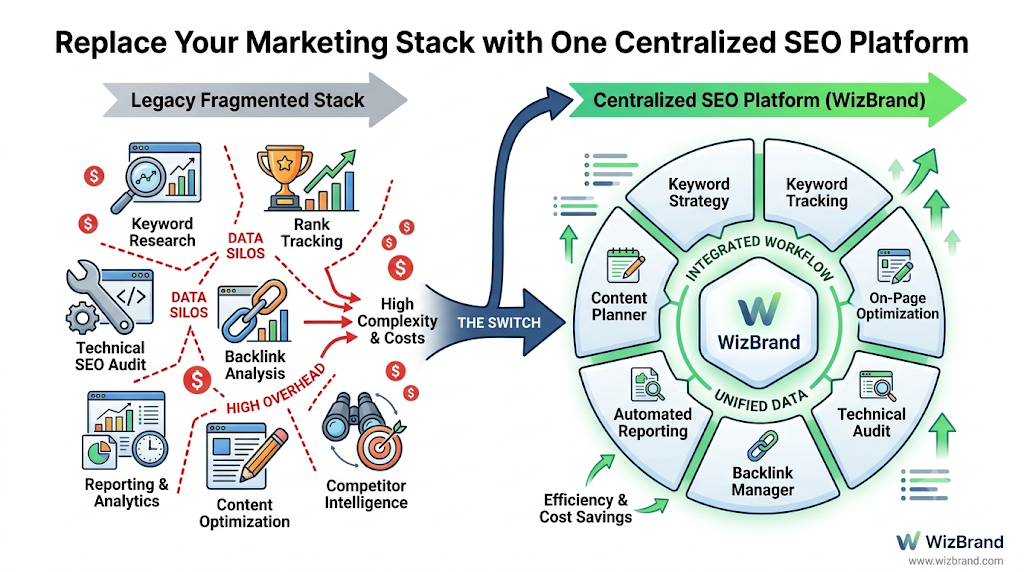
An all in one SEO platform is a comprehensive software ecosystem designed to centralize the various elements of organic search optimization and digital marketing into a single, cohesive interface. Rather than piecing together disparate applications for keyword research, backlink monitoring, and competitor analysis, marketing teams can access all these critical functionalities in one centralized workspace.
This unified infrastructure goes beyond basic technical search capabilities. It bridges the gap between search visibility and broader promotional strategies, offering built-in modules for managing social outreach, tracking campaign performance, and organizing digital media. For enterprise teams and marketing agencies, this integration is invaluable. It ensures that data flows effortlessly between different departments, allowing an SEO specialist’s keyword strategy to directly inform a content creator’s workflow. By removing the friction associated with switching between various standalone tools, an all-inclusive system empowers organizations to execute complex digital strategies with speed, accuracy, and absolute clarity.
Why Centralized Marketing Infrastructure Matters
Relying on scattered applications for distinct marketing functions creates isolated data silos, which ultimately restricts a brand’s ability to scale. When search engine rankings, influencer outreach efforts, and creative assets are housed in completely different environments, attributing success to specific campaigns becomes incredibly difficult. A centralized infrastructure matters because it establishes a single source of truth for all digital marketing initiatives.
Implementing dedicated SEO management software that encompasses every facet of a brand’s online presence allows leadership teams to make informed, data-driven decisions. Instead of wasting valuable administrative hours compiling manual reports from various vendors, teams can instantly visualize how a recent content push impacted overall search visibility. Furthermore, this centralization dramatically enhances team collaboration. When every stakeholder—from technical SEO engineers to creative directors—operates within the same platform, miscommunication plummets. A unified ecosystem not only protects brand consistency but also drastically reduces the financial overhead associated with maintaining dozens of individual software licenses.
Key Features of a Comprehensive Marketing Hub
A truly effective digital marketing hub is defined by its ability to merge technical optimization with creative execution and project administration. The core of this system typically begins with robust search engine optimization utilities, allowing users to conduct deep technical audits, analyze competitor strategies, and discover high-value keywords. Alongside these foundational tools, a modern platform incorporates sophisticated project management capabilities to assign tasks and track campaign progress efficiently.
Beyond standard search functionalities, a comprehensive suite must include dedicated environments for modern outreach. This involves integrated spaces for connecting with content creators and monitoring social campaign performance in real-time. Additionally, a central repository for all media files is essential to ensure that every campaign utilizes approved, high-quality visuals. By combining these diverse elements, a marketing hub empowers agencies and brand managers to oversee the entire lifecycle of a digital campaign—from initial keyword discovery and asset creation to final deployment and detailed performance reporting.
SEO Management and Rank Tracking
At the heart of any visibility strategy is the ability to monitor search performance accurately over time. An integrated rank tracking tool provides real-time updates on keyword positioning across different geographic locations and devices. This allows SEO professionals to quickly identify fluctuations and adjust their on-page strategies accordingly. Coupled with advanced SEO reporting software, teams can automatically generate comprehensive, white-labeled performance documents for clients or internal stakeholders, completely eliminating the tedious process of manual data extraction and spreadsheet formatting.
Influencer Campaign Integration
Modern organic growth is heavily reliant on authoritative backlinks and social signals generated through external collaborations. A built-in influencer marketing platform simplifies the complex process of identifying, negotiating with, and managing external creators. By utilizing an integrated influencer marketplace, brands can easily discover relevant voices that align with their target demographics. Furthermore, dedicated influencer campaign management software allows teams to track the exact ROI of these partnerships, ensuring that every collaborative effort directly contributes to broader digital marketing objectives.
Digital and Marketing Asset Management
Executing cohesive campaigns requires seamless access to approved creative files. Implementing dedicated digital asset management software within your marketing hub ensures that all images, videos, and branding documents are securely stored and easily searchable via metadata tags. This structured approach, driven by robust marketing asset management software, guarantees that both in-house teams and external collaborators consistently use the correct brand collateral. It eliminates the chaos of scattered cloud folders, enhances version control, and accelerates the entire content production pipeline.
Comparison Tables: Legacy Workflows vs. Modern Platforms
To truly grasp the value of a centralized system, it is essential to compare modern integrated solutions against traditional, fragmented methodologies. The following tables illustrate the stark contrasts in efficiency, cost, and functionality between legacy approaches and contemporary digital marketing software. By evaluating these differences, decision-makers can clearly identify how upgrading their technological infrastructure resolves common operational bottlenecks and drives long-term strategic advantage.
Traditional SEO Tools vs All-in-One SEO Platform
| Features | Traditional SEO Tools | All-in-One SEO Platform |
| Functionality | Limited to specific tasks (e.g., only keyword research). | Covers audits, tracking, assets, and influencer outreach. |
| Benefits | Highly specialized for narrow, single-purpose functions. | Seamless data flow and unified reporting across all channels. |
| Limitations | Requires purchasing and managing multiple subscriptions. | May involve a brief learning curve to master all modules. |
| Use Cases | Freelancers needing only one specific metric analysis. | Agencies and enterprises requiring comprehensive oversight. |
| Best Choice | Micro-businesses with extremely limited digital needs. | SEO software for agencies focused on scalable growth. |
Manual SEO Management vs SEO Management Software
| Features | Manual SEO Management | SEO Management Software |
| Tracking Method | Checking SERPs manually and updating spreadsheets. | Automated, daily tracking across global and local search. |
| Benefits | Zero software subscription costs. | Saves countless hours and eliminates human data entry errors. |
| Limitations | Highly inaccurate, time-consuming, and unscalable. | Requires an initial investment in a software platform. |
| Use Cases | Hobbyist bloggers tracking a handful of local phrases. | Marketing teams managing hundreds of target keywords. |
| Best Choice | Individuals with zero marketing budget. | Brands leveraging a professional rank tracking tool. |
In-House Influencer Management vs Influencer Marketing Platform
| Features | In-House Influencer Management | Influencer Marketing Platform |
| Discovery | Manual searching through social media hashtags. | AI-driven search within a vetted influencer marketplace. |
| Benefits | Direct, personal initial contact via direct messages. | Streamlined discovery, contract management, and ROI tracking. |
| Limitations | Extremely difficult to scale and verify creator authenticity. | Requires adopting new workflow protocols for outreach. |
| Use Cases | Small local shops partnering with one local creator. | E-commerce brands running extensive creator campaigns. |
| Best Choice | Businesses running highly localized, rare promotions. | Teams needing influencer campaign management software. |
Digital Asset Storage vs Digital Asset Management Software
| Features | Basic Digital Asset Storage | Digital Asset Management Software |
| Organization | Simple folder structures on standard cloud drives. | Advanced metadata tagging, version control, and AI search. |
| Benefits | Familiar interface for basic file saving. | Instant retrieval, strict brand compliance, and secure access. |
| Limitations | Files easily lost; poor access control for external users. | Requires initial setup of tagging taxonomies and rules. |
| Use Cases | Solopreneurs storing a few logo files and documents. | Global teams sharing thousands of creative media files. |
| Best Choice | Startups with minimal creative output. | Enterprises needing marketing asset management software. |
Business Use Cases and Industry Applications
The versatility of an integrated digital marketing ecosystem makes it highly adaptable across various industries. For digital marketing agencies, managing multiple client portfolios simultaneously is a complex challenge. By utilizing comprehensive SEO software for agencies, account managers can securely separate client data, track individual campaign progress, and automate monthly performance reporting without data crossover. This ensures transparency and builds long-term client trust.
In the e-commerce sector, brands constantly launch new product lines that require coordinated content creation, search optimization, and social media promotion. An integrated platform allows these companies to store product imagery securely within their digital asset management software, share those assets directly with creators via an influencer marketplace, and track the resulting organic traffic spikes through built-in analytics. Similarly, SaaS companies utilize these unified systems to monitor technical site health, ensure their educational content ranks highly for targeted queries, and manage their promotional assets efficiently, ensuring a consistent brand experience that drives continuous lead generation and customer acquisition.
Common Mistakes in Digital Marketing Workflows
A frequent misstep among growing businesses is attempting to scale operations while relying on a disjointed technology stack. When teams use one tool for search analytics, another for creator outreach, and standard cloud folders for asset storage, critical data is inevitably lost in translation. This fragmentation leads to inconsistent brand messaging and makes it virtually impossible to accurately measure the return on investment for complex, multi-channel campaigns.
Another common mistake is neglecting the power of automated reporting. Marketing teams often waste days manually compiling metrics into spreadsheets, diverting valuable time away from actual strategic execution. Additionally, failing to maintain strict version control over creative files frequently results in outdated or unapproved media being published. By adopting an all in one SEO platform, businesses can easily avoid these pitfalls. Centralization automates data collection, ensures everyone works from a single source of truth, and secures brand assets, allowing teams to focus on strategy rather than administrative troubleshooting.
Solutions and Best Practices
To maximize the impact of your digital marketing efforts, it is crucial to establish standardized workflows within your chosen platform. Begin by fully migrating all historical data and media files into your new system to prevent lingering data silos. Establish clear metadata tagging conventions within your marketing asset management software so that any team member can instantly locate the correct file.
Furthermore, automate your performance tracking. Configure your SEO reporting software to generate weekly insights tailored to different stakeholders, ensuring that executives see high-level ROI while specialists receive granular technical data. Finally, unify your outreach by managing all creator communications directly through your influencer campaign management software, ensuring that every external partnership is securely logged, tracked, and measured against your core business objectives.
Expert Tips for Scaling Visibility
Scaling your online presence requires moving beyond isolated tactics and embracing a holistic strategy. One vital expert tip is to actively intertwine your search strategy with your influencer campaigns. When launching a new product, use your rank tracking tool to identify keyword gaps, then brief your creators to naturally incorporate those specific themes into their content.
Additionally, always prioritize technical health before scaling content production. Regularly utilize your platform’s site audit features to identify and resolve crawl errors or broken links; pouring resources into a structurally unsound website yields poor returns. Finally, leverage the analytics within your digital asset management software to identify which types of creative media generate the most engagement, allowing you to continually refine your visual strategy based on hard performance data.
Why Choose WizBrand?
WizBrand stands out as a premier destination for organizations seeking to consolidate their digital marketing operations into a single, powerful hub. It eliminates the frustration of managing multiple, disconnected tools by offering a truly comprehensive suite tailored for modern marketing demands. With WizBrand, users gain immediate access to advanced SEO management software, robust creator marketplaces, and secure asset coordination, all housed within an intuitive and user-friendly interface.
The platform is explicitly engineered to support scalability, making it an ideal choice for ambitious startups, busy marketing agencies, and large enterprise teams alike. By centralizing workflows, WizBrand drastically reduces software overhead costs while simultaneously improving cross-departmental collaboration and data accuracy. The positive impact is clearly reflected in user feedback, with professionals like Aarav noting how the system transformed days of reporting into minutes, and Priya highlighting the ease of managing creator partnerships natively. Choosing WizBrand means investing in a reliable, all-encompassing infrastructure that empowers your team to execute sophisticated digital strategies with confidence and precision.
Frequently Asked Questions
What strategic advantage does an all in one SEO platform offer executive teams?
An integrated platform provides leadership with a transparent, unified view of all marketing activities. By consolidating data, decision-makers can easily evaluate cross-channel performance, optimize budget allocation, and eliminate the financial inefficiencies of maintaining numerous overlapping software subscriptions.
How does SEO management software improve resource allocation within an agency?
By automating time-consuming tasks like keyword monitoring and technical audits, this software frees up highly skilled professionals to focus on strategic execution. Leaders can confidently redirect billable hours away from manual data entry toward high-impact campaign development.
Why should decision-makers prioritize integrating an influencer marketing platform?
Creator partnerships are critical for modern brand authority. Integrating this platform allows executives to transition influencer marketing from a speculative expense into a measurable, data-driven channel, ensuring strict accountability and clear ROI tracking for all external collaborations.
What is the primary ROI of implementing digital asset management software?
The return on investment stems from drastic reductions in wasted creative time and the elimination of brand inconsistencies. Decision-makers ensure that expensive creative assets are easily discoverable, securely stored, and maximally utilized across all global campaigns.
How does a centralized rank tracking tool influence high-level business strategy?
Accurate rank tracking provides immediate feedback on market positioning and competitor movements. This real-time intelligence empowers executives to pivot marketing strategies swiftly, capitalize on emerging search trends, and defend valuable digital market share against industry rivals.
In what way does SEO reporting software enhance stakeholder communication?
Automated reporting software translates complex technical metrics into clear, executive-friendly visualizations. This allows marketing leaders to communicate campaign successes and justify budget requests to stakeholders clearly, fostering trust and aligning marketing efforts with broader corporate goals.
How does an influencer marketplace reduce operational risk for brands?
A vetted marketplace minimizes the risk of partnering with fraudulent or misaligned creators. Decision-makers can rely on platform analytics to verify audience authenticity and engagement metrics before committing budget, ensuring safer and more effective brand representation.
Why is marketing asset management software critical for enterprise compliance?
Enterprise compliance requires strict control over brand messaging and intellectual property. This software provides robust access controls and version histories, allowing leaders to guarantee that only legally approved and current assets are distributed into the public domain.
How can SEO software for agencies impact client retention rates?
Agencies utilizing robust software can deliver faster results, proactive strategy adjustments, and highly transparent reporting. This level of professional reliability and clear communication directly enhances client satisfaction, resulting in significantly higher long-term retention and increased referral business.
What makes influencer campaign management software a strategic necessity?
Managing multiple creators via email and spreadsheets creates massive operational vulnerabilities. Dedicated management software centralizes contracts, deliverables, and performance metrics, giving leaders complete oversight and control over complex, multi-tiered promotional campaigns.
How does unified marketing software mitigate the risks of employee turnover?
When workflows are centralized within a single platform, institutional knowledge is preserved in the system rather than in individual employee inboxes. Decision-makers ensure continuity, allowing new hires to seamlessly step into standardized workflows without disrupting ongoing marketing initiatives.
Why should a business transition away from manual SEO tracking methods?
Manual tracking is inherently prone to human error and cannot scale to meet competitive demands. Leadership must adopt automated solutions to ensure data integrity, accelerate decision-making, and maintain a competitive edge in rapidly evolving digital search landscapes.
How do centralized platforms support global expansion strategies?
Integrated platforms offer multi-region tracking and global asset distribution capabilities. This allows executives to manage localized marketing campaigns across different territories from a single headquarters, ensuring brand consistency while catering to specific regional search behaviors.
What is the financial benefit of consolidating digital marketing tools?
Maintaining separate tools for search, social, and asset management incurs high cumulative subscription costs and integration fees. Consolidation drastically reduces these overhead expenses while simultaneously lowering the training costs associated with onboarding staff to multiple systems.
How does an integrated ecosystem future-proof a brand’s marketing efforts?
An integrated ecosystem is inherently agile, allowing brands to adapt quickly to algorithm shifts and emerging consumer trends. Decision-makers secure a scalable infrastructure that seamlessly incorporates new marketing methodologies, ensuring sustained competitive advantage in dynamic digital environments.
Conclusion
Achieving sustained visibility in today’s competitive digital landscape requires more than just isolated marketing tactics; it demands a robust, centralized operational infrastructure. Relying on disconnected applications severely limits a team’s ability to track performance accurately, maintain brand consistency, and scale campaigns efficiently. By adopting a comprehensive, all-in-one ecosystem, organizations can successfully merge their technical search strategies, creator outreach programs, and asset management into a single, streamlined workflow. This unification not only dramatically reduces administrative overhead but also empowers teams to make agile, data-driven decisions based on clear, cross-channel insights. Ultimately, investing in modern digital marketing software equips businesses with the essential tools required to outpace competitors, optimize internal resources, and drive measurable, long-term organic growth.
