Introduction
Data Clean Rooms are secure environments that allow multiple organizations to analyze and collaborate on data without directly sharing raw customer information. They help companies combine datasets, measure campaign effectiveness, perform audience analysis, and generate insights while preserving privacy and complying with modern data protection regulations.
As third-party cookies continue to disappear and privacy regulations become stricter, Data Clean Rooms have become a critical component of modern data and marketing strategies. Enterprises increasingly rely on them to enable privacy-safe analytics, advertising measurement, customer intelligence, and cross-company collaboration.
Real-world use cases include:
- Privacy-safe advertising measurement
- Customer journey and attribution analysis
- Retail media network analytics
- Cross-partner audience insights
- Secure healthcare and financial data collaboration
What buyers should evaluate:
- Privacy and security controls
- Data governance capabilities
- Integration ecosystem
- Scalability and performance
- AI and analytics features
- Ease of implementation
- Collaboration workflows
- Compliance support
- Cost structure
- Multi-cloud compatibility
Best for: Large enterprises, retailers, publishers, advertisers, healthcare organizations, financial institutions, data science teams, and privacy-focused marketing organizations.
Not ideal for: Small businesses with limited data volumes, organizations without data-sharing requirements, or companies seeking only basic analytics solutions.
Key Trends in Data Clean Rooms
- AI-powered audience modeling and segmentation are becoming standard.
- Privacy-enhancing technologies are evolving rapidly.
- Retail media networks increasingly rely on clean room infrastructure.
- Multi-party collaboration is replacing traditional data sharing.
- Real-time analytics capabilities continue to improve.
- Federated learning is gaining adoption for advanced modeling.
- Multi-cloud deployments are becoming more common.
- Regulatory compliance automation is expanding.
- Identity resolution capabilities are improving.
- Consumption-based pricing models are becoming more prevalent.
How We Selected These Tools
The following tools were evaluated using a consistent methodology:
- Market adoption and enterprise mindshare
- Feature completeness and innovation
- Security and privacy capabilities
- Scalability for large datasets
- Integration ecosystem maturity
- Customer feedback and industry recognition
- AI and advanced analytics capabilities
- Suitability across different business sizes
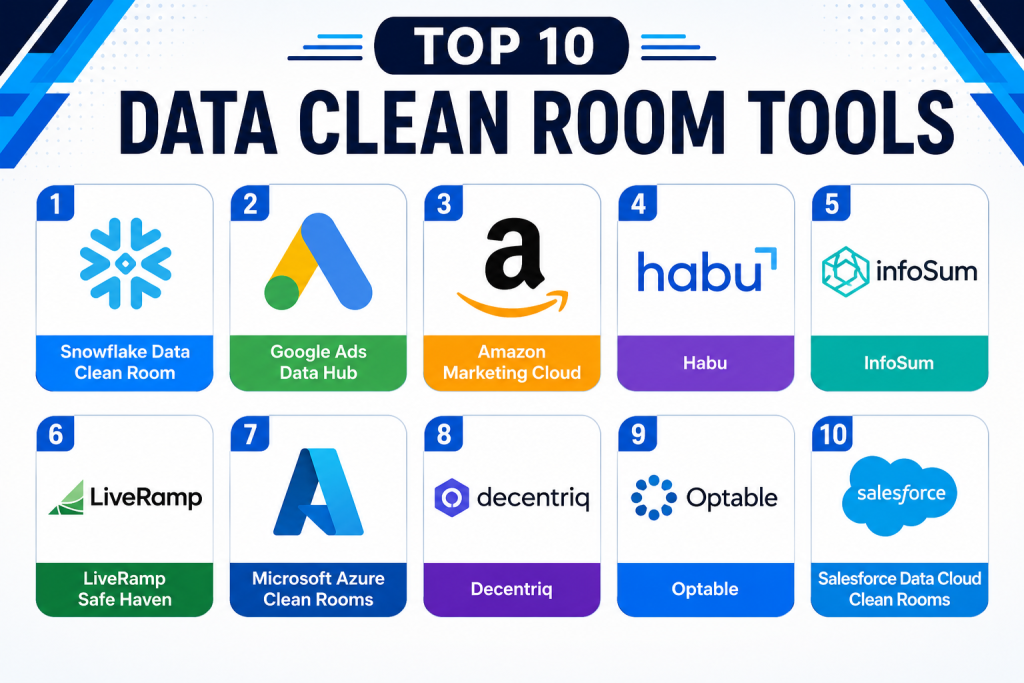
Top 10 Data Clean Room Tools
1- Snowflake Data Clean Room
Short description:
Snowflake Data Clean Room enables organizations to collaborate securely across datasets without exposing sensitive information. Built on the Snowflake Data Cloud, it supports privacy-preserving analytics, audience insights, and secure data sharing. Enterprises use it extensively for advertising measurement, customer analytics, and partner collaboration. Its cloud-native architecture provides strong scalability and performance. The platform supports various industries including retail, media, finance, and healthcare. It is particularly attractive to organizations already invested in the Snowflake ecosystem.
Key Features
- Privacy-safe data collaboration
- Advanced analytics support
- Native Snowflake integration
- Secure audience matching
- Data governance controls
- Cross-organizational workflows
- AI-ready architecture
Pros
- Excellent scalability
- Strong ecosystem integration
- Enterprise-grade architecture
Cons
- Requires Snowflake familiarity
- Enterprise pricing may be significant
- Advanced setup can be complex
Platforms / Deployment
- Cloud
Security & Compliance
- Encryption
- RBAC
- Audit logs
- MFA
- SSO/SAML
Integrations & Ecosystem
Snowflake benefits from one of the largest modern data ecosystems available.
- Data warehouses
- BI platforms
- AI tools
- Marketing platforms
- APIs
Support & Community
Strong documentation, enterprise support options, and a large global community.
2- Google Ads Data Hub
Short description:
Google Ads Data Hub is Google’s privacy-safe clean room solution designed primarily for advertising measurement and audience analytics. It allows advertisers to analyze campaign performance using aggregated data while maintaining privacy requirements. The platform is widely used by brands, agencies, and publishers. Its close integration with Google’s advertising ecosystem makes it a popular choice for marketing teams. Organizations can perform advanced reporting and audience analysis without accessing raw user-level information.
Key Features
- Campaign measurement
- Audience analysis
- Privacy-safe reporting
- Google ecosystem integration
- Custom SQL queries
- Attribution analysis
- Aggregated insights
Pros
- Excellent Google integration
- Strong advertising analytics
- Privacy-focused architecture
Cons
- Primarily Google-centric
- Limited outside advertising use cases
- Requires SQL expertise
Platforms / Deployment
- Cloud
Security & Compliance
- Encryption
- Access controls
- Audit capabilities
Integrations & Ecosystem
Works closely with Google marketing technologies.
- Google Ads
- Google Marketing Platform
- BigQuery
- Analytics tools
Support & Community
Strong enterprise support backed by Google’s extensive documentation.
3- Amazon Marketing Cloud
Short description:
Amazon Marketing Cloud provides advertisers with privacy-safe analytics and audience measurement capabilities within Amazon’s advertising ecosystem. Organizations use it to gain deeper campaign insights, optimize targeting, and understand customer behavior. It offers advanced query capabilities while maintaining strict privacy controls. Brands operating heavily within Amazon advertising frequently adopt the platform for attribution and audience analysis. It supports sophisticated measurement strategies at scale.
Key Features
- Campaign analytics
- Audience insights
- Custom reporting
- Attribution measurement
- Query-based analysis
- Privacy controls
- Retail media analytics
Pros
- Strong retail media capabilities
- Deep Amazon integration
- Advanced measurement options
Cons
- Amazon-focused ecosystem
- Learning curve for analysts
- Limited broader collaboration
Platforms / Deployment
- Cloud
Security & Compliance
- Access controls
- Encryption
- Privacy protections
Integrations & Ecosystem
Optimized for Amazon advertising workflows.
- Amazon Ads
- AWS services
- Analytics platforms
- Reporting tools
Support & Community
Comprehensive documentation and enterprise support.
4- Habu
Short description:
Habu specializes in privacy-enhancing technologies and clean room solutions. The platform enables secure data collaboration across organizations while supporting compliance requirements. It is commonly used for advertising measurement, customer intelligence, and cross-partner analytics. Habu emphasizes interoperability and flexibility. Organizations seeking independent clean room solutions often evaluate Habu alongside major cloud provider offerings.
Key Features
- Multi-party collaboration
- Privacy controls
- Audience analytics
- Data federation
- Measurement tools
- Governance capabilities
- Interoperability support
Pros
- Vendor-neutral approach
- Strong privacy focus
- Flexible integrations
Cons
- Enterprise-focused pricing
- Requires governance planning
- May require specialist expertise
Platforms / Deployment
- Cloud
Security & Compliance
- Encryption
- Access management
- Audit logging
Integrations & Ecosystem
Designed for broad ecosystem compatibility.
- Cloud platforms
- Advertising systems
- Analytics tools
- APIs
Support & Community
Strong enterprise onboarding and consulting support.
5- InfoSum
Short description:
InfoSum provides a decentralized approach to privacy-safe data collaboration. Instead of moving data into a centralized environment, it enables analysis while data remains under each organization’s control. This architecture appeals to organizations prioritizing privacy and governance. The platform is widely used in advertising, media, and customer intelligence initiatives. Its decentralized model differentiates it from many traditional clean room platforms.
Key Features
- Decentralized architecture
- Audience collaboration
- Privacy-first analytics
- Identity resolution
- Data governance
- Partner collaboration
- Measurement capabilities
Pros
- Strong privacy model
- No centralized data movement
- Flexible collaboration
Cons
- Complex concepts for beginners
- Enterprise-oriented
- Requires planning
Platforms / Deployment
- Cloud
Security & Compliance
- Encryption
- Privacy-enhancing technologies
- Governance controls
Integrations & Ecosystem
Supports a growing partner network.
- Data platforms
- Marketing systems
- Analytics tools
- APIs
Support & Community
Enterprise support and expanding ecosystem partnerships.
6- LiveRamp Safe Haven
Short description:
LiveRamp Safe Haven is a leading clean room platform focused on data collaboration and identity-enabled analytics. Organizations use it to connect datasets securely while maintaining privacy compliance. It is especially popular among retailers, advertisers, and media companies. Safe Haven supports measurement, audience building, and advanced analytics workflows. Its identity expertise provides additional value for customer insights.
Key Features
- Identity resolution
- Audience insights
- Secure collaboration
- Measurement analytics
- Data governance
- Partner connectivity
- Retail media support
Pros
- Strong identity capabilities
- Large partner ecosystem
- Mature platform
Cons
- Enterprise complexity
- Premium pricing
- Setup effort required
Platforms / Deployment
- Cloud
Security & Compliance
- Encryption
- Access controls
- Audit logging
Integrations & Ecosystem
Large ecosystem of partners and platforms.
- Retail media platforms
- Marketing tools
- Data warehouses
- Analytics solutions
Support & Community
Well-established support organization and partner network.
7- Microsoft Azure Clean Rooms
Short description:
Microsoft Azure Clean Rooms provides privacy-safe collaboration capabilities within the Azure ecosystem. Organizations can analyze and share insights without exposing sensitive data. The platform supports compliance-focused industries and integrates tightly with Azure services. Enterprises already invested in Microsoft technologies often find it an attractive option. Its cloud-native architecture supports scalability and governance.
Key Features
- Secure collaboration
- Azure integration
- Privacy controls
- Governance tools
- Analytics support
- Identity management
- Compliance features
Pros
- Strong Microsoft ecosystem
- Enterprise security
- Cloud scalability
Cons
- Azure dependency
- Configuration complexity
- Enterprise learning curve
Platforms / Deployment
- Cloud
Security & Compliance
- RBAC
- Encryption
- Audit logs
- Identity management
Integrations & Ecosystem
Works across Microsoft’s cloud ecosystem.
- Azure services
- Power BI
- Microsoft Fabric
- APIs
Support & Community
Extensive Microsoft documentation and enterprise support.
8- Decentriq
Short description:
Decentriq offers confidential data collaboration using privacy-enhancing technologies. The platform enables organizations to collaborate on sensitive datasets without exposing raw information. It supports advertising measurement, healthcare collaboration, and analytics use cases. Its privacy-first architecture appeals to organizations with strict compliance requirements. Decentriq continues to gain recognition in European markets.
Key Features
- Confidential computing
- Privacy-safe collaboration
- Secure analytics
- Governance controls
- Partner collaboration
- Compliance support
- Data protection tools
Pros
- Strong privacy protections
- Modern architecture
- Compliance-focused design
Cons
- Smaller ecosystem
- Enterprise focus
- Less market adoption than larger vendors
Platforms / Deployment
- Cloud
Security & Compliance
- Encryption
- Confidential computing
- Access controls
Integrations & Ecosystem
Focused on privacy-centric integrations.
- Cloud platforms
- Analytics tools
- APIs
Support & Community
Growing community and enterprise support offerings.
9- Optable
Short description:
Optable focuses on privacy-preserving data collaboration using advanced cryptographic techniques. The platform enables secure audience matching and analytics while minimizing data exposure risks. It serves advertisers, publishers, and retailers seeking privacy-compliant collaboration. Optable’s technology-driven approach appeals to organizations prioritizing advanced privacy methods. Its solutions support evolving regulatory requirements.
Key Features
- Cryptographic privacy methods
- Audience matching
- Secure analytics
- Data collaboration
- Privacy controls
- Partner workflows
- Compliance support
Pros
- Advanced privacy technology
- Strong security focus
- Innovative architecture
Cons
- Smaller ecosystem
- Specialized expertise may be needed
- Limited mainstream adoption
Platforms / Deployment
- Cloud
Security & Compliance
- Encryption
- Privacy-enhancing technologies
- Access controls
Integrations & Ecosystem
Supports modern data workflows.
- APIs
- Analytics tools
- Marketing platforms
Support & Community
Growing vendor support and technical resources.
10- Salesforce Data Cloud Clean Rooms
Short description:
Salesforce Data Cloud Clean Rooms enables organizations to collaborate on customer data securely while leveraging Salesforce’s broader customer data platform ecosystem. It supports audience analysis, activation, and measurement workflows. Enterprises using Salesforce CRM and marketing technologies can benefit from native integrations. The platform focuses on privacy, governance, and customer intelligence use cases.
Key Features
- Customer data collaboration
- Audience activation
- Privacy-safe analytics
- Governance controls
- Salesforce integration
- Measurement tools
- Identity capabilities
Pros
- Strong Salesforce ecosystem
- Customer intelligence focus
- Enterprise-grade capabilities
Cons
- Salesforce-centric
- Enterprise pricing
- Configuration complexity
Platforms / Deployment
- Cloud
Security & Compliance
- Encryption
- Access controls
- Audit capabilities
Integrations & Ecosystem
Deeply integrated with Salesforce technologies.
- CRM platforms
- Marketing tools
- Analytics solutions
- APIs
Support & Community
Extensive documentation, training resources, and enterprise support.
Comparison Table
| Tool Name | Best For | Platforms Supported | Deployment | Standout Feature | Public Rating |
|---|---|---|---|---|---|
| Snowflake Data Clean Room | Enterprise collaboration | Web | Cloud | Data Cloud integration | N/A |
| Google Ads Data Hub | Advertising analytics | Web | Cloud | Google ecosystem analytics | N/A |
| Amazon Marketing Cloud | Retail media analytics | Web | Cloud | Amazon advertising insights | N/A |
| Habu | Multi-party collaboration | Web | Cloud | Vendor-neutral approach | N/A |
| InfoSum | Privacy-first collaboration | Web | Cloud | Decentralized architecture | N/A |
| LiveRamp Safe Haven | Identity-enabled analytics | Web | Cloud | Identity resolution | N/A |
| Azure Clean Rooms | Microsoft enterprises | Web | Cloud | Azure integration | N/A |
| Decentriq | Compliance-focused collaboration | Web | Cloud | Confidential computing | N/A |
| Optable | Advanced privacy workflows | Web | Cloud | Cryptographic matching | N/A |
| Salesforce Data Cloud Clean Rooms | Customer intelligence | Web | Cloud | Salesforce integration | N/A |
Evaluation & Scoring of Data Clean Room Tools
| Tool Name | Core | Ease | Integrations | Security | Performance | Support | Value | Weighted Total |
|---|---|---|---|---|---|---|---|---|
| Snowflake | 9.5 | 8.0 | 9.5 | 9.5 | 9.5 | 9.0 | 8.0 | 9.0 |
| Google Ads Data Hub | 8.5 | 8.5 | 8.5 | 9.0 | 9.0 | 8.5 | 8.0 | 8.6 |
| Amazon Marketing Cloud | 8.5 | 8.0 | 8.5 | 9.0 | 9.0 | 8.5 | 8.0 | 8.5 |
| Habu | 8.5 | 7.5 | 8.5 | 9.0 | 8.5 | 8.5 | 7.5 | 8.3 |
| InfoSum | 8.5 | 7.5 | 8.0 | 9.5 | 8.5 | 8.0 | 7.5 | 8.3 |
| LiveRamp Safe Haven | 9.0 | 8.0 | 9.0 | 9.0 | 8.5 | 8.5 | 7.5 | 8.6 |
| Azure Clean Rooms | 8.5 | 8.0 | 9.0 | 9.5 | 9.0 | 9.0 | 8.0 | 8.7 |
| Decentriq | 8.0 | 7.5 | 7.5 | 9.0 | 8.5 | 8.0 | 8.0 | 8.1 |
| Optable | 8.0 | 7.0 | 7.5 | 9.0 | 8.5 | 7.5 | 8.0 | 7.9 |
| Salesforce Data Cloud | 8.5 | 8.0 | 9.0 | 9.0 | 8.5 | 9.0 | 7.5 | 8.5 |
How to interpret the scores:
- Scores are comparative rather than absolute.
- Higher scores indicate stronger overall capabilities across evaluation criteria.
- Enterprise ecosystem alignment often influences integration scores.
- Security scores emphasize privacy and governance capabilities.
- Value scores reflect feature-to-investment considerations.
- Buyers should prioritize criteria that align with their specific use cases.
Which Data Clean Room Tool Is Right for You?
Solo / Freelancer
Most solo users do not require a dedicated data clean room. Traditional analytics platforms are often sufficient.
SMB
SMBs with growing data-sharing needs should consider Google Ads Data Hub or Salesforce Data Cloud integrations if they already use those ecosystems.
Mid-Market
LiveRamp Safe Haven, Habu, and Snowflake offer strong balance between scalability and functionality.
Enterprise
Large enterprises typically benefit most from Snowflake, Azure Clean Rooms, LiveRamp Safe Haven, or Salesforce Data Cloud Clean Rooms.
Budget vs Premium
Budget-conscious organizations should focus on ecosystem-aligned solutions. Premium buyers seeking advanced privacy controls may prefer Snowflake, LiveRamp, or InfoSum.
Feature Depth vs Ease of Use
Organizations prioritizing depth should evaluate Snowflake, LiveRamp, and Habu. Teams seeking simplicity may prefer Google Ads Data Hub.
Integrations & Scalability
Snowflake, Azure, Salesforce, and LiveRamp provide extensive integration ecosystems and enterprise scalability.
Security & Compliance Needs
Highly regulated industries should prioritize Decentriq, InfoSum, Azure Clean Rooms, and Snowflake due to their strong privacy-focused architectures.
Frequently Asked Questions
1. What is a Data Clean Room?
A Data Clean Room is a secure environment where organizations can analyze shared data without exposing raw customer information. It enables privacy-safe collaboration and analytics.
2. Why are Data Clean Rooms becoming important?
The decline of third-party cookies and increasing privacy regulations have made privacy-preserving analytics essential for modern marketing and data strategies.
3. Who uses Data Clean Rooms?
Retailers, advertisers, publishers, healthcare organizations, financial institutions, and enterprises that need secure data collaboration commonly use them.
4. How do Data Clean Rooms improve privacy?
They use aggregation, encryption, access controls, and privacy-enhancing technologies to prevent exposure of sensitive data.
5. Are Data Clean Rooms only for marketing?
No. While marketing is a major use case, they are also used in healthcare research, financial analytics, fraud detection, and strategic partnerships.
6. What are the biggest implementation challenges?
Data governance, integration complexity, user training, privacy policy alignment, and stakeholder coordination are common challenges.
7. How long does implementation typically take?
Implementation timelines vary from a few weeks to several months depending on data complexity, integrations, and governance requirements.
8. What should organizations evaluate before choosing a platform?
Organizations should assess privacy controls, integrations, scalability, analytics capabilities, compliance requirements, and total cost of ownership.
9. Can organizations switch Data Clean Room platforms later?
Yes, but migration can require significant planning due to integrations, governance processes, and operational workflows.
10. What alternatives exist to Data Clean Rooms?
Alternatives include traditional data sharing, secure APIs, federated analytics, and privacy-enhancing technologies, though they may not offer the same balance of collaboration and privacy.
Conclusion
Data Clean Rooms have become a foundational technology for privacy-first analytics, secure collaboration, and modern customer intelligence. As organizations navigate stricter regulations and changing digital ecosystems, platforms such as Snowflake Data Clean Room, LiveRamp Safe Haven, Google Ads Data Hub, Azure Clean Rooms, and Salesforce Data Cloud Clean Rooms provide powerful ways to generate insights without compromising sensitive information. The right choice depends on your existing technology stack, compliance requirements, collaboration needs, and budget. Rather than searching for a universal winner, organizations should identify the platform that best aligns with their business objectives. A practical next step is to shortlist two or three solutions, conduct a pilot project, validate integration capabilities, review governance requirements, and assess long-term scalability before making a final investment decision.
