Introduction
Japan is one of the best countries in the world for road travel. The asphalt is smooth. Mountain passes twist like ribbons. Neon city streets glow long after sunset. Your own set of wheels turns a trip into a true adventure.
You can stop at a quiet shrine whenever you like. You can chase a coastal road at your own pace. Trains are fast, but they follow fixed timetables. Your own bike or car does not.
MotoShare.jp helps you find that freedom. It is a dual-sided marketplace. Riders and tourists discover trusted rental vehicles in one place. Local shop owners list and manage their fleets on the same platform. This guide covers everything you need. You will learn about licenses, routes, costs, and safety rules. Shop owners will also find practical tips for running a modern rental business in Japan.
Why Rent a Motorcycle in Japan?
Riding in Japan feels easy. Roads are clean and well marked. Drivers stay calm and steady. Police enforce rules strictly, so traffic stays orderly and safe.
The joy goes far beyond the highway. Michi-no-Eki roadside stations offer free parking, hot food, and local gifts. Winding mountain roads in Nikko and Hakone reward you with temple views and crisp air. Quiet countryside shrines welcome slow, respectful visitors.
Pick the right engine class for your skill level. A 50cc moped suits short city hops. A 125cc small bike handles light commuting and errands. A 250cc light machine blends city speed with touring comfort. A 400cc or larger heavy bike is built for expressways and long trips.
Matching engine size to real riding experience matters a lot. A big bike feels heavy in slow Tokyo traffic. A tiny moped struggles on steep hill roads. Choose honestly, and every ride stays fun, safe, and stress-free.
Choosing Your Ride: Scooters, Touring Bikes, and Cars
Japanese streets change character very fast. Central Tokyo is dense and slow. Tollways are fast and wide. Your vehicle must match both worlds. A light scooter wins in narrow lanes. A big touring bike wins on the expressway. A compact rental car wins with luggage and family. Think about your route before you book.
| Vehicle Type | Best Use | Rider License Class Needed | Luggage Space | Road Comfort |
|---|---|---|---|---|
| City Scooter (50cc–125cc) | Short city hops, errands, tourist spots | Moped or small motorcycle license | Very small, under-seat storage only | Great in slow traffic, weak on fast roads |
| Standard Commuter (250cc) | Daily riding and weekend city escapes | Standard motorcycle license | Small tail bag or top case | Balanced comfort in town and on rural roads |
| Touring Motorcycle (400cc–1000cc+) | Expressway trips and long-distance touring | Large motorcycle license | Large side bags and rear cases | Excellent on long, fast, open roads |
| Compact Rental Car / Kei Car | Family trips, luggage, and rainy season travel | Full car license | Spacious trunk and back seats | Smooth, dry, and comfy in all weather |
Expressway speed limits are often 80 to 100 km/h. Always check the posted signs on each route. Most rental bikes come with an ETC card slot. ETC is an electronic toll card system. It pays your tolls for you as you pass the gates. Ask your rental shop to include one. Passengers need a proper seat and a certified helmet. Never carry a passenger on a scooter rated for one person only.
レンタルバイク 東京 and Motorcycle Rental Tokyo
Tokyo is a dream city for riders. Searching for レンタルバイク 東京, or motorcycle rental Tokyo, gives you dozens of shops. Each one offers different bikes, prices, and pickup spots. Choose a shop close to your hotel or a major station.
Start your ride in Odaiba. Cross the Rainbow Bridge on a clear evening. The bay lights stretch out beside you. Then explore the central avenues. Ginza feels wide and grand at night. Omotesando rewards slow cruising past designer shops.
Weekend trips are where Tokyo rentals truly shine. Hakone sits about two hours away. Its hairpin roads climb through cedar forest toward hot spring towns. Mount Fuji is a half-day ride. The Fuji Five Lakes area serves up the classic postcard view across still water.
Keep your plans simple. City riding is stop-and-go, so pick a light, nimble machine for weekdays. Save the big touring bike for weekend escapes. Fuel up before leaving central wards, because mountain stations close early. Book ahead in spring and autumn. Those seasons bring peak demand, and the best bikes go first.
スクーターレンタル 東京 and Affordable Urban Cruising
Not every rider wants a big machine. Sometimes a simple scooter is the smartest choice. Searching for スクーターレンタル 東京 opens up light options for daily city life. Scooters are cheap to rent and sip very little fuel.
A 50cc to 125cc scooter covers most tourist needs. Ride from your hotel to a museum. Zip to a ramen shop across the ward. Park in seconds and move on. They are also perfect for short hops between areas that sit too far apart to walk.
Know the local parking culture before you ride. Central wards have marked motorcycle parking bays. Look for the painted markings and blue signs near stations. Never park on sidewalks. Ward monitors patrol busy streets and issue swift fines. Illegally parked bikes may even get towed.
Budget hunters can search 東京 バイク レンタル 安い to find deals. Prices drop on weekdays and in winter. Compare a few shops, and check what is included. A helmet, box, and insurance should come standard. A cheap deal with hidden extras is not really cheap at all.
レンタルバイク 日本 and Touring Across the Country
Ready for more than one city? Search レンタルバイク 日本, or motorcycle rental Japan, and plan a real tour. Japan is small enough to cross in days, yet varied enough to ride for weeks.
Start with the Izu Peninsula south of Tokyo. Coastal roads curve past fishing ports and hot spring beaches. Stop for grilled seafood at a roadside station. Then head inland to Nagano. Its mountain switchbacks climb through cool highland air. Hokkaido sits farther north. It offers wide, empty roads and farm views that stretch to the horizon.
Weather changes fast across this country. Mountain mornings can be cold even in summer. Many touring rentals offer heated grips, so ask for them. Seasonal typhoons strike from summer to early autumn. Check forecasts before each long leg, and delay a day if a storm is coming.
Use Michi-no-Eki stations as your travel anchors. They give free parking, clean toilets, and local food. They also show live road information. Book bikes with side bags for multi-day trips. Carrying gear on your back gets tiring after hour three.
Pre-Ride Safety Check and Highway Rules
Each good ride starts before the engine does. Spend five minutes checking your rental machine. This habit protects your safety and your deposit. Small problems grow into big ones on fast roads. Catch them while you are still in the shop parking lot.
| Check Point | What to Look For | Why It Matters |
|---|---|---|
| Tire Tread & Air Pressure | Deep tread lines, no cracks, firm pressure when pressed | Worn or soft tires slide on wet corners |
| Front & Rear Brake Levers | Firm lever feel, smooth stop at low speed | Brakes are your main safety tool in traffic |
| Headlight & Turn Signals | All lights work, lenses are clean and intact | Japan requires lights on, and signals prevent crashes |
| Jibaiseki Insurance Papers | Valid 自賠責保険 certificate stored under the seat | This mandatory liability insurance is checked at traffic stops |
| ETC Card Unit & Reader | Card is inserted, reader screen powers on | Electronic toll payment saves time and cash at every gate |
| Mirrors & Handlebar Controls | Mirrors adjust cleanly, horn and switchgear respond | You need full rear vision and instant control in dense traffic |
Remember that Japan drives on the left side of the road. This feels strange at first, so take quiet streets to practice. Look right first at each junction. Expressway tandem riding has strict rules. The rider must be 20 or older with three years of licensed experience. Always take check-in photos of the bike. Walk around it and shoot each panel, mirror, and wheel. Share the photos with shop staff before leaving.
レンタカー 東京 and Car Rental Tokyo for Groups
A motorcycle is not always the right tool. Searching レンタカー 東京, or car rental Tokyo, makes sense for many travelers. Rain, luggage, and family all point toward four wheels.
The rainy season runs from June to mid-July. Weeks of wet roads turn a bike tour into a soggy test of willpower. Heavy suitcases do not fit on a scooter. Small children cannot ride as motorcycle passengers at all. Elderly parents prefer climate control and soft seats. In these cases, a car simply wins.
Highway tolls are easier with an ETC card. Rental companies rent electronic ETC cards with the car. The card sits in a dash reader and pays each toll for you. Ask for one when you book. It saves queue time and often unlocks discount plans.
Kei cars are a smart local choice. These compact yellow-plated cars squeeze through tight alleyways. They are cheap to rent and easy to park. For city travel, few vehicles fit better. Just do not expect expressway racing pace.
Parking takes some planning in Tokyo. Mechanical parking towers stack cars in tight slots. Staff will guide you in, so follow their hand signals. Always reserve a parking space if your hotel charges for one. Streetside overnight parking is not allowed in most wards.
Modern Fleet Software: バイクレンタル 管理システム
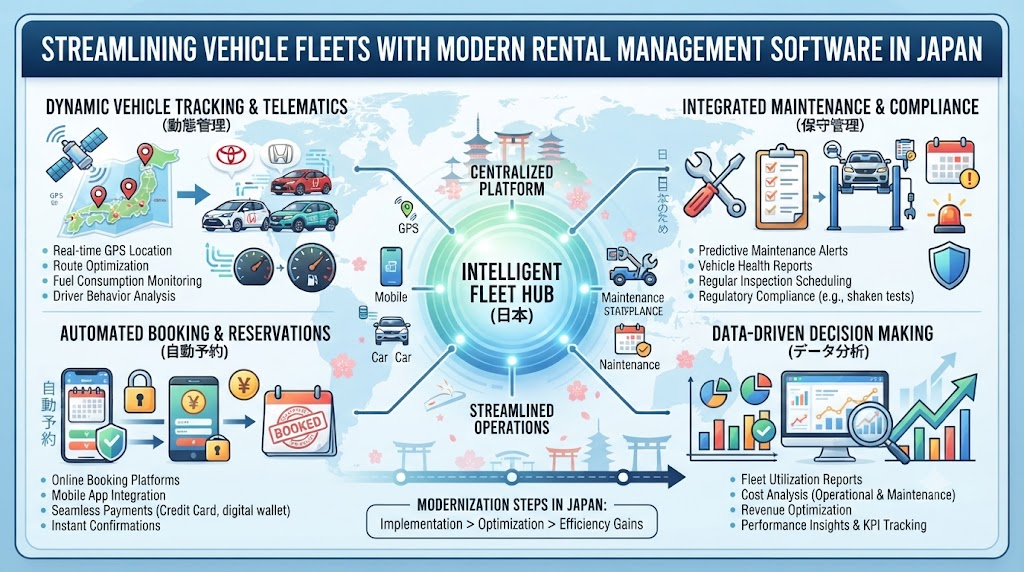
This part is for shop owners. Running a rental business by hand gets messy fast. Paper logs, phone notes, and spreadsheets all break as a fleet grows. A modern バイクレンタル 管理システム, or motorcycle rental management system, fixes this.
Good software shows your whole fleet on one screen. You see which bikes are out, which are free, and which are in for service. Online bookings flow in, and your free bikes update in real time. No more crossed wires. No more double bookings that ruin a guest’s weekend.
Customer records get simpler too. The system stores license details, IDP checks, and signed agreements in one place. Staff can check a rider in seconds, not minutes. Deposits and payments are worked out for you. This cuts math errors and speeds up each pickup.
The same logic drives a レンタカー 管理システム, or car rental management system. Car fleets add fuel logs, mileage limits, and parking tower schedules. Software tracks all of it and sends service reminders before parts fail. Owners spend less time on paperwork and more time serving riders. That is how small shops grow into strong businesses.
How MotoShare Connects Renters and Rental Businesses
MotoShare works both sides of the rental market. Travelers get a simple way to find vehicles. Shop owners get a full platform to run their business. One site serves both.
For travelers, MotoShare is an online vehicle discovery marketplace. You can browse bikes, scooters, and cars across Japanese cities. Every listing shows clear prices in Japanese Yen, or JPY. There are no hidden platform fees at checkout. What you see is what you pay.
For owners, the platform acts as an all-in-one management hub. Listings always match your real fleet. Bookings arrive directly, and records stay in order. Verified local fleet partners build trust with visiting riders. New shops gain exposure that word of mouth alone cannot deliver.
This model keeps things honest. Renters see real vehicles from real local businesses. Owners reach travelers who are ready to book today. Fewer phone calls, fewer mistakes, and smoother handovers on both sides.
Real-Life Travel and Business Scenarios
- An international tourist lands at Haneda Airport with a valid IDP. She rents a 250cc bike and rides southwest toward Mount Fuji. Two days later she threads Hakone’s hairpin roads in light mist, topping up fuel at a Michi-no-Eki station.
- A local Tokyo resident wants a low-cost weekend escape. He books an affordable scooter and rides the old Kamakura coast road. He hops between seaside cafes, parks in marked bays, and returns the scooter before the shop closes.
- A family of four rents a spacious hybrid car in Tokyo. They drive north to the temples of Nikko without studying train timetables. The kids nap in the back seat, and the ETC card pays every toll without stopping for cash.
- A small motorcycle shop owner in Tokyo manages a growing fleet. He uses modern rental software to track bookings, licenses, and deposits. Double bookings have dropped to zero, and his staff now finish daily check-ins in minutes.
Common Mistakes to Avoid When Renting Vehicles in Japan
- Carrying the wrong type of International Driving Permit. Japan only accepts the 1949 Geneva Convention IDP. Shops must turn away other formats. Check the cover for “1949” before you fly, and always carry your home license too.
- Parking motorcycles on pedestrian sidewalks. Ward monitors patrol busy streets and issue swift fines. Illegally parked bikes can also be towed. Use marked motorcycle parking bays or paid lots, even for quick stops.
- Forgetting to request an ETC toll card. Without one, you queue at every cash booth on long expressway journeys. Ask your rental shop for an ETC card and reader when you book your bike or car.
- Planning tandem riding on the Shuto Expressway without meeting the rules. Two-up highway riding demands a qualified rider aged 20 or older with three years of licensed experience. Confirm the rules with your shop before you plan the trip.
- Skipping a close walk-around inspection. Existing scratches may be charged to you at return. Take photos of each panel, mirror, and wheel before leaving the shop, and share the photos with staff.
- Turning onto expressways on a lightweight moped. Expressway entry requires a machine over 125cc. A 50cc moped cannot legally enter. Plan surface roads, or upgrade to a bigger rental bike.
- Assuming all gas stations are full-service. Many rural stations are self-service with Japanese-only screens. Ask staff to show you the pump steps, or watch a short self-service guide video before your trip.
- Running out of cash or local cards in rural areas. Unmanned toll gates and small mountain shops often refuse foreign cards. Carry enough JPY cash, and keep coins ready for machines.
Simple Rental Booking Checklist
- Valid 1949 Geneva Convention IDP, official Japanese license, or certified translation. This is your legal base for driving in Japan. Check the cover date before you pack.
- Original passport for foreign travelers. Shops check your identity at pickup. Copies and phone photos are not accepted.
- Major credit card for the security deposit. The shop places a short hold, then releases it after a safe return. Ask about the held amount in advance.
- Certified helmet meeting JIS safety standards. Rentals include one by law. Check the fit, strap, and visor before you ride off.
- Full-tank fuel policy check. Note your return time and the nearest gas station. Plan a refill stop so you return the tank full.
Frequently Asked Questions
1. What driver’s license do foreign tourists need to rent a motorcycle in Japan?
Japan follows the 1949 Geneva Convention. Tourists need their home license plus that exact type of International Driving Permit. Residents can use an official Japanese driver’s license instead. Some countries’ licenses also work with a certified Japanese translation. Always confirm the format with your rental shop before booking.
2. Which side of the road do vehicles drive on in Japan?
Japan drives on the left side of the road. The driver sits on the right of the vehicle. Look right first at each junction, then left. Practice in a quiet parking lot if this feels new. Roundabouts and one-way lanes follow the same left-hand flow.
3. Are motorcycle helmets legally required for all riders across Japan?
Yes. Helmets are needed for each rider and each passenger. The helmet should meet JIS or similar safety standards. Rental shops provide a certified helmet with each bike. Check the fit and fasten the strap properly. A loose helmet protects almost nothing in a crash.
4. Are motorcycles permitted to ride on Japanese expressways and toll roads?
Yes, but only machines over 125cc. Mopeds and small scooters are banned from expressways. Riders must also follow the posted speed limits, often 80 to 100 km/h. Use an ETC card to pay the tolls for you. Tandem riding on expressways has extra age and license rules.
5. What is the mandatory Jibaiseki insurance policy in Japan?
Jibaiseki, or 自賠責保険, is the required liability insurance for each vehicle. It covers injuries to other people in a crash. It does not cover damage to your rental bike or to property. Rental shops must include it by law. Ask about extra optional coverage for fuller protection.
6. What is an ETC card, and why should motorcycle renters ask for one?
ETC stands for an electronic toll collection card system. The card sits in a small reader on the bike. It pays expressway tolls for you at the special gates. This saves time and often earns discount fares. Most rental bikes have an ETC card slot, so request one at booking.
7. Where can riders legally park motorcycles and scooters in central Tokyo?
Use marked motorcycle parking bays near stations and shops. Look for painted markings and blue signs. Never park on sidewalks, because ward monitors issue swift fines. Paid motorcycle lots sit near busy areas. Apps and shop staff can point you to the nearest legal spot.
8. Can two people ride tandem on a motorcycle in Japan?
Yes, on normal roads, with clear rules. The bike must be rated for a passenger. Both people must wear helmets. On expressways, the rider must be 20 or older with three years of licensed riding. Check that your rental agreement allows tandem riding before you plan it.
9. When should a traveler choose a rental car instead of a motorcycle in Tokyo?
Choose a car for the rainy season, heavy luggage, or family travel. Small children and elderly travelers sit safer in a car seat. Winter mountain trips also favor four wheels. If your route crosses many tollways with children aboard, a car keeps everyone dry, rested, and comfy together.
10. What should a rider do if they encounter an accident or flat tire on a Japanese highway?
Pull onto the shoulder and turn on your hazard lights. Place a warning triangle behind your bike if you have one. Call the police at 110 for accidents, then call your rental shop’s support line. Keep your rental contract handy. Take photos of the scene for insurance and deposit records.
11. How does a rental management system help Japanese vehicle shop operators?
It brings the whole business onto one screen. Bookings, free bikes, and rider license records stay in order. The software works out deposits and flags service dates. Double bookings drop to zero because the free bikes update in real time. Owners save hours of paperwork every week.
12. Why should riders and fleet owners use a platform like MotoShare in Japan?
Riders see verified local fleet partners with clear prices in JPY. There are no hidden platform fees at checkout. Owners get direct bookings and simple fleet management tools in one place. Both sides save time and avoid mistakes. It is a fair, simple bridge between travelers and local shops.
Conclusion
Japan rewards travelers who plan with their head and ride with their heart. Match your vehicle to your route, not to your ego. Respect seasonal mountain weather, and pack heated grips for cold mornings. Carry the right license, whether it is a 1949 Geneva Convention IDP or an official Japanese driver’s license. Confirm your Jibaiseki papers, secure an ETC card, and take photos of your rental before you roll. Follow local road etiquette, park only in legal bays, and keep your speed near the limits. The highways, passes, and coastal roads of Japan are waiting. Ride with care, wave at fellow riders, and enjoy every safe kilometer of the open road.
