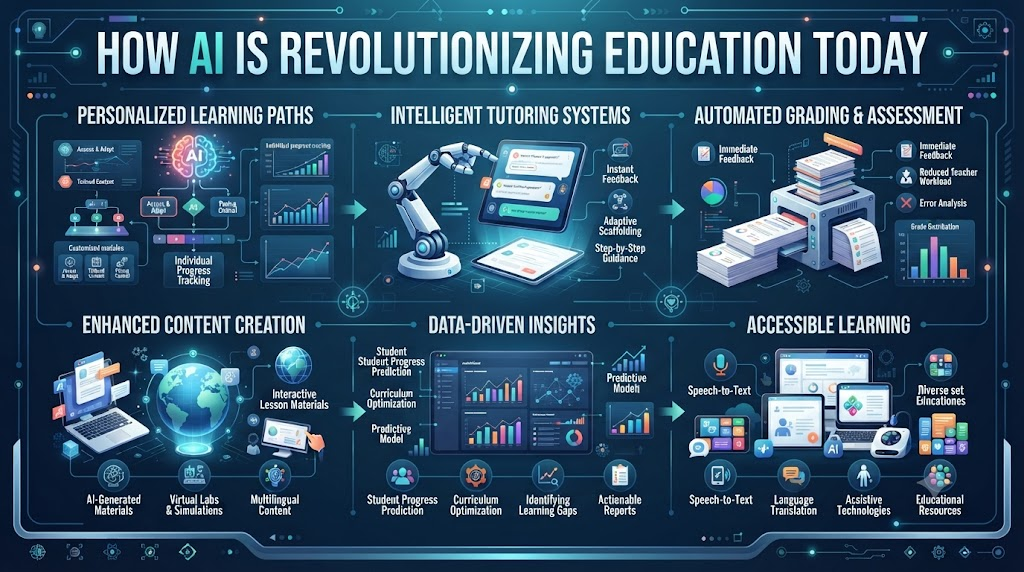
Learning is changing faster today than at any point in history. For generations, classrooms relied on a one-size-fits-all model where every student had to keep up with the exact same lesson plan at the exact same speed. This outdated approach often left struggling learners behind while holding back advanced students who needed a greater challenge.
Fortunately, modern technology is stepping in to solve this long-standing classroom dilemma. Smart tools and adaptive algorithms now analyze how individual students absorb information, allowing educational platforms to customize lessons in real time. This ensures that every child receives targeted support right where they need it most, turning rigid classrooms into dynamic learning environments.
Whether you are a student looking to master a difficult subject, a parent wanting to support homework time, or an educator searching for better ways to engage your class, understanding these digital tools is essential. You can explore a wide variety of these cutting-edge resources and guides directly by visiting AIUniverse.xyz. Let us dive deep into how this technological shift is reshaping schools and helping students reach their full potential.
The Shift From One-Size-Fits-All to Personal Learning
Old classrooms forced every student to move at the exact same speed. If a child fell behind, the class just kept moving.
Smart software looks at how each student learns. It spots weak spots fast and gives extra practice where it helps most. This keeps students from feeling lost or stuck. They get a custom path built just for them.
How Smart Tutors Help Students After School
Teachers have a lot on their plates. They cannot spend hours with one single student every single night.
Smart tutoring tools step in to fill this gap. They answer questions any time of day or night. These tools never get tired or mad. They explain hard math or science problems step by step until the student gets it.
Giving Teachers More Time to Teach
Many teachers spend hours grading papers and filling out forms. This leaves little time to actually talk with students.
Smart software now handles tests and basic grading in seconds. It sorts data so teachers see who needs help right away. This gives teachers more time to mentor students face to face. It brings the human touch back to the front of the classroom.
Breaking Down Language Barriers in Classrooms
Language should never stop a child from learning new things. Yet, many kids struggle in schools where they do not speak the local language well.
New translation tools turn spoken words into text in real time. They translate books and notes into any language instantly. This helps kids stay on track with their peers. Everyone gets an equal chance to learn and grow.
Making Lessons Fun With Interactive Games
Old textbooks can feel dry and boring. Kids tune out when they just read page after page of plain text.
Smart systems turn hard lessons into fun games. Students solve puzzles to unlock the next level of math or history. This keeps kids hooked and excited to learn. They want to finish their work because it feels like play.
Helping Students With Special Needs Thrive
Every child’s brain works in a unique way. Some kids need extra help to read, write, or focus during class hours.
Voice recognition tools let kids type papers just by speaking out loud. Screen readers help students with poor eyesight read complex science books. These smart tools level the playing field. Every child gets the support they need to shine.
Real-World Stories About AI in Schools
- Story One: A young boy named Leo struggled with basic math. His teacher used a smart math tool that found Leo missed a key step in fractions. The tool gave him custom puzzles, and Leo caught up in three weeks.
- Story Two: A high school in a small town had no physics teacher. They used an online smart learning system to teach the class. Every student passed the final state exam with high marks.
- Story Three: Maya moved to a new country and spoke zero English. A real-time translation app let her read her science book in her native language while she learned English on the side.
- Story Four: A busy teacher named Mr. Davis spent every weekend grading essays. A new grading assistant cut his weekend work down to one hour. He used his free time to plan fun science experiments.
- Story Five: Sarah has dyslexia and hates reading long chapters. A smart audio tool read the text out loud while highlighting each word. Her reading scores jumped by forty percent in one term.
- Story Six: A rural school district lacked funds for field trips. They used virtual reality software to take students on digital tours of Mars and the deep ocean floor.
- Story Seven: A quiet girl named Chloe never raised her hand in class. She used an anonymous chat tool to ask her smart tutor tough history questions without feeling shy.
- Story十八 (Eight): A high school math club used predictive software to spot which students might fail algebra early in the term. The school set up peer study groups to help them pass.
- Story Nine: A college student with a late-night work shift used an AI writing helper to organize his research notes after midnight when the library was closed.
- Story Ten: A school board used data tools to track student attendance patterns. They found that morning bus delays caused most tardy marks, so they fixed the bus schedule.
Traditional Classrooms vs. AI-Powered Classrooms
| Feature | Traditional Classroom | AI-Powered Classroom |
| Pace | One speed for all students | Custom speed for every student |
| Grading | Takes days or weeks by hand | Done in seconds by software |
| Support | Limited to class hours | Available twenty-four-seven |
| Engagement | Textbooks and lectures | Interactive games and virtual worlds |
| Data Use | Hard to track trends | Real-time charts and instant alerts |
Common Mistakes and Pitfalls
- Mistake One: Relying too much on tech and losing human contact.
- Fix: Use tech for admin work, but keep teachers front and center for mentoring.
- Mistake Two: Buying software without training teachers how to use it.
- Fix: Run fun workshops so teachers feel confident with the new tools.
- Mistake Three: Ignoring student data privacy rules.
- Fix: Choose secure software that follows strict data protection laws.
- Mistake Four: Assuming all students have fast internet at home.
- Fix: Provide offline modes and school loaner devices for kids in need.
- Mistake Five: Letting machines grade creative writing.
- Fix: Let humans grade essays while smart tools check grammar and spelling.
- Mistake Six: Pushing kids too fast just because the software says they can go fast.
- Fix: Check in with students to make sure they truly understand the core ideas.
- Mistake Seven: Buying flashy tools that do not solve real school problems.
- Fix: Ask teachers and students what they actually need before buying software.
- Mistake Eight: Forgetting to teach kids how to spot bad information online.
- Fix: Add digital literacy lessons to the core school curriculum.
- Mistake Nine: Using smart tools to replace critical thinking skills.
- Fix: Teach students to question the answers and find proof on their own.
- Mistake Ten: Failing to update software security patches.
- Fix: Set up automatic updates to keep student data safe from hackers.
Step-by-Step Implementation Roadmap
- Audit Current Needs: Look at your school or study habits to find the biggest bottlenecks and time wastes.
- Set Clear Goals: Decide what you want to fix first, like math scores, grading speed, or language support.
- Research Options: Look for simple, proven software tools that fit your budget and technical skill level.
- Test With a Small Group: Try the new tool out in one single classroom or study group for two weeks.
- Gather Feedback: Ask teachers and students what they liked and what drove them crazy during the test run.
- Train the Team: Run short, simple training sessions so everyone knows how to use the tool with ease.
- Roll Out Slowly: Introduce the software to the whole school or study group step by step over a month.
- Monitor Results: Check test scores and time saved to see if the tool is actually helping.
- Adjust and Refine: Turn off features you do not use and fine-tune the settings for better results.
- Scale Up: Expand the successful setup to other classes or subjects for long-term growth.
FAQs
1. Will AI replace teachers in the classroom?
No, machines cannot replace the empathy and care of a real human teacher. Smart tools only handle boring admin tasks so teachers can spend more time mentoring students.
2. Is smart school software safe for kids to use?
Most good tools follow strict privacy laws to keep student data safe. Schools must always pick trusted brands that put security first.
3. How does custom learning help slow learners?
It spots exact weak spots and gives extra practice on those specific topics. This lets kids catch up without feeling rushed or stressed out.
4. Do students need fast internet to use these tools?
Many modern apps work offline or sync when connected. Schools also lend out devices with mobile data to help kids who lack home internet.
5. Can parents use these tools at home?
Yes, many platforms offer parent dashboards. Parents can log in to check homework progress and see where their child needs extra help.
6. Are these tools expensive for public schools?
Costs vary, but many basic smart tools are free or low-cost. Grants and state funds often help schools buy the tech they need.
7. How do translation apps help in class?
They turn spoken words and textbooks into different languages instantly. This lets non-native speakers keep up with every lesson.
8. Do smart tools stop students from cheating?
Some tools track work habits and flag copied text. However, the best fix is teaching kids why honesty matters in their schoolwork.
Final Recommendation
The evolution of education through smart technology is no longer a distant dream; it is happening right now in classrooms around the globe. By shifting away from rigid, one-size-fits-all lesson plans, we are finally building learning environments that respect individual differences. Every student deserves a system that adapts to their unique pace, catching learning gaps early and turning frustration into genuine curiosity.
Technology does not push teachers out of the picture; instead, it empowers them to do what they do best. When automated tools take over routine grading and administrative chores, educators gain the freedom to focus entirely on human connection, mentorship, and creative instruction. This balance ensures that the heart of teaching remains alive and well in every modern school.
