Introduction
Your mobile phone connects to cell towers worldwide in seconds. Hidden digital ID numbers live inside every SIM card to make this happen. These codes guide global cellular roaming and data packets seamlessly. Finding accurate network data is crucial for engineers, developers, and travelers. eSIMGlobo serves as an evidence-led global telecom provider directory and network research platform. It helps users explore cellular data without complex technical barriers.
Understanding Cellular Identity: What Are MCC and MNC Codes?
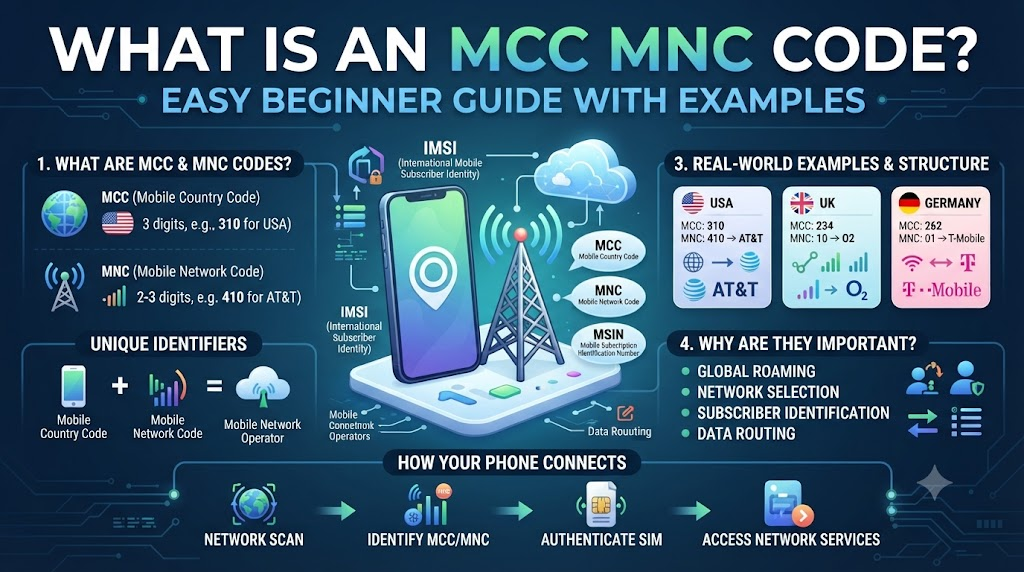
Cellular networks rely on standard digital codes to identify every country and carrier. Mobile Country Codes, or MCC, use three digits to show which country a network belongs to. Every nation receives specific numbers from international telecommunication groups. Mobile Network Codes, or MNC, use two or three digits to identify the exact phone carrier within that country. Together, these numbers act like a digital address for your phone. They guide voice calls, text messages, and mobile data across radio airwaves.
Decoding the Telecom Stack: Codes, Networks, and Operators
Cellular identifiers separate countries, carriers, and individual subscriber SIM cards into clear categories. Understanding this stack helps researchers map out global wireless infrastructure accurately.
| Telecom Identifier | Number Length | Primary Purpose | Real-World Example | Managing Body |
| Mobile Country Code (MCC) | 3 Digits | Identifies geographic territory or international scope | 310 (United States) / 204 (Netherlands) | ITU-T |
| Mobile Network Code (MNC) | 2 or 3 Digits | Identifies specific mobile carrier within a country | 260 (T-Mobile) / 04 (Vodafone) | National Regulators |
| PLMN Code (MCC + MNC) | 5 or 6 Digits | Identifies unique wireless network operator | 310260 / 20404 | Cellular Industry |
| IMSI Identifier | Up to 15 Digits | Identifies the unique individual subscriber line | Stored securely on SIM card chips | Mobile Operators |
Phones read these numbers continuously when searching for available radio signals. When you travel abroad, your phone scans for local broadcast signals matching your carrier agreements. This system ensures your device connects to the correct foreign tower instantly.
MCC MNC Lookup and Identifying Wireless Carriers
An MCC MNC Lookup tool helps users identify the exact company behind a digital network code. Engineers and fraud analysts type a five- or six-digit code into a database to find its owner. This process relies on official international standards maintained by global telecommunication unions. Verifying incoming traffic protects digital platforms from malicious routing and spoofing attacks. Researchers use these lookups to audit roaming agreements and map international carrier footprints.
PLMN Code Lookup and Cellular Network Routing
A Public Land Mobile Network, or PLMN, combines country and carrier codes into a single digital ID. A PLMN Code Lookup helps engineers track how mobile data routes across different borders. Cross-border travel requires your phone to switch between foreign radio towers smoothly. Matching phone radio bands to local carriers prevents dropped calls and slow data speeds. This lookup process ensures seamless international roaming for modern travelers and IoT devices.
Mobile Network Operator Directory and Verified Network Holders
Mobile Network Operators, or MNOs, own the physical radio towers and base stations that broadcast signals. A Mobile Network Operator Directory lists these infrastructure owners in one centralized place. Verifying official network assignees separates real tower owners from virtual resellers. This clarity helps telecom researchers understand true market competition and physical coverage reach. Knowing who owns the hardware ensures accurate network planning and coverage analysis.
Global Telecom Provider Directory and International Coverage
Global telecommunications span hundreds of countries and complex international territories. A Global Telecom Provider Directory brings all these regional carriers together into a searchable database. International shared-code networks, satellite carriers, and maritime services require special tracking. Cross-border data routing depends on clean directories to manage multi-country roaming agreements. Researchers rely on these comprehensive records to understand worldwide cellular connectivity at a glance.
Mobile Network Codes by Country and Regional Numbering
National telecommunications regulators assign specific network codes to local wireless carriers. Exploring Mobile Network Codes by Country reveals how different regions manage their radio spectrum. European markets, American carriers, and Asian operators all follow unique numbering patterns. Studying these regional lists highlights market competition and carrier expansion strategies. It also shows how new virtual operators enter established national markets.
Mobile Country Code List for Global Travelers and Researchers
Navigating a standardized Mobile Country Code List helps identify foreign SIM cards instantly. The International Telecommunication Union assigns clean three-digit blocks to every recognized nation. Researchers use these official lists to decode international roaming data and traffic logs. Travelers benefit from understanding how their home SIM interacts with foreign networks abroad. Clean country lists form the bedrock of all global telecommunication research.
Network Data Validation and Carrier Research Checklist
Validating network data requires checking multiple official sources before drawing conclusions. Researchers must follow strict steps to ensure accuracy and avoid outdated information.
| Research Step | What to Check | Why It Matters |
| ITU-T E.212 Baseline | Official Assignment Status | Confirms legal code ownership from international records |
| National Regulator Filing | Local Frequency Licenses | Shows domestic operational approval and spectrum rights |
| Commercial Role Check | MNO vs MVNO Designation | Clarifies whether the provider owns physical cell towers |
| Active Brand Matching | Retail Trade Name | Connects technical network numbers to consumer brand logos |
| International Shared Codes | 901/902 Global Allocations | Identifies satellite, maritime, and specialized IoT networks |
| Data Timestamp Review | Date of Last Assignment Audit | Ensures decommissioned or merged network codes are updated |
Avoiding outdated or copied carrier lists prevents costly routing mistakes. Unverified websites often display old mergers or defunct network codes. Checking primary regulatory filings keeps your telecom research reliable and professional.
Telecom Operator Database and Evidence-Led Research
Verifiable evidence matters when studying mobile telecom networks and carrier agreements. A robust Telecom Operator Database links baseline network records directly to primary government filings. Researchers avoid guesswork by verifying official regulatory documents for every entry. This evidence-led approach ensures that technical audits remain accurate and legally sound. Reliable data builds trust across engineering and telecommunication strategy teams.
MVNO Directory: Virtual Operators and Wholesale Networks
Mobile Virtual Network Operators, or MVNOs, sell cellular service without owning physical towers. An MVNO Directory lists these virtual brands and links them to their host network operators. Virtual carriers lease radio capacity from major MNOs to deliver affordable consumer plans. Tracking MVNO relationships helps analysts understand wholesale market dynamics and pricing trends. It also clarifies which underlying radio network actually powers a specific virtual brand.
eSIM Provider Directory and Modern Digital Connectivity
eSIM technology replaces plastic SIM cards with a tiny digital chip built inside smartphones. An eSIM Provider Directory helps users research digital connectivity options before traveling abroad. Travelers download mobile plans digitally without visiting local retail stores. Researching underlying network partners ensures strong coverage quality across foreign destinations. Digital SIM cards make global travel more flexible and convenient than ever before.
Developer Workflows: MCC MNC Lookup API and Data Integration
Software engineers and fintech platforms need fast access to telecom data. An MCC MNC Lookup API automates code verification within web and mobile applications. Automated lookups detect SIM card origins and prevent SMS routing fraud. Telecom product teams integrate these APIs to optimize global data connections instantly. Automated workflows save engineering hours and protect digital platforms from security threats.
Real-Life Telecommunications Scenarios
- A mobile app developer uses an automated network lookup to route two-factor SMS codes through the lowest-cost local carrier.
- An international business traveler checks an online directory to identify which local network partner their roaming eSIM connects to abroad.
- A telecom security analyst investigating an unfamiliar PLMN code to flag suspected SIM-swap fraud or unauthorized network spoofing.
- An IoT fleet manager verifying country codes and network assignees to ensure smart tracking sensors connect reliably across foreign borders.
Common Mistakes to Avoid in Telecom and Network Code Research
- Confusing a consumer brand name with the actual licensed infrastructure owner leads to false assumptions. Always check the legal corporate assignee in official regulatory filings.
- Assuming an International Dialing Code is the same as a Mobile Country Code causes routing errors. Keep dialing prefixes separate from three-digit MCC values.
- Relying on outdated carrier lists that do not reflect recent corporate telecom mergers breaks network tools. Audit your data sources against recent industry announcements.
- Overlooking whether a code belongs to an international shared range rather than a single country misinterprets roaming traffic. Verify global allocation blocks like 901 and 902.
- Trusting unsourced blog lists that invent network assignments introduces faulty data into your research. Cross-reference all entries with official ITU E.212 records.
- Forgetting that an MVNO shares the radio towers and physical PLMN codes of its host operator hides true infrastructure ownership. Map virtual brands to their parent MNOs.
- Assuming all mobile operators operate on the same radio frequency bands across different continents causes connectivity failures. Check local frequency compatibility before traveling.
- Neglecting to verify whether an assigned network code is actively operating or held as a non-commercial test license wastes engineering time. Confirm active operational status.
Simple Telecom Data Research Checklist
- Verify the three-digit Mobile Country Code (MCC) against the official ITU list.
- Confirm the Mobile Network Code (MNC) length (two digits versus three digits).
- Check the combined five- or six-digit PLMN code in a verified operator database.
- Identify the legal corporate assignee holding the frequency license.
- Review official national regulator filings for recent changes or license transfers.
Frequently Asked Questions
1. What is the difference between an MCC and an MNC?
An MCC is a three-digit code that identifies the country of a mobile network. An MNC uses two or three digits to identify the specific carrier. Together, they create a unique digital address for every cellular network worldwide.
2. How do mobile phones use PLMN codes to select a cellular network?
Phones scan available radio frequencies and read broadcasted PLMN codes constantly. When you travel, your phone compares these codes against your home roaming agreements. This process lets your device lock onto the correct partner tower automatically.
3. Where do official Mobile Country Code and Network Code records come from?
Official code assignments come directly from the International Telecommunication Union and national telecom regulators. These governing bodies manage global spectrum allocations and issue official numbering blocks. Researchers rely on these primary sources for accurate data.
4. What is the difference between an MNO and an MVNO in a telecom directory?
An MNO owns the physical radio towers and broadcast equipment in a region. An MVNO is a virtual provider that leases network capacity from major MNOs. Directories help users track these distinct business models clearly.
5. Why do some international networks use 901 or 902 country codes?
Codes starting with 901 or 902 are not assigned to a single geographic country. The ITU allocates these ranges for global services, maritime networks, and satellite systems. They allow seamless cross-border communication without regional restrictions.
6. How does an MCC MNC lookup tool help stop financial and SMS fraud?
Lookup tools verify the true origin of incoming mobile numbers and connection requests. Financial platforms use this data to spot suspicious routing or unauthorized SIM swaps. Checking carrier identities protects digital systems from automated messaging fraud.
7. Can two different telephone companies share the exact same MCC and MNC?
No two active operators share the exact same combination of country and network codes. Every five- or six-digit PLMN pair is globally unique to prevent signal interference. Regulators assign new codes carefully to maintain orderly radio operations.
8. How does an eSIM profile connect to local physical cell towers abroad?
An eSIM downloads a digital profile containing authorized roaming partner network codes. When you land abroad, the chip scans for matching local broadcast signals. It connects securely to the host tower using pre-arranged international agreements.
9. What is an IMSI number, and how does it relate to network codes?
An IMSI is a unique fifteen-digit number stored securely on every subscriber SIM card. It starts with the exact MCC and MNC codes of your home carrier. This structure helps routing systems direct calls and data to your account.
10. Why do some network operators hold multiple MNC assignments in the same country?
Large carriers acquire multiple network codes due to corporate mergers or brand acquisitions. They may also use separate codes for different network generations or regional subsidiaries. Directories track these multiple assignments to prevent confusion.
11. How does an MCC MNC lookup API into their applications?
Developers integrate lookup APIs by sending carrier code queries through secure web requests. The API returns verified company names and network ownership data instantly. This automation streamlines fraud detection and improves mobile app security workflows.
12. How does eSIMGlobo help researchers find verified global telecom information?
eSIMGlobo provides a centralized platform for exploring global telecom providers and network codes. It compiles verified data from official regulatory filings into easy-to-search directories. Researchers use the platform to analyze international coverage and roaming partnerships quickly.
Conclusion
Understanding global cellular identifiers, official ITU records, verified provider data, and digital connectivity empowers modern engineers and travelers. Reliable telecom directories transform complex carrier codes into clear insights for secure communication. When research teams rely on evidence-backed network databases, digital operations run smoothly across every border. Accurate data remains the foundation of seamless worldwide connectivity, empowering global networks to perform at their absolute best every single day.
