Introduction
Preference Management Tools help organizations collect, manage, update, and enforce customer communication preferences across channels such as email, SMS, mobile apps, websites, and customer portals. These platforms allow users to decide how, when, and where they want to receive communications while helping organizations comply with privacy regulations and improve customer experiences.
As privacy regulations continue evolving and consumers demand greater control over their personal data, preference management has become a critical component of customer engagement strategies. Organizations can reduce unsubscribe rates, improve customer trust, increase marketing effectiveness, and maintain regulatory compliance through centralized preference management.
Real-world use cases include:
- Email subscription management
- Consent and privacy preference collection
- Omnichannel communication preferences
- Customer self-service preference centers
- Regulatory compliance management
What buyers should evaluate:
- Consent management capabilities
- Multi-channel preference support
- Regulatory compliance features
- Customer experience and usability
- Integration ecosystem
- Real-time synchronization
- Data governance controls
- Scalability
- Reporting and analytics
- Security and privacy protections
Best for: Marketing teams, customer experience teams, privacy officers, compliance teams, financial institutions, healthcare organizations, retailers, SaaS companies, and enterprises managing customer communications.
Not ideal for: Small businesses with minimal customer communication requirements or organizations relying solely on basic email marketing tools.
Key Trends in Preference Management Tools
- AI-driven communication preference recommendations are becoming common.
- Consent and preference management platforms are converging.
- Real-time preference synchronization is increasingly expected.
- Zero-party data collection strategies continue gaining importance.
- Privacy regulations are driving broader adoption.
- Customer Data Platform integration is becoming standard.
- Self-service preference centers are becoming more sophisticated.
- Unified customer profiles are increasingly connected to preference systems.
- Mobile-first preference management experiences are expanding.
- Preference analytics are becoming a strategic customer intelligence source.
How We Selected These Tools
The following criteria were used when evaluating the leading preference management platforms:
- Market adoption and customer base
- Preference management capabilities
- Compliance and governance features
- User experience quality
- Integration ecosystem strength
- Scalability and reliability
- Multi-channel communication support
- Customer support and implementation maturity
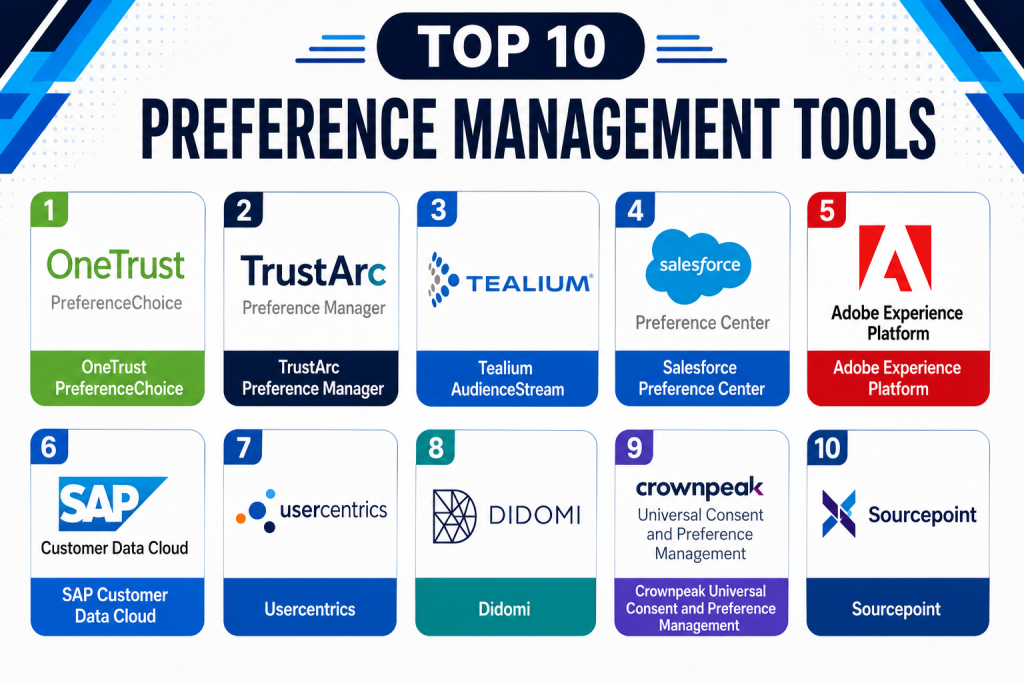
Top 10 Preference Management Tools
1- OneTrust PreferenceChoice
Short description:
OneTrust PreferenceChoice is one of the most recognized preference management platforms available today. It helps organizations manage customer communication preferences, consent choices, and privacy settings across digital channels. The platform is widely used by enterprises operating in highly regulated industries. PreferenceChoice enables organizations to build self-service preference centers while maintaining compliance with global privacy requirements. Its integration with broader privacy and governance capabilities makes it attractive for large organizations.
Key Features
- Preference center management
- Consent management integration
- Multi-channel communication preferences
- Customer self-service portals
- Compliance automation
- Preference analytics
- Workflow automation
Pros
- Strong compliance capabilities
- Enterprise scalability
- Extensive privacy ecosystem
Cons
- Enterprise-focused pricing
- Complex implementation
- May exceed SMB requirements
Platforms / Deployment
- Cloud
Security & Compliance
- SSO/SAML
- MFA
- Encryption
- Audit logs
- RBAC
Integrations & Ecosystem
OneTrust integrates with marketing, CRM, and customer experience platforms.
- CRM systems
- Marketing automation tools
- Customer data platforms
- APIs
- Data governance platforms
Support & Community
Strong enterprise support, implementation services, and extensive documentation.
2- TrustArc Preference Manager
Short description:
TrustArc Preference Manager enables organizations to manage customer consent and communication preferences across digital ecosystems. The platform supports privacy compliance initiatives while helping businesses improve customer trust and engagement. It is frequently used by enterprises with complex regulatory requirements. TrustArc offers configurable preference centers and centralized preference governance.
Key Features
- Preference management
- Consent tracking
- Privacy compliance workflows
- Preference centers
- Customer self-service
- Analytics dashboards
- Governance controls
Pros
- Strong privacy expertise
- Flexible configuration
- Regulatory support
Cons
- Enterprise implementation effort
- Learning curve
- Premium pricing
Platforms / Deployment
- Cloud
Security & Compliance
- Encryption
- Access controls
- Audit capabilities
Integrations & Ecosystem
Supports enterprise customer engagement environments.
- CRM platforms
- Marketing tools
- Customer data systems
- APIs
Support & Community
Comprehensive support programs and onboarding assistance.
3- Tealium AudienceStream
Short description:
Tealium AudienceStream includes robust preference management capabilities as part of its customer data platform functionality. Organizations use it to capture, synchronize, and activate customer preferences across channels. The platform supports real-time updates and customer profile management. Businesses focused on personalization often adopt Tealium to connect preference data with customer experiences.
Key Features
- Real-time preference updates
- Customer profile management
- Audience segmentation
- Omnichannel activation
- Event-driven architecture
- Data governance
- Analytics capabilities
Pros
- Strong real-time capabilities
- Extensive integrations
- Unified customer data
Cons
- Advanced configuration requirements
- Enterprise-oriented
- Learning curve
Platforms / Deployment
- Cloud
Security & Compliance
- Encryption
- RBAC
- SSO
Integrations & Ecosystem
Large ecosystem supporting customer engagement initiatives.
- CRM systems
- Marketing platforms
- Analytics tools
- APIs
Support & Community
Strong documentation and enterprise support.
4- Salesforce Preference Center
Short description:
Salesforce Preference Center enables organizations to manage customer communication preferences directly within the Salesforce ecosystem. Businesses can offer self-service preference management while synchronizing preferences across sales, service, and marketing applications. The platform is especially valuable for Salesforce-centric organizations.
Key Features
- Communication preference management
- Customer self-service
- Marketing integration
- Unified customer records
- Preference synchronization
- Audience management
- Reporting tools
Pros
- Deep Salesforce integration
- Unified customer view
- Enterprise scalability
Cons
- Salesforce dependency
- Premium licensing
- Setup complexity
Platforms / Deployment
- Cloud
Security & Compliance
- Encryption
- Access controls
- Audit support
Integrations & Ecosystem
Part of the broader Salesforce ecosystem.
- Salesforce applications
- Marketing Cloud
- CRM systems
- APIs
Support & Community
Large user community and extensive support resources.
5- Adobe Experience Platform
Short description:
Adobe Experience Platform supports preference management through customer profile management and consent frameworks. Organizations can connect customer preferences to personalization and marketing initiatives. Large enterprises frequently use Adobe’s ecosystem to unify customer experiences across digital channels.
Key Features
- Customer profile management
- Preference data activation
- Real-time personalization
- Audience segmentation
- Analytics integration
- Consent management
- Omnichannel support
Pros
- Strong personalization capabilities
- Enterprise scalability
- Adobe ecosystem integration
Cons
- Adobe-centric implementation
- Premium pricing
- Complexity for smaller teams
Platforms / Deployment
- Cloud
Security & Compliance
- SSO
- Encryption
- Audit capabilities
Integrations & Ecosystem
Integrates across Adobe Experience Cloud.
- Analytics tools
- Marketing platforms
- CRM systems
- APIs
Support & Community
Comprehensive training and enterprise support.
6- SAP Customer Data Cloud
Short description:
SAP Customer Data Cloud provides customer identity, consent, and preference management capabilities for enterprises. Organizations use it to maintain customer trust, improve compliance, and deliver personalized experiences. The platform supports large-scale customer data environments.
Key Features
- Consent management
- Preference management
- Identity services
- Customer profiles
- Compliance workflows
- Customer self-service
- Governance tools
Pros
- Enterprise-grade capabilities
- Strong compliance focus
- SAP ecosystem integration
Cons
- Enterprise complexity
- Implementation effort
- Higher ownership costs
Platforms / Deployment
- Cloud
Security & Compliance
- Encryption
- Access controls
- Audit logging
Integrations & Ecosystem
Supports integration across SAP environments.
- SAP applications
- CRM platforms
- Marketing systems
- APIs
Support & Community
Global enterprise support structure.
7- Usercentrics
Short description:
Usercentrics focuses on consent and preference management for digital businesses. The platform helps organizations manage customer choices, privacy preferences, and regulatory requirements across websites and digital channels. It is popular among organizations prioritizing privacy compliance and transparency.
Key Features
- Consent management
- Preference controls
- Privacy dashboards
- Compliance reporting
- Customer self-service
- Analytics tools
- Multi-language support
Pros
- Strong compliance focus
- Easy deployment
- Modern user experience
Cons
- Less extensive than enterprise suites
- Primarily privacy-focused
- Advanced customization may require effort
Platforms / Deployment
- Cloud
Security & Compliance
- Encryption
- Access controls
- GDPR support
Integrations & Ecosystem
Supports modern digital environments.
- CMS platforms
- Analytics tools
- Marketing systems
- APIs
Support & Community
Strong documentation and onboarding resources.
8- Didomi
Short description:
Didomi provides consent and preference management solutions designed to help organizations maintain transparency and customer trust. It supports customer preference collection, compliance workflows, and preference center creation. Businesses across multiple industries use Didomi to improve privacy operations.
Key Features
- Preference centers
- Consent collection
- Compliance management
- Analytics reporting
- Multi-channel support
- Customer controls
- Governance tools
Pros
- Strong compliance support
- Flexible deployment
- User-friendly interface
Cons
- Enterprise features may require premium plans
- Smaller ecosystem than some competitors
- Limited advanced analytics
Platforms / Deployment
- Cloud
Security & Compliance
- Encryption
- Audit support
- Access controls
Integrations & Ecosystem
Designed for customer data and privacy workflows.
- CRM platforms
- Marketing tools
- Analytics systems
- APIs
Support & Community
Responsive support and growing community.
9- Crownpeak Universal Consent and Preference Management
Short description:
Crownpeak provides centralized preference and consent management designed for enterprises managing customer communications across regions and channels. The platform supports governance, compliance, and customer preference visibility while integrating with customer engagement systems.
Key Features
- Preference centers
- Consent management
- Compliance controls
- Customer self-service
- Reporting capabilities
- Workflow automation
- Governance support
Pros
- Enterprise governance focus
- Multi-region support
- Compliance capabilities
Cons
- Enterprise complexity
- Premium pricing
- Learning curve
Platforms / Deployment
- Cloud
Security & Compliance
- Encryption
- Access controls
- Audit logs
Integrations & Ecosystem
Supports enterprise customer communication environments.
- CRM systems
- Marketing platforms
- APIs
- Customer databases
Support & Community
Strong enterprise support offerings.
10- Sourcepoint
Short description:
Sourcepoint offers privacy, consent, and preference management capabilities that help organizations manage customer choices across digital properties. The platform focuses on transparency, compliance, and customer trust. It is frequently used by publishers, media organizations, and digital businesses.
Key Features
- Preference management
- Consent collection
- Privacy workflows
- Customer controls
- Analytics reporting
- Governance tools
- Compliance automation
Pros
- Strong privacy expertise
- Publisher-focused capabilities
- Flexible deployment
Cons
- Specialized use cases
- Smaller ecosystem
- Limited broader customer data capabilities
Platforms / Deployment
- Cloud
Security & Compliance
- Encryption
- Access controls
- Audit support
Integrations & Ecosystem
Works with modern digital experience environments.
- Analytics tools
- Marketing platforms
- Publishing systems
- APIs
Support & Community
Good support resources and implementation guidance.
Comparison Table
| Tool Name | Best For | Platform Supported | Deployment | Standout Feature | Public Rating |
|---|---|---|---|---|---|
| OneTrust PreferenceChoice | Enterprise compliance | Web | Cloud | Privacy ecosystem integration | N/A |
| TrustArc Preference Manager | Regulatory environments | Web | Cloud | Compliance workflows | N/A |
| Tealium AudienceStream | Real-time personalization | Web | Cloud | Real-time preference activation | N/A |
| Salesforce Preference Center | Salesforce users | Web | Cloud | Native CRM integration | N/A |
| Adobe Experience Platform | Customer experience teams | Web | Cloud | Preference-driven personalization | N/A |
| SAP Customer Data Cloud | Large enterprises | Web | Cloud | Identity and preference management | N/A |
| Usercentrics | Privacy-focused organizations | Web | Cloud | Compliance-first design | N/A |
| Didomi | Multi-channel preference centers | Web | Cloud | Customer transparency tools | N/A |
| Crownpeak | Governance-heavy organizations | Web | Cloud | Enterprise consent management | N/A |
| Sourcepoint | Publishers and media | Web | Cloud | Privacy management expertise | N/A |
Evaluation & Scoring of Preference Management Tools
| Tool Name | Core | Ease | Integrations | Security | Performance | Support | Value | Weighted Total |
| OneTrust | 9.5 | 8.0 | 9.0 | 9.5 | 9.0 | 9.0 | 8.0 | 8.9 |
| TrustArc | 9.0 | 8.0 | 8.5 | 9.0 | 8.5 | 8.5 | 8.0 | 8.5 |
| Tealium | 9.0 | 8.0 | 9.5 | 8.5 | 9.0 | 8.5 | 8.0 | 8.8 |
| Salesforce | 8.5 | 8.5 | 9.0 | 8.5 | 8.5 | 9.0 | 8.0 | 8.6 |
| Adobe | 9.0 | 7.5 | 9.0 | 9.0 | 9.0 | 8.5 | 7.5 | 8.6 |
| SAP | 8.5 | 7.5 | 8.5 | 9.0 | 8.5 | 8.5 | 7.5 | 8.3 |
| Usercentrics | 8.0 | 9.0 | 8.0 | 8.5 | 8.0 | 8.5 | 8.5 | 8.4 |
| Didomi | 8.0 | 8.5 | 8.0 | 8.5 | 8.0 | 8.0 | 8.5 | 8.2 |
| Crownpeak | 8.5 | 7.5 | 8.5 | 8.5 | 8.5 | 8.0 | 7.5 | 8.1 |
| Sourcepoint | 8.0 | 8.0 | 7.5 | 8.5 | 8.0 | 8.0 | 8.5 | 8.0 |
These scores are comparative benchmarks intended to help buyers evaluate relative strengths across preference management platforms. Organizations should prioritize criteria that align with their business goals. Compliance-focused organizations may emphasize governance and security scores, while customer experience teams may prioritize integrations, ease of use, and personalization capabilities. No single platform is universally best for every scenario.
Which Preference Management Tool Is Right for You?
Solo / Freelancer
Most solo professionals can rely on built-in preference management capabilities available within email marketing platforms and CRM tools.
SMB
Usercentrics and Didomi offer strong usability, compliance capabilities, and manageable implementation requirements for growing businesses.
Mid-Market
Tealium, Salesforce Preference Center, and Adobe Experience Platform provide strong scalability and customer engagement capabilities.
Enterprise
OneTrust PreferenceChoice, SAP Customer Data Cloud, Adobe Experience Platform, and TrustArc are strong choices for organizations with complex governance requirements.
Budget vs Premium
Budget-conscious organizations should focus on Usercentrics or Didomi. Enterprises seeking advanced governance and compliance capabilities should consider OneTrust or TrustArc.
Feature Depth vs Ease of Use
Usercentrics offers simplicity and usability, while OneTrust and Adobe provide deeper enterprise functionality.
Integrations & Scalability
Tealium, Salesforce, Adobe, and SAP offer broad integration ecosystems and scalability for large customer environments.
Security & Compliance Needs
Organizations operating in regulated industries should prioritize OneTrust, TrustArc, SAP Customer Data Cloud, and Crownpeak.
Frequently Asked Questions
1. What is a Preference Management Tool?
A Preference Management Tool allows organizations to collect, manage, and enforce customer communication preferences across channels while improving compliance and customer trust.
2. How is preference management different from consent management?
Consent management focuses on legal permission collection, while preference management focuses on communication choices, channel preferences, and customer engagement settings.
3. Why are Preference Management Tools important?
They help organizations improve customer experiences, reduce unsubscribe rates, maintain compliance, and build stronger customer relationships.
4. Which industries benefit most from preference management?
Retail, financial services, healthcare, SaaS, media, telecommunications, and e-commerce organizations frequently benefit from preference management solutions.
5. How difficult is implementation?
Implementation complexity varies depending on integrations, customer data architecture, governance requirements, and the number of communication channels involved.
6. Can Preference Management Tools integrate with CRM systems?
Yes. Most modern platforms integrate with CRM systems, marketing automation tools, customer data platforms, and analytics environments.
7. Are these platforms secure?
Enterprise-grade platforms typically include encryption, access controls, auditing capabilities, and governance controls designed to protect customer data.
8. What common mistakes should organizations avoid?
Common mistakes include poor preference center design, inconsistent preference synchronization, weak governance policies, and insufficient customer communication.
9. Can organizations switch preference management platforms later?
Yes, although migrations require planning around customer data, integrations, compliance requirements, and preference synchronization workflows.
10. What alternatives exist to dedicated Preference Management Tools?
Alternatives include CRM preference modules, email marketing subscription centers, customer data platforms, and custom-built preference management solutions.
Conclusion
Preference Management Tools have become essential components of modern customer engagement, privacy, and compliance strategies. As customers demand more transparency and control over their data, organizations need solutions that can manage communication preferences consistently across channels while maintaining trust and regulatory compliance. Platforms such as OneTrust PreferenceChoice, TrustArc Preference Manager, Tealium AudienceStream, Salesforce Preference Center, and Adobe Experience Platform provide strong capabilities for managing customer preferences at scale. The right choice depends on organizational size, compliance requirements, customer engagement goals, and technology ecosystem alignment. Rather than selecting a platform solely based on features, organizations should evaluate integration capabilities, governance requirements, scalability, and long-term operational fit. A practical next step is to shortlist two or three platforms, conduct a pilot implementation, validate integrations, assess user experience, and confirm compliance capabilities before making a final investment decision.
