Introduction
Field Service Management (FSM) Software refers to digital platforms that help organizations manage field operations such as scheduling technicians, dispatching jobs, tracking work orders, managing assets, and handling customer service in real time. In simple terms, it connects office teams with field workers so tasks are assigned, executed, and reported efficiently through a single system.
In and beyond, FSM software is becoming critical because businesses are scaling distributed service operations, expecting faster response times, and relying heavily on mobile-first workflows. AI-driven scheduling, predictive maintenance, and real-time workforce tracking are now standard expectations.
Real-world use cases include:
- Dispatching technicians for equipment repairs and maintenance.
- Managing HVAC, electrical, and utility field operations.
- Tracking delivery, installation, and on-site service jobs.
- Scheduling preventive maintenance for industrial assets.
- Providing real-time updates between field workers and office teams.
What buyers should evaluate:
- Scheduling and dispatch optimization capabilities.
- Mobile app usability for field technicians.
- Real-time GPS tracking and workforce visibility.
- Work order management and automation.
- Integration with ERP, CRM, and IoT systems.
- Offline functionality for remote locations.
- Asset and inventory management features.
- Reporting and analytics dashboards.
- Scalability for large field teams.
- Security, compliance, and data protection.
Best for: Utilities, telecom, HVAC, manufacturing, logistics, healthcare equipment providers, facility management companies, and service-based enterprises.
Not ideal for: Fully digital businesses without field operations or small teams with no on-site service requirements.
Key Trends in FSM Software
- AI-powered scheduling and intelligent dispatch optimization.
- Predictive maintenance using IoT and sensor data.
- Mobile-first technician apps with offline capabilities.
- Real-time GPS tracking and route optimization.
- Integration with smart devices and industrial IoT platforms.
- Automated work order creation from customer requests.
- AR-assisted remote support for technicians.
- Unified field + CRM + ERP ecosystems.
- Voice-enabled job updates and reporting.
- Low-code customization for workflows and forms.
How We Selected These Tools (Methodology)
The tools in this list were selected based on:
- Market adoption in FSM and service management industries.
- Depth of scheduling, dispatch, and workforce management features.
- Mobile application performance and usability.
- Integration ecosystem with ERP, CRM, and IoT systems.
- Real-time tracking and visibility capabilities.
- Scalability for enterprise field operations.
- Security, compliance, and audit readiness.
- Vendor reputation across service-heavy industries.
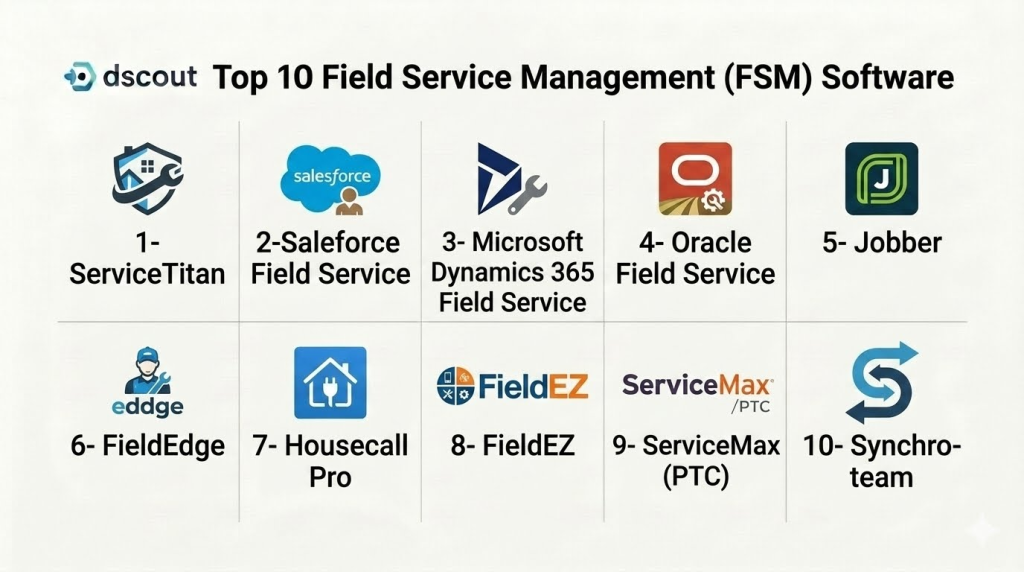
Top 10 Field Service Management (FSM) Software
1- ServiceTitan
Short description:
ServiceTitan is a leading FSM platform designed for home services industries such as HVAC, plumbing, electrical, and construction. It provides end-to-end job management including scheduling, dispatching, invoicing, and customer management. The platform is widely used by mid-market and enterprise service companies. It offers strong mobile capabilities for technicians in the field. ServiceTitan helps improve operational efficiency and revenue management. It is best suited for high-volume service businesses.
Key Features
- Smart scheduling and dispatch optimization.
- Mobile app for technicians.
- Work order and job tracking.
- CRM and customer history management.
- Invoicing and payment processing.
- Reporting and analytics dashboards.
- Inventory and pricing management.
Pros
- Strong industry-specific features.
- Excellent mobile technician experience.
- Robust reporting and analytics.
Cons
- Higher pricing structure.
- Complex setup for new users.
- Best suited for larger organizations.
Platforms / Deployment
- Web
- iOS
- Android
- Cloud
Security & Compliance
- SSO/SAML
- MFA
- Encryption
- RBAC
- Audit logs
- Not publicly stated certifications
Integrations & Ecosystem
- CRM systems
- Accounting software
- Payment gateways
- ERP systems
- APIs
- Marketing tools
Support & Community
Strong enterprise onboarding and industry-focused support.
2- Salesforce Field Service
Short description:
Salesforce Field Service is an enterprise FSM solution built on the Salesforce platform. It enables organizations to manage work orders, dispatch technicians, and optimize field operations using AI-powered scheduling. It integrates deeply with Salesforce CRM. The platform supports complex enterprise workflows and global field operations. It is ideal for organizations already using Salesforce. It provides strong scalability and customization.
Key Features
- AI-powered scheduling optimization.
- Work order management.
- Mobile technician app.
- Real-time tracking.
- Asset and inventory management.
- Customer service integration.
- Workflow automation.
Pros
- Deep Salesforce ecosystem integration.
- Highly scalable enterprise solution.
- Strong AI-driven scheduling.
Cons
- Complex implementation.
- High cost structure.
- Requires Salesforce expertise.
Platforms / Deployment
- Web
- iOS
- Android
- Cloud
Security & Compliance
- SSO/SAML
- MFA
- Encryption
- RBAC
- Audit logs
- Salesforce enterprise compliance standards
Integrations & Ecosystem
- Salesforce CRM
- Slack
- ERP systems
- IoT platforms
- APIs
- AppExchange ecosystem
Support & Community
Strong enterprise support and global partner network.
3- Microsoft Dynamics 365 Field Service
Short description:
Microsoft Dynamics 365 Field Service is a powerful FSM solution integrated within the Microsoft ecosystem. It helps organizations manage work orders, scheduling, and predictive maintenance using AI and IoT signals. It is widely used in manufacturing, utilities, and enterprise service operations. The platform supports mobile workforce management and real-time communication. It is ideal for Microsoft-centric enterprises. It provides strong automation and scalability.
Key Features
- AI-based scheduling and dispatch.
- Work order management.
- IoT-based predictive maintenance.
- Mobile technician app.
- Asset management tools.
- Customer communication portal.
- Workflow automation.
Pros
- Strong Microsoft ecosystem integration.
- Excellent predictive maintenance capabilities.
- Scalable enterprise architecture.
Cons
- Complex configuration.
- Requires Microsoft licensing ecosystem.
- Steep learning curve.
Platforms / Deployment
- Web
- iOS
- Android
- Cloud
Security & Compliance
- Azure Active Directory SSO
- MFA
- Encryption
- RBAC
- Audit logs
- Microsoft compliance standards
Integrations & Ecosystem
- Microsoft 365
- Azure IoT
- Dynamics CRM
- Power Platform
- APIs
- ERP systems
Support & Community
Enterprise Microsoft support and global ecosystem.
4- Oracle Field Service
Short description:
Oracle Field Service is a cloud-based FSM platform designed for large-scale field operations with complex scheduling needs. It uses advanced algorithms for route optimization and real-time workforce tracking. It is widely used in utilities, telecom, and enterprise service sectors. The platform focuses on real-time dispatch and predictive scheduling. It is ideal for high-volume field operations requiring precision and scalability.
Key Features
- Real-time scheduling optimization.
- GPS-based technician tracking.
- Route optimization engine.
- Work order management.
- Mobile workforce app.
- Predictive scheduling algorithms.
- Performance analytics.
Pros
- Extremely strong scheduling engine.
- Real-time workforce visibility.
- Highly scalable architecture.
Cons
- Complex setup and configuration.
- High enterprise cost.
- Requires technical expertise.
Platforms / Deployment
- Web
- iOS
- Android
- Cloud
Security & Compliance
- SSO/SAML
- MFA
- Encryption
- RBAC
- Audit logs
- Oracle enterprise security standards
Integrations & Ecosystem
- Oracle ERP
- CRM systems
- IoT platforms
- APIs
- Enterprise systems
- Cloud services
Support & Community
Enterprise Oracle support with global services.
5- Jobber
Short description:
Jobber is a user-friendly FSM platform designed for small to mid-sized service businesses. It helps manage scheduling, quoting, invoicing, and customer communication. It is widely used in cleaning, landscaping, HVAC, and home service industries. The platform focuses on simplicity and ease of use. It provides mobile tools for technicians and office teams. It is ideal for SMB service providers.
Key Features
- Scheduling and dispatching tools.
- Client management system.
- Mobile technician app.
- Invoicing and payments.
- Quote and job tracking.
- Reporting dashboards.
- Customer communication tools.
Pros
- Very easy to use.
- Fast setup and onboarding.
- Great for SMBs.
Cons
- Limited enterprise scalability.
- Fewer advanced automation features.
- Basic customization options.
Platforms / Deployment
- Web
- iOS
- Android
- Cloud
Security & Compliance
- SSO/SAML
- MFA
- Encryption
- RBAC
- Audit logs
- Not publicly stated certifications
Integrations & Ecosystem
- QuickBooks
- Stripe
- Zapier
- Google Calendar
- APIs
- CRM tools
Support & Community
Strong SMB-focused support and documentation.
6- FieldEdge
Short description:
FieldEdge is an FSM solution designed primarily for HVAC, plumbing, and electrical service companies. It provides dispatching, scheduling, invoicing, and customer management features. The platform helps streamline field operations and improve technician efficiency. It is widely used by service contractors. FieldEdge focuses on improving revenue and operational visibility. It is ideal for trade-based service businesses.
Key Features
- Dispatch and scheduling tools.
- Mobile technician app.
- CRM functionality.
- Invoicing and payments.
- Work order management.
- Reporting tools.
- Customer history tracking.
Pros
- Strong trade industry focus.
- Good technician usability.
- Easy workflow management.
Cons
- Limited enterprise scalability.
- Fewer advanced AI features.
- UI feels traditional.
Platforms / Deployment
- Web
- iOS
- Android
- Cloud
Security & Compliance
- SSO/SAML
- MFA
- Encryption
- RBAC
- Audit logs
- Not publicly stated certifications
Integrations & Ecosystem
- QuickBooks
- Accounting tools
- APIs
- Payment systems
- CRM tools
- Scheduling apps
Support & Community
Good industry-specific support.
7- Housecall Pro
Short description:
Housecall Pro is a popular FSM platform designed for home service businesses. It helps manage scheduling, dispatching, payments, and customer communication. It is widely used in cleaning, plumbing, HVAC, and maintenance industries. The platform emphasizes ease of use and mobile-first operations. It is ideal for SMB service providers looking for simple FSM tools. It helps streamline daily operations and customer engagement.
Key Features
- Scheduling and dispatch tools.
- Mobile app for technicians.
- Online booking system.
- Payment processing.
- CRM and customer management.
- Job tracking system.
- Automated notifications.
Pros
- Very easy to use.
- Strong mobile experience.
- Good SMB pricing.
Cons
- Limited enterprise features.
- Basic customization.
- Not suited for complex workflows.
Platforms / Deployment
- Web
- iOS
- Android
- Cloud
Security & Compliance
- SSO/SAML
- MFA
- Encryption
- RBAC
- Audit logs
- Not publicly stated certifications
Integrations & Ecosystem
- QuickBooks
- Stripe
- Google Calendar
- Zapier
- APIs
- CRM tools
Support & Community
Strong SMB support and onboarding.
8- FieldEZ
Short description:
FieldEZ is a cloud-based FSM platform designed for workforce automation, scheduling, and field operations management. It helps organizations manage technicians, service requests, and job workflows. It is used across industries like manufacturing, telecom, and utilities. The platform supports mobile field operations and real-time tracking. It is ideal for mid-market service organizations. It focuses on operational efficiency and automation.
Key Features
- Work order management.
- Field workforce tracking.
- Scheduling and dispatch.
- Mobile technician app.
- Route optimization.
- Reporting dashboards.
- Inventory management.
Pros
- Flexible workflow configuration.
- Good mid-market fit.
- Strong mobile capabilities.
Cons
- UI less modern than competitors.
- Limited enterprise ecosystem.
- Requires setup customization.
Platforms / Deployment
- Web
- iOS
- Android
- Cloud
Security & Compliance
- SSO/SAML
- MFA
- Encryption
- RBAC
- Audit logs
- Not publicly stated certifications
Integrations & Ecosystem
- ERP systems
- CRM platforms
- APIs
- IoT tools
- Payment systems
- Enterprise software
Support & Community
Standard enterprise support.
9- ServiceMax (PTC)
Short description:
ServiceMax is an enterprise FSM platform designed for complex service operations and asset-centric industries. It focuses on managing field service lifecycle, maintenance, and asset performance. It is widely used in manufacturing, energy, and industrial sectors. The platform integrates with IoT and predictive maintenance systems. It is ideal for asset-intensive enterprises. It supports advanced service workflows.
Key Features
- Asset-centric service management.
- Work order automation.
- Predictive maintenance integration.
- Mobile technician tools.
- Scheduling and dispatch optimization.
- Service analytics dashboards.
- IoT integration support.
Pros
- Strong industrial focus.
- Excellent asset management capabilities.
- Good predictive maintenance support.
Cons
- Complex implementation.
- High enterprise cost.
- Requires technical expertise.
Platforms / Deployment
- Web
- iOS
- Android
- Cloud
Security & Compliance
- SSO/SAML
- MFA
- Encryption
- RBAC
- Audit logs
- Enterprise compliance standards vary
Integrations & Ecosystem
- IoT platforms
- ERP systems
- CRM tools
- APIs
- Industrial systems
- Cloud platforms
Support & Community
Strong enterprise and industrial support ecosystem.
10- Synchroteam
Short description:
Synchroteam is a cloud-based FSM solution designed for scheduling, dispatching, and field workforce management. It is widely used by SMBs and mid-sized companies. The platform provides real-time job tracking and mobile workforce tools. It is known for affordability and ease of deployment. It is ideal for service businesses needing lightweight FSM functionality. It supports multiple industries including maintenance and logistics.
Key Features
- Scheduling and dispatch system.
- Mobile field app.
- Job tracking tools.
- Route optimization.
- Customer management.
- Reporting dashboards.
- Time tracking features.
Pros
- Easy to deploy.
- Affordable pricing.
- Good SMB functionality.
Cons
- Limited enterprise features.
- Basic UI design.
- Fewer advanced automation features.
Platforms / Deployment
- Web
- iOS
- Android
- Cloud
Security & Compliance
- SSO/SAML
- MFA
- Encryption
- RBAC
- Audit logs
- Not publicly stated certifications
Integrations & Ecosystem
- ERP systems
- CRM tools
- APIs
- Google Workspace
- Accounting systems
- Scheduling tools
Support & Community
Good SMB support and documentation.
Comparison Table
| Tool Name | Best For | Platform(s) Supported | Deployment | Standout Feature | Public Rating |
|---|---|---|---|---|---|
| ServiceTitan | Home services enterprises | Web, Mobile | Cloud | All-in-one service platform | N/A |
| Salesforce Field Service | CRM-centric enterprises | Web, Mobile | Cloud | AI scheduling engine | N/A |
| Microsoft Dynamics 365 FS | Microsoft enterprises | Web, Mobile | Cloud | IoT predictive maintenance | N/A |
| Oracle Field Service | Large-scale field ops | Web, Mobile | Cloud | Real-time routing engine | N/A |
| Jobber | SMB service businesses | Web, Mobile | Cloud | Simple job management | N/A |
| FieldEdge | Trade contractors | Web, Mobile | Cloud | HVAC-focused workflows | N/A |
| Housecall Pro | SMB home services | Web, Mobile | Cloud | Easy mobile FSM | N/A |
| FieldEZ | Mid-market FSM | Web, Mobile | Cloud | Flexible workflows | N/A |
| ServiceMax | Industrial enterprises | Web, Mobile | Cloud | Asset-centric FSM | N/A |
| Synchroteam | SMB FSM users | Web, Mobile | Cloud | Affordable scheduling tools | N/A |
Evaluation & Scoring of FSM Tools
| Tool Name | Core (25%) | Ease (15%) | Integrations (15%) | Security (10%) | Performance (10%) | Support (10%) | Value (15%) | Weighted Total (0–10) |
|---|---|---|---|---|---|---|---|---|
| ServiceTitan | 10 | 8 | 10 | 10 | 9 | 9 | 8 | 9.0 |
| Salesforce Field Service | 10 | 7 | 10 | 10 | 9 | 9 | 8 | 9.0 |
| Microsoft Dynamics FS | 10 | 7 | 10 | 10 | 9 | 9 | 8 | 9.0 |
| Oracle Field Service | 10 | 7 | 10 | 10 | 10 | 9 | 7 | 8.9 |
| Jobber | 8 | 10 | 8 | 8 | 9 | 8 | 9 | 8.6 |
| FieldEdge | 8 | 9 | 8 | 8 | 8 | 8 | 9 | 8.4 |
| Housecall Pro | 8 | 10 | 8 | 8 | 9 | 8 | 9 | 8.6 |
| FieldEZ | 8 | 8 | 8 | 8 | 8 | 8 | 8 | 8.2 |
| ServiceMax | 10 | 7 | 10 | 10 | 9 | 9 | 7 | 8.9 |
| Synchroteam | 7 | 10 | 7 | 8 | 8 | 8 | 9 | 8.1 |
These scores are comparative and reflect differences in enterprise scalability, scheduling intelligence, and mobile workforce capabilities. Enterprise FSM platforms excel in automation and predictive maintenance, while SMB tools prioritize simplicity and affordability. The right choice depends on workforce size, industry complexity, and integration requirements.
Which FSM Software Is Right for You?
Solo / Freelancer
FSM tools are generally not required unless managing independent field technicians.
SMB
Jobber, Housecall Pro, FieldEdge, and Synchroteam are ideal for small service businesses.
Mid-Market
FieldEZ, ServiceTitan (mid-tier), and Salesforce Field Service offer strong operational scalability.
Enterprise
Salesforce Field Service, Microsoft Dynamics 365, Oracle Field Service, and ServiceMax are best for large-scale operations.
Budget vs Premium
Budget options include Synchroteam and Housecall Pro. Premium enterprise solutions include Oracle Field Service and Salesforce Field Service.
Feature Depth vs Ease of Use
Jobber and Housecall Pro are easiest to use. Oracle and ServiceMax offer deeper but complex capabilities.
Integrations & Scalability
Salesforce, Microsoft, and Oracle provide the strongest ecosystem integration and scalability.
Security & Compliance Needs
Enterprise FSM platforms are best for regulated industries requiring audit logs, encryption, and governance controls.
Frequently Asked Questions
1. What is FSM software?
It is software that manages field service operations like scheduling, dispatching, and tracking technicians.
2. Who uses FSM software?
Industries like HVAC, telecom, utilities, healthcare, and logistics use FSM tools.
3. Does FSM include mobile apps?
Yes, most FSM tools include mobile apps for field technicians.
4. Can FSM tools work offline?
Yes, many support offline functionality for remote job sites.
5. Do FSM tools use AI?
Yes, modern FSM platforms use AI for scheduling and predictive maintenance.
6. Can FSM integrate with CRM systems?
Yes, most tools integrate with Salesforce, Microsoft Dynamics, and others.
7. Is FSM suitable for small businesses?
Yes, SMB-focused tools like Jobber and Housecall Pro are ideal.
8. What is the biggest benefit of FSM software?
Improved efficiency, faster dispatching, and better field visibility.
9. Is FSM cloud-based?
Most modern FSM platforms are cloud-based with mobile access.
10. What is the biggest challenge?
Implementation complexity in large enterprise environments.
Conclusion
Field Service Management (FSM) Software is essential for organizations that rely on field operations to deliver services efficiently. Platforms like Salesforce Field Service, Microsoft Dynamics 365, Oracle Field Service, and ServiceMax lead enterprise transformation with AI-driven scheduling and predictive maintenance. SMB-focused tools like Jobber, Housecall Pro, and Synchroteam provide simpler and cost-effective solutions. The right choice depends on operational complexity, workforce size, and integration needs. Organizations should pilot a few tools, test real dispatch scenarios, and evaluate mobile usability before full-scale rollout.
