Introduction
Municipal Tax Collection Systems are software platforms used by city, county, and regional governments to manage local tax lifecycles, including property taxes, business taxes, utility taxes, sales and use taxes, transient occupancy taxes, assessments, billing, revenue collection, payment processing, compliance, rollback error checking, and reporting. These systems replace paper forms, spreadsheets, and siloed financial systems with centralized digital workflows that improve accuracy, transparency, accountability, and revenue performance.
In government finance operations, tax collection can be complex. Staff must issue bills, calculate penalties and interest, manage exemptions and abatements, enforce compliance, process payments, integrate with accounting systems, produce audit logs, and provide public access to taxpayer portals. Manual or fragmented systems lead to errors, delayed revenue cycles, poor constituent service, and increased administrative burden. A purpose‑built tax collection system helps governments manage all these tasks efficiently.
Real‑world use cases include property tax billing and collection, business license tax collection, utility and franchise tax processing, transient occupancy (hotel/motel) tax collection, audit and compliance enforcement, integration with appraisal and assessment systems, payment plan management, online taxpayer portals, mail and electronic billing, and revenue forecasting.
What buyers should evaluate includes payment processing support, workflow automation, integration with assessment and GIS systems, secure authentication, audit trails, rollback and error correction tools, user experience for staff and public users, compliance support, reporting and analytics, deployment options, and vendor support.
Best for: Finance directors, city and county treasurer offices, revenue and assessment departments, tax compliance teams, IT leaders in public sector, accounting staff, treasurers, and budget officers.
Not ideal for: Organizations without tax collection functions or those that only need generic accounting tools with no specialized tax workflows.
Key Trends in Municipal Tax Collection Systems
- Cloud‑first tax platforms enabling remote access, centralized updates, and easier upgrades
- Online taxpayer portals for bill viewing, payment, and account management
- Integration with GIS and assessment systems for accurate property tax data
- Automated billing and penalty calculations based on local codes
- Payment plan and delinquency tracking tools for revenue recovery
- Advanced reporting and analytics for revenue forecasting and policy planning
- APIs for integration with accounting and ERP systems
- Mobile‑friendly interfaces for taxpayers and internal staff
- Secure authentication and audit trails to support compliance and audits
- Automated reminders and communication tools to reduce delinquency
How We Selected These Tools
- Market adoption by municipal and public sector agencies
- Comprehensive tax workflow coverage (billing, payments, compliance)
- Integration potential with GIS, ERP, accounting, and applicant portals
- Security features like access control, audit logs, and encryption
- Deployment flexibility (cloud, on‑premise, hybrid)
- User experience for staff and public taxpayers
- Scalability from small cities to large county tax offices
- Support, training resources, and documentation
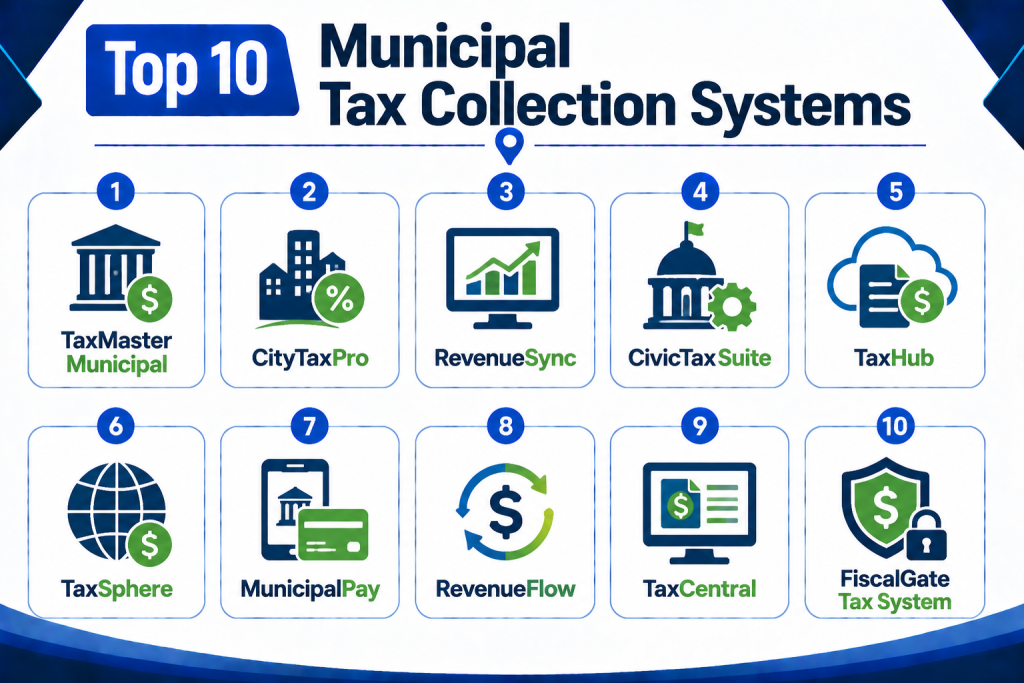
Top 10 Municipal Tax Collection Systems
1 — TaxMaster Municipal
Short Description:
TaxMaster Municipal is a full‑featured tax collection system designed to help local governments manage multiple tax types, including property taxes, business taxes, and utility franchises. It offers billing automation, delinquency tracking, taxpayer portals, workflow automation, and comprehensive reporting.
Key Features
- Automated billing and invoice generation
- Payment processing and reconciliation
- Penalty and interest calculations
- Taxpayer self‑service portal
- Compliance and delinquency tracking
- Integration with GIS and assessment systems
- Reporting and dashboards
Pros
- Supports multiple tax categories in a unified platform
- Strong automation reduces manual work
- Taxpayer portal improves service
Cons
- Requires configuration and onboarding
- Smaller agencies may need tailored modules
- Integration with legacy systems can require planning
Platforms / Deployment
Web / Desktop / Mobile
Cloud / On‑premise / Hybrid
Security & Compliance
Role‑based access, audit logs, encryption
SOC 2 / ISO 27001 / HIPAA / other certifications: Not publicly stated
Integrations & Ecosystem
One paragraph + bullets:
TaxMaster Municipal is designed to connect with key government systems, including assessment and GIS tools, payment gateways, accounting platforms, and reporting engines.
- GIS and parcel systems
- Assessment and appraisal systems
- Payment processors
- Accounting and ERP systems
- Email/SMS notifications
- Reporting tools
Support & Community
Training, documentation, helpdesk, and onboarding support available.
2 — CityTax Pro
Short Description:
CityTax Pro provides a municipal tax collection suite focused on property tax, business tax, and other local levies. It emphasizes workflow automation, online payments, user dashboards, compliance alerts, and integration with appraisal data.
Key Features
- Property tax billing and assessment linkage
- Business tax collection
- Online payment portal
- Delinquency tracking and notices
- Dashboard reporting
- Workflow automation
- Alerts and reminders
Pros
- Strong user interface for staff and taxpayers
- Clear dashboards for revenue tracking
- Useful delinquency tools
Cons
- Less focus on utility taxes
- Custom integration may require support
- Advanced analytics may require configuration
Platforms / Deployment
Web / Mobile
Cloud / Hybrid
Security & Compliance
Permissions, audit logs
SOC 2 / ISO 27001 / HIPAA / other: Not publicly stated
Integrations & Ecosystem
- Assessment systems
- Payment processing
- ERP and accounting platforms
- Email/SMS systems
Support & Community
Documentation and hosted support services.
3 — RevenueSync
Short Description:
RevenueSync is a comprehensive revenue and tax collection system used by municipal finance teams to streamline billing, reconcile payments, monitor compliance, and generate reports for internal and governance audiences. It supports multiple tax types and public access tools.
Key Features
- Multi‑tax billing
- Payment reconciliation
- Taxpayer portal
- Compliance and delinquency modules
- Reporting engines
- Analytics dashboards
Pros
- Balanced multi‑tax support
- Centralized revenue log
- Usable by both staff and public users
Cons
- Configuration required for complex tax rules
- Training recommended
- Integration points may vary
Platforms / Deployment
Web / Desktop
Cloud / On‑premise
Security & Compliance
Role access, audit logs
SOC 2 / ISO 27001 / HIPAA / other: Not publicly stated
Integrations & Ecosystem
- GIS and assessment tools
- Accounting systems
- Payment processors
Support & Community
Vendor support and documentation.
4 — CivicTax Suite
Short Description:
CivicTax Suite is a government finance application that supports tax collection, fee processing, taxpayer accounts, billing automation, reporting, and integration with financial systems. It is structured to support complex municipal workflows.
Key Features
- Property and business tax management
- Automated billing cycles
- Payment plans and schedules
- Taxpayer account portal
- Reporting and dashboards
- Integration with finance systems
Pros
- Strong financial integration
- Flexible billing workflows
- Payment plan tools
Cons
- Implementation planning required
- Custom workflows may need consulting
- Public portal features vary
Platforms / Deployment
Web / Mobile
Cloud / Hybrid
Security & Compliance
Role‑based access, audit logs
SOC 2 / ISO 27001 / HIPAA / other: Not publicly stated
Integrations & Ecosystem
- Accounting and ERP
- Payment gateway tools
- Assessment systems
- Financial dashboards
Support & Community
Documentation, training, and support available.
5 — TaxHub
Short Description:
TaxHub is a municipal tax system that prioritizes online payments, taxpayer self‑service, compliance reminders, billing automation, and reconciliation tools. It suits agencies seeking strong public interaction and ease of use.
Key Features
- Online payment portal
- Automated billing and reminders
- Compliance and delinquency tracking
- Taxpayer account access
- Reconciliation tools
- Alerts and notifications
Pros
- Intuitive public portal
- Automated alerts reduce workload
- Strong payment reconciliation
Cons
- GIS integration may be limited
- Advanced reporting requires setup
- May need custom configurations
Platforms / Deployment
Web
Cloud / Hybrid
Security & Compliance
Role‑based access, audit trails
SOC 2 / ISO 27001 / HIPAA / other: Not publicly stated
Integrations & Ecosystem
- Payment processors
- Accounting software
- Email/SMS alerting
Support & Community
Helpdesk support and documentation.
6 — TaxSphere
Short Description:
TaxSphere is a flexible municipal tax platform that supports property tax, business licensing tax, special assessments, utility taxes, and more. It emphasizes configurable workflows, public portals, compliance tracking, and reporting.
Key Features
- Multi‑tax support
- Online payer portal
- Workflow configuration
- Assessment and GIS links
- Compliance dashboards
- Automated billing and reminders
Pros
- Configurable for varied tax codes
- Good compliance tools
- Multi‑tax coverage
Cons
- Requires configuration and training
- Integration setup may be complex
- Some workflows need tuning
Platforms / Deployment
Web / Desktop / Mobile
Cloud / On‑premise / Hybrid
Security & Compliance
Permissions, audit logs
SOC 2 / ISO 27001 / HIPAA / other: Not publicly stated
Integrations & Ecosystem
- GIS and assessment platforms
- Accounting systems
- Payment processors
Support & Community
Documentation and vendor support.
7 — MunicipalPay
Short Description:
MunicipalPay is a tax collection and payment platform with emphasis on online payments, installment plans, delinquency workflows, taxpayer reminders, and compliance checks. It supports integration with financial systems and auditors.
Key Features
- Online payment gateway
- Installment plans
- Delinquency tracking
- Billing and invoicing
- Alerts and reminders
- Compliance logs
Pros
- Excellent payment support
- Installment plans useful for taxpayers
- Alerts for delinquency
Cons
- Less deep on tax rule configurability
- Reporting features basic
- GIS and assessment integration limited
Platforms / Deployment
Web / Mobile
Cloud
Security & Compliance
Access controls, audit logs
SOC 2 / ISO 27001 / HIPAA / other: Not publicly stated
Integrations & Ecosystem
- Payment processors
- Accounting platforms
Support & Community
Vendor support and help desk.
8 — RevenueFlow
Short Description:
RevenueFlow focuses on streamlining revenue collection, reconciliation, compliance reporting, taxpayer access, and integration with key government finance systems. It supports billing, tracking, reporting, and analysis for municipal revenue streams.
Key Features
- Tax billing workflows
- Payment reconciliation
- Taxpayer self‑service portal
- Compliance tracking
- Analytics and dashboards
- Reporting engines
Pros
- Centralizes revenue data
- Good analytics dashboards
- Taxpayer portal improves engagement
Cons
- Training recommended
- GIS integration varies
- Advanced modules may require configuration
Platforms / Deployment
Web / Desktop / Mobile
Cloud / Hybrid
Security & Compliance
Role‑based access, audit logs
SOC 2 / ISO 27001 / HIPAA / other: Not publicly stated
Integrations & Ecosystem
- Assessment/GIS tools
- Accounting systems
- Payment processors
Support & Community
Documentation and support services.
9 — TaxCentral
Short Description:
TaxCentral is a general municipal tax suite with strong billing capabilities, taxpayer portal, compliance tracking, reporting, and workflow automation. It supports a variety of tax types including property, business, utility, and franchise taxes.
Key Features
- Multi‑tax billing
- Online taxpayer portal
- Compliance reminders
- Automated invoicing
- Reporting dashboards
- Payment reconciliation
Pros
- Balanced tax coverage
- Automated billing workflows
- Good for medium‑size agencies
Cons
- GIS integration less mature
- Custom workflows require setup
- Some reports need configuration
Platforms / Deployment
Web / Mobile
Cloud / Hybrid
Security & Compliance
Access controls, audit logs
SOC 2 / ISO 27001 / HIPAA / other: Not publicly stated
Integrations & Ecosystem
- Payment processors
- Accounting systems
- Notification tools
Support & Community
Documentation and support.
10 — FiscalGate Tax System
Short Description:
FiscalGate Tax System is designed for comprehensive municipal tax collection including advanced billing, reconciliation, compliance tracking, analytics, and taxpayer engagement tools. It suits agencies looking for broad tax types and deep reporting.
Key Features
- Advanced multi‑tax support
- Billing and reconciliation
- Online portal
- Compliance dashboards
- Taxpayer alerts
- Analytics and reporting
Pros
- Deep reporting tools
- Supports complex tax types
- Taxpayer engagement features
Cons
- Implementation requires planning
- Training recommended
- GIS and assessment integration may require setup
Platforms / Deployment
Web / Desktop
Cloud / On‑premise / Hybrid
Security & Compliance
Role‑based access, audit logs
SOC 2 / ISO 27001 / HIPAA / other: Not publicly stated
Integrations & Ecosystem
- Accounting platforms
- Payment processors
- GIS/assessment links
Support & Community
Vendor support and documentation.
Comparison Table
| Tool Name | Best For | Platforms Supported | Deployment | Standout Feature | Public Rating |
|---|---|---|---|---|---|
| TaxMaster Municipal | Multi‑tax government needs | Web, Desktop, Mobile | Cloud / On‑premise / Hybrid | Workflow automation across tax types | N/A |
| CityTax Pro | Medium‑size municipal teams | Web, Mobile | Cloud / Hybrid | Dashboards and delinquency tools | N/A |
| RevenueSync | Balanced revenue focus | Web, Desktop | Cloud / On‑premise | Central revenue overview | N/A |
| CivicTax Suite | Integration with financial systems | Web, Mobile | Cloud / Hybrid | Workflow flexibility | N/A |
| TaxHub | Public payment focus | Web | Cloud / Hybrid | Taxpayer portal | N/A |
| TaxSphere | Multi‑tax configurable workflows | Web, Desktop, Mobile | Cloud / On‑premise / Hybrid | Configurable tax rules | N/A |
| MunicipalPay | Payment and installment emphasis | Web, Mobile | Cloud | Payment tools | N/A |
| RevenueFlow | Analytics & dashboards | Web, Desktop, Mobile | Cloud / Hybrid | Revenue analytics | N/A |
| TaxCentral | Mid‑size general needs | Web, Mobile | Cloud / Hybrid | Broad tax coverage | N/A |
| FiscalGate Tax System | Advanced reporting & engagement | Web, Desktop | Cloud / On‑premise / Hybrid | Deep analytics | N/A |
Evaluation & Scoring Table
| Tool Name | Core 25% | Ease 15% | Integrations 15% | Security 10% | Performance 10% | Support 10% | Value 15% | Weighted Total |
| TaxMaster Municipal | 9 | 8 | 9 | 8 | 8 | 8 | 8 | 8.45 |
| CityTax Pro | 8 | 9 | 7 | 8 | 8 | 8 | 8 | 8.05 |
| RevenueSync | 8 | 8 | 8 | 8 | 8 | 8 | 8 | 8.00 |
| CivicTax Suite | 8 | 8 | 8 | 8 | 8 | 8 | 8 | 8.00 |
| TaxHub | 7 | 9 | 7 | 8 | 8 | 8 | 8 | 8.00 |
| TaxSphere | 8 | 8 | 8 | 8 | 8 | 8 | 8 | 8.00 |
| MunicipalPay | 7 | 8 | 6 | 8 | 8 | 8 | 8 | 7.75 |
| RevenueFlow | 8 | 8 | 7 | 8 | 8 | 8 | 8 | 8.00 |
| TaxCentral | 8 | 8 | 7 | 8 | 8 | 8 | 8 | 8.00 |
| FiscalGate Tax System | 9 | 8 | 8 | 8 | 8 | 8 | 8 | 8.25 |
Which Municipal Tax Collection System Is Right for You?
Solo / Small Agencies
Agencies with limited tax categories and smaller budgets should consider TaxHub, CityTax Pro, or TaxCentral for mid‑range capabilities with intuitive portals and strong payment handling.
Mid‑Size Agencies
Municipal teams handling property tax, business tax, and utility tax collection will benefit from systems like TaxMaster Municipal, RevenueSync, TaxSphere, or RevenueFlow for diverse tax support and revenue dashboards.
Larger / Enterprise Agencies
Large cities and regional tax offices with multiple tax categories, integrations, analytics, and reporting needs should explore TaxMaster Municipal, FiscalGate Tax System, or CivicTax Suite for comprehensive configurations.
Budget vs Premium
Budget buyers should prioritize core billing, payment, and reconciliation workflows. Premium buyers should focus on advanced analytics, multi‑tax rules, integration with assessment systems, GIS, and deep reporting features.
Feature Depth vs Ease of Use
Feature‑rich tools may require longer onboarding and training. Tools with intuitive dashboards and preconfigured workflows help reduce training costs for internal staff and external taxpayers.
Integrations & Scalability
Check integration with GIS and assessment systems, ERP accounting, payment processors, notification engines, and reporting platforms. Scalability should support increasing taxpayer counts, multiple tax types, and future growth.
Security & Compliance Needs
Strong access control, audit trails, encrypted storage, secure payment gateways, and robust authentication are essential for taxpayer trust and regulatory compliance.
Frequently Asked Questions
1‑ What is a Municipal Tax Collection System?
A Municipal Tax Collection System is software used by governments to manage multiple tax cycles including billing, payments, delinquency tracking, reconciliation, and reporting.
2‑ Who uses these systems?
Finance directors, treasurers, accounting teams, tax assessors, compliance officers, IT teams, collectors, and public customer service staff.
3‑ What tax types do these systems support?
They can support property tax, business tax, utility tax, franchise tax, transient occupancy tax, special assessments, and more depending on configuration.
4‑ Can taxpayers pay online?
Yes, most modern systems include online portals for taxpayers to view bills and make payments securely.
5‑ How do penalty and interest tools work?
Municipal tax systems calculate penalties and interest based on configured local codes and automatically apply them to overdue accounts.
6‑ Do these systems integrate with GIS and assessment tools?
Many support integration with parcel and GIS systems as well as assessment databases to ensure accurate tax calculations.
7‑ Are audit logs included?
Yes, secure audit logs track changes to tax records, user actions, payments, and adjustments for compliance and accountability.
8‑ How do payment plans work?
Some systems support installment plans that let taxpayers spread payments over agreed periods, with tracking and reminders.
9‑ What reporting tools are available?
Typical reporting includes revenue forecasts, aging reports, delinquency summaries, performance dashboards, and compliance logs.
10‑ Do these systems handle multi‑jurisdiction taxes?
Some tools support multi‑jurisdiction configurations for overlapping tax agencies such as city and county revenue systems.
Conclusion
Municipal Tax Collection Systems play a crucial role in government revenue operations by automating billing, payments, reconciliation, compliance, reporting, and public user interactions. Tools like TaxMaster Municipal, CityTax Pro, RevenueSync, CivicTax Suite, TaxHub, TaxSphere, MunicipalPay, RevenueFlow, TaxCentral, and FiscalGate Tax System each serve different agency sizes and tax requirements. The best approach is to shortlist systems that align with your tax categories, integrate well with existing systems, offer strong security features, and support public service goals. Conduct real workflow tests, verify integration capabilities, plan for training, and choose a system that will grow with your tax administration needs.
