Introduction
Utility Billing Software is designed to automate the management, invoicing, and collection of utility services such as electricity, water, gas, and waste. These platforms simplify billing processes, reduce manual errors, and enhance customer satisfaction by providing transparent and timely billing. With increasing regulatory requirements and the need for digital transformation, these tools are essential for utilities and municipalities looking to optimize operations.
Real-world use cases include automating meter reading and billing cycles, integrating with CRM and payment gateways, providing usage analytics for customers, monitoring energy consumption trends, and managing regulatory reporting. Modern systems often incorporate AI to forecast demand, detect anomalies, and optimize billing accuracy.
What buyers should evaluate:
- Core billing and invoicing capabilities
- Meter data management and integration
- Customer management and self-service portals
- Analytics and reporting features
- Ease of use and process automation
- Integration with ERP, CRM, and payment systems
- Security and compliance certifications
- Cloud vs on-premise deployment
- Customer support and onboarding
- Pricing and scalability
Best for: Municipal utilities, energy providers, water authorities, and companies managing large-scale utility billing.
Not ideal for: Small organizations or single-property landlords with minimal billing needs who can rely on simpler spreadsheet or accounting tools.
Key Trends in Utility Billing Software
- AI-driven consumption forecasting and anomaly detection.
- Automated meter-to-cash workflows to reduce manual errors.
- Integration with IoT smart meters for real-time usage tracking.
- Cloud-first deployment models for scalability and remote management.
- Enhanced customer self-service portals and mobile apps.
- Regulatory compliance features for GDPR, HIPAA, and local mandates.
- Interoperability with ERP, CRM, and payment processing platforms.
- Advanced analytics for demand management and sustainability reporting.
- Usage-based pricing and dynamic tariff management.
- Cybersecurity improvements including MFA, encryption, and audit logging.
How We Selected These Tools (Methodology)
- Evaluated market adoption and vendor mindshare.
- Reviewed feature completeness for billing, reporting, and analytics.
- Assessed reliability and performance through case studies and user feedback.
- Verified security posture including encryption, authentication, and compliance adherence.
- Examined integration capabilities with ERP, CRM, and payment gateways.
- Compared customer fit across enterprise, mid-market, and SMB segments.
- Analyzed AI and automation capabilities for forecasting and anomaly detection.
- Balanced cost, deployment flexibility, and support quality for practical implementation.
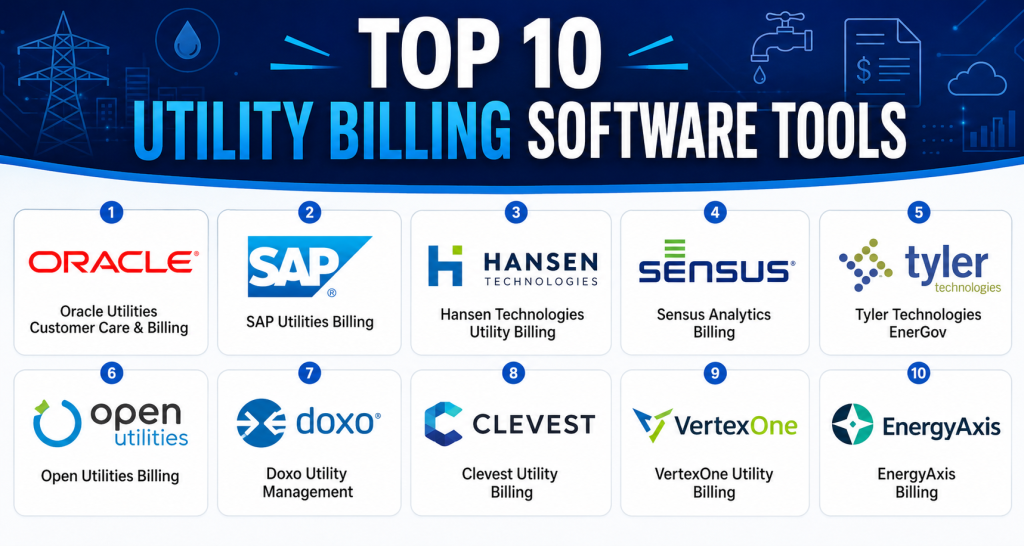
Top 10 Utility Billing Software Tools
1- Oracle Utilities Customer Care & Billing
Short description: Oracle Utilities Customer Care & Billing automates billing, customer management, and regulatory reporting. It serves large utilities needing enterprise-grade reliability and integration capabilities.
Key Features
- Meter data management and automated billing
- Customer self-service portals and mobile apps
- Regulatory reporting compliance
- Usage analytics and forecasting
- Workflow automation for account management
- Integration with ERP and CRM systems
- Advanced tariff and rate management
Pros
- Comprehensive enterprise-level capabilities
- Strong analytics and forecasting
- Scalable for large utilities
Cons
- High implementation cost
- Complexity may require training
- Limited suitability for SMBs
Platforms / Deployment
- Web / Windows
- Cloud / Hybrid / On-premise
Security & Compliance
- Not publicly stated
Integrations & Ecosystem
Supports ERP, CRM, and payment gateways.
- APIs for integration
- Third-party reporting tools
- Smart meter systems
Support & Community
- Vendor support tiers
- Extensive documentation and onboarding resources
- Active enterprise community
2- SAP Utilities Billing
Short description: SAP Utilities Billing delivers integrated billing, customer management, and analytics for multi-utility providers. Ideal for enterprises needing ERP-native integration.
Key Features
- Centralized billing and invoicing
- Customer relationship management
- Real-time usage tracking
- Analytics and reporting dashboards
- Automated payment processing
- AI-assisted demand forecasting
- Regulatory compliance modules
Pros
- Deep integration with SAP ERP
- Reliable analytics and reporting
- Strong scalability
Cons
- Implementation complexity
- Higher cost than SMB solutions
- Requires SAP technical expertise
Platforms / Deployment
- Web / Windows
- Cloud / On-premise
Security & Compliance
- Not publicly stated
Integrations & Ecosystem
- SAP ERP and CRM integration
- Payment gateway connectors
- Meter data management
Support & Community
- Enterprise-level support
- Knowledge base and training
- Active user forums
3- Hansen Technologies Utility Billing
Short description: Hansen Technologies offers flexible billing solutions for utilities, including energy, water, and telecom. Focused on automation and regulatory compliance.
Key Features
- Multi-utility billing
- Regulatory reporting and audit trails
- Customer portals and notifications
- Workflow automation
- Meter data management
- Usage analytics
- Cloud-based reporting dashboards
Pros
- Flexible for various utility types
- Automation reduces errors
- Strong compliance focus
Cons
- Onboarding may require technical assistance
- Customization can be resource-intensive
- Higher cost for small utilities
Platforms / Deployment
- Web / Windows
- Cloud / Hybrid
Security & Compliance
- Not publicly stated
Integrations & Ecosystem
- Payment systems
- CRM and ERP connectors
- Smart meter APIs
Support & Community
- Vendor support packages
- Training and documentation
- Moderate community engagement
4- Sensus Analytics Billing
Short description: Sensus Analytics Billing integrates advanced analytics with utility billing processes, enabling smart meter data usage and energy management.
Key Features
- Smart meter integration
- Billing automation and reconciliation
- Usage analytics and reporting
- Customer engagement portals
- Regulatory compliance dashboards
- Data visualization tools
- Automated alerts for anomalies
Pros
- Real-time analytics capabilities
- Integration with IoT meters
- Enhances customer engagement
Cons
- Limited non-electric utility support
- Technical setup may be complex
- Costlier for small deployments
Platforms / Deployment
- Web / Windows / iOS
- Cloud
Security & Compliance
- Not publicly stated
Integrations & Ecosystem
- IoT meter systems
- ERP connectors
- CRM platforms
Support & Community
- Vendor support and onboarding
- Knowledge base
- User community moderate
5- Tyler Technologies EnerGov
Short description: Tyler Technologies EnerGov provides municipal utility billing and management, combining regulatory compliance with citizen self-service portals.
Key Features
- Municipal utility billing
- Customer self-service portal
- Regulatory compliance and reporting
- Payment processing integration
- Usage and consumption analytics
- Workflow automation
- Mobile access for customers
Pros
- Tailored for municipal utilities
- Supports citizen engagement
- Comprehensive compliance modules
Cons
- Limited enterprise-scale features
- Customization can require consulting
- Implementation time may be long
Platforms / Deployment
- Web / Windows
- Cloud / On-premise
Security & Compliance
- Not publicly stated
Integrations & Ecosystem
- ERP and accounting systems
- Payment gateways
- GIS integration
Support & Community
- Vendor support and training
- Documentation and help resources
- Moderate community
6- Open Utilities Billing
Short description: Open Utilities Billing is designed for scalable cloud billing, offering automation for utilities and integrated customer portals.
Key Features
- Cloud-native billing platform
- Automated invoicing and payment collection
- Customer self-service portal
- Usage analytics and reporting
- Regulatory compliance tools
- API integration capabilities
- Alerts and notifications
Pros
- Cloud-first architecture
- Scalable and flexible
- Streamlined customer management
Cons
- Limited on-premise options
- Customization may require developer input
- Less suitable for legacy systems
Platforms / Deployment
- Web / iOS / Android
- Cloud
Security & Compliance
- Not publicly stated
Integrations & Ecosystem
- ERP and CRM systems
- Payment gateways
- API for third-party extensions
Support & Community
- Cloud support tiers
- Onboarding resources
- User forums
7- Doxo Utility Management
Short description: Doxo Utility Management focuses on customer convenience, streamlining bill payments and consolidating multiple utilities for easy management.
Key Features
- Multi-utility billing
- Online payment processing
- Automated reminders and notifications
- Customer engagement dashboards
- Reporting and analytics
- Integration with banks and payment providers
- Data security measures
Pros
- Simplifies multi-utility payment
- Enhances customer convenience
- Cloud-based with mobile access
Cons
- Limited enterprise reporting
- Core features may be basic for large utilities
- Less integration flexibility
Platforms / Deployment
- Web / iOS / Android
- Cloud
Security & Compliance
- Not publicly stated
Integrations & Ecosystem
- Payment gateways
- Banking systems
- CRM tools
Support & Community
- Vendor support and documentation
- Online FAQs and guides
- Community limited
8- Clevest Utility Billing
Short description: Clevest Utility Billing integrates field operations with billing for energy and water utilities, supporting mobile workforce and real-time updates.
Key Features
- Mobile workforce integration
- Meter-to-cash automation
- Customer self-service portal
- Analytics and reporting
- Regulatory compliance support
- Smart meter integration
- Alerts and notifications
Pros
- Strong field operations integration
- Supports smart metering initiatives
- Real-time updates improve accuracy
Cons
- Requires mobile infrastructure
- Complex setup for smaller utilities
- Cost may be higher than simple billing systems
Platforms / Deployment
- Web / Windows / iOS / Android
- Cloud / Hybrid
Security & Compliance
- Not publicly stated
Integrations & Ecosystem
- ERP and CRM systems
- Payment gateways
- Smart meter networks
Support & Community
- Vendor support with training
- Documentation and onboarding resources
- Moderate community
9- VertexOne Utility Billing
Short description: VertexOne Utility Billing focuses on comprehensive automation and analytics for electricity, gas, and water utilities, enhancing operational efficiency.
Key Features
- Multi-utility billing
- Workflow automation
- Customer self-service portals
- Usage analytics and reporting
- Regulatory compliance dashboards
- Alerts and notifications
- Integration APIs
Pros
- Streamlines operations
- Enhances billing accuracy
- Supports multiple utilities
Cons
- May require technical setup
- Less suitable for SMBs
- Custom integrations can be costly
Platforms / Deployment
- Web / Windows
- Cloud / Hybrid
Security & Compliance
- Not publicly stated
Integrations & Ecosystem
- ERP and CRM connectors
- Payment gateways
- Reporting tools
Support & Community
- Vendor support packages
- Knowledge base and guides
- Moderate community
10- EnergyAxis Billing
Short description: EnergyAxis Billing offers utility billing automation with cloud deployment, customer engagement, and reporting for energy providers.
Key Features
- Cloud-based billing platform
- Customer portal and mobile access
- Automated invoicing and payments
- Usage analytics
- Compliance reporting
- Alerts and notifications
- Integration with ERP and CRM
Pros
- Cloud-native and scalable
- Simplifies customer interaction
- Real-time analytics
Cons
- Limited on-premise deployment
- Smaller user community
- Advanced customization may require support
Platforms / Deployment
- Web / iOS / Android
- Cloud
Security & Compliance
- Not publicly stated
Integrations & Ecosystem
- ERP and CRM systems
- Payment gateways
- API support
Support & Community
- Vendor support and onboarding
- Documentation and training
- Limited community
Comparison Table (Top 10)
| Tool Name | Best For | Platform(s) Supported | Deployment | Standout Feature | Public Rating |
|---|---|---|---|---|---|
| Oracle Utilities CCB | Enterprise utilities | Web / Windows | Cloud / Hybrid / On-premise | Full enterprise capabilities | N/A |
| SAP Utilities Billing | Large-scale ERP-integrated | Web / Windows | Cloud / On-premise | ERP-native integration | N/A |
| Hansen Technologies Billing | Multi-utility providers | Web / Windows | Cloud / Hybrid | Compliance focus | N/A |
| Sensus Analytics Billing | Smart meter integration | Web / Windows / iOS | Cloud | Real-time analytics | N/A |
| Tyler EnerGov | Municipal utilities | Web / Windows | Cloud / On-premise | Citizen engagement portals | N/A |
| Open Utilities Billing | Cloud-first utilities | Web / iOS / Android | Cloud | Automation and scalability | N/A |
| Doxo Utility Management | Multi-utility payment portals | Web / iOS / Android | Cloud | Customer convenience | N/A |
| Clevest Utility Billing | Field operations integration | Web / Windows / iOS / Android | Cloud / Hybrid | Mobile workforce integration | N/A |
| VertexOne Utility Billing | Multi-utility operations | Web / Windows | Cloud / Hybrid | Workflow automation | N/A |
| EnergyAxis Billing | Cloud-native billing | Web / iOS / Android | Cloud | Customer engagement | N/A |
Evaluation & Scoring of Utility Billing Software
| Tool Name | Core (25%) | Ease (15%) | Integrations (15%) | Security (10%) | Performance (10%) | Support (10%) | Value (15%) | Weighted Total |
|---|---|---|---|---|---|---|---|---|
| Oracle Utilities CCB | 9 | 7 | 8 | 7 | 9 | 8 | 6 | 8.0 |
| SAP Utilities Billing | 8 | 8 | 7 | 7 | 8 | 8 | 7 | 7.8 |
| Hansen Technologies Billing | 8 | 8 | 7 | 6 | 8 | 7 | 8 | 7.7 |
| Sensus Analytics Billing | 8 | 7 | 7 | 6 | 8 | 7 | 7 | 7.4 |
| Tyler EnerGov | 7 | 7 | 6 | 6 | 7 | 7 | 7 | 6.9 |
| Open Utilities Billing | 8 | 8 | 7 | 6 | 7 | 7 | 7 | 7.5 |
| Doxo Utility Management | 7 | 8 | 6 | 6 | 7 | 6 | 7 | 6.9 |
| Clevest Utility Billing | 8 | 7 | 7 | 6 | 8 | 7 | 7 | 7.5 |
| VertexOne Utility Billing | 7 | 7 | 6 | 6 | 7 | 7 | 7 | 6.9 |
| EnergyAxis Billing | 8 | 8 | 7 | 6 | 7 | 7 | 7 | 7.5 |
Interpretation: Scores are comparative and reflect capabilities, usability, integration, security, performance, support, and value. Weighted totals help identify strong performers relative to peers.
Which Utility Billing Software Tool Is Right for You?
Solo / Freelancer
- Cloud-based tools like Doxo or EnergyAxis are simple to implement for small portfolios or limited utility services.
SMB
- Open Utilities Billing and Sensus Analytics Billing provide automation and analytics without heavy IT overhead.
Mid-Market
- Hansen Technologies or Tyler EnerGov offer scalability, compliance modules, and moderate enterprise features.
Enterprise
- Oracle Utilities CCB, SAP Utilities Billing, and Clevest Utility Billing provide full enterprise capabilities with advanced analytics and multi-utility support.
Budget vs Premium
- Cloud-first SaaS solutions reduce upfront costs but have ongoing subscription fees.
- Premium enterprise platforms provide depth and integration but require higher investment.
Feature Depth vs Ease of Use
- Enterprise tools deliver deep features but may require training.
- SMB and cloud-native platforms emphasize ease of use and rapid onboarding.
Integrations & Scalability
- Prioritize platforms with APIs and connectors to ERP, CRM, and payment systems.
- Cloud or hybrid deployment enables scaling with organizational growth.
Security & Compliance Needs
- Utilities must ensure encryption, role-based access, audit logs, and regulatory compliance.
- Verify vendor security capabilities and certifications where applicable.
Frequently Asked Questions (FAQs)
1- What pricing models do utility billing platforms offer?
Most platforms offer cloud subscription pricing or license-based models for on-premise deployments. Costs vary by number of accounts, utility types, and deployment complexity.
2- How long does implementation typically take?
Implementation can range from 3–9 months depending on customization, integrations, and organizational size.
3- What common mistakes do organizations make when selecting a tool?
Mistakes include ignoring integration requirements, underestimating training, and selecting based on feature lists rather than support, usability, or scalability.
4- Can these systems handle multiple utilities?
Yes, most top-tier platforms support electricity, gas, water, and waste billing under a unified platform.
5- How is customer self-service enabled?
Platforms provide web and mobile portals where customers can view bills, usage history, and make payments.
6- Are smart meters supported?
Leading platforms integrate with IoT and smart meters for real-time consumption tracking and automated billing.
7- How do these platforms handle compliance?
Most include configurable reporting dashboards for local and federal regulatory requirements. Certifications may vary by vendor.
8- How secure is customer data?
Encryption, audit logs, and role-based access control are standard. MFA and SSO support may vary.
9- What about integration with ERP/CRM systems?
Top platforms provide APIs and connectors to integrate billing data with enterprise ERP, CRM, and accounting systems.
10- Can these tools scale with growing utilities?
Yes, cloud-native and hybrid solutions allow scaling for increasing customer bases, new utility services, and multi-region operations.
Conclusion
Utility Billing Software has become essential for modern utilities to streamline operations, ensure accurate billing, maintain compliance, and enhance customer engagement. The “best” platform depends on organizational size, deployment preferences, integration needs, and budget. Enterprises may prioritize Oracle or SAP for comprehensive capabilities, while SMBs can leverage cloud-native options like Open Utilities or Sensus. Next steps include shortlisting , running a pilot, and validating integrations and security before full-scale deployment
