Introduction
Solar Asset Monitoring Software refers to specialized platforms designed to track, analyze, and optimize the performance of solar photovoltaic (PV) installations — from rooftop systems to utility‑scale solar farms. These platforms aggregate data from inverters, sensors, weather stations, and array controllers to provide real‑time visibility into energy production, identify issues early, and enable data‑driven decisions.
In and beyond, solar energy continues its rapid expansion driven by declining hardware costs, decarbonization mandates, and smarter grid requirements. Effective monitoring software is now foundational to maximizing return on investment (ROI), reducing operational expenditures (OPEX), and ensuring long‑term reliability in increasingly complex solar portfolios.
Real‑world use cases include:
- Real‑time performance tracking: Monitoring energy output, availability, and system health across distributed solar assets.
- Predictive maintenance: Identifying failure patterns and scheduling interventions before costly breakdowns occur.
- Production forecasting: Using weather and irradiation data to anticipate generation and inform grid dispatch or trading strategies.
- Compliance & reporting: Generating regulatory, environmental, and investor‑focused reports.
- Anomaly detection: Alerting operators to under‑performance or hardware issues such as inverter faults or shading losses.
What buyers should evaluate:
- Data ingestion capabilities from heterogenous hardware and sensors.
- Real‑time dashboards and alerting mechanisms.
- Predictive analytics and AI integration.
- Support for multi‑site and multi‑vendor environments.
- Integration with SCADA, ERP, asset management, and energy trading systems.
- Security controls and compliance readiness.
- Cloud, hybrid, and on‑premises deployment options.
- Reporting flexibility and custom KPI creation.
- Vendor support, SLAs, and onboarding resources.
Best for: Solar project owners, plant operators, renewable energy utilities, O&M service providers, and portfolio managers of distributed generation assets.
Not ideal for: Very small installations where manual tracking or lightweight dashboards suffice, or where energy output is not critical to broader operational objectives.
Key Trends in Solar Asset Monitoring Software
- AI‑Enhanced Predictive Analytics: Leveraging machine learning to forecast failures and optimize maintenance cycles.
- IoT & Edge Processing: Integrating distributed sensors and edge analytics to reduce latency and data load.
- Cloud‑Native Scalability: Platforms built for seamless scaling across thousands of PV sites.
- Advanced Fault Detection & Diagnosis: Automated root cause analysis for performance deviations.
- Hybrid Deployment Models: Balancing cloud agility with on‑premises control for sensitive data.
- Integration with DERMS & SCADA Systems: Enabling broader grid and distributed energy resource management.
- Security & Compliance Automation: Encryption, RBAC, audit trails, and compliance reporting for energy grids.
- Environmental & ESG Reporting: Built‑in emissions tracking and sustainability dashboards.
- Energy Trading & Forecasting Integration: Tighter linkage with market forecasting and revenue optimization tools.
- Digital Twins: Virtual replicas of solar assets for scenario modeling and performance optimization.
How We Selected These Tools (Methodology)
- Assessing market adoption, reputation, and track record in solar portfolios.
- Evaluating feature completeness across core monitoring, analytics, and alerting.
- Considering reliability and uptime performance signals from operational deployments.
- Reviewing security posture including encryption, authentication, and governance.
- Analyzing integration ecosystems with SCADA, asset management, ERP, and IoT.
- Scoring customer fit across small, mid‑market, and enterprise segments.
- Reviewing vendor support and documentation quality.
- Gauging innovation in AI, predictive analytics, and cloud architecture.
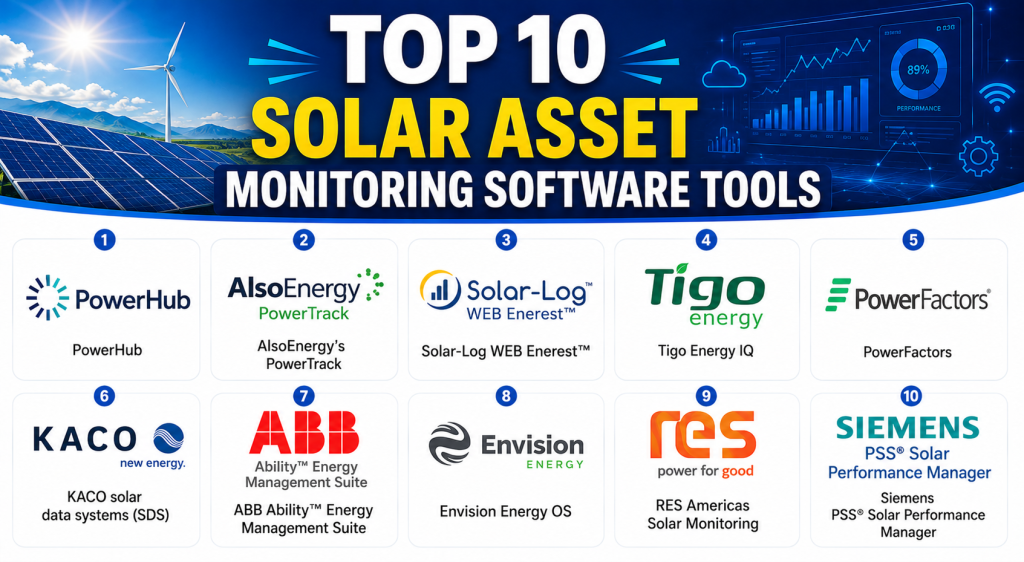
Top 10 Solar Asset Monitoring Software Tools
1— PowerHub
Short description: PowerHub provides solar asset owners and operators with a comprehensive platform to monitor PV system performance, track maintenance, and benchmark energy production across distributed portfolios. Designed for enterprise‑scale use, it emphasizes visibility, predictive insights, and operational efficiency.
Key Features
- Centralized real‑time solar output dashboards
- Predictive maintenance and anomaly detection
- Portfolio performance benchmarking
- Configurable alerts and KPI reporting
- Integration with weather, SCADA, and business systems
Pros
- Strong analytics with predictive insights
- Scalable for large, distributed solar portfolios
Cons
- Premium pricing for smaller installations
- Advanced setup may require vendor support
Platforms / Deployment
- Web / Windows / macOS
- Cloud / Hybrid
Security & Compliance
- Encryption at rest and in transit
- Role‑based access control (RBAC)
- Not publicly stated
Integrations & Ecosystem
PowerHub connects with SCADA, inverters, ERP, and energy trading tools.
- REST APIs for custom extensions
- Weather and irradiance data feeds
- IoT and sensor integrations
Support & Community
- Dedicated vendor support and onboarding
- Documentation and best‑practice guides
- User forums and community webinars
2— AlsoEnergy’s PowerTrack
Short description: PowerTrack centralizes data from solar arrays, inverters, and environmental sensors to provide operators with real‑time insights, performance analytics, and operational alerts. It is widely adopted by commercial and utility solar portfolios.
Key Features
- Real‑time performance monitoring
- Fault detection and notification system
- Long‑term trend analysis
- Custom reporting for performance and compliance
- Mobile and web dashboards
Pros
- Intuitive interface with strong visualization
- Extensive alerting and reporting capabilities
Cons
- Data‑heavy environments may need tuning
- Integrations vary by asset type
Platforms / Deployment
- Web / iOS / Android
- Cloud
Security & Compliance
- Encryption and SSO/SAML support
- Not publicly stated
Integrations & Ecosystem
AlsoEnergy integrates PV inverters, weather stations, asset management layers, and analytical tools.
- SCADA and telemetry feeds
- ERP system connectivity
- Custom API access
Support & Community
- Professional services onboarding
- Technical documentation and webinars
- Customer support tiers
3— Solar‐Log WEB Enerest™
Short description: Solar‑Log WEB Enerest™ is a monitoring service for solar PV installations of all sizes, focusing on performance tracking, yield analysis, and fault identification. It’s aimed at O&M teams, EPCs, and portfolio managers.
Key Features
- Live PV system data visualization
- Yield and performance analysis tools
- Automatic error detection
- Reporting for compliance and investors
- Multi‑system portfolio management
Pros
- Suitable for both small and large portfolios
- Built‑in performance reporting tools
Cons
- Advanced customization may require support
- Some features vary by region
Platforms / Deployment
- Web / iOS / Android
- Cloud
Security & Compliance
- Encryption and access controls
- Not publicly stated
Integrations & Ecosystem
Integrated with PV hardware and SCADA, Solar‑Log offers:
- Inverter and sensor protocols
- Weather and irradiation feeds
- API for third‑party tools
Support & Community
- Global support network
- Online documentation
- Training and certification programs
4— Tigo Energy IQ
Short description: Tigo Energy IQ provides module‑level monitoring and analytics tailored for high‑resolution visibility, performance tracking, and power optimization, especially in commercial and industrial PV systems.
Key Features
- Module‑level performance data
- Real‑time analytics and alerting
- Shading and mismatch detection
- ROI and degradation insights
- Downloadable performance reports
Pros
- Extremely granular performance visibility
- Useful for optimizing complex installations
Cons
- Best suited for systems with Tigo hardware
- May require hardware upgrades
Platforms / Deployment
- Web / iOS / Android
- Cloud
Security & Compliance
- Encryption and user access controls
- Not publicly stated
Integrations & Ecosystem
- PV hardware and optimizer data
- SCADA integrations where present
- API hooks for third‑party analytics
Support & Community
- Vendor onboarding and training
- Documentation library
- Technical support teams
5— PowerFactors
Short description: PowerFactors provides a cloud‑native analytics platform that monitors renewable assets, including solar PV systems, offering predictive maintenance, real‑time dashboards, and portfolio optimization.
Key Features
- Real‑time solar performance dashboards
- Predictive maintenance and anomaly detection
- Energy production forecasting
- Portfolio benchmarking
- API‑first integration framework
Pros
- Cloud scalability and accessibility
- User‑friendly interface
Cons
- Limited offline capabilities
- Smaller community compared to established vendors
Platforms / Deployment
- Web / Windows / iOS / Android
- Cloud
Security & Compliance
- Encryption and RBAC
- Not publicly stated
Integrations & Ecosystem
- SCADA and IoT sensor data
- Inverter and weather integrations
- ERP and energy trading connectors
Support & Community
- Dedicated vendor support
- Online guides and onboarding materials
- Customer success resources
6— KACO solar data systems (SDS)
Short description: SDS provides monitoring, visualization, and reporting for KACO inverter fleets and broader PV systems, with a focus on performance data and detection of anomalies.
Key Features
- Real‑time inverter performance visualization
- Error and alarm management
- Historical yield analysis
- Site and fleet dashboards
- Performance and compliance reporting
Pros
- Tight integration with KACO hardware
- Solid performance tracking features
Cons
- Best value for KACO‑centric installations
- Feature depth varies with hardware mix
Platforms / Deployment
- Web
- Cloud / Hybrid
Security & Compliance
- Encryption and access controls
- Not publicly stated
Integrations & Ecosystem
- Inverter telemetry feeds
- Weather and irradiation data
- Custom API access
Support & Community
- Vendor support and documentation
- Technical assistance
7— ABB Ability™ Energy Management Suite
Short description: ABB Ability offers an enterprise‑grade platform for solar asset performance monitoring, analytics, and operations management, integrating with grid and energy management systems.
Key Features
- Performance visualization and KPIs
- Predictive analytics and alerting
- Asset health and fault detection
- ESG and compliance reporting
- Integration with SCADA and grid management
Pros
- Enterprise‑grade scalability and security
- Strong analytical tooling
Cons
- Higher cost for smaller portfolios
- Complex implementation and training
Platforms / Deployment
- Web / Windows / Linux
- Cloud / Hybrid
Security & Compliance
- Enterprise‑grade encryption and access controls
- Not publicly stated
Integrations & Ecosystem
- SCADA, ERP, and energy systems
- IoT and sensor data layers
- API framework for extensions
Support & Community
- Premium support tiers
- Global technical teams
- Documentation and knowledge base
8— Envision Energy OS
Short description: Envision Energy OS monitors performance and health of solar installations, using analytics to optimize production and schedule maintenance.
Key Features
- Real‑time production dashboards
- Predictive maintenance indicators
- Portfolio performance benchmarking
- Environmental KPI tracking
- Reporting and alerts
Pros
- Strong analytics suite
- Scalable across distributed assets
Cons
- May require customization support
- Smaller ecosystem compared to larger vendors
Platforms / Deployment
- Web / Windows / iOS
- Cloud / Hybrid
Security & Compliance
- Not publicly stated
Integrations & Ecosystem
- SCADA and inverters
- IoT/weather feeds
- ERP and asset management systems
Support & Community
- Vendor onboarding and training
- Online documentation
9— RES Americas Solar Monitoring
Short description: RES Americas’ monitoring solution aggregates PV system data into centralized dashboards that drive performance analysis, fault detection, and compliance reporting.
Key Features
- Centralized performance monitoring
- Real‑time anomaly alerts
- Trend and yield analysis
- Reporting for compliance and investors
- Multi‑site support
Pros
- Solid analytical core
- Useful for portfolio management
Cons
- Smaller user community
- May need vendor setup support
Platforms / Deployment
- Web / Windows
- Cloud / Hybrid
Security & Compliance
- Not publicly stated
Integrations & Ecosystem
- SCADA and sensor integrations
- Inverter data layers
- API access for third‑party tools
Support & Community
- Technical support teams
- Documentation and onboarding resources
10— Siemens PSS® Solar Performance Manager
Short description: Siemens PSS® Solar Performance Manager focuses on centralized performance tracking, predictive maintenance, and reporting for utility‑scale solar farms.
Key Features
- Real‑time performance dashboards
- Predictive and preventive analytics
- Compliance and investor reporting
- Fault detection and root cause analysis
- Multi‑site portfolio benchmarks
Pros
- Strong predictive analytics and scalability
- Suitable for large, distributed solar assets
Cons
- High cost and implementation complexity
- Training required for full adoption
Platforms / Deployment
- Windows / Web
- Hybrid / Cloud
Security & Compliance
- Not publicly stated
Integrations & Ecosystem
- SCADA and IoT data
- Asset management systems
- API for analytic extensions
Support & Community
- Vendor support and documentation
- Training resources
Comparison Table (Top 10)
| Tool Name | Best For | Platform(s) Supported | Deployment | Standout Feature | Public Rating |
|---|---|---|---|---|---|
| PowerHub | Enterprise portfolios | Web/Windows/macOS | Cloud/Hybrid | Predictive insights | N/A |
| AlsoEnergy PowerTrack | Commercial & utility | Web/iOS/Android | Cloud | Real‑time dashboards | N/A |
| Solar‑Log WEB Enerest™ | Mixed portfolio sizes | Web/iOS/Android | Cloud | Yield & error analytics | N/A |
| Tigo Energy IQ | Module‑level visibility | Web/iOS/Android | Cloud | Granular performance data | N/A |
| PowerFactors | Cloud scalability | Web/Windows/iOS/Android | Cloud | AI‑driven analytics | N/A |
| KACO SDS | KACO asset portfolios | Web | Cloud/Hybrid | Inverter‑centric insights | N/A |
| ABB Ability EMS | Enterprise & grid | Web/Windows/Linux | Cloud/Hybrid | Enterprise analytics | N/A |
| Envision Energy OS | Distributed assets | Web/Windows/iOS | Cloud/Hybrid | Environmental KPIs | N/A |
| RES Americas Monitoring | Portfolio management | Web/Windows | Cloud/Hybrid | Centralized dashboards | N/A |
| Siemens PSS® Solar PM | Utility‑scale | Windows/Web | Hybrid/Cloud | Predictive maintenance | N/A |
Evaluation & Scoring of Solar Asset Monitoring Tools
| Tool Name | Core (25%) | Ease (15%) | Integrations (15%) | Security (10%) | Performance (10%) | Support (10%) | Value (15%) | Weighted Total |
|---|---|---|---|---|---|---|---|---|
| PowerHub | 9 | 8 | 8 | 7 | 9 | 8 | 7 | 8.1 |
| AlsoEnergy PowerTrack | 8 | 9 | 7 | 7 | 8 | 8 | 7 | 8.0 |
| Solar‑Log WEB Enerest™ | 8 | 8 | 7 | 7 | 8 | 7 | 7 | 7.7 |
| Tigo Energy IQ | 8 | 9 | 6 | 7 | 8 | 7 | 7 | 7.7 |
| PowerFactors | 8 | 8 | 8 | 7 | 8 | 7 | 7 | 7.8 |
| KACO SDS | 7 | 7 | 6 | 7 | 7 | 6 | 7 | 7.0 |
| ABB Ability EMS | 9 | 7 | 8 | 8 | 9 | 8 | 7 | 8.1 |
| Envision Energy OS | 8 | 7 | 7 | 7 | 8 | 7 | 7 | 7.5 |
| RES Americas Monitoring | 8 | 7 | 7 | 7 | 7 | 7 | 7 | 7.4 |
| Siemens PSS® Solar PM | 9 | 7 | 7 | 7 | 9 | 8 | 7 | 8.0 |
Interpretation: These scores compare platforms across core functions, usability, integration maturity, security posture, performance reliability, support, and overall value. Higher weighted totals indicate strong balance across these categories, but tool selection should align with specific portfolio size, operational complexity, and strategic priorities.
Which Solar Asset Monitoring Tool Is Right for You?
Solo / Freelancer
Small system owners may find basic dashboards or lightweight cloud tools sufficient — advanced platforms offer more capability than needed.
SMB
Platforms like Solar‑Log WEB Enerest™, Tigo Energy IQ, and AlsoEnergy PowerTrack strike a balance between affordability and meaningful analytics for commercial solar portfolios.
Mid‑Market
PowerFactors and PowerHub provide scalable cloud‑native tools with strong analytics, suitable for growing solar portfolios requiring predictive maintenance and performance optimization.
Enterprise
For large, multi‑site deployments with integrated grid and enterprise systems, ABB Ability Energy Management Suite and PowerHub offer deep analytics, robust integrations, and compliance reporting.
Budget vs Premium
Mid‑market options deliver core capabilities at lower cost, while premium enterprise tools offer advanced analytics, predictive capabilities, and integration breadth.
Feature Depth vs Ease of Use
Tools like PowerFactors and AlsoEnergy PowerTrack balance powerful features with intuitive interfaces; enterprise solutions typically require more training but provide deeper insights.
Integrations & Scalability
Enterprise platforms integrate with SCADA, ERP, IoT sensors, and energy trading systems, enabling scalable monitoring across distributed assets.
Security & Compliance Needs
Evaluate encryption, access control, audit trails, and vendor compliance with regulatory standards when security and governance are priorities.
Frequently Asked Questions (FAQs)
1— What does Solar Asset Monitoring Software do?
It aggregates performance data from inverters, sensors, and environmental inputs to provide real‑time insights, fault detection, and long‑term analytics for PV systems.
2— How much does this software cost?
Costs vary by portfolio size, deployment model, and feature set. Enterprise platforms are premium, while mid‑market and cloud solutions are more affordable.
3— Can these tools predict failures?
Yes, many platforms use AI and machine learning to detect anomalies and predict maintenance needs before failures occur.
4— Are cloud deployments secure?
Generally yes, provided proper encryption, access controls, and compliance measures are implemented. Evaluate vendor security documentation carefully.
5— How long does implementation take?
Deployment timelines range from a few weeks for smaller systems to several months for enterprise and multi‑site integrations.
6— Do these tools integrate with SCADA?
Yes, most solar monitoring platforms support SCADA integration to centralize operations and telemetry.
7— What reporting options exist?
Platforms typically offer customizable dashboards, performance reports, compliance outputs, and automated export capabilities.
8— Are there open‑source options?
There are limited open‑source solutions; most credible tools in this space are commercial with active vendor support.
9— Can these platforms handle multiple PV sites?
Yes, enterprise and cloud‑native solutions are designed to scale across distributed solar portfolios.
10— How do I choose the right tool?
Consider portfolio scale, integration needs, analytics depth, deployment preferences, and support expectations aligned to your operational priorities.
Conclusion
Solar Asset Monitoring Software is integral to maximizing energy production, reducing operational risk, and supporting growth in distributed solar portfolios. Mid‑market tools like PowerFactors and AlsoEnergy PowerTrack provide a strong balance of features and usability, while enterprise solutions such as PowerHub and ABB Ability deliver deep analytics and integration capabilities. Start by shortlisting a few platforms, pilot critical integrations, and validate analytics and reporting workflows. With the right tool, operators gain real‑time visibility, actionable insights, and sustained performance improvements.
