Introduction
Oil & Gas Field Service Tools are software platforms and digital systems designed to support the planning, execution, monitoring, and optimization of field service operations in the upstream, midstream, and downstream sectors of the oil and gas industry. These tools help operators manage work orders, fleets, equipment maintenance, field personnel, safety compliance, and real‑time asset data — all in environments that are remote, hazardous, and operationally complex.
In and beyond, the oil and gas industry is accelerating digital transformation to improve uptime, reduce operational risk, drive cost efficiency, and comply with stricter environmental and safety regulations. Field service software has become critical as operators adopt cloud computing, IoT, predictive analytics, and mobile tooling to unify dispersed teams and assets.
Real‑world use cases include:
- Work order management: Assigning, tracking, and closing field work orders for drilling support, inspection, and maintenance.
- Preventive and predictive maintenance: Monitoring equipment health to prevent downtime and extend asset life.
- Field workforce coordination: Dispatching technicians, capturing field data, and managing inspections via mobile apps.
- Equipment and inventory tracking: Monitoring tools, parts, and equipment across sites and fleets.
- Safety and compliance reporting: Automating permits, checklists, incident tracking, and regulatory documentation.
What buyers should evaluate:
- Completeness of field service management (FSM) functionality
- Mobile usability for remote technicians
- Predictive maintenance and analytics
- Integration with ERP, SCADA, EAM, and safety systems
- Cloud and offline capabilities for remote environments
- Role‑based access and security controls
- Scalability for multi‑site operations
- Reporting, KPI dashboards, and compliance tools
- Deployment flexibility (cloud / on‑prem / hybrid)
- Vendor support, training, and community resources
Best for: Oil & gas operators, field service managers, E&P companies, service contractors, and maintenance teams in upstream, midstream, or downstream operations.
Not ideal for: Small operators with minimal field activity or simple maintenance processes not requiring industrial‑grade service management.
Key Trends in Oil & Gas Field Service Tools
- AI‑powered predictive maintenance to forecast failures before they impact production.
- Mobile and offline capabilities for field workers in remote locations.
- IoT and sensor integration with equipment, pumps, compressors, and rig instrumentation.
- Cloud‑native platforms enabling global collaboration and real‑time data access.
- Augmented reality (AR) assistance for remote guidance and documentation.
- Advanced analytics and KPIs for operational performance and cost control.
- Automated safety and compliance workflows tied to regulatory frameworks and HSE standards.
- Integration with enterprise systems such as ERP, EAM, supply chain, and GIS.
- Edge computing for local processing where connectivity is intermittent.
- Role‑based dashboards for executives, field engineers, and technicians.
How We Selected These Tools (Methodology)
- Market adoption and reputation in oil & gas field service operations.
- Feature completeness covering work orders, maintenance, scheduling, and analytics.
- Reliability and performance signals from real‑world implementations.
- Security posture evaluation including access controls and data protection.
- Integration breadth with ERP, EAM, IoT, SCADA, GIS, and safety systems.
- Scalability for field operations across sites and geographic regions.
- Vendor support, documentation, and training offerings.
- Innovation in predictive analytics, mobile support, and cloud deployment.
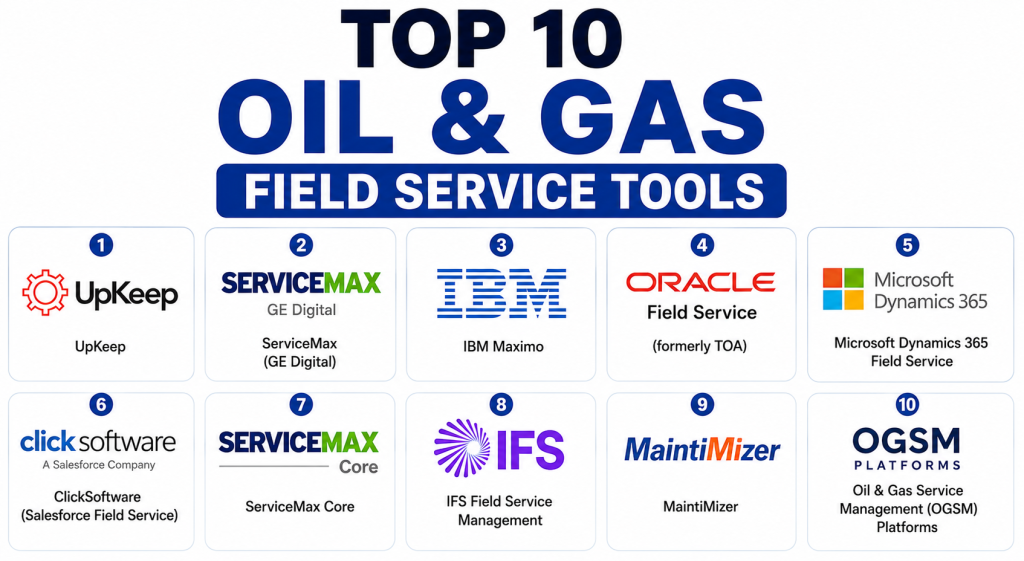
Top 10 Oil & Gas Field Service Tools
1 — UpKeep
Short description: UpKeep is a mobile‑first field service and maintenance management platform used in oil & gas operations to schedule, track, and execute work orders, monitor asset health, and manage inventory across facilities and field sites.
Key Features
- Work order creation, prioritization, and tracking
- Preventive and predictive maintenance scheduling
- Asset health dashboards and analytics
- Inventory and parts tracking
- Mobile apps with offline capabilities
Pros
- Intuitive mobile experience for field technicians
- Strong preventive maintenance features
Cons
- Advanced reporting may require higher tiers
- Limited out‑of‑box integrations with complex oil & gas systems
Platforms / Deployment
- Web / iOS / Android
- Cloud / Hybrid
Security & Compliance
- Role‑based access control (RBAC)
- Encryption of data
- Not publicly stated
Integrations & Ecosystem
UpKeep integrates with financial, inventory, and IoT tools.
- Asset telematics
- ERP connectors
- Barcode and scanning systems
Support & Community
- Vendor support tiers
- Online knowledge base
- Community forums
2 — ServiceMax (GE Digital)
Short description: ServiceMax is a comprehensive field service management platform widely used in industrial sectors, including oil & gas, for work orders, scheduling, mobility, and performance analytics.
Key Features
- Advanced work order management
- Technician scheduling and optimization
- Asset and fleet management
- Mobile field execution
- SLAs, contracts, and service analytics
Pros
- Designed for large, complex field operations
- Deep scheduling and optimization
Cons
- Premium pricing level
- Can be complex to configure
Platforms / Deployment
- Web / iOS / Android
- Cloud / Hybrid
Security & Compliance
- SSO, MFA, encryption
- Not publicly stated
Integrations & Ecosystem
- ERP and CRM connectivity
- IoT and asset sensor feeds
- Business intelligence connectors
Support & Community
- Enterprise support packages
- Training and certification programs
- User community and events
3 — IBM Maximo
Short description: IBM Maximo is a leader in enterprise asset management (EAM) with strong field service capabilities, widely adopted in oil & gas for maintenance planning, asset tracking, and operational analytics.
Key Features
- Enterprise asset and maintenance management
- Predictive maintenance with AI insights
- Work order lifecycle management
- Safety and compliance workflows
- Multi‑site and fleet tracking
Pros
- Scalable for global oil & gas operations
- Deep asset and maintenance analytics
Cons
- Requires skilled implementation teams
- Higher total cost of ownership
Platforms / Deployment
- Web / Windows
- Cloud / On‑prem / Hybrid
Security & Compliance
- SSO/SAML, RBAC
- Not publicly stated
Integrations & Ecosystem
Maximo fits into broad enterprise ecosystems.
- ERP and supply chain systems
- IoT sensors and SCADA feeds
- GIS and analytics platforms
Support & Community
- Extensive professional support
- Global community events
- Training and certifications
4 — Oracle Field Service (formerly TOA)
Short description: Oracle Field Service is a robust platform for scheduling, dispatching, and tracking field tasks, with real‑time visibility and optimization for enterprise field service teams in oil & gas.
Key Features
- Intelligent scheduling and dispatching
- Mobile field execution and reporting
- Real‑time technician tracking
- SLA and compliance tracking
- Routing and workload balancing
Pros
- Strong scheduling and routing capabilities
- Real‑time visibility into field work
Cons
- User interface can be complex
- Premium pricing
Platforms / Deployment
- Web / iOS / Android
- Cloud / Hybrid
Security & Compliance
- Encryption, RBAC
- Not publicly stated
Integrations & Ecosystem
- ERP and EAM systems
- GPS and fleet telematics
- Mobile device management
Support & Community
- Enterprise support tiers
- Documentation and knowledge center
- Training options
5 — Microsoft Dynamics 365 Field Service
Short description: Microsoft Dynamics 365 Field Service supports oil & gas field operations with work order automation, resource scheduling, mobile apps, and integration across the Dynamics ecosystem.
Key Features
- Automated work order creation
- Schedule and resource optimization
- Mobile execution and offline support
- Asset and inventory management
- Connected workflows with CRM and ERP
Pros
- Deep integration with Microsoft stack
- Familiar interface for many enterprises
Cons
- May require configuration expertise
- Feature overlap with ERP modules
Platforms / Deployment
- Web / iOS / Android / Windows
- Cloud / Hybrid
Security & Compliance
- Enterprise‑grade encryption and access controls
- Not publicly stated
Integrations & Ecosystem
Dynamics 365 integrates broadly.
- ERP, CRM, and supply chain
- IoT and sensor data layers
- Reporting and Power BI
Support & Community
- Microsoft support tiers
- Large partner network
- Community forums
6 — ClickSoftware (Salesforce Field Service)
Short description: ClickSoftware’s field service capabilities, now part of Salesforce Field Service, help coordinate oil & gas technicians, scheduling, dispatching, and customer/work order lifecycles.
Key Features
- AI‑powered scheduling and optimization
- Technician mobile apps
- Work order and contract management
- Inventory tracking
- Real‑time field status
Pros
- Strong AI scheduling
- Seamless CRM linkage
Cons
- Salesforce dependency for full value
- Licensing complexity
Platforms / Deployment
- Web / iOS / Android
- Cloud
Security & Compliance
- SSO, encryption
- Not publicly stated
Integrations & Ecosystem
- Salesforce ecosystem
- Mobile and telematics
- ERP and analytics connectors
Support & Community
- Salesforce support tiers
- Trailhead training ecosystem
- Global user community
7 — ServiceMax Core
Short description: ServiceMax Core focuses on core field service functions — work orders, technician enablement, commissioning, and asset tracking — tailored for oil & gas maintenance and service teams.
Key Features
- Work order management
- Asset lifecycle tracking
- Technician mobile enablement
- Metrics and operational KPIs
- Parts and inventory control
Pros
- Strong field‑centric workflows
- Easy to scale across teams
Cons
- Advanced analytics require add‑ons
- Cost scales with usage
Platforms / Deployment
- Web / iOS / Android
- Cloud / Hybrid
Security & Compliance
- Encryption and access controls
- Not publicly stated
Integrations & Ecosystem
- IoT and telemetry systems
- ERP and parts systems
- Routing and mapping tools
Support & Community
- Tiered support options
- Training and documentation
- Active user base
8 — IFS Field Service Management
Short description: IFS FSM supports oil & gas field operations with a unified approach to work orders, assets, projects, and mobile execution, combining EAM and FSM.
Key Features
- Work order and contract management
- Asset performance tracking
- Mobile field execution
- Project and service billing
- Inventory and parts management
Pros
- Unified service and asset view
- Strong project support
Cons
- Implementation sophistication required
- Pricing beyond entry‑level
Platforms / Deployment
- Web / iOS / Android
- Cloud / On‑prem / Hybrid
Security & Compliance
- Enterprise‑grade security controls
- Not publicly stated
Integrations & Ecosystem
- ERP and supply chain
- IoT and sensor platforms
- Finance and billing systems
Support & Community
- Vendor support tiers
- Documentation and training
- Installed user community
9 — MaintiMizer
Short description: MaintiMizer offers robust asset and field service management geared for industrial sites in oil & gas, focusing on preventive maintenance, work orders, and asset tracking.
Key Features
- Preventive maintenance scheduling
- Work order workflows
- Asset hierarchy and tracking
- Parts and inventory control
- Reporting and dashboards
Pros
- Focused preventive maintenance modules
- Cost‑effective option
Cons
- Fewer advanced analytics
- Limited mobility features without add‑ons
Platforms / Deployment
- Web / Windows
- Cloud / On‑prem / Hybrid
Security & Compliance
- Not publicly stated
Integrations & Ecosystem
- ERP and parts systems
- IoT sensor feeds
- Reporting tools
Support & Community
- Vendor support
- Documentation
10 — Oil & Gas Service Management (OGSM) Platforms
Short description: OGSM platforms bundle field service, maintenance, compliance, and reporting capabilities for oil & gas operators needing industry‑specific workflows tailored to rigs, pipelines, and facilities.
Key Features
- Work orders and planning
- Safety and compliance modules
- Mobile technician execution
- Asset and equipment tracking
- Regulatory reporting dashboards
Pros
- Tailored for oil & gas operational complexity
- Built‑in compliance features
Cons
- Narrow focus might limit broader use cases
- varies by vendor
Platforms / Deployment
- Web / iOS / Android
- Cloud / Hybrid
Security & Compliance
- Depends on vendor
- Not publicly stated
Integrations & Ecosystem
- SCADA and telemetry
- ERP and inventory
- Compliance systems
Support & Community
- Vendor support varies
- Documentation varies
Comparison Table (Top 10)
| Tool Name | Best For | Platform(s) Supported | Deployment | Standout Feature | Public Rating |
|---|---|---|---|---|---|
| UpKeep | SMB–Enterprise field teams | Web / iOS / Android | Cloud / Hybrid | Mobile preventive maintenance | N/A |
| ServiceMax | Complex industrial service | Web / iOS / Android | Cloud / Hybrid | Optimized scheduling | N/A |
| IBM Maximo | Enterprise asset management | Web / Windows | Cloud / On‑prem / Hybrid | Predictive maintenance | N/A |
| Oracle Field Service | Dispatch & mobile execution | Web / iOS / Android | Cloud / Hybrid | Intelligent dispatching | N/A |
| Dynamics 365 Field Service | Integrated operations | Web / iOS / Android | Cloud / Hybrid | Microsoft ecosystem | N/A |
| ClickSoftware | CRM‑connected service | Web / iOS / Android | Cloud | AI scheduling | N/A |
| ServiceMax Core | Field‑centric workflows | Web / iOS / Android | Cloud / Hybrid | Core FSM features | N/A |
| IFS FSM | Asset & service unified | Web / iOS / Android | Cloud / On‑prem / Hybrid | Service + EAM synergy | N/A |
| MaintiMizer | Preventive maintenance | Web / Windows | Cloud / On‑prem / Hybrid | Cost‑effective maintenance | N/A |
| OGSM Platforms | Industry‑specific workflows | Web / iOS / Android | Cloud / Hybrid | Oil & gas tailored | N/A |
Evaluation & Scoring of Oil & Gas Field Service Tools
| Tool Name | Core (25%) | Ease (15%) | Integrations (15%) | Security (10%) | Performance (10%) | Support (10%) | Value (15%) | Weighted Total |
|---|---|---|---|---|---|---|---|---|
| UpKeep | 8 | 9 | 7 | 7 | 8 | 8 | 8 | 8.1 |
| ServiceMax | 9 | 7 | 8 | 8 | 9 | 8 | 7 | 8.3 |
| IBM Maximo | 9 | 7 | 9 | 9 | 9 | 8 | 6 | 8.2 |
| Oracle Field Service | 8 | 7 | 8 | 8 | 8 | 8 | 7 | 7.9 |
| Dynamics 365 | 8 | 8 | 9 | 8 | 8 | 8 | 7 | 8.1 |
| ClickSoftware | 8 | 8 | 8 | 8 | 8 | 7 | 7 | 7.8 |
| ServiceMax Core | 8 | 8 | 8 | 8 | 8 | 8 | 7 | 8.0 |
| IFS FSM | 8 | 7 | 8 | 8 | 8 | 8 | 7 | 8.0 |
| MaintiMizer | 7 | 8 | 7 | 7 | 7 | 7 | 8 | 7.5 |
| OGSM Platforms | 7 | 7 | 7 | 7 | 7 | 7 | 7 | 7.0 |
Interpretation:
These scores compare tools across core service features, usability, ecosystem integration, security, performance reliability, support, and value. Higher weighted totals suggest stronger overall balance. Organizations should consider their specific operational scale, complexity, and integration needs when interpreting these scores.
Which Oil & Gas Field Service Tool Is Right for You?
Solo / Freelancer
Not typically relevant; these tools are more suited for teams managing industrial field operations.
SMB
UpKeep and MaintiMizer provide affordable, mobile‑friendly options for small field teams with strong preventive maintenance features.
Mid‑Market
Dynamics 365 Field Service, ServiceMax Core, and ClickSoftware balance usability, scheduling intelligence, and integration capabilities for growing field teams.
Enterprise
IBM Maximo, ServiceMax, and IFS FSM offer deep enterprise asset and field service integration, advanced analytics, and scalability across global operations.
Budget vs Premium
Budget tools focus on core workflows and ease of use, while premium solutions provide advanced analytics, predictive maintenance, and comprehensive integration stacks.
Feature Depth vs Ease of Use
Enterprise platforms deliver extensive functionality but may require implementation expertise; mid‑market tools strike a balance between capability and usability.
Integrations & Scalability
Tools with broad integration ecosystems — particularly those that connect to ERP, EAM, IoT, and fleet telematics — provide better scalability for multi‑site operations.
Security & Compliance Needs
Enterprise tools tend to incorporate stronger security controls, RBAC, encryption, and compliance workflows, important for regulatory environments.
Frequently Asked Questions (FAQs)
1— What does field service software do in oil & gas?
It helps manage field workforce activities, equipment maintenance, scheduling, dispatching, and operational reporting across remote industrial sites.
2— How much does field service software cost?
Costs vary widely based on deployment model, number of users, feature depth, and whether advanced modules like predictive maintenance are used.
3— Can these tools work offline?
Many solutions offer mobile offline capabilities so field technicians can capture data and sync when connectivity returns.
4— Do these tools integrate with ERP systems?
Yes, top field service tools integrate with ERP, supply chain systems, EAM, and finance platforms.
5— How do predictive maintenance features help?
They use sensor data and analytics to forecast failures, optimize maintenance cycles, and reduce unplanned downtime.
6— Are cloud deployments secure?
Most enterprise platforms include encryption, RBAC, audit logging, and compliance workflows; verify vendor security documentation for specifics.
7— How long does implementation take?
Implementation can range from a few weeks for SMB tools to several months for enterprise solutions with complex integrations.
8— What is mobile field execution?
Mobile apps allow technicians to receive work orders, capture data, update statuses, and access manuals in the field.
9— Can these tools track inventory and parts?
Yes — inventory and parts management is a key feature, helping ensure parts availability and reduce lead times.
10— How do I choose the right tool?
Assess operational scale, crew mobility needs, integration requirements, analytics goals, and long‑term strategy before selection.
Conclusion
Oil & Gas Field Service Tools are foundational to operational efficiency, safety, and cost control in modern energy operations. For smaller field teams, UpKeep and MaintiMizer provide strong core capabilities with mobile ease. Mid‑market operations may find Dynamics 365 Field Service, ServiceMax Core, and ClickSoftware balance usability and integration. For enterprise scale, IBM Maximo and ServiceMax lead with deep analytics, asset management, and global deployment support. Begin with a shortlist, pilot key integrations like ERP and IoT, and validate predictive maintenance and compliance workflows before broader rollout — ensuring the selected tool aligns with operational strategy and scale.
