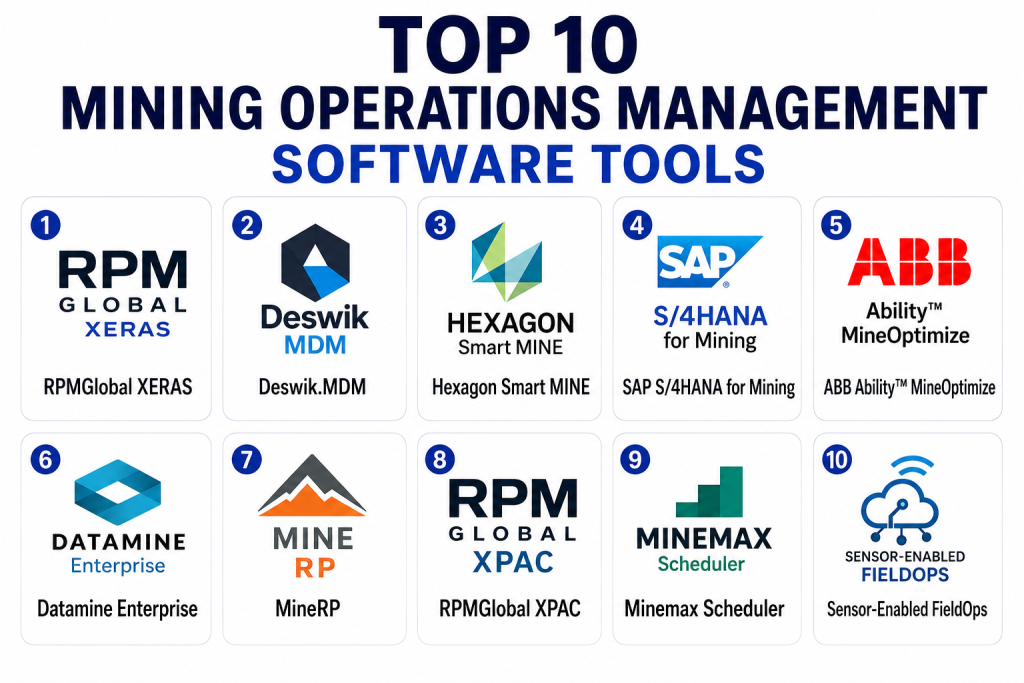
Introduction
Mining Operations Management Software (MOMS) refers to specialized platforms that help mining companies plan, execute, monitor, and optimize end‑to‑end mining operations — from extraction and processing to safety compliance and equipment maintenance. These tools centralize data from equipment, sensors, field crews, and operational workflows to improve safety, boost productivity, reduce costs, and ensure regulatory compliance across increasingly complex site ecosystems.
As mining continues evolving in and beyond, operators face tighter environmental standards, decentralized teams, remote sites, and growing demand for real‑time visibility. MOMS has become essential for enabling digital transformation initiatives, integrating IoT and AI, and driving sustainable, data‑driven decisions in both surface and underground mining environments.
Real‑world use cases include:
- Production planning and scheduling: Aligning extraction, haulage, and processing to meet targets.
- Equipment performance and predictive maintenance: Monitoring machinery health to prevent failures and reduce downtime.
- Safety and compliance management: Automating safety workflows, incident reporting, and regulatory tracking.
- Resource tracking and cost control: Managing materials, fuel, parts, and labor across sites.
- Real‑time visibility and analytics: Dashboards that provide live insights into operations, KPIs, and bottlenecks.
What buyers should evaluate:
- Production scheduling and optimization capabilities
- Fleet and equipment monitoring, including predictive maintenance
- Safety, incident reporting, and compliance modules
- Integration with IoT, SCADA, ERP, and GIS systems
- Cloud, on‑premises, or hybrid deployment flexibility
- Security, access controls, and audit logging
- Reporting, BI dashboards, and visualization tools
- Mobile access for field crews and supervisors
- Scalability across sites and regions
- Vendor support, onboarding, and training resources
Best for: Mid‑size to large mining enterprises, operations managers, maintenance teams, fleet supervisors, and safety or compliance leaders.
Not ideal for: Small operations with minimal automation needs or sites that rely on simple spreadsheets and manual tracking for basic workflows.
Key Trends in Mining Operations Management Software
- AI‑enabled predictive maintenance to reduce unplanned failures and optimize maintenance schedules.
- Digital twins replicating site operations to test scenarios and forecast outcomes.
- IoT sensor integration for real‑time equipment and environmental monitoring.
- Cloud‑native and hybrid deployments enabling distributed site access.
- Augmented reality (AR) for remote assistance and training.
- Advanced safety and compliance automation with incident tracking and audit trails.
- Mobile workforce enablement for field data capture and task execution.
- Edge analytics to process sensor data locally for faster decisions.
- Unified dashboards and BI analytics to correlate cost, production, and safety data.
- Sustainability and ESG reporting integrated into operational KPIs.
How We Selected These Tools (Methodology)
- Market adoption and usage across mining operations.
- Feature breadth and completeness across scheduling, maintenance, safety, and analytics.
- Reliability and performance signals from real deployments.
- Security posture including encryption, RBAC, and compliance readiness.
- Integration capability with SCADA, ERP, IoT, and GIS systems.
- Scalability for multi‑site, multi‑region mining operations.
- Vendor support and documentation quality.
- Innovation in AI, predictive analytics, and mobile enablement.
Top 10 Mining Operations Management Software Tools
1 — RPMGlobal XERAS
Short description: XERAS is a mining operations planning and execution suite designed to unite long‑term strategic planning with short‑term scheduling and real‑time performance insights across open‑pit and underground operations.
Key Features
- Integrated long‑term and short‑term planning modules
- Real‑time production monitoring
- Scenario modeling and optimization tools
- KPI dashboards for cost, throughput, and utilization
- Fleet allocation and task prioritization
Pros
- Strong planning and scheduling capabilities
- Real‑time visibility across assets and crews
Cons
- Higher learning curve for new users
- Premium price point
Platforms / Deployment
- Web / Windows
- Cloud / Hybrid
Security & Compliance
- Encryption, RBAC
- Not publicly stated
Integrations & Ecosystem
XERAS integrates with fleet telematics, ERP, and business intelligence systems.
- Telematics and IoT sensors
- ERP and finance systems
- BI and reporting connectors
Support & Community
- Vendor‑led support and professional services
- Extensive documentation and training programs
2 — Deswik.MDM
Short description: Deswik.MDM (Mine Data Management) centralizes mining data from multiple sources, enabling planners and engineers to model, analyze, and optimize grade control, drill data, and geological information.
Key Features
- Centralized mine data repository
- Drill and blast data integration
- Geological modeling dashboards
- Reporting and KPI visualization
- Data validation and quality control
Pros
- Strong data consolidation and visualization
- Streamlines data quality workflows
Cons
- Focused more on data than operational execution
- Customization requires expertise
Platforms / Deployment
- Web / Windows
- Cloud / Hybrid
Security & Compliance
- Not publicly stated
Integrations & Ecosystem
- Drill rig telemetry
- Geological and ore control systems
- ERP and planning tools
Support & Community
- Vendor support and training
- Documentation and user forums
3 — Hexagon Smart MINE
Short description: Smart MINE is a unified platform from Hexagon combining planning, fleet management, safety, and analytics to optimize end‑to‑end mining operations.
Key Features
- Fleet telematics and utilization monitoring
- Production scheduling and dispatch
- Safety and incident reporting
- Analytics and KPI dashboards
- Integration with GIS and site systems
Pros
- Comprehensive suite covering key mining workflows
- Strong fleet and safety modules
Cons
- Complex implementation
- May require professional services for full setup
Platforms / Deployment
- Web / iOS / Android
- Cloud / Hybrid
Security & Compliance
- Encryption and access controls
- Not publicly stated
Integrations & Ecosystem
- Telematics and IoT sensors
- ERP and compliance systems
- GIS and mapping platforms
Support & Community
- Global support teams
- Training and certification programs
4 — SAP S/4HANA for Mining
Short description: SAP’s solution brings enterprise‑scale operations, maintenance, finance, and procurement workflows into a unified platform tailored for mining enterprises.
Key Features
- Asset and maintenance management
- Procurement and inventory control
- Financial planning and cost analysis
- Production and resource scheduling
- Compliance and safety reporting
Pros
- Deep enterprise integration
- Strong financial and procurement modules
Cons
- Requires skilled configuration teams
- Higher total cost of ownership
Platforms / Deployment
- Web / Windows
- Cloud / On‑prem / Hybrid
Security & Compliance
- Enterprise security controls
- Not publicly stated
Integrations & Ecosystem
- ERP modules
- IoT and SCADA
- BI and analytics
Support & Community
- Extensive global support
- Large partner ecosystem
5 — ABB Ability™ MineOptimize
Short description: ABB’s MineOptimize provides performance dashboards, production analytics, and equipment health monitoring to improve throughput and reduce unplanned downtime.
Key Features
- Real‑time operational dashboards
- Predictive maintenance analytics
- Production KPI tracking
- Energy usage and cost monitoring
- Fleet performance insights
Pros
- Strong analytics and IoT integration
- Predictive insights for equipment health
Cons
- Installation complexity
- Best value at medium to large scale
Platforms / Deployment
- Web / Windows
- Cloud / Hybrid
Security & Compliance
- Encryption and access control
- Not publicly stated
Integrations & Ecosystem
- IoT and sensor layers
- GIS and telematics
- ERP and financial systems
Support & Community
- Vendor support and onboarding
- Documentation
6 — Datamine Enterprise
Short description: Datamine Enterprise offers integrated planning, scheduling, and resource tracking with a focus on geological, grade, and operational data for mining operations.
Key Features
- Integrated resource and reserve data
- Production scheduling and modeling
- Drill and blast planning
- KPI reporting and dashboards
- Fleet and equipment tracking
Pros
- Excellent for geological continuity and planning
- Comprehensive analytics
Cons
- Can be overwhelming without specialist support
- Premium cost
Platforms / Deployment
- Web / Windows
- Cloud / Hybrid
Security & Compliance
- Not publicly stated
Integrations & Ecosystem
- GIS and telemetry
- ERP and planning tools
- Sensor and field data systems
Support & Community
- Vendor training
- Documentation and professional services
7 — MineRP
Short description: MineRP provides a centralized “single source of truth” for integrating planning, scheduling, and operational data across mining sites with visualization and analytics.
Key Features
- Unified data environment
- Visualization dashboards
- Production and resource planning
- Safety and incident analytics
- Integration with surface and underground telemetry
Pros
- Strong visualization and integration
- Single data platform
Cons
- Setup requires data governance planning
- Higher entry cost
Platforms / Deployment
- Web / Windows
- Cloud / Hybrid
Security & Compliance
- Not publicly stated
Integrations & Ecosystem
- GIS and field data
- ERP and telemetry
- BI analytics
Support & Community
- Vendor support
- Training and onboarding
8 — RPMGlobal XPAC
Short description: XPAC focuses on short‑term scheduling and production planning with strong cost tracking and scenario modeling for pit and underground environments.
Key Features
- Short‑term production scheduling
- Cost tracking and analysis
- Task sequencing
- KPI reporting
- Integration with telematics
Pros
- Excellent short‑term operational planning
- Cost transparency
Cons
- Limited field execution features
- Best combined with other modules
Platforms / Deployment
- Web / Windows
- Cloud / Hybrid
Security & Compliance
- Not publicly stated
Integrations & Ecosystem
- Telematics and IoT
- ERP systems
- BI connectors
Support & Community
- Vendor support
- Documentation
9 — Minemax Scheduler
Short description: Minemax provides optimization tools focused on blending strategic mine planning with practical scheduling to enhance throughput and NPV outcomes.
Key Features
- Strategic and tactical optimization
- Blending and stockpile modeling
- Scheduler modules
- Scenario analysis
- KPI visualization
Pros
- Strong optimization engine
- Useful for planners and engineers
Cons
- Specialist knowledge required
- Not focused on field execution
Platforms / Deployment
- Windows / Web
- Hybrid / Cloud
Security & Compliance
- Not publicly stated
Integrations & Ecosystem
- Planning and ERP systems
- Geological data feeds
- BI and analytics
Support & Community
- Documentation
- Training and consulting
10 — Sensor‑Enabled FieldOps
Short description: FieldOps focuses on mobile field execution, safety reporting, and real‑time data capture from operators in the field, enabling integrated workflows from crew to command center.
Key Features
- Mobile field execution app
- Safety and incident reporting
- Equipment and inspection logs
- Real‑time dashboards
- Offline capabilities
Pros
- Effective for on‑site teams
- Mobile and offline support
Cons
- Limited high‑level planning
- Best paired with core planning tools
Platforms / Deployment
- iOS / Android / Web
- Cloud / Hybrid
Security & Compliance
- Not publicly stated
Integrations & Ecosystem
- Telematics and sensor layers
- ERP and planning systems
- GIS mapping
Support & Community
- Documentation
- Vendor support
Comparison Table (Top 10)
| Tool Name | Best For | Platform(s) Supported | Deployment | Standout Feature | Public Rating |
|---|---|---|---|---|---|
| RPMGlobal XERAS | Integrated planning | Web/Windows | Cloud/Hybrid | Real‑time execution insights | N/A |
| Deswik.MDM | Data mgmt & analytics | Web/Windows | Cloud/Hybrid | Mine data consolidation | N/A |
| Hexagon Smart MINE | Unified ops suite | Web/iOS/Android | Cloud/Hybrid | Fleet & safety modules | N/A |
| SAP S/4HANA for Mining | Enterprise ops | Web/Windows | Cloud/On‑prem/Hybrid | Finance + ops integration | N/A |
| ABB Ability MineOptimize | IoT analytics | Web/Windows | Cloud/Hybrid | Predictive maintenance | N/A |
| Datamine Enterprise | Geological & ops | Web/Windows | Cloud/Hybrid | Geological continuity | N/A |
| MineRP | Single data source | Web/Windows | Cloud/Hybrid | Visualization & integration | N/A |
| RPMGlobal XPAC | Short‑term scheduling | Web/Windows | Cloud/Hybrid | Pit & underground scheduling | N/A |
| Minemax Scheduler | Strategic planning | Web/Windows | Cloud/Hybrid | Optimization tools | N/A |
| Sensor‑Enabled FieldOps | Field execution | iOS/Android/Web | Cloud/Hybrid | Mobile field reporting | N/A |
Evaluation & Scoring of Mining Operations Management Tools
| Tool Name | Core (25%) | Ease (15%) | Integrations (15%) | Security (10%) | Performance (10%) | Support (10%) | Value (15%) | Weighted Total |
|---|---|---|---|---|---|---|---|---|
| RPMGlobal XERAS | 9 | 7 | 8 | 7 | 9 | 8 | 7 | 8.0 |
| Deswik.MDM | 8 | 8 | 7 | 7 | 8 | 7 | 7 | 7.6 |
| Hexagon Smart MINE | 9 | 7 | 8 | 7 | 9 | 8 | 7 | 8.0 |
| SAP S/4HANA | 9 | 7 | 9 | 8 | 9 | 8 | 6 | 8.1 |
| ABB MineOptimize | 8 | 8 | 8 | 7 | 8 | 7 | 7 | 7.8 |
| Datamine Enterprise | 8 | 7 | 8 | 7 | 8 | 7 | 7 | 7.6 |
| MineRP | 8 | 7 | 8 | 7 | 8 | 7 | 7 | 7.6 |
| RPMGlobal XPAC | 7 | 8 | 7 | 7 | 8 | 7 | 7 | 7.4 |
| Minemax Scheduler | 7 | 7 | 7 | 7 | 8 | 7 | 7 | 7.3 |
| FieldOps | 7 | 9 | 7 | 7 | 7 | 7 | 8 | 7.6 |
Interpreting the Scores:
These weighted totals reflect comparative strengths in core operational features, usability, integrations, security posture, performance reliability, support quality, and overall value. Higher totals indicate tools that balance depth, flexibility, and enterprise readiness. Organizations should weigh these factors according to their operational scale, technical maturity, and digital strategy.
Which Mining Operations Management Tool Is Right for You?
Solo / Small Operator
Small operations or single‑site mines may find Sensor‑Enabled FieldOps and Deswik.MDM sufficient for mobile reporting, data consolidation, and basic operational visibility.
SMB
Solutions such as ABB Ability MineOptimize, RPMGlobal XPAC, and MineRP provide strong mid‑market capabilities in scheduling, analytics, and visualization without overwhelming complexity.
Mid‑Market
Platforms like RPMGlobal XERAS and Datamine Enterprise strike a good balance between planning depth, real‑time visibility, and performance tracking for broader operations.
Enterprise
Enterprise mining companies benefit from integrated suites like SAP S/4HANA for Mining, Hexagon Smart MINE, and RPMGlobal XERAS due to deep BI, ERP linkage, and IoT support.
Budget vs Premium
Budget‑oriented tools focus on core workflows with simpler interfaces, while premium platforms provide advanced forecasting, optimization, and predictive maintenance capabilities.
Feature Depth vs Ease of Use
Enterprise suites deliver deep, comprehensive functionality but may require extensive training. Mid‑market tools balance sophistication with usability for cross‑functional teams.
Integrations & Scalability
Platforms that integrate SCADA, ERP, IoT, and GIS offer the best scalability for multi‑site, multi‑region mining operations.
Security & Compliance Needs
Evaluate robust encryption, RBAC, audit trails, and compliance features when regulatory accountability and data governance are priorities.
Frequently Asked Questions (FAQs)
1— What is Mining Operations Management Software?
It is software that supports planning, execution, monitoring, and optimization of mining site activities, including equipment, crews, safety, maintenance, and production.
2— How much does MOMS cost?
Costs vary widely based on deployment, number of users, feature depth, and integration complexity. Enterprise solutions tend to be premium priced.
3— Can these tools integrate with existing systems?
Yes, most solutions offer integrations with ERP, IoT sensors, SCADA, and GIS systems for comprehensive visibility.
4— Do these tools support predictive maintenance?
Many tools include predictive analytics or connect with IoT sensor networks to forecast equipment failures and optimize maintenance schedules.
5— Are mobile field capabilities available?
Yes, mobile apps enable field data capture, task completion, safety reporting, and offline access.
6— How long does implementation take?
Deployment timelines range from a few weeks for lighter tools to several months for enterprise suites with broad integration.
7— Do these solutions support safety and compliance?
Yes, safety modules, incident tracking, audit trails, and reporting tools are commonly included.
8— Can MOMS handle multiple mining sites?
Top platforms scale horizontally to manage multi‑site operations with centralized visibility.
9— Is cloud deployment secure?
Secure cloud deployments include encryption, RBAC, and audit logging; verify vendor details for compliance frameworks.
10— How do I choose the right MOMS?
Consider operational scale, technical maturity, integration needs, and digital transformation goals to select the best fit.
Conclusion
Mining Operations Management Software is fundamental to modern mining’s productivity, safety, and sustainability goals. Mid‑market operators may find solutions like ABB Ability MineOptimize or MineRP effective for analytics and field operations, while global enterprises benefit from SAP S/4HANA for Mining, RPMGlobal XERAS, or Hexagon Smart MINE for deep integration and planning. Begin by shortlisting based on core needs — production planning, safety, maintenance — and validate integration and analytics capabilities in pilot programs before full deployment to maximize ROI and operational efficiency.
