Introduction
Lab Safety Management Tools are specialized software platforms designed to help laboratories, research institutions, and educational facilities manage safety, compliance, and risk across chemical, biological, and physical environments. These tools centralize incident reporting, chemical inventory, safety documentation, training records, and regulatory compliance, enabling safer and more efficient laboratory operations. In and beyond, digital safety management is essential for minimizing accidents, meeting regulatory obligations, and supporting sustainability goals.
Real-world use cases include:
- Chemical inventory management and SDS tracking.
- Incident and near-miss reporting with workflow automation.
- Compliance tracking for OSHA, HSE, ISO, and local regulatory standards.
- Safety training and certification management for laboratory personnel.
- Audit preparation and documentation of safety inspections.
What buyers should evaluate:
- Chemical inventory and SDS management capabilities
- Incident reporting and tracking workflow
- Regulatory compliance and audit modules
- Training and certification management
- Integration with laboratory information management systems (LIMS)
- Cloud, on-premises, or hybrid deployment flexibility
- User interface and ease of adoption
- Security, access control, and audit logging
- Mobile access for field or laboratory staff
- Vendor support and training resources
Best for: Research laboratories, academic institutions, pharmaceutical and chemical companies, and safety managers.
Not ideal for: Small labs with minimal chemical use or operations where safety can be managed manually.
Key Trends in Lab Safety Management Tools
- AI-driven risk analysis to identify high-risk chemicals and activities.
- Cloud-native platforms for centralized safety data across multiple sites.
- Mobile-enabled reporting for real-time incident tracking.
- Integration with LIMS and ERP systems for unified lab operations.
- Automated compliance reporting to meet OSHA, ISO, and local regulations.
- Predictive analytics for accident prevention based on historical incident data.
- Enhanced chemical inventory tracking with barcode/RFID integration.
- Digital workflows for safety audits and inspections.
- Gamification and micro-learning for safety training engagement.
- Sustainability and ESG reporting for laboratory safety practices.
How We Selected These Tools (Methodology)
- Market adoption and reputation among laboratory safety professionals.
- Feature completeness including incident reporting, chemical inventory, and training management.
- Reliability and performance in laboratory environments.
- Security posture including encryption, RBAC, and audit logging.
- Integration capabilities with LIMS, ERP, and other laboratory systems.
- Scalability for multi-site laboratory networks.
- Vendor support, documentation, and user training quality.
- Innovation in AI, mobile access, and predictive safety analytics.
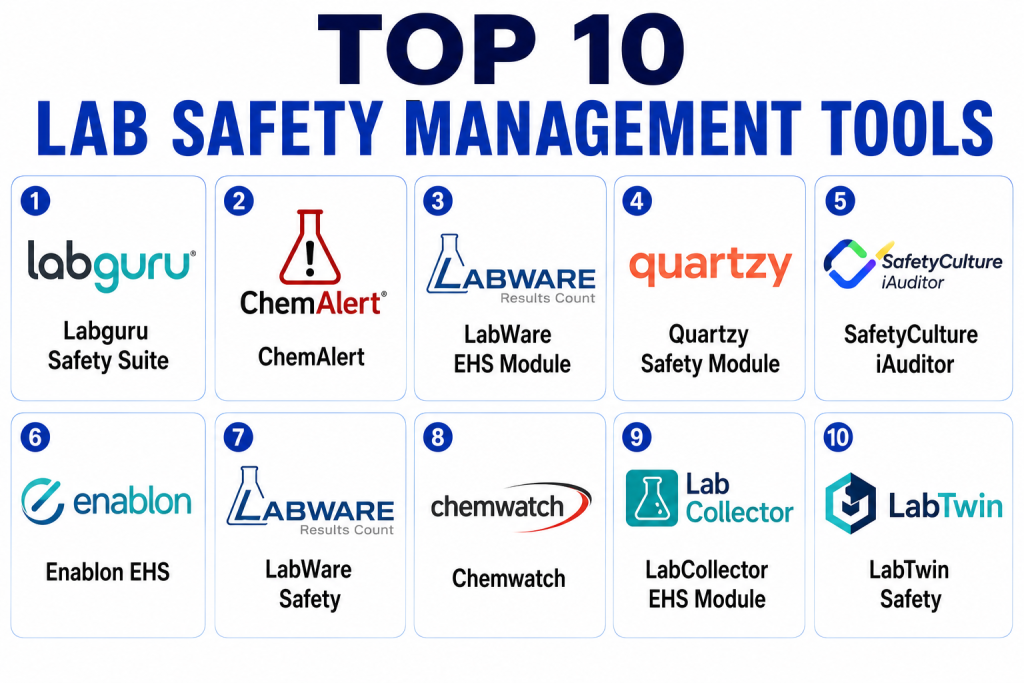
Top 10 Lab Safety Management Tools
1- Labguru Safety Suite
Short description: Labguru Safety Suite centralizes chemical inventory, SDS management, and incident reporting, providing researchers and lab managers with a complete digital safety platform.
Key Features
- Chemical inventory and SDS tracking
- Incident and near-miss reporting workflow
- Compliance dashboard for OSHA and ISO standards
- Training and certification management
- Audit preparation and inspection logging
Pros
- Comprehensive chemical and safety management
- Strong compliance reporting features
Cons
- Premium licensing cost
- Training required for advanced modules
Platforms / Deployment
- Web / Windows / macOS
- Cloud / Hybrid
Security & Compliance
- Encryption, RBAC, audit logging
- Not publicly stated
Integrations & Ecosystem
- LIMS and ERP integration
- Barcode and RFID tracking
- Reporting API for external systems
Support & Community
- Vendor support and training programs
- Documentation and online resources
2- ChemAlert
Short description: ChemAlert specializes in chemical safety management, providing SDS management, hazard tracking, and regulatory compliance tools for laboratories and industrial sites.
Key Features
- SDS and hazard management
- Incident and audit tracking
- Regulatory compliance alerts
- Training and certification tracking
- Mobile access for field personnel
Pros
- Excellent chemical compliance management
- Mobile-friendly interface
Cons
- Focused mainly on chemicals, less on physical hazards
- Integration setup can be complex
Platforms / Deployment
- Web / iOS / Android
- Cloud / Hybrid
Security & Compliance
- Encryption and access controls
- Not publicly stated
Integrations & Ecosystem
- LIMS, ERP, and laboratory inventory systems
- Barcode and RFID scanners
- API access for reporting
Support & Community
- Vendor training and support
- Online help documentation
3- LabWare EHS Module
Short description: LabWare’s Environmental Health and Safety module provides incident reporting, chemical tracking, and regulatory compliance management within an integrated laboratory software platform.
Key Features
- Chemical and reagent inventory management
- Incident and near-miss reporting
- Regulatory compliance workflows
- Safety audit and inspection management
- Training certification tracking
Pros
- Integrated with LabWare LIMS
- Strong workflow automation
Cons
- Enterprise-focused pricing
- Steeper learning curve for small labs
Platforms / Deployment
- Web / Windows
- Cloud / Hybrid
Security & Compliance
- Encryption, RBAC
- Not publicly stated
Integrations & Ecosystem
- LIMS, ERP, and laboratory instruments
- Reporting and analytics tools
- API connectivity
Support & Community
- Vendor support and professional services
- Extensive documentation
4- Quartzy Safety Module
Short description: Quartzy provides chemical inventory and lab safety management, with mobile access and real-time incident tracking for research labs.
Key Features
- Chemical inventory and SDS management
- Incident reporting and alerting
- Mobile access for lab personnel
- Compliance and audit tracking
- Safety training records
Pros
- Easy to use for small to mid-sized labs
- Mobile-enabled and intuitive interface
Cons
- Limited advanced analytics
- Less suited for large multi-site operations
Platforms / Deployment
- Web / iOS / Android
- Cloud
Security & Compliance
- Not publicly stated
Integrations & Ecosystem
- LIMS integration
- Barcode/RFID tracking
- Reporting API
Support & Community
- Vendor support
- Online help documentation
5- SafetyCulture iAuditor
Short description: iAuditor provides digital checklist and inspection management for laboratory safety, enabling teams to standardize audits and track corrective actions.
Key Features
- Digital checklists for lab inspections
- Incident and non-conformance reporting
- Corrective action tracking
- Analytics and dashboards
- Mobile app for field and lab use
Pros
- Intuitive inspection workflow
- Excellent mobile accessibility
Cons
- Focused on inspections rather than chemical tracking
- Limited regulatory-specific modules
Platforms / Deployment
- Web / iOS / Android
- Cloud
Security & Compliance
- Encryption and access control
- Not publicly stated
Integrations & Ecosystem
- ERP and LIMS integration
- Reporting and analytics tools
- API access
Support & Community
- Vendor support
- Documentation and training
6- Enablon EHS
Short description: Enablon EHS offers enterprise-level environmental, health, and safety management, including lab safety, compliance, and risk analytics.
Key Features
- Incident and near-miss tracking
- Chemical and reagent inventory management
- Regulatory compliance dashboards
- Audit and inspection workflows
- Training and certification management
Pros
- Enterprise-grade reporting and analytics
- Scalable for large multi-site labs
Cons
- High cost
- May be complex for small operations
Platforms / Deployment
- Web
- Cloud / Hybrid
Security & Compliance
- Encryption, RBAC
- Not publicly stated
Integrations & Ecosystem
- LIMS, ERP, and laboratory equipment
- Reporting API
- Data analytics and visualization
Support & Community
- Vendor support
- Training programs and documentation
7- LabWare Safety
Short description: LabWare Safety focuses on compliance, SDS management, and incident tracking, integrated with LabWare’s LIMS platform for full lab operations.
Key Features
- Chemical inventory and SDS management
- Incident and accident reporting
- Compliance workflow automation
- Safety audits and inspections
- Training and certification tracking
Pros
- Seamless LIMS integration
- Automates compliance processes
Cons
- Enterprise-level pricing
- Complex setup for small labs
Platforms / Deployment
- Web / Windows
- Cloud / Hybrid
Security & Compliance
- Encryption, RBAC
- Not publicly stated
Integrations & Ecosystem
- LIMS, ERP, and reporting systems
- Barcode and RFID integration
- API connectors
Support & Community
- Vendor support
- Training and documentation
8- Chemwatch
Short description: Chemwatch specializes in chemical safety, SDS management, and incident tracking for labs and industrial facilities.
Key Features
- SDS database and chemical management
- Incident reporting
- Regulatory compliance dashboards
- Training and certification management
- Mobile access
Pros
- Strong chemical and regulatory tracking
- Mobile-enabled workflows
Cons
- Limited advanced analytics
- High cost for small labs
Platforms / Deployment
- Web / iOS / Android
- Cloud
Security & Compliance
- Not publicly stated
Integrations & Ecosystem
- LIMS, ERP, and inventory systems
- Barcode and RFID
- Reporting API
Support & Community
- Vendor support
- Online documentation
9- LabCollector EHS Module
Short description: LabCollector EHS module provides inventory management, safety reporting, and regulatory compliance for research labs and academic facilities.
Key Features
- Chemical and reagent inventory
- Incident and audit tracking
- Safety workflows and alerts
- Training records and compliance monitoring
- Mobile access
Pros
- Affordable solution for small to medium labs
- Easy to deploy and use
Cons
- Limited advanced analytics
- Not ideal for large multi-site labs
Platforms / Deployment
- Web / iOS / Android
- Cloud
Security & Compliance
- Not publicly stated
Integrations & Ecosystem
- LIMS and ERP connectivity
- Barcode/RFID integration
- Reporting tools
Support & Community
- Vendor support
- Documentation
10- LabTwin Safety
Short description: LabTwin Safety integrates digital lab notebooks with safety management, incident tracking, and compliance workflows for modern research laboratories.
Key Features
- Digital lab notebook integration
- Incident and near-miss reporting
- Chemical inventory and SDS tracking
- Training and certification management
- Analytics and dashboards
Pros
- Combines data management with safety workflows
- Modern interface and mobile support
Cons
- Limited enterprise reporting
- Focused on digital lab workflow integration
Platforms / Deployment
- Web / iOS / Android
- Cloud
Security & Compliance
- Not publicly stated
Integrations & Ecosystem
- LIMS and ERP integration
- Barcode and RFID
- Reporting API
Support & Community
- Vendor support
- Documentation
Comparison Table (Top 10)
| Tool Name | Best For | Platform(s) Supported | Deployment | Standout Feature | Public Rating |
|---|---|---|---|---|---|
| Labguru Safety Suite | Chemical & lab management | Web/Windows/macOS | Cloud/Hybrid | Centralized chemical & safety | N/A |
| ChemAlert | Chemical compliance | Web/iOS/Android | Cloud/Hybrid | SDS & hazard tracking | N/A |
| LabWare EHS Module | Enterprise labs | Web/Windows | Cloud/Hybrid | Integrated incident & compliance | N/A |
| Quartzy Safety Module | Academic & small labs | Web/iOS/Android | Cloud | Mobile incident tracking | N/A |
| SafetyCulture iAuditor | Inspections & audits | Web/iOS/Android | Cloud | Digital inspection checklists | N/A |
| Enablon EHS | Enterprise labs | Web | Cloud/Hybrid | Scalable EHS management | N/A |
| LabWare Safety | Compliance & SDS | Web/Windows | Cloud/Hybrid | LIMS integration | N/A |
| Chemwatch | Industrial & chemical labs | Web/iOS/Android | Cloud | SDS & compliance tracking | N/A |
| LabCollector EHS | Small-medium labs | Web/iOS/Android | Cloud | Affordable safety management | N/A |
| LabTwin Safety | Digital labs | Web/iOS/Android | Cloud | Lab notebook & safety integration | N/A |
Evaluation & Scoring of Lab Safety Management Tools
| Tool Name | Core (25%) | Ease (15%) | Integrations (15%) | Security (10%) | Performance (10%) | Support (10%) | Value (15%) | Weighted Total |
|---|---|---|---|---|---|---|---|---|
| Labguru Safety Suite | 9 | 7 | 8 | 7 | 8 | 8 | 7 | 7.9 |
| ChemAlert | 8 | 8 | 8 | 7 | 8 | 7 | 7 | 7.7 |
| LabWare EHS Module | 9 | 7 | 8 | 7 | 8 | 8 | 6 | 7.8 |
| Quartzy Safety Module | 7 | 8 | 7 | 7 | 7 | 7 | 7 | 7.2 |
| SafetyCulture iAuditor | 7 | 8 | 7 | 7 | 7 | 7 | 7 | 7.2 |
| Enablon EHS | 9 | 7 | 8 | 7 | 8 | 8 | 6 | 7.8 |
| LabWare Safety | 9 | 7 | 8 | 7 | 8 | 8 | 6 | 7.8 |
| Chemwatch | 8 | 7 | 7 | 7 | 8 | 7 | 7 | 7.4 |
| LabCollector EHS | 7 | 8 | 7 | 7 | 7 | 7 | 7 | 7.2 |
| LabTwin Safety | 7 | 8 | 7 | 7 | 7 | 7 | 7 | 7.2 |
Which Lab Safety Management Tool Is Right for You?
Solo / Freelancer
Quartzy Safety Module and LabCollector EHS are ideal for small labs needing affordable, easy-to-use safety management.
SMB
ChemAlert, SafetyCulture iAuditor, and LabTwin Safety provide mobile-friendly, integrated safety workflows for medium-sized labs.
Mid-Market
Labguru Safety Suite, Chemwatch, and LabWare EHS Module balance advanced features, compliance, and mobile access for larger research or industrial labs.
Enterprise
Enablon EHS and LabWare Safety are scalable solutions for multi-site, highly regulated lab environments with centralized reporting and audit capabilities.
Budget vs Premium
Budget options suit small labs with basic safety workflows, while premium solutions offer full compliance management, incident analysis, and integration with lab information systems.
Feature Depth vs Ease of Use
Enterprise platforms have deeper capabilities but require training; mid-market and small lab solutions are more intuitive.
Integrations & Scalability
Integration with LIMS, ERP, and mobile reporting enhances scalability for distributed labs and large institutions.
Security & Compliance Needs
Encryption, role-based access, and audit trails are essential for regulatory compliance and sensitive laboratory data.
Frequently Asked Questions (FAQs)
1— What are lab safety management tools?
Software platforms to manage chemical inventory, safety compliance, training, and incident reporting within laboratories.
2— How much do they cost?
Costs range from free or low-cost options for small labs to premium enterprise licenses for multi-site deployments.
3— Can these tools track chemicals and SDS?
Yes, most include SDS management, chemical tracking, and hazard alerts.
4— Do they support mobile reporting?
Yes, mobile apps allow real-time incident and inspection reporting.
5— Are they suitable for regulatory compliance?
Yes, they help meet OSHA, ISO, and local laboratory safety standards.
6— Can multiple labs collaborate on one platform?
Enterprise cloud platforms support multi-site collaboration and centralized data management.
7— Is training required?
Training improves efficiency, especially for advanced features in enterprise solutions.
8— Can these tools integrate with LIMS?
Yes, integration allows seamless workflow between experiments and safety tracking.
9— Are analytics included?
Most platforms provide dashboards, trend analysis, and reporting for safety metrics.
10— How do I choose the right tool?
Assess lab size, chemical inventory complexity, regulatory needs, mobile access, and integration requirements.
Conclusion
Lab Safety Management Tools are essential for maintaining safe, compliant, and efficient laboratory operations. Small labs can leverage Quartzy Safety Module or LabCollector EHS for affordability and simplicity, while medium and enterprise labs benefit from Labguru Safety Suite, LabWare EHS Module, and Enablon EHS for advanced compliance, analytics, and multi-site management. Begin by shortlisting based on lab size, workflow complexity, and regulatory requirements, pilot the selected tool, and validate integration with LIMS and reporting systems to ensure optimal safety outcomes.
