Introduction
Warehouse Labor Management Tools are software platforms designed to optimize workforce planning, track productivity, and enhance operational efficiency in warehouses and distribution centers. These tools allow managers to assign tasks, monitor labor performance, analyze workflow bottlenecks, and align labor resources with real-time demand. With the rise of e-commerce, omni-channel logistics, and automated fulfillment centers, efficient labor management has become critical for reducing costs and improving service levels.
Real-world use cases include:
- Order Fulfillment Optimization: Ensuring the right workforce allocation for high-volume picking and packing tasks.
- Shift Planning & Scheduling: Automating schedules to reduce overtime and minimize idle labor costs.
- Performance Monitoring: Tracking KPIs like pick rates, packing accuracy, and task completion times.
- Cross-Docking Operations: Coordinating labor for fast-moving goods requiring precise timing.
- Seasonal Staffing Management: Scaling labor efficiently during peak demand periods like holidays.
What buyers should evaluate:
- Ease of scheduling and workforce planning
- Real-time labor tracking and analytics
- Integration with WMS, ERP, and TMS platforms
- Support for multi-site operations
- Automation and AI optimization capabilities
- Security and compliance features
- User experience for both managers and warehouse staff
- Reporting and performance dashboards
- Scalability for growing operations
Best for: Warehouse managers, logistics operations teams, mid-size to large enterprises in e-commerce, retail, and third-party logistics.
Not ideal for: Small warehouses with limited labor complexity; companies using fully automated or robotic fulfillment centers with minimal human labor.
Key Trends in Warehouse Labor Management Tools
- AI-Driven Labor Forecasting: Predict labor needs dynamically based on historical data, seasonal trends, and real-time order volumes.
- Task-Level Optimization: Assigning work at granular levels to maximize efficiency for picking, packing, and shipping.
- Mobile & Wearable Interfaces: Supporting workers through handheld devices, scanners, and wearable tech for real-time guidance.
- Integration with Automation & Robotics: Coordinating human labor with AMRs (Autonomous Mobile Robots) and conveyor systems.
- Cloud-First Platforms: Offering scalability, rapid deployment, and multi-site management across regions.
- Gamification & Performance Incentives: Motivating warehouse staff through dashboards, leaderboards, and rewards.
- Compliance & Safety Monitoring: Tracking labor adherence to safety protocols and labor laws.
- Predictive Analytics & KPI Reporting: Providing actionable insights for continuous labor improvement.
- Flexible Pricing Models: SaaS subscriptions, per-user, or per-shift pricing to suit diverse operations.
- Workforce Diversity & Skill Matching: Assigning tasks based on individual skill levels to improve productivity and satisfaction.
How We Selected These Tools (Methodology)
- Evaluated market adoption and mindshare across warehouses and fulfillment networks.
- Assessed feature completeness, including scheduling, tracking, analytics, and integrations.
- Reviewed performance and reliability signals, such as uptime and speed.
- Analyzed security posture, including authentication, audit logs, and compliance readiness.
- Considered ecosystem and integrations, including WMS, ERP, TMS, and robotics platforms.
- Measured customer fit across small, medium, and enterprise operations.
- Reviewed user experience and support, onboarding, and documentation quality.
- Balanced innovation and roadmap for AI, automation, and mobile capabilities.
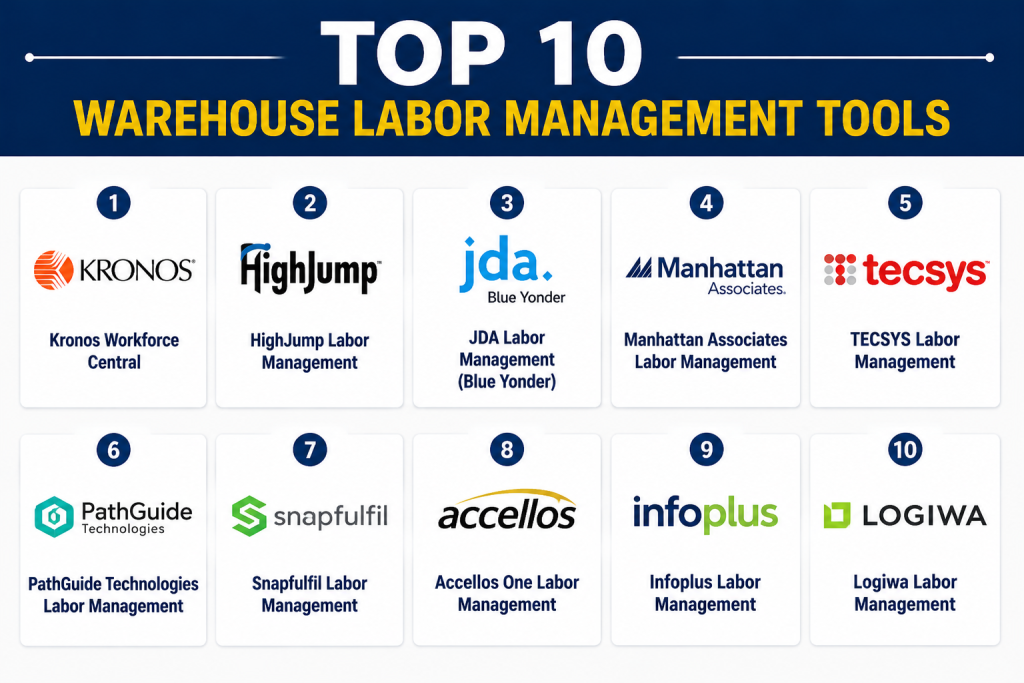
Top 10 Warehouse Labor Management Tools
1- Kronos Workforce Central
Short description: Kronos Workforce Central is a comprehensive labor management platform for large-scale warehouses. It supports workforce scheduling, time tracking, and productivity analytics, suitable for operations teams in retail and logistics.
Key Features
- Advanced shift planning and workforce optimization
- Real-time labor tracking and reporting
- Mobile apps for warehouse staff
- Performance benchmarking dashboards
- Integration with major WMS and ERP systems
- Compliance tracking for labor regulations
Pros
- Scalable for multi-site operations
- Strong reporting and analytics capabilities
Cons
- Can be complex for smaller operations
- Premium pricing for enterprise features
Platforms / Deployment
- Web / Windows / iOS / Android
- Cloud / Hybrid
Security & Compliance
- SSO/SAML, MFA, encryption, audit logs
- SOC 2, GDPR compliance
Integrations & Ecosystem
Supports integration with WMS, ERP, and HR systems:
- SAP, Oracle, Manhattan WMS
- APIs for custom extensions
- Mobile SDKs for handheld devices
Support & Community
- Extensive documentation
- Tiered support packages
- Large enterprise user community
2- HighJump Labor Management
Short description: HighJump Labor Management streamlines warehouse labor by combining task management with performance monitoring. Designed for distribution centers seeking to optimize staff allocation and operational KPIs.
Key Features
- Task interleaving and intelligent work assignment
- Real-time KPI tracking for labor productivity
- Visual dashboards for supervisors
- Integration with warehouse automation
- Historical data analytics for labor forecasting
Pros
- Improves pick-and-pack efficiency
- Supports cross-docking operations
Cons
- Setup can be time-consuming
- Learning curve for new users
Platforms / Deployment
- Web / Windows / Android
- Cloud / Hybrid
Security & Compliance
- Not publicly stated
Integrations & Ecosystem
- Connects with WMS and ERP solutions
- API support for data exchange
- Integration with barcode scanners
Support & Community
- Online knowledge base
- Customer support tiers
- Limited public community forums
3- JDA Labor Management (Blue Yonder)
Short description: JDA Labor Management offers advanced workforce optimization for large-scale fulfillment centers. It enables predictive staffing, labor scheduling, and real-time task monitoring.
Key Features
- Predictive labor demand forecasting
- Shift management and time-off tracking
- Mobile and tablet apps for workers
- Labor compliance and audit tracking
- Advanced performance analytics
Pros
- Strong AI-driven optimization
- Robust multi-site support
Cons
- Higher cost for smaller warehouses
- Integration requires professional services
Platforms / Deployment
- Web / iOS / Android
- Cloud / Hybrid
Security & Compliance
- SSO, MFA, encryption
- SOC 2, GDPR
Integrations & Ecosystem
- WMS integration (Manhattan, Oracle, SAP)
- API for ERP connections
- Mobile device connectivity
Support & Community
- Dedicated support plans
- User conferences
- Limited community content
4- Manhattan Associates Labor Management
Short description: Manhattan Associates provides labor management solutions for distribution centers and e-commerce fulfillment, focusing on productivity, scheduling, and performance analytics.
Key Features
- Real-time workforce tracking
- Task assignment optimization
- Mobile apps for operators
- KPI dashboards for management
- Integration with automation systems
Pros
- Strong integration with Manhattan WMS
- Scalable for enterprise operations
Cons
- Premium pricing
- Requires training for full utilization
Platforms / Deployment
- Web / iOS / Android
- Cloud / Hybrid
Security & Compliance
- SSO/SAML, encryption
- Not publicly stated for certifications
Integrations & Ecosystem
- WMS and ERP integrations
- APIs for custom extensions
- Support for barcode and RFID scanners
Support & Community
- Documentation and onboarding guides
- Enterprise support packages
- Active professional user base
5- TECSYS Labor Management
Short description: TECSYS Labor Management enhances warehouse operations with task allocation, workforce scheduling, and labor performance analysis, suitable for mid-size and large warehouses.
Key Features
- Workload balancing and shift scheduling
- Real-time task visibility
- Performance KPIs and reporting
- Mobile support for operators
- Analytics for continuous improvement
Pros
- User-friendly interface
- Effective task-level optimization
Cons
- Limited advanced AI features
- Smaller integration ecosystem
Platforms / Deployment
- Web / iOS / Android
- Cloud / Hybrid
Security & Compliance
- Not publicly stated
Integrations & Ecosystem
- ERP/WMS integrations
- Mobile device connectivity
- API access for extensions
Support & Community
- Documentation and onboarding
- Customer support tiers
- Small but engaged user base
6- PathGuide Technologies Labor Management
Short description: PathGuide’s system targets warehouse efficiency, providing detailed labor tracking, analytics, and task optimization for distribution centers.
Key Features
- Labor task assignment
- Real-time productivity dashboards
- Shift and schedule management
- Mobile and handheld device support
- Integration with WMS platforms
Pros
- Strong usability for operators
- Effective real-time monitoring
Cons
- Smaller ecosystem
- Limited AI-based predictions
Platforms / Deployment
- Web / Windows / Android
- Cloud / Hybrid
Security & Compliance
- Not publicly stated
Integrations & Ecosystem
- WMS and ERP connectors
- APIs for custom integration
- Mobile scanning device support
Support & Community
- Vendor documentation
- Professional services available
- Smaller community network
7- Snapfulfil Labor Management
Short description: Snapfulfil offers cloud-native warehouse labor management with scheduling, productivity tracking, and mobile workforce support, ideal for modern distribution centers.
Key Features
- Cloud-based labor tracking
- Task assignment and optimization
- Performance metrics and dashboards
- Mobile device compatibility
- Integration with Snapfulfil WMS
Pros
- Easy cloud deployment
- Good mobile support
Cons
- Limited multi-WMS integration
- Advanced analytics may require add-ons
Platforms / Deployment
- Web / iOS / Android
- Cloud
Security & Compliance
- Not publicly stated
Integrations & Ecosystem
- Snapfulfil WMS
- API support for ERP
- Mobile device integration
Support & Community
- Online help and documentation
- Vendor support packages
- Moderate user community
8- Accellos One Labor Management
Short description: Accellos One provides workforce optimization, tracking, and performance management, suitable for warehouses and third-party logistics providers.
Key Features
- Labor scheduling and task allocation
- Performance tracking dashboards
- Real-time reporting
- Mobile workforce support
- KPI and compliance tracking
Pros
- Optimizes labor utilization
- Supports multiple warehouse sites
Cons
- Setup complexity
- Limited AI-driven insights
Platforms / Deployment
- Web / iOS / Android
- Cloud / Hybrid
Security & Compliance
- Not publicly stated
Integrations & Ecosystem
- ERP/WMS integration
- API support
- Mobile device connectivity
Support & Community
- Documentation and onboarding
- Vendor support tiers
- Small community network
9- Infoplus Labor Management
Short description: Infoplus Labor Management enables task tracking, performance analysis, and workforce scheduling, designed for fast-paced warehouses and e-commerce fulfillment.
Key Features
- Task assignment and prioritization
- Real-time labor monitoring
- KPI dashboards and reporting
- Mobile device support
- Integration with Infoplus WMS
Pros
- Simple user interface
- Efficient for SMB warehouses
Cons
- Limited enterprise-scale features
- Advanced analytics may require add-ons
Platforms / Deployment
- Web / iOS / Android
- Cloud
Security & Compliance
- Not publicly stated
Integrations & Ecosystem
- Infoplus WMS
- API access
- Mobile device compatibility
Support & Community
- Online documentation
- Vendor support
- Small community
10- Logiwa Labor Management
Short description: Logiwa offers labor management for warehouses, focusing on productivity, scheduling, and performance analytics, especially for e-commerce and high-volume operations.
Key Features
- Workforce scheduling and task allocation
- Real-time productivity dashboards
- KPI reporting and monitoring
- Mobile app support
- WMS integration
Pros
- Cloud-native and easy to deploy
- Good visibility into labor performance
Cons
- Limited AI/forecasting capabilities
- Smaller integration ecosystem
Platforms / Deployment
- Web / iOS / Android
- Cloud
Security & Compliance
- Not publicly stated
Integrations & Ecosystem
- WMS integrations
- API support
- Mobile device connectivity
Support & Community
- Vendor documentation
- Support tiers available
- Moderate user community
Comparison Table (Top 10)
| Tool Name | Best For | Platform(s) Supported | Deployment | Standout Feature | Public Rating |
|---|---|---|---|---|---|
| Kronos Workforce Central | Large warehouses | Web/Windows/iOS/Android | Cloud/Hybrid | Advanced shift planning | N/A |
| HighJump Labor Management | Distribution centers | Web/Windows/Android | Cloud/Hybrid | Task interleaving optimization | N/A |
| JDA Labor Management | Fulfillment centers | Web/iOS/Android | Cloud/Hybrid | AI-driven optimization | N/A |
| Manhattan Associates L.M. | Enterprise warehouses | Web/iOS/Android | Cloud/Hybrid | Multi-site integration | N/A |
| TECSYS Labor Management | Mid-size warehouses | Web/iOS/Android | Cloud/Hybrid | User-friendly task optimization | N/A |
| PathGuide Technologies L.M. | Distribution centers | Web/Windows/Android | Cloud/Hybrid | Real-time monitoring | N/A |
| Snapfulfil Labor Management | Cloud-native warehouses | Web/iOS/Android | Cloud | Cloud-based deployment | N/A |
| Accellos One L.M. | Warehouses & 3PLs | Web/iOS/Android | Cloud/Hybrid | Multi-site labor optimization | N/A |
| Infoplus Labor Management | SMB warehouses | Web/iOS/Android | Cloud | Simple, fast deployment | N/A |
| Logiwa Labor Management | E-commerce high-volume | Web/iOS/Android | Cloud | Productivity dashboards | N/A |
Evaluation & Scoring
| Tool Name | Core (25%) | Ease (15%) | Integrations (15%) | Security (10%) | Performance (10%) | Support (10%) | Value (15%) | Weighted Total |
|---|---|---|---|---|---|---|---|---|
| Kronos Workforce Central | 9 | 7 | 8 | 8 | 9 | 8 | 7 | 8.3 |
| HighJump Labor Management | 8 | 8 | 7 | 7 | 8 | 7 | 8 | 7.9 |
| JDA Labor Management | 9 | 7 | 8 | 8 | 9 | 7 | 7 | 8.3 |
| Manhattan Associates L.M. | 8 | 7 | 8 | 7 | 8 | 7 | 7 | 7.7 |
| TECSYS Labor Management | 7 | 8 | 7 | 7 | 7 | 7 | 8 | 7.4 |
| PathGuide Technologies L.M. | 7 | 8 | 6 | 7 | 7 | 7 | 7 | 7.0 |
| Snapfulfil Labor Management | 7 | 8 | 6 | 7 | 7 | 6 | 7 | 6.9 |
| Accellos One L.M. | 7 | 7 | 7 | 6 | 7 | 6 | 7 | 6.9 |
| Infoplus Labor Management | 6 | 8 | 6 | 6 | 6 | 6 | 7 | 6.5 |
| Logiwa Labor Management | 6 | 7 | 6 | 6 | 6 | 6 | 7 | 6.4 |
Interpretation: Scores are comparative across tools based on feature richness, usability, integration potential, security, performance, support, and value. Higher scores indicate better overall alignment with modern warehouse labor management needs.
Which Warehouse Labor Management Tool Is Right for You?
Solo / Freelancer
For very small warehouses, Infoplus or Snapfulfil offer simple, cloud-based solutions with minimal setup.
SMB
Mid-size warehouses benefit from TECSYS or Accellos One, balancing features, ease of use, and cost.
Mid-Market
Warehouses with moderate complexity can leverage HighJump or PathGuide, providing task optimization and analytics without the overhead of enterprise systems.
Enterprise
Large-scale operations require Kronos, JDA, or Manhattan Associates, offering AI-driven forecasting, multi-site management, and robust integrations.
Budget vs Premium
Budget-conscious buyers may choose Infoplus or Logiwa. Premium features such as AI optimization and predictive labor scheduling come with Kronos, JDA, or Manhattan Associates.
Feature Depth vs Ease of Use
High feature depth (forecasting, analytics, automation) favors enterprise tools. Ease of use favors TECSYS, Snapfulfil, and Infoplus.
Integrations & Scalability
For extensive WMS/ERP ecosystems and multi-site scalability, Manhattan, JDA, and Kronos are optimal.
Security & Compliance Needs
Operations requiring rigorous compliance benefit from Kronos and JDA due to strong security frameworks and audit capabilities.
Frequently Asked Questions (FAQs)
1- What pricing models are common for warehouse labor management tools?
Most vendors offer SaaS subscription pricing, often per user or per warehouse site. Some provide per-shift or per-transaction options.
2- How long does implementation take?
Implementation varies by tool complexity and warehouse size. SMBs can deploy in weeks, whereas enterprise setups may require months for full integration.
3- Can these tools integrate with existing WMS/ERP?
Yes, all top platforms provide APIs or native connectors for major WMS and ERP systems to ensure seamless data flow.
4- What are common onboarding challenges?
Challenges include training staff, configuring performance KPIs, and aligning labor schedules with operational workflows.
5- Are mobile devices supported?
Yes, most tools support iOS and Android apps or handheld scanners to guide warehouse staff and monitor real-time performance.
6- How do tools handle seasonal labor spikes?
Tools provide predictive scheduling, temporary staff onboarding support, and task assignment optimization for peak periods.
7- What security features should I expect?
Enterprise-grade tools offer SSO/SAML, MFA, encryption, audit logs, and compliance with GDPR/SOC 2 where applicable.
8- Can performance analytics improve labor efficiency?
Yes, real-time dashboards, KPI tracking, and historical performance analysis help managers optimize staffing and reduce idle labor.
9- How easy is it to switch tools?
Migration depends on data portability and integration complexity. Cloud-native tools often simplify migration compared to legacy systems.
10- Are AI and automation included?
Many enterprise tools incorporate AI for forecasting, task prioritization, and workload balancing, but SMB tools may have limited AI capabilities.
Conclusion
Warehouse Labor Management Tools are critical for optimizing workforce efficiency, reducing costs, and improving fulfillment accuracy. Choosing the right tool depends on warehouse size, complexity, integration needs, and budget. Enterprises will benefit from AI-driven platforms like Kronos, JDA, or Manhattan Associates, while SMBs can leverage solutions like TECSYS, Accellos, or Snapfulfil. Start by shortlistings, run a pilot in one warehouse or department, and validate integration, security, and performance before scaling operations. Thoughtful implementation ensures workforce efficiency and sustainable operational improvements.
