Introduction
Yard Management Systems (YMS) are software platforms designed to optimize the flow of trailers, containers, and goods within a warehouse or distribution yard. These systems provide visibility, scheduling, and coordination for inbound and outbound shipments, helping companies reduce bottlenecks, improve asset utilization, and accelerate loading and unloading processes. In , YMS solutions increasingly integrate AI-driven routing, predictive analytics, and IoT tracking to enhance efficiency and real-time decision-making.
Real-world use cases include:
- Managing trailer arrivals and departures to minimize congestion at busy distribution centers.
- Automating gate check-in and yard inspection processes for faster throughput.
- Optimizing dock assignment and staging for warehouse operations.
- Monitoring yard assets in real-time using GPS and IoT sensors.
- Predicting trailer availability and reducing detention times for logistics efficiency.
Evaluation Criteria for Buyers:
- Real-time yard visibility and trailer tracking
- Dock scheduling and yard workflow automation
- AI-driven optimization and predictive analytics
- Integration with WMS, TMS, and ERP systems
- Ease of deployment and scalability
- User interface and ease of adoption
- Security and compliance standards
- Performance reliability and uptime
- Vendor support and community resources
- Pricing and total cost of ownership
Best for: logistics managers, warehouse operators, distribution center teams, mid-market and enterprise companies, third-party logistics providers.
Not ideal for: small businesses with minimal yard activity or limited shipment volume; in such cases, lightweight TMS or spreadsheet-based tracking may suffice.
Key Trends in Yard Management Systems
- AI-driven trailer routing and dock assignment to reduce congestion and idle times.
- Real-time asset tracking using GPS, RFID, and IoT sensors.
- Predictive analytics for detention and dwell time management.
- Automated gate operations with electronic documentation and self-service portals.
- Integration with WMS, TMS, and ERP platforms for end-to-end logistics visibility.
- Cloud-native and hybrid deployment models for scalability and remote access.
- Mobile and tablet support for yard personnel and drivers.
- Enhanced security and compliance tracking including audit logs and RBAC.
- Data-driven KPI dashboards to monitor throughput, asset utilization, and bottlenecks.
- Flexible pricing models including subscription and usage-based plans.
How We Selected These Tools (Methodology)
- Evaluated market adoption and mindshare across warehouse and logistics operations.
- Assessed feature completeness, including dock scheduling, trailer tracking, and automation.
- Reviewed reliability and performance metrics, including real-time updates and uptime.
- Verified security posture, including encryption, SSO/MFA, and compliance reporting.
- Examined integration ecosystem with WMS, TMS, ERP, and third-party logistics tools.
- Considered customer fit across SMBs, mid-market, and enterprise segments.
- Analyzed ease of use and learning curve for warehouse and logistics staff.
- Factored in support, training, and community engagement for effective implementation.
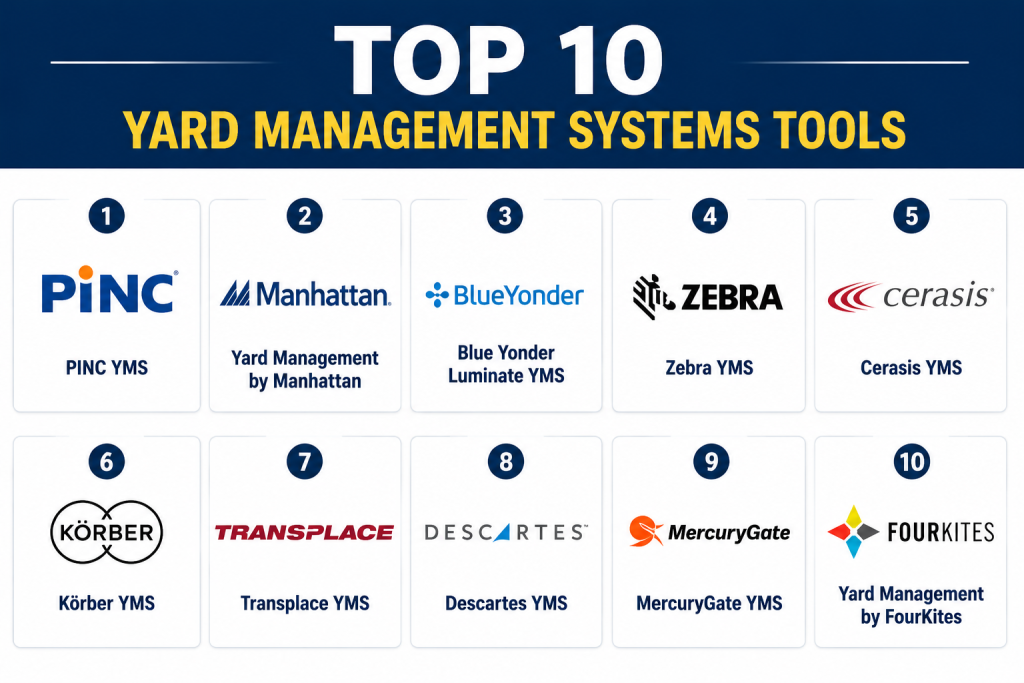
Top 10 Yard Management Systems Tools
1- PINC YMS
Short description: PINC YMS offers a cloud-based solution for yard visibility, trailer tracking, and dock scheduling. It is ideal for large distribution centers and third-party logistics providers seeking real-time operational insights.
Key Features
- Trailer tracking with GPS and RFID
- Dock scheduling automation
- Real-time yard visibility dashboards
- AI-driven trailer movement optimization
- Mobile apps for yard personnel
- Integration with WMS/TMS/ERP
Pros
- Reduces yard congestion
- Improves trailer turnaround time
Cons
- Requires configuration for complex yards
- May be expensive for smaller operations
Platforms / Deployment
- Web / iOS / Android
- Cloud
Security & Compliance
- SSO, MFA, encryption, audit logs
- SOC 2, Not publicly stated
Integrations & Ecosystem
Works with enterprise systems and logistics platforms:
- WMS and TMS connectors
- ERP integration (SAP, Oracle)
- API for third-party logistics
- Mobile extensions for drivers
Support & Community
Comprehensive documentation, dedicated support tiers, active logistics user community.
2- Yard Management by Manhattan
Short description: Manhattan’s YMS provides comprehensive yard visibility, dock management, and trailer scheduling. It suits large retail and manufacturing distribution centers focused on efficiency.
Key Features
- Dock and trailer scheduling
- Real-time yard tracking
- Automated alerts and notifications
- Optimization algorithms for yard flows
- Integration with WMS and TMS
Pros
- Improves operational efficiency
- Supports complex distribution networks
Cons
- High implementation complexity
- Steep learning curve
Platforms / Deployment
- Web / Cloud / Hybrid
Security & Compliance
- SSO, encryption
- Not publicly stated
Integrations & Ecosystem
Seamless ERP, WMS, and TMS integration:
- SAP, Oracle ERP
- Analytics dashboards
- API for third-party logistics
Support & Community
Extensive training resources, customer support tiers, active online forums.
3- Blue Yonder Luminate YMS
Short description: Blue Yonder Luminate offers AI-enhanced yard management, focusing on predictive scheduling and real-time visibility. Best for retailers and logistics operators managing large trailer fleets.
Key Features
- AI-driven yard and dock scheduling
- Trailer tracking with IoT integration
- Predictive analytics for dwell times
- Alerts for congestion and delays
- Mobile access for yard staff
Pros
- Predictive insights reduce delays
- Real-time tracking improves throughput
Cons
- Complexity requires training
- Premium pricing for smaller users
Platforms / Deployment
- Web / iOS / Android
- Cloud
Security & Compliance
- Encryption, MFA
- SOC 2, Not publicly stated
Integrations & Ecosystem
- WMS and TMS connectors
- ERP integration
- API for analytics and dashboards
- Mobile fleet management
Support & Community
Varies / Not publicly stated; includes onboarding programs and support teams.
4- Zebra YMS
Short description: Zebra YMS provides real-time visibility and operational control of the yard using RFID, barcode, and IoT sensors. Designed for distribution centers and manufacturing hubs.
Key Features
- RFID and barcode tracking
- Real-time yard visibility
- Dock scheduling automation
- Mobile device support for personnel
- Predictive yard analytics
Pros
- Reduces congestion and dwell times
- Easy to integrate with mobile devices
Cons
- Requires hardware setup (RFID/barcodes)
- Limited customization options
Platforms / Deployment
- Web / iOS / Android
- Cloud / Hybrid
Security & Compliance
- SSO, encryption
- Not publicly stated
Integrations & Ecosystem
- Connects with WMS and ERP
- Mobile device ecosystem
- API for logistics partners
Support & Community
Good documentation, training resources, support tiers available.
5- Cerasis YMS
Short description: Cerasis YMS is a cloud-based solution focused on optimizing yard flows, trailer movements, and dock scheduling for mid-size shippers and logistics providers.
Key Features
- Trailer scheduling and assignment
- Real-time yard visibility
- Automated alerts for arrivals and departures
- Dock planning dashboards
- Mobile interface for drivers
Pros
- Simplifies yard operations
- Affordable for mid-market companies
Cons
- Less suitable for complex, multi-site operations
- Limited AI optimization features
Platforms / Deployment
- Web / Mobile
- Cloud
Security & Compliance
- Encryption, audit logs
- Not publicly stated
Integrations & Ecosystem
- WMS and TMS integration
- ERP connectors
- Mobile API extensions
Support & Community
Documentation and support included; small but growing community.
6- Körber YMS
Short description: Körber YMS focuses on operational efficiency in yard management with real-time asset tracking and intelligent scheduling for global supply chains.
Key Features
- Dock scheduling and trailer assignment
- Real-time trailer and asset tracking
- AI-assisted optimization
- Mobile app support
- KPI dashboards and reporting
Pros
- Enhances throughput and utilization
- Supports complex global operations
Cons
- High learning curve
- Implementation requires professional services
Platforms / Deployment
- Web / iOS / Android
- Cloud / Hybrid
Security & Compliance
- MFA, encryption, RBAC
- SOC 2, Not publicly stated
Integrations & Ecosystem
- ERP, WMS, and TMS integrations
- Mobile device and IoT extensions
- API support for logistics partners
Support & Community
Varies / Not publicly stated; includes onboarding and training services.
7- Transplace YMS
Short description: Transplace YMS is a cloud-based solution offering dock scheduling, yard visibility, and trailer optimization for 3PLs and large shippers.
Key Features
- Dock appointment scheduling
- Trailer tracking and yard visibility
- Predictive analytics for dwell time
- Alerts for delays and congestion
- Mobile access for yard staff
Pros
- Improves operational efficiency
- Cloud-native with real-time updates
Cons
- Limited offline functionality
- Integration may require technical support
Platforms / Deployment
- Web / Mobile
- Cloud
Security & Compliance
- Encryption, SSO
- Not publicly stated
Integrations & Ecosystem
- WMS and TMS connections
- ERP integration
- API for third-party carriers
- Mobile fleet management
Support & Community
Documentation and customer support included.
8- Descartes YMS
Short description: Descartes YMS provides real-time yard operations management, optimizing trailer movement and dock assignments for logistics and manufacturing companies.
Key Features
- Trailer assignment and dock planning
- Real-time yard visibility
- Mobile interface for operators
- Analytics and reporting
- Alerts for congestion
Pros
- Streamlines trailer operations
- Real-time data improves decisions
Cons
- Limited AI features
- May require integration work
Platforms / Deployment
- Web / Mobile
- Cloud
Security & Compliance
- SSO, encryption
- Not publicly stated
Integrations & Ecosystem
- WMS/TMS integration
- ERP connectors
- Mobile API support
Support & Community
Varies / Not publicly stated.
9- MercuryGate YMS
Short description: MercuryGate YMS provides a scalable platform for yard visibility, trailer tracking, and dock optimization, particularly suited for logistics providers and retailers.
Key Features
- Dock scheduling automation
- Trailer and yard tracking
- Predictive analytics for yard flow
- Mobile application support
- KPI dashboards
Pros
- Reduces congestion and dwell times
- Flexible and scalable
Cons
- Limited AI-driven optimization
- May require training for complex features
Platforms / Deployment
- Web / Mobile
- Cloud
Security & Compliance
- Encryption, audit logs
- Not publicly stated
Integrations & Ecosystem
- ERP and WMS integration
- API for logistics partners
- Mobile device support
Support & Community
Documentation and customer support available.
10- Yard Management by FourKites
Short description: FourKites YMS delivers real-time trailer visibility, dock scheduling, and yard flow optimization, using AI for predictive scheduling in large distribution networks.
Key Features
- Real-time trailer and yard tracking
- AI-driven dock scheduling
- Mobile access for yard operators
- Predictive analytics for dwell and detention
- Alerts for congestion and delays
Pros
- Real-time insights improve throughput
- AI scheduling reduces bottlenecks
Cons
- Premium pricing for SMBs
- Requires training for advanced features
Platforms / Deployment
- Web / iOS / Android
- Cloud
Security & Compliance
- SSO, MFA, encryption
- SOC 2, Not publicly stated
Integrations & Ecosystem
- ERP, WMS, and TMS integration
- Mobile device and IoT connectivity
- API support for partners
Support & Community
Varies / Not publicly stated; includes onboarding and support services.
Comparison Table (Top 10)
| Tool Name | Best For | Platform(s) Supported | Deployment | Standout Feature | Public Rating |
|---|---|---|---|---|---|
| PINC YMS | Large DCs, 3PLs | Web / iOS / Android | Cloud | Real-time trailer tracking | N/A |
| Manhattan YMS | Retail & manufacturing | Web | Cloud / Hybrid | Dock and trailer scheduling | N/A |
| Blue Yonder Luminate YMS | Retailers & logistics | Web / iOS / Android | Cloud | AI predictive scheduling | N/A |
| Zebra YMS | Distribution centers | Web / iOS / Android | Cloud / Hybrid | IoT & RFID tracking | N/A |
| Cerasis YMS | Mid-market shippers | Web / Mobile | Cloud | Affordable yard optimization | N/A |
| Körber YMS | Global supply chains | Web / iOS / Android | Cloud / Hybrid | AI-assisted yard optimization | N/A |
| Transplace YMS | 3PLs & large shippers | Web / Mobile | Cloud | Cloud-native real-time updates | N/A |
| Descartes YMS | Logistics & manufacturing | Web / Mobile | Cloud | Trailer assignment dashboards | N/A |
| MercuryGate YMS | Retail & logistics | Web / Mobile | Cloud | Scalable yard management | N/A |
| FourKites YMS | Large DCs & distributors | Web / iOS / Android | Cloud | AI-driven dock scheduling | N/A |
Evaluation & Scoring of YMS Tools
| Tool Name | Core (25%) | Ease (15%) | Integrations (15%) | Security (10%) | Performance (10%) | Support (10%) | Value (15%) | Weighted Total (0–10) |
|---|---|---|---|---|---|---|---|---|
| PINC YMS | 9 | 8 | 9 | 8 | 9 | 8 | 7 | 8.5 |
| Manhattan YMS | 8 | 7 | 8 | 7 | 8 | 8 | 7 | 7.8 |
| Blue Yonder Luminate | 8 | 7 | 8 | 7 | 8 | 7 | 7 | 7.6 |
| Zebra YMS | 7 | 8 | 7 | 7 | 7 | 7 | 7 | 7.2 |
| Cerasis YMS | 7 | 8 | 7 | 6 | 7 | 6 | 7 | 7.0 |
| Körber YMS | 8 | 7 | 8 | 7 | 8 | 7 | 7 | 7.6 |
| Transplace YMS | 7 | 8 | 7 | 6 | 7 | 7 | 7 | 7.1 |
| Descartes YMS | 7 | 7 | 7 | 6 | 7 | 6 | 7 | 6.9 |
| MercuryGate YMS | 7 | 7 | 7 | 6 | 7 | 6 | 7 | 6.9 |
| FourKites YMS | 8 | 7 | 8 | 7 | 8 | 7 | 7 | 7.6 |
Interpretation: Higher scores reflect better overall suitability based on functionality, ease of use, and integration capabilities. Selection should consider specific business priorities such as predictive analytics or real-time tracking.
Which Yard Management Tool Is Right for You?
Solo / Freelancer
- YMS is generally unnecessary unless managing small-scale logistics; consider lightweight TMS tools or manual tracking.
SMB
- Cerasis YMS or Transplace offers scalable, affordable cloud solutions without complex implementation.
Mid-Market
- Manhattan YMS or Körber YMS balance operational depth and ease of use for moderate yard complexity.
Enterprise
- PINC YMS, Blue Yonder Luminate, and FourKites provide AI-driven optimization, predictive analytics, and comprehensive integrations.
Budget vs Premium
- SMBs benefit from Cerasis and Descartes; enterprises may require PINC, Blue Yonder, or FourKites for advanced capabilities.
Feature Depth vs Ease of Use
- PINC, Körber, and Blue Yonder offer deep feature sets but may require training; Cerasis and Transplace are easier to adopt.
Integrations & Scalability
- Enterprises need YMS platforms that integrate with WMS, TMS, ERP, and IoT sensors for full operational visibility.
Security & Compliance Needs
- SOC 2, GDPR, MFA, and encryption are key for sensitive logistics operations. Choose vendors that meet regulatory requirements.
Frequently Asked Questions (FAQs)
1- What are typical pricing models for YMS platforms?
Most vendors offer subscription-based pricing, often tiered by features or number of trailers/docks. Enterprise deployments may include implementation fees.
2- How long does YMS implementation take?
SMBs can implement in a few weeks, while complex enterprise yards may require 3–6 months, including hardware setup, integration, and training.
3- Can YMS integrate with existing WMS or ERP systems?
Yes, most leading YMS solutions offer connectors and APIs to integrate with WMS, TMS, ERP, and other logistics platforms.
4- Do these platforms support mobile access for yard personnel?
Yes, most YMS solutions provide web and mobile apps, enabling real-time updates for drivers, yard operators, and managers.
5- Are AI features common in YMS?
Leading platforms now incorporate AI for predictive dock scheduling, congestion alerts, and trailer routing optimization.
6- How secure are YMS platforms?
Security features often include encryption, SSO/MFA, RBAC, and audit logs. SOC 2 and GDPR compliance is standard among enterprise-grade solutions.
7- Can YMS scale with business growth?
Yes, cloud-native YMS solutions scale from mid-market operations to global enterprise distribution networks.
8- What common mistakes should be avoided during implementation?
Avoid insufficient staff training, skipping integration testing, and underestimating data quality needs. Phased rollout is recommended.
9- Are YMS platforms suitable for small logistics operations?
Small-scale yards may not require full-featured YMS; lightweight TMS or spreadsheet-based tracking can suffice for minimal operations.
10- How do I switch from one YMS to another?
Switching requires data migration, system integration adjustments, and retraining. Vendor support and professional services are critical for a smooth transition.
Conclusion
Yard Management Systems are essential for optimizing trailer flow, dock assignments, and yard visibility, particularly for mid-market and enterprise logistics operations. While tools like PINC, Blue Yonder Luminate, and FourKites provide advanced AI-driven scheduling and predictive analytics, SMBs may find Cerasis or Transplace more practical and cost-effective. The best YMS depends on operational complexity, integration needs, and scalability requirements. shortlist 2–3 platforms based on your yard complexity, run a pilot to validate integration and predictive features, and scale while monitoring performance, security, and ROI.
