Introduction
Customs Brokerage Software is a specialized solution that helps importers, exporters, and logistics providers manage customs clearance efficiently. In plain terms, these platforms automate and streamline the documentation, compliance, tariff calculation, and regulatory reporting required for international shipments. This reduces delays, prevents costly fines, and ensures smooth cross-border operations.
In , global trade complexity, increased e-commerce flows, and evolving customs regulations make digital brokerage tools essential. Real-world use cases include:
- Import/Export Documentation: Automating the creation and submission of customs declarations and compliance forms.
- Tariff & Duty Calculation: Accurate assessment of duties, taxes, and fees for international shipments.
- Regulatory Compliance: Ensuring shipments meet local and international trade regulations.
- Integration with Freight Forwarders: Coordinating with carriers, ports, and 3PL partners.
- Analytics & Reporting: Tracking clearance times, cost, and operational bottlenecks.
What buyers should evaluate:
- Compliance automation and regulatory coverage
- Ease of creating and submitting customs documents
- Integration with TMS, WMS, and ERP systems
- Real-time shipment and status visibility
- AI-assisted tariff classification and valuation
- Reporting and analytics for cost and performance
- Multi-country and multi-port support
- Security and audit capabilities
- Support for digital signatures and electronic filings
Best for: Customs brokers, freight forwarders, large import/export businesses, and multinational supply chain teams.
Not ideal for: Small businesses with infrequent cross-border shipments; companies that outsource all customs functions to third parties.
Key Trends in Customs Brokerage Software
- AI-Powered Classification: Automating HS code and tariff determination with machine learning.
- Real-Time Regulatory Updates: Automatic updates on customs rules, trade agreements, and sanctions.
- Cloud-Native Platforms: Multi-country accessibility and remote team collaboration.
- Electronic Data Interchange (EDI): Seamless submission to customs authorities worldwide.
- Integrated Trade Compliance: Including restricted party screening and sanctions checks.
- Predictive Analytics for Clearance Times: Anticipate delays and optimize shipment schedules.
- Mobile & Portal Access: Allow brokers and clients to manage documentation and track shipments remotely.
- Blockchain for Trade Transparency: Immutable records of shipments and clearance for auditing purposes.
- Flexible Pricing Models: SaaS subscription, per declaration, or enterprise licensing.
- Interoperability with Freight & Supply Chain Tools: WMS, TMS, ERP, and carrier systems.
How We Selected These Tools (Methodology)
- Evaluated market adoption and mindshare in the customs brokerage industry.
- Assessed feature completeness, including automation, compliance, and reporting.
- Reviewed performance and reliability signals, such as uptime and processing speed.
- Analyzed security posture, including authentication, encryption, and audit logging.
- Considered integration ecosystem with WMS, TMS, ERP, and e-filing systems.
- Measured fit across different business sizes, from SMBs to global enterprises.
- Reviewed AI and automation capabilities for classification and predictive insights.
- Assessed support, documentation, and community resources.
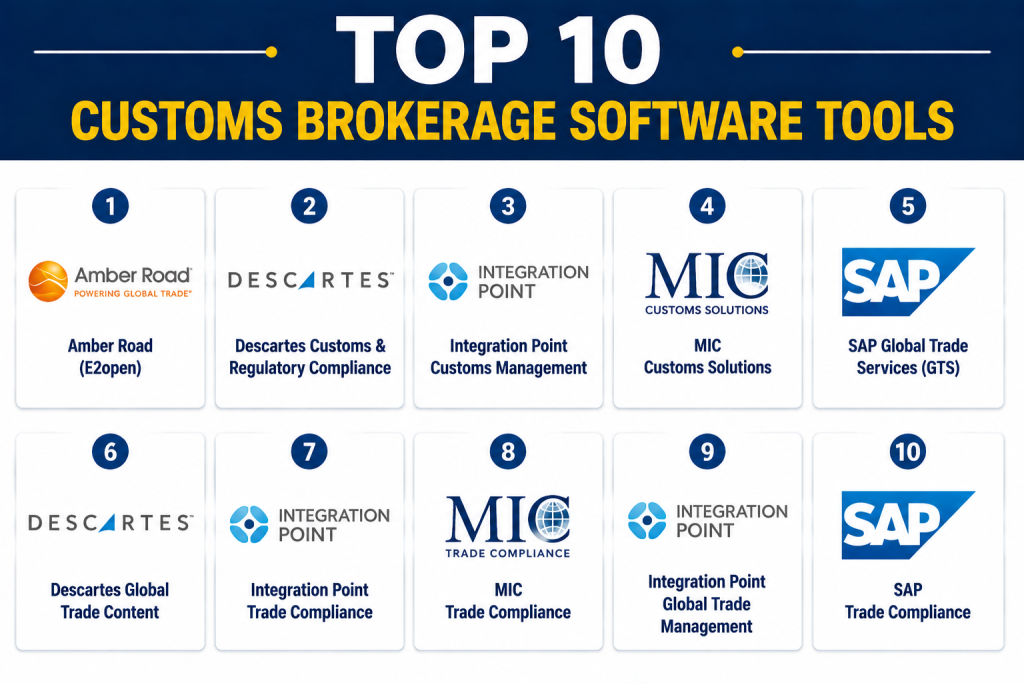
Top 10 Customs Brokerage Software Tools
1- Amber Road (E2open)
Short description: Amber Road, now part of E2open, offers end-to-end global trade management with customs brokerage capabilities. Designed for multinational importers and exporters, it supports automated documentation, compliance, and trade analytics.
Key Features
- Automated customs declarations and e-filing
- Tariff and duty calculation engine
- Restricted party and sanctions screening
- Integration with TMS and ERP systems
- Real-time shipment visibility
- Compliance reporting dashboards
Pros
- Reduces errors in customs documentation
- Supports multi-country and multi-port operations
Cons
- Enterprise pricing may be high
- Complexity may require training for full adoption
Platforms / Deployment
- Web / Windows / iOS / Android
- Cloud / Hybrid
Security & Compliance
- SSO/SAML, encryption, audit logs
- Not publicly stated for certifications
Integrations & Ecosystem
- ERP and TMS systems integration
- API access for third-party tools
- Carrier and freight forwarder connectivity
Support & Community
- Documentation and onboarding guides
- Professional support tiers
- Moderate professional user community
2- Descartes Customs & Regulatory Compliance
Short description: Descartes provides customs brokerage automation, helping brokers and logistics teams ensure accurate compliance and timely clearance. Suitable for high-volume international shippers.
Key Features
- Automated customs documentation
- Duty and tax calculation
- Trade compliance checks
- Real-time reporting and dashboards
- Multi-country filing support
Pros
- Reduces clearance delays
- Ensures compliance with evolving regulations
Cons
- May require process adaptation
- Premium for enterprise-scale use
Platforms / Deployment
- Web / iOS / Android
- Cloud
Security & Compliance
- Not publicly stated
Integrations & Ecosystem
- Integration with TMS, ERP, and carrier systems
- API access for custom workflows
- Electronic submission to customs authorities
Support & Community
- Vendor documentation
- Support packages
- Limited public community
3- Integration Point Customs Management
Short description: Integration Point offers cloud-based customs brokerage software focused on compliance, automation, and visibility. Designed for mid-size and enterprise global trade operations.
Key Features
- Duty and tax automation
- EDI submissions for customs authorities
- Restricted party screening
- Real-time shipment tracking
- Compliance reporting
Pros
- Cloud-native and scalable
- Supports multi-country trade compliance
Cons
- Smaller community support
- Advanced features may require professional setup
Platforms / Deployment
- Web / Mobile
- Cloud
Security & Compliance
- Not publicly stated
Integrations & Ecosystem
- WMS, TMS, and ERP integrations
- API access for carriers and freight partners
- Workflow automation for documentation
Support & Community
- Documentation and tutorials
- Professional support
- Small professional network
4- MIC Customs Solutions
Short description: MIC Customs Solutions delivers customs brokerage automation with a focus on regulatory compliance and document accuracy. Ideal for importers/exporters dealing with complex trade flows.
Key Features
- Automated customs filing
- Tariff and duty engine
- Compliance screening and reporting
- Multi-port and multi-country support
- Analytics dashboards
Pros
- Enhances regulatory compliance
- Reduces manual paperwork
Cons
- Limited integration ecosystem
- Requires user training for full features
Platforms / Deployment
- Web / Mobile
- Cloud / Hybrid
Security & Compliance
- Not publicly stated
Integrations & Ecosystem
- ERP and TMS integrations
- API support
- Carrier portal access
Support & Community
- Documentation
- Support tiers
- Small user community
5- SAP Global Trade Services (GTS)
Short description: SAP GTS automates customs and compliance management for global trade. It is suitable for enterprise businesses needing integrated trade and ERP solutions.
Key Features
- Customs declaration automation
- Duty and tax calculation
- Restricted party screening
- Integration with SAP ERP
- Real-time reporting
Pros
- Fully integrated with SAP ecosystem
- Scales for global enterprises
Cons
- High implementation cost
- Complexity requires training
Platforms / Deployment
- Web / Windows
- Cloud / Hybrid
Security & Compliance
- SSO, encryption, audit logs
- Not publicly stated
Integrations & Ecosystem
- SAP ERP and TMS integration
- API for third-party connections
- Multi-country filing support
Support & Community
- SAP support tiers
- Documentation and training
- Large enterprise user base
6- Descartes Global Trade Content
Short description: Descartes Global Trade Content offers customs brokerage automation for multi-country shipments, focusing on documentation accuracy and compliance.
Key Features
- E-filing and documentation automation
- Harmonized System (HS) code validation
- Duty and tariff calculation
- Compliance reporting dashboards
- Carrier and freight forwarder integration
Pros
- Ensures accurate customs declarations
- Supports multiple international jurisdictions
Cons
- Enterprise focus may not suit SMBs
- Learning curve for new users
Platforms / Deployment
- Web / Mobile
- Cloud
Security & Compliance
- Not publicly stated
Integrations & Ecosystem
- ERP and TMS systems
- APIs for custom workflows
- Mobile access for carriers
Support & Community
- Vendor documentation
- Professional support
- Limited community
7- Integration Point Trade Compliance
Short description: This platform supports customs brokerage with compliance management, automated declarations, and visibility for global shipments. Suitable for multinational importers/exporters.
Key Features
- Automated customs filing
- Restricted party and sanctions screening
- Tariff and duty management
- EDI submissions to authorities
- Analytics and reporting
Pros
- Reduces risk of fines and penalties
- Streamlines customs documentation
Cons
- Smaller user base
- Advanced features require setup
Platforms / Deployment
- Web / Mobile
- Cloud
Security & Compliance
- Not publicly stated
Integrations & Ecosystem
- ERP, TMS, and WMS connections
- API for freight partners
- Carrier portal support
Support & Community
- Documentation and guides
- Vendor support tiers
- Limited community
8- MIC Trade Compliance
Short description: MIC Trade Compliance focuses on customs brokerage automation and regulatory compliance for international trade.
Key Features
- Automated e-filing and documentation
- Tariff classification and duty calculation
- Compliance screening
- Reporting dashboards
- Multi-country support
Pros
- Reduces manual workload
- Enhances compliance
Cons
- Smaller integration options
- Training required for full adoption
Platforms / Deployment
- Web / Mobile
- Cloud / Hybrid
Security & Compliance
- Not publicly stated
Integrations & Ecosystem
- ERP and TMS integration
- APIs for freight and carrier connections
- Reporting automation
Support & Community
- Documentation and tutorials
- Vendor support
- Small professional user base
9- Integration Point Global Trade Management
Short description: Integration Point GTS provides enterprise-grade customs brokerage and trade compliance automation with multi-country support and visibility tools.
Key Features
- Automated customs filings
- Duty and tax calculation
- Restricted party screening
- Reporting dashboards
- Multi-country e-filing support
Pros
- Scales for global operations
- Reduces compliance risk
Cons
- Implementation complexity
- Enterprise pricing
Platforms / Deployment
- Web / Mobile
- Cloud
Security & Compliance
- Not publicly stated
Integrations & Ecosystem
- ERP, TMS, and WMS integration
- API connectivity
- Carrier portals
Support & Community
- Documentation
- Professional support
- Moderate enterprise user base
10- SAP Trade Compliance
Short description: SAP Trade Compliance provides customs brokerage automation within SAP GTS, focusing on documentation, compliance, and tariff management.
Key Features
- Customs declaration automation
- Duty, tax, and tariff management
- Restricted party screening
- Compliance reporting
- Integration with SAP ERP
Pros
- Fully integrated with SAP ecosystem
- Suitable for enterprise-scale operations
Cons
- Complex implementation
- High cost for SMBs
Platforms / Deployment
- Web / Windows
- Cloud / Hybrid
Security & Compliance
- SSO, audit logs, encryption
- Not publicly stated
Integrations & Ecosystem
- SAP ERP and TMS
- APIs for carrier and freight integration
- Multi-country e-filing
Support & Community
- SAP support tiers
- Documentation and training
- Large enterprise user community
Comparison Table (Top 10)
| Tool Name | Best For | Platform(s) Supported | Deployment | Standout Feature | Public Rating |
|---|---|---|---|---|---|
| Amber Road (E2open) | Multinational importers/exporters | Web/iOS/Android | Cloud/Hybrid | Automated documentation | N/A |
| Descartes Customs & Compliance | High-volume brokers | Web/iOS/Android | Cloud | Real-time compliance alerts | N/A |
| Integration Point Customs Mgmt | Mid-size to enterprise | Web/Mobile | Cloud | EDI submissions | N/A |
| MIC Customs Solutions | Importers/exporters | Web/Mobile | Cloud/Hybrid | Multi-country compliance | N/A |
| SAP GTS | Enterprise businesses | Web/Windows | Cloud/Hybrid | Full ERP integration | N/A |
| Descartes Global Trade Content | Multi-country shipments | Web/Mobile | Cloud | HS code validation | N/A |
| Integration Point Trade Compliance | Multinational trade operations | Web/Mobile | Cloud | Compliance automation | N/A |
| MIC Trade Compliance | SMBs and mid-size companies | Web/Mobile | Cloud/Hybrid | E-filing and reporting | N/A |
| Integration Point GTM | Enterprise global operations | Web/Mobile | Cloud | Multi-country filing support | N/A |
| SAP Trade Compliance | Enterprise with SAP ERP | Web/Windows | Cloud/Hybrid | Integrated SAP compliance | N/A |
Evaluation & Scoring
| Tool Name | Core (25%) | Ease (15%) | Integrations (15%) | Security (10%) | Performance (10%) | Support (10%) | Value (15%) | Weighted Total |
|---|---|---|---|---|---|---|---|---|
| Amber Road (E2open) | 9 | 8 | 8 | 7 | 8 | 7 | 7 | 8.0 |
| Descartes Customs & Compliance | 8 | 8 | 7 | 7 | 8 | 7 | 7 | 7.7 |
| Integration Point Customs Mgmt | 8 | 7 | 7 | 7 | 8 | 7 | 7 | 7.5 |
| MIC Customs Solutions | 7 | 7 | 6 | 6 | 7 | 6 | 7 | 6.8 |
| SAP GTS | 9 | 7 | 8 | 7 | 8 | 7 | 6 | 7.9 |
| Descartes Global Trade Content | 8 | 7 | 7 | 6 | 7 | 6 | 7 | 7.2 |
| Integration Point Trade Compliance | 8 | 7 | 7 | 6 | 7 | 6 | 7 | 7.2 |
| MIC Trade Compliance | 7 | 8 | 6 | 6 | 7 | 6 | 7 | 6.9 |
| Integration Point GTM | 8 | 7 | 7 | 6 | 7 | 6 | 7 | 7.2 |
| SAP Trade Compliance | 9 | 7 | 8 | 7 | 8 | 7 | 6 | 7.9 |
Interpretation: Higher weighted totals indicate stronger alignment with modern customs brokerage requirements including automation, compliance, integration, and usability. Scores are comparative across all 10 tools.
Which Customs Brokerage Tool Is Right for You?
Solo / Freelancer
For occasional importers/exporters, platforms like MIC Trade Compliance or MIC Customs Solutions provide affordable, cloud-based options with essential compliance features.
SMB
Mid-size businesses can benefit from Integration Point Customs Mgmt or Descartes Global Trade Content, offering scalable compliance automation without full ERP dependency.
Mid-Market
Operations with moderate volume and multi-country shipments should consider Amber Road or Integration Point Trade Compliance for workflow automation and reporting.
Enterprise
Large multinational operations benefit from SAP GTS, SAP Trade Compliance, or Descartes Customs & Compliance for end-to-end visibility, AI-assisted compliance, and multi-country coverage.
Budget vs Premium
Budget-conscious buyers may choose MIC Solutions or Integration Point Customs Mgmt. Premium platforms like SAP GTS and Amber Road deliver AI-driven automation, advanced analytics, and ERP integration.
Feature Depth vs Ease of Use
Enterprise tools offer deep features but require training. SMB-focused platforms prioritize usability and speed of deployment.
Integrations & Scalability
Multi-country, multi-carrier operations require SAP GTS, Amber Road, or Descartes, which integrate with ERP, WMS, and TMS systems.
Security & Compliance Needs
Organizations with strict regulatory requirements should consider enterprise-grade solutions with audit trails and encryption, such as SAP GTS and Descartes.
Frequently Asked Questions (FAQs)
1- What pricing models exist for customs brokerage software?
Most platforms offer SaaS subscriptions, often per declaration, per warehouse, or enterprise licensing models. Volume-based pricing is common for high-throughput operations.
2- How long does implementation take?
Implementation can range from a few weeks for SMBs to several months for enterprise platforms, depending on integration and regulatory requirements.
3- Can these tools integrate with WMS, ERP, and TMS?
Yes, all top platforms provide APIs or native connectors for seamless integration with logistics and enterprise systems.
4- How do tools handle multi-country compliance?
Enterprise platforms like SAP GTS and Amber Road offer regulatory updates, tariff management, and e-filing support for multiple jurisdictions.
5- Are AI and automation included?
Many tools offer AI-assisted tariff classification, predictive compliance checks, and workflow automation to reduce errors and improve efficiency.
6- What security measures are standard?
SSO/SAML, MFA, encryption, and audit logging are common, although formal certifications are often “Not publicly stated.”
7- Can small businesses benefit from these tools?
Yes, but they should focus on cloud-based solutions with essential compliance features to avoid unnecessary complexity.
8- Are mobile portals available for brokers and clients?
Most platforms support web and mobile access, enabling documentation management and status tracking on the go.
9- How is documentation accuracy ensured?
Automation, AI-assisted classification, and validation rules help reduce errors in customs declarations.
10- Can these platforms reduce clearance delays?
Yes, real-time visibility, automated filings, and compliance checks minimize delays at ports and customs.
Conclusion
Customs Brokerage Software is a key tool for businesses navigating complex international trade. Choosing the right solution depends on shipment volume, business size, integration needs, and regulatory exposure. SMBs can leverage MIC Solutions or Integration Point, while enterprises benefit from SAP GTS, Amber Road, or Descartes for AI-driven compliance and multi-country coverage. Start by shortlisting , run a pilot for your operational workflows, and validate integration, automation, and security before scaling globally.
