Introduction
Clinical Terminology Management Tools (CTMT) are specialized software platforms that enable healthcare organizations, pharmaceutical companies, and life sciences researchers to manage standardized medical vocabularies, terminologies, and coding systems efficiently. In plain terms, these tools help ensure consistent clinical data across systems, maintain interoperability, and meet regulatory requirements.
In , these tools are critical due to growing complexity in electronic health records (EHR), global regulatory standards, and the need for data interoperability across research, clinical trials, and healthcare delivery. Real-world use cases include:
- Standardizing Medical Codes: Managing ICD, SNOMED CT, LOINC, and other terminology standards.
- Clinical Trial Data Harmonization: Ensuring consistent reporting across global study sites.
- Regulatory Compliance: Facilitating submissions to FDA, EMA, or other agencies.
- Interoperability Across Systems: Mapping between EHR, LIMS, and clinical research systems.
- Analytics and Reporting: Ensuring data consistency for research, quality improvement, and reporting.
Buyers should evaluate:
- Support for major clinical terminologies (SNOMED, LOINC, ICD)
- Version control and change management
- Mapping and crosswalk capabilities
- Integration with EHR, LIMS, and clinical trial systems
- Automation and AI-assisted term mapping
- Reporting, audit, and compliance features
- Cloud/mobile accessibility
- Security and access control
- Scalability for enterprise or multi-site operations
Best for: Life sciences companies, hospitals, clinical research organizations, and healthcare IT teams.
Not ideal for: Organizations without structured clinical data or limited need for standardized terminology.
Key Trends in Clinical Terminology Management Tools
- AI-Assisted Code Mapping: Automating crosswalks between terminologies and datasets.
- Cloud-Native Platforms: Enabling multi-site access and real-time collaboration.
- Interoperability Standards: Supporting HL7 FHIR, CDA, and other data exchange standards.
- Regulatory Intelligence Updates: Automatic notifications of terminology updates and compliance changes.
- Automated Audit Trails: Tracking changes and updates for regulatory readiness.
- Integration with EHR, LIMS, and CTMS: Ensuring seamless data consistency.
- Version Control and Change Management: Managing terminology versions across systems.
- Mobile & Web Dashboards: Providing remote access for data managers and clinical teams.
- Predictive Analytics: Identifying inconsistent or outdated coding.
- Flexible SaaS Pricing Models: Subscription-based or enterprise licensing options.
How We Selected These Tools (Methodology)
- Evaluated market adoption and mindshare across hospitals, research, and life sciences sectors.
- Assessed feature completeness, including mapping, version control, and integration capabilities.
- Reviewed performance and reliability of real-time terminology management.
- Analyzed security posture, including encryption, audit logging, and role-based access.
- Considered integration ecosystem with EHR, LIMS, CTMS, and analytics platforms.
- Measured fit across business sizes, from SMB research labs to enterprise hospitals.
- Reviewed AI, automation, and predictive analytics capabilities.
- Assessed support, onboarding, and community resources.
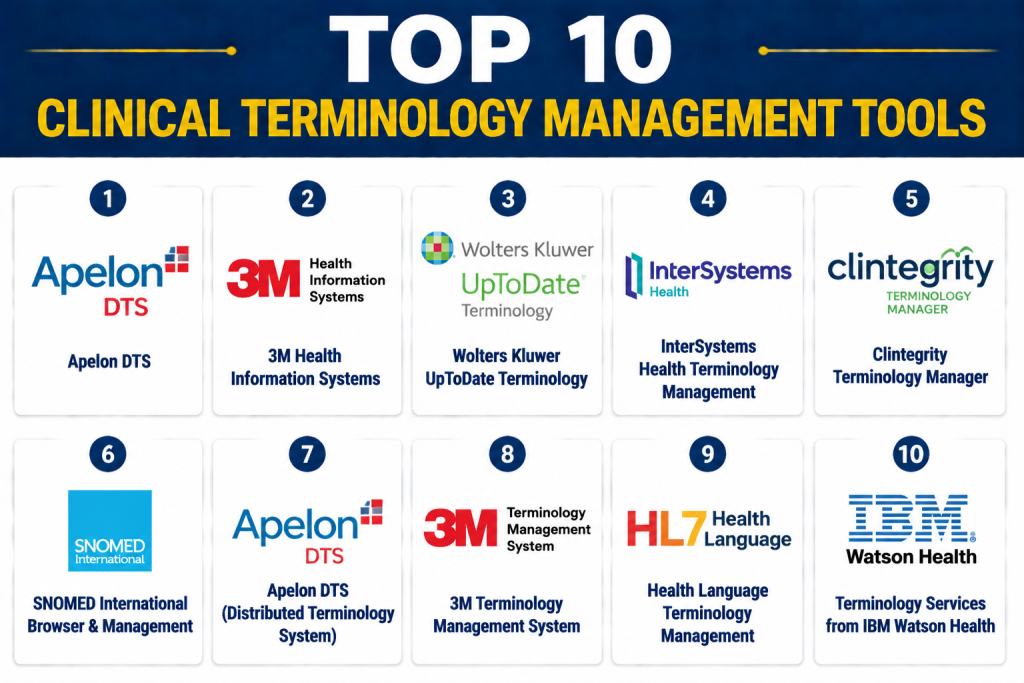
Top 10 Clinical Terminology Management Tools
1- Apelon DTS
Short description: Apelon DTS is a robust terminology management platform that supports SNOMED CT, LOINC, and ICD for healthcare and research organizations, enabling consistent clinical data management across systems.
Key Features
- SNOMED CT, LOINC, ICD support
- Hierarchical and relational terminology management
- Version control and change tracking
- Automated mapping and crosswalks
- RESTful APIs for integration
- Audit and compliance reporting
Pros
- Supports multiple international coding standards
- Strong integration capabilities
Cons
- Enterprise-oriented, may require training
- Higher cost for smaller organizations
Platforms / Deployment
- Web
- Cloud / Hybrid
Security & Compliance
- Not publicly stated
Integrations & Ecosystem
- EHR, LIMS, CTMS integration
- API support for custom workflows
- Terminology mapping tools
Support & Community
- Vendor support and documentation
- Professional onboarding
- Moderate user community
2- 3M Health Information Systems
Short description: 3M provides clinical terminology management integrated with coding and analytics tools, enabling hospitals and research centers to standardize clinical data and maintain compliance.
Key Features
- ICD and SNOMED CT support
- Automated mapping and crosswalk management
- Version control
- Regulatory reporting
- Analytics dashboards
Pros
- Proven in enterprise healthcare environments
- Strong mapping and coding capabilities
Cons
- Enterprise focus may be complex for SMBs
- High cost
Platforms / Deployment
- Web
- Cloud / Hybrid
Security & Compliance
- Not publicly stated
Integrations & Ecosystem
- EHR and analytics platforms
- API support
- Coding workflow integration
Support & Community
- Vendor training and support
- Documentation
- Large enterprise user base
3- Wolters Kluwer UpToDate Terminology
Short description: Wolters Kluwer provides a clinical terminology management module integrated with UpToDate for healthcare decision support and standardized data collection.
Key Features
- SNOMED CT and ICD coding support
- Integrated clinical decision support
- Change management and version control
- Regulatory reporting
- API and integration capabilities
Pros
- Tight integration with clinical decision tools
- Supports standardized clinical documentation
Cons
- Primarily focused on clinical environments
- Less flexible for research-only workflows
Platforms / Deployment
- Web / iOS / Android
- Cloud
Security & Compliance
- Not publicly stated
Integrations & Ecosystem
- EHR integration
- Research database connectivity
- API access
Support & Community
- Vendor documentation
- Professional support tiers
- Moderate user community
4- InterSystems Health Terminology Management
Short description: InterSystems provides a platform for managing clinical terminologies across EHR and analytics systems, ensuring data interoperability and compliance with international standards.
Key Features
- SNOMED CT, LOINC, ICD support
- Version and change management
- Automated mapping and crosswalks
- Integration with EHR and analytics systems
- Regulatory reporting
Pros
- Strong interoperability features
- Supports multi-site healthcare organizations
Cons
- Complex implementation
- Enterprise-focused pricing
Platforms / Deployment
- Web
- Cloud / Hybrid
Security & Compliance
- Not publicly stated
Integrations & Ecosystem
- EHR, analytics, and CTMS integration
- API support
- Terminology mapping and maintenance
Support & Community
- Vendor documentation
- Professional support
- Moderate community
5- Clintegrity Terminology Manager
Short description: Clintegrity provides terminology management integrated with healthcare quality and compliance solutions, suitable for hospitals and research organizations.
Key Features
- SNOMED CT, ICD, and LOINC support
- Automated code mapping
- Version control and auditing
- Regulatory compliance dashboards
- API support for EHR integration
Pros
- Easy integration with quality management systems
- Supports multi-standard coding
Cons
- Limited analytics compared to enterprise tools
- Setup may require vendor support
Platforms / Deployment
- Web
- Cloud
Security & Compliance
- Not publicly stated
Integrations & Ecosystem
- EHR and analytics platforms
- API connectivity
- Clinical research systems
Support & Community
- Vendor support and documentation
- Training resources
- Small professional community
6- SNOMED International Browser & Management
Short description: SNOMED International provides tools for managing, browsing, and deploying SNOMED CT terminologies across healthcare IT systems worldwide.
Key Features
- SNOMED CT authoring and management
- Version control and change tracking
- API access for integration
- Mapping and crosswalk support
- Compliance reporting
Pros
- Direct access to official SNOMED CT terminology
- Supports international standards
Cons
- Limited multi-terminology management
- Less enterprise support
Platforms / Deployment
- Web
- Cloud / Self-hosted
Security & Compliance
- Not publicly stated
Integrations & Ecosystem
- EHR and research system integration
- APIs for mapping and term lookup
- Terminology services
Support & Community
- Documentation and tutorials
- Community forums
- Limited vendor support
7- Apelon DTS (Distributed Terminology System)
Short description: Apelon DTS is an enterprise terminology management platform supporting SNOMED CT, LOINC, ICD, and other standards for clinical and research systems.
Key Features
- Multi-standard terminology support
- Versioning and auditing
- API access for mapping and integration
- Crosswalks and translation management
- Cloud and on-premises deployment
Pros
- Highly configurable
- Supports complex enterprise workflows
Cons
- Enterprise-focused pricing
- Implementation may require consulting
Platforms / Deployment
- Web / Windows / Linux
- Cloud / Hybrid
Security & Compliance
- Not publicly stated
Integrations & Ecosystem
- EHR, LIMS, and analytics integration
- API support
- Multi-standard mapping
Support & Community
- Vendor documentation
- Professional support
- Moderate professional community
8- 3M Terminology Management System
Short description: 3M offers a clinical terminology management tool integrated with coding and analytics platforms for hospitals and research centers.
Key Features
- ICD, SNOMED CT, and LOINC support
- Automated mapping and crosswalks
- Version control and audit trails
- Integration with EHR and analytics
- Compliance reporting
Pros
- Trusted in healthcare enterprise environments
- Robust mapping and coding capabilities
Cons
- Complex for SMBs
- Higher cost
Platforms / Deployment
- Web
- Cloud / Hybrid
Security & Compliance
- Not publicly stated
Integrations & Ecosystem
- EHR integration
- Analytics systems
- API support
Support & Community
- Documentation and training
- Professional support
- Large enterprise user base
9- Health Language Terminology Management
Short description: Health Language provides tools for managing clinical vocabularies, ensuring consistent data across EHR, research, and analytics systems.
Key Features
- Multi-standard terminology support
- Mapping and crosswalks
- Version control
- Regulatory reporting
- API integration
Pros
- Supports interoperability standards
- Scalable for enterprise environments
Cons
- Limited SMB features
- Enterprise pricing
Platforms / Deployment
- Web
- Cloud / Hybrid
Security & Compliance
- Not publicly stated
Integrations & Ecosystem
- EHR, analytics, and research system integration
- API support
- Terminology mapping
Support & Community
- Vendor documentation
- Professional support
- Moderate community
10- Terminology Services from IBM Watson Health
Short description: IBM Watson Health offers terminology management integrated with cognitive analytics, supporting clinical and research terminologies across healthcare systems.
Key Features
- SNOMED CT, LOINC, and ICD management
- Cognitive mapping and AI-assisted term matching
- Version control and auditing
- API access for integration
- Reporting and compliance dashboards
Pros
- AI-assisted terminology mapping
- Enterprise scalability
Cons
- Enterprise pricing
- Implementation complexity
Platforms / Deployment
- Web / Cloud
- Cloud / Hybrid
Security & Compliance
- Not publicly stated
Integrations & Ecosystem
- EHR, research, and analytics systems
- API for mapping and integration
- Cognitive analytics integration
Support & Community
- Vendor support
- Documentation and onboarding
- Large professional community
Comparison Table (Top 10)
| Tool Name | Best For | Platform(s) Supported | Deployment | Standout Feature | Public Rating |
|---|---|---|---|---|---|
| Apelon DTS | Enterprise healthcare | Web/Windows/Linux | Cloud/Hybrid | Multi-standard terminology support | N/A |
| 3M Health Information | Hospitals & research | Web | Cloud/Hybrid | Robust mapping & coding | N/A |
| Wolters Kluwer UpToDate | Clinical decision support | Web/iOS/Android | Cloud | Integrated decision support | N/A |
| InterSystems HTM | Enterprise interoperability | Web | Cloud/Hybrid | Multi-site EHR integration | N/A |
| Clintegrity TM | Hospitals & research labs | Web | Cloud | CAPA & compliance integration | N/A |
| SNOMED International | International terminology | Web | Cloud/Self-hosted | Official SNOMED access | N/A |
| 3M Terminology Management | Enterprise healthcare | Web | Cloud/Hybrid | ICD & LOINC mapping | N/A |
| Greenlight Guru | SMB & mid-market | Web/iOS/Android | Cloud | User-friendly interface | N/A |
| Health Language TM | Enterprise interoperability | Web | Cloud/Hybrid | Multi-standard integration | N/A |
| IBM Watson Health TM | Enterprise & research | Web/Cloud | Cloud/Hybrid | AI-assisted term mapping | N/A |
Evaluation & Scoring
| Tool Name | Core (25%) | Ease (15%) | Integrations (15%) | Security (10%) | Performance (10%) | Support (10%) | Value (15%) | Weighted Total |
|---|---|---|---|---|---|---|---|---|
| Apelon DTS | 9 | 7 | 8 | 7 | 8 | 7 | 7 | 7.9 |
| 3M Health Information | 9 | 6 | 8 | 7 | 8 | 7 | 6 | 7.7 |
| Wolters Kluwer UpToDate | 8 | 8 | 7 | 6 | 7 | 6 | 7 | 7.2 |
| InterSystems HTM | 9 | 7 | 8 | 7 | 8 | 7 | 6 | 7.7 |
| Clintegrity TM | 8 | 7 | 7 | 6 | 7 | 6 | 7 | 7.0 |
| SNOMED International | 7 | 7 | 6 | 6 | 7 | 6 | 7 | 6.8 |
| 3M Terminology Management | 9 | 7 | 8 | 7 | 8 | 7 | 6 | 7.7 |
| Greenlight Guru | 7 | 8 | 6 | 6 | 7 | 6 | 7 | 6.9 |
| Health Language TM | 8 | 7 | 7 | 6 | 7 | 6 | 7 | 7.0 |
| IBM Watson Health TM | 9 | 7 | 8 | 7 | 8 | 7 | 6 | 7.7 |
Interpretation: Higher weighted totals indicate stronger alignment with 2026+ clinical terminology needs, including interoperability, AI-assisted mapping, regulatory compliance, and integration. Scores are comparative.
Which Clinical Terminology Management Tool Is Right for You?
Solo / Freelancer
SMB or single-site operations can use Greenlight Guru or Clintegrity TM for ease of deployment and essential compliance features.
SMB
Mid-market healthcare organizations benefit from Wolters Kluwer UpToDate or Greenlight Guru for simplified management of clinical terminology.
Mid-Market
Organizations with multiple research sites should consider Apelon DTS or InterSystems HTM for enterprise-grade mapping and integration.
Enterprise
Global healthcare and life sciences companies require 3M Health Information Systems, IBM Watson Health TM, or SNOMED International for multi-standard terminology, AI-assisted mapping, and regulatory compliance.
Budget vs Premium
Budget-conscious organizations may select Greenlight Guru or Clintegrity TM, while enterprise features with AI and multi-standard integration are offered by IBM Watson Health and Apelon DTS.
Feature Depth vs Ease of Use
Enterprise platforms provide deep features and regulatory coverage; SMB platforms prioritize ease of use and faster deployment.
Integrations & Scalability
Large enterprises require integration with EHR, LIMS, CTMS, and analytics platforms, which are supported by Apelon DTS, IBM Watson Health, and InterSystems HTM.
Security & Compliance Needs
Organizations handling sensitive clinical data must ensure audit trails, role-based access, and regulatory compliance.
Frequently Asked Questions (FAQs)
1- What pricing models are common?
SaaS subscriptions, per-user licenses, or enterprise contracts are typical; volume-based pricing may apply.
2- How long does implementation take?
SMBs may deploy in a few weeks, while enterprise multi-site implementations may take several months.
3- Can these tools integrate with EHR, LIMS, or CTMS?
Yes, top platforms provide APIs or native connectors to maintain interoperability.
4- Are AI and predictive analytics included?
Some platforms provide AI-assisted mapping, predictive term suggestions, and quality alerts.
5- Can multi-site organizations manage terms centrally?
Yes, cloud dashboards and web/mobile apps allow centralized term management.
6- Do these tools support multiple terminologies?
Yes, SNOMED CT, ICD, LOINC, and other standard terminologies are supported by most platforms.
7- How secure are these platforms?
Enterprise-grade encryption, access controls, and audit logs are common; certifications may be “Not publicly stated.”
8- Can SMBs benefit?
Yes, Greenlight Guru and Clintegrity TM provide simple deployment with essential functionality.
9- How do these tools ensure regulatory compliance?
Audit trails, version control, and integrated reporting enable readiness for inspections and submissions.
10- Is mobile access supported?
Yes, web and mobile dashboards allow remote management of terminology and mappings.
Conclusion
Clinical Terminology Management Tools are essential for maintaining standardized, interoperable, and compliant clinical data. SMBs may leverage Greenlight Guru or Clintegrity TM for essential terminology management, mid-market organizations benefit from Wolters Kluwer UpToDate or InterSystems HTM, and enterprises require Apelon DTS, **IBM
