Introduction
Healthcare Interoperability APIs (HL7/FHIR) are software interfaces that enable secure, standardized data exchange between electronic health record (EHR) systems, medical devices, health apps, and other digital health solutions. HL7 and FHIR standards ensure that clinical, administrative, and patient-generated data can be shared seamlessly across disparate systems, facilitating better care coordination and patient outcomes. In , with increasing adoption of digital health, telemedicine, and AI-driven clinical decision support, interoperability APIs have become essential for hospitals, clinics, payers, and healthcare IT providers.
Real-world use cases include:
- Exchanging patient health records between hospitals and clinics for coordinated care.
- Enabling telehealth platforms to access real-time patient data securely.
- Integrating wearables and IoT health devices with EHR systems for monitoring.
- Supporting AI and analytics platforms with standardized clinical data.
- Streamlining regulatory reporting and population health initiatives.
Evaluation Criteria for Buyers:
- Compliance with HL7, FHIR, and other healthcare data standards
- Real-time API performance and reliability
- Data security and HIPAA compliance
- Integration with EHR, EMR, telemedicine, and health apps
- Support for patient identity management and authentication
- Audit logs and data access tracking
- Scalability across multi-site healthcare networks
- Ease of developer onboarding and documentation quality
- API versioning and backward compatibility
- Vendor support and SLAs
Best for: healthcare IT teams, hospital systems, digital health platforms, EHR vendors, and developers integrating health data.
Not ideal for: small clinics or practices without digital infrastructure, or non-healthcare software developers without clinical integration needs.
Key Trends in Healthcare Interoperability APIs
- AI-assisted data normalization to harmonize clinical records from multiple sources.
- Cloud-native API platforms for scalable, multi-institutional interoperability.
- FHIR v5 adoption for enhanced data structure and semantic consistency.
- Blockchain for immutable audit trails in patient data exchange.
- IoT and wearable integration for real-time monitoring and alerts.
- Telehealth and remote patient monitoring interoperability.
- Automated consent management for HIPAA-compliant data sharing.
- Predictive analytics integration for population health and outcomes research.
- Microservices architecture for flexible deployment and modular integration.
- Flexible pricing models including pay-per-use, subscription, or enterprise licensing.
How We Selected These Tools (Methodology)
- Evaluated market adoption and mindshare among hospitals, payers, and health IT vendors.
- Assessed feature completeness, including HL7/FHIR support, authentication, and consent management.
- Reviewed performance and reliability for real-time data exchange and uptime.
- Verified security posture, including encryption, SSO/MFA, and audit logs.
- Examined integration ecosystem with EHR, EMR, telehealth, and analytics platforms.
- Considered customer fit across segments, from SMB healthcare providers to large hospital networks.
- Analyzed ease of use and developer documentation.
- Factored in vendor support, SLAs, and community engagement.
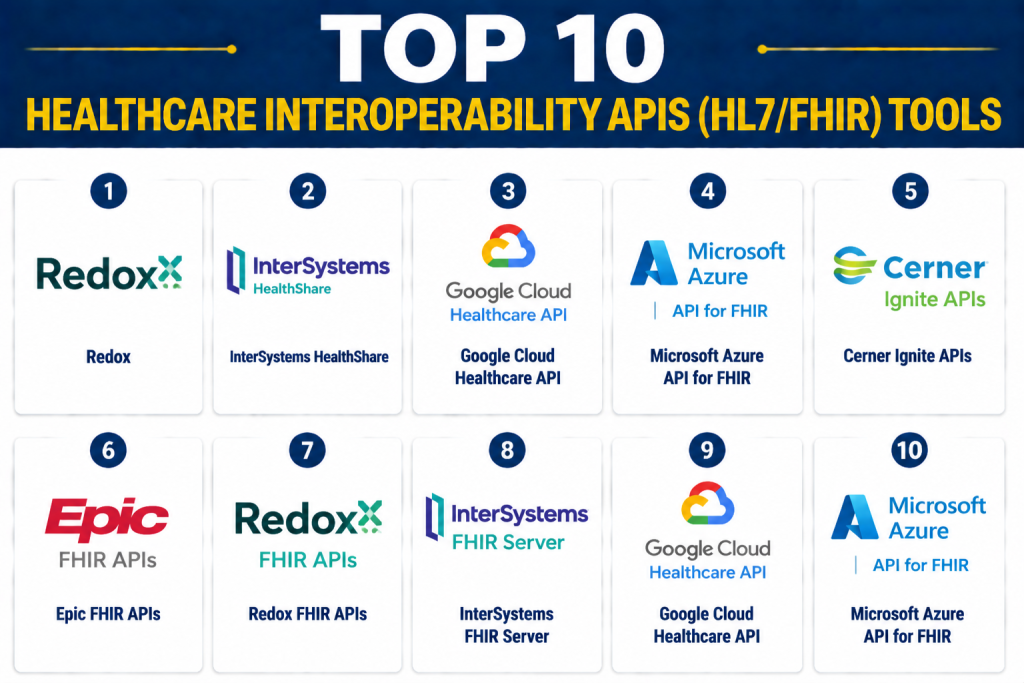
Top 10 Healthcare Interoperability APIs (HL7/FHIR) Tools
1- Redox
Short description: Redox provides a cloud-based interoperability platform that connects EHRs, apps, and health IT systems using HL7 and FHIR APIs. It enables real-time data exchange and supports a wide network of healthcare partners.
Key Features
- HL7 and FHIR API support
- Real-time data exchange
- Cloud-native and scalable
- Integration with EHRs, EMRs, and telehealth apps
- Consent management and audit logging
- Developer-friendly sandbox environment
Pros
- Extensive integration ecosystem
- Rapid onboarding for new healthcare partners
Cons
- Pricing can be high for small providers
- Complex setup for multi-system workflows
Platforms / Deployment
- Web / Cloud
Security & Compliance
- SSO, encryption, audit logs
- HIPAA, SOC 2
Integrations & Ecosystem
- EHR/EMR systems (Epic, Cerner)
- Telehealth and mobile health apps
- Analytics platforms
Support & Community
Developer documentation, onboarding guides, and dedicated support team.
2- InterSystems HealthShare
Short description: HealthShare provides interoperability and integration services for hospitals and healthcare networks, supporting HL7, FHIR, and other standards for real-time clinical data exchange.
Key Features
- FHIR and HL7 API support
- Real-time clinical data exchange
- Master patient index and identity resolution
- Integration with EMRs and HIEs
- Analytics and reporting dashboards
- Consent and audit management
Pros
- Mature enterprise platform
- Strong identity management and patient matching
Cons
- Complexity for smaller practices
- Implementation timeline can be long
Platforms / Deployment
- Web / Cloud / Hybrid
Security & Compliance
- Encryption, audit logs
- HIPAA, SOC 2, ISO 27001
Integrations & Ecosystem
- EMR/EHR systems (Epic, Cerner)
- Health Information Exchanges (HIEs)
- Clinical analytics tools
Support & Community
Comprehensive documentation, onboarding, and professional services.
3- Google Cloud Healthcare API
Short description: Google Cloud Healthcare API enables developers to store, manage, and integrate healthcare data using HL7, FHIR, and DICOM standards, supporting scalable cloud-based interoperability.
Key Features
- HL7, FHIR, DICOM API support
- Cloud-native, scalable architecture
- Data transformation and mapping tools
- Integration with AI/ML pipelines
- Audit logs and access controls
- Consent and role-based access management
Pros
- Scalable for large health networks
- Strong AI and analytics integration
Cons
- Cloud dependency
- Requires developer expertise for setup
Platforms / Deployment
- Web / Cloud
Security & Compliance
- Encryption, IAM, audit logs
- HIPAA, SOC 2, ISO 27001
Integrations & Ecosystem
- EHR systems
- Analytics and AI platforms
- Telehealth and mobile apps
Support & Community
Extensive developer documentation, support forums, and cloud support.
4- Microsoft Azure API for FHIR
Short description: Azure API for FHIR provides a secure, scalable platform for exchanging healthcare data using HL7 and FHIR standards, integrating with EHRs, analytics, and AI systems.
Key Features
- HL7/FHIR API support
- Cloud-native scalability
- Data transformation and validation
- Integration with Azure AI and analytics
- Consent management and audit trails
- Interoperability with EHR/EMR systems
Pros
- Seamless integration with Microsoft ecosystem
- Enterprise-grade security and compliance
Cons
- Azure ecosystem dependency
- Requires cloud expertise
Platforms / Deployment
- Web / Cloud
Security & Compliance
- SSO, encryption, audit logs
- HIPAA, SOC 2, ISO 27001
Integrations & Ecosystem
- EHR/EMR systems
- AI/ML pipelines
- Telehealth and mobile health apps
Support & Community
Documentation, onboarding guides, and professional support.
5- Cerner Ignite APIs
Short description: Cerner Ignite APIs allow healthcare providers to integrate Cerner EHR systems with external applications, using HL7 and FHIR for interoperability.
Key Features
- HL7/FHIR API support
- Real-time clinical data exchange
- Patient identity management
- Integration with Cerner EHR modules
- Audit and compliance features
- Developer sandbox and testing
Pros
- Tight integration with Cerner EHR
- Supports large hospital networks
Cons
- Vendor lock-in
- Limited flexibility outside Cerner ecosystem
Platforms / Deployment
- Web / Cloud / Hybrid
Security & Compliance
- Encryption, audit logs
- HIPAA, SOC 2
Integrations & Ecosystem
- Cerner EHR modules
- Telehealth apps
- Analytics platforms
Support & Community
Developer documentation, sandbox access, and technical support.
6- Epic FHIR APIs
Short description: Epic provides HL7 and FHIR APIs enabling hospitals and clinics to integrate Epic EHR data with third-party apps and clinical tools.
Key Features
- HL7/FHIR API support
- Integration with Epic EHR modules
- Real-time patient data access
- Audit and consent management
- Analytics dashboards
- Sandbox testing environment
Pros
- Direct integration with Epic EHR
- Enterprise scalability
Cons
- Epic ecosystem dependency
- Licensing complexity
Platforms / Deployment
- Web / Cloud / Hybrid
Security & Compliance
- Encryption, audit logs
- HIPAA, SOC 2
Integrations & Ecosystem
- Epic EHR modules
- Telehealth and patient apps
- Analytics platforms
Support & Community
Epic developer portal, sandbox environment, and professional support.
7- Redox FHIR APIs
Short description: Redox offers cloud-based FHIR APIs for connecting healthcare applications to EHRs, facilitating interoperability across diverse systems.
Key Features
- HL7/FHIR API support
- Real-time clinical data exchange
- Cloud-based scalability
- Integration with multiple EHRs and health apps
- Developer sandbox and testing tools
- Audit and consent management
Pros
- Extensive EHR network integration
- Rapid onboarding for developers
Cons
- Cost for small-scale implementations
- Requires technical integration knowledge
Platforms / Deployment
- Web / Cloud
Security & Compliance
- SSO, encryption, audit logs
- HIPAA, SOC 2
Integrations & Ecosystem
- EHR/EMR systems (Epic, Cerner)
- Telehealth apps
- Analytics and AI platforms
Support & Community
Developer documentation, onboarding guides, and support team.
8- InterSystems FHIR Server
Short description: InterSystems FHIR Server enables organizations to expose and consume FHIR-compliant APIs, supporting data interoperability in clinical and operational workflows.
Key Features
- HL7/FHIR API support
- Real-time clinical data exchange
- Cloud or on-premises deployment
- Audit logs and access controls
- Data mapping and transformation
- Integration with EHRs and analytics
Pros
- Flexible deployment options
- Enterprise-grade reliability
Cons
- Setup and configuration complexity
- Licensing cost
Platforms / Deployment
- Web / Cloud / On-premises
Security & Compliance
- Encryption, SSO, audit logs
- HIPAA, SOC 2, ISO 27001
Integrations & Ecosystem
- EHR/EMR systems
- Analytics platforms
- Telehealth integration
Support & Community
Documentation, professional support, and developer community.
9- Google Cloud Healthcare API
Short description: Provides HL7, FHIR, and DICOM APIs for cloud-based healthcare data interoperability, with AI and analytics integration.
Key Features
- HL7, FHIR, DICOM API support
- Cloud-native and scalable
- Real-time data exchange
- Integration with AI/ML tools
- Audit logs and consent management
- Analytics dashboards
Pros
- Cloud scalability
- AI and analytics integration
Cons
- Cloud dependency
- Requires developer expertise
Platforms / Deployment
- Web / Cloud
Security & Compliance
- Encryption, IAM, audit logs
- HIPAA, SOC 2, ISO 27001
Integrations & Ecosystem
- EHR systems
- Telehealth apps
- AI/ML platforms
Support & Community
Extensive developer documentation and support.
10- Microsoft Azure API for FHIR
Short description: Azure API for FHIR enables healthcare organizations to exchange data securely using FHIR standards and integrate with cloud services for analytics and AI.
Key Features
- FHIR API support
- Cloud-native and scalable
- Consent management and audit trails
- Integration with Azure AI and analytics
- Multi-tenant support for healthcare networks
- Real-time data exchange
Pros
- Seamless Microsoft ecosystem integration
- Enterprise-grade security and compliance
Cons
- Azure ecosystem dependency
- Requires cloud expertise
Platforms / Deployment
- Web / Cloud
Security & Compliance
- SSO, encryption, audit logs
- HIPAA, SOC 2, ISO 27001
Integrations & Ecosystem
- EHR/EMR systems
- Analytics and AI pipelines
- Telehealth applications
Support & Community
Documentation, onboarding guides, and professional support.
Comparison Table (Top 10)
| Tool Name | Best For | Platform(s) Supported | Deployment | Standout Feature | Public Rating |
|---|---|---|---|---|---|
| Redox | Hospitals & Apps | Web | Cloud | Broad EHR integration | N/A |
| InterSystems HealthShare | Large Hospital Networks | Web | Cloud / Hybrid | Identity management & interoperability | N/A |
| Google Cloud Healthcare API | Developers & Analytics | Web | Cloud | Cloud-native & AI integration | N/A |
| Microsoft Azure API for FHIR | Enterprises | Web | Cloud | Multi-tenant & Azure ecosystem | N/A |
| Cerner Ignite APIs | Cerner users | Web | Cloud / Hybrid | Epic/Cerner data integration | N/A |
| Epic FHIR APIs | Epic users | Web | Cloud / Hybrid | Direct Epic EHR integration | N/A |
| Redox FHIR APIs | Developers & Health Apps | Web | Cloud | EHR network connectivity | N/A |
| InterSystems FHIR Server | Enterprises | Web | Cloud / On-premises | Flexible deployment & reliability | N/A |
| Google Cloud Healthcare API | AI & Analytics | Web | Cloud | HL7/FHIR/DICOM integration | N/A |
| Microsoft Azure API for FHIR | Enterprises | Web | Cloud | Azure-native analytics & AI | N/A |
Evaluation & Scoring of Healthcare Interoperability APIs
| Tool Name | Core (25%) | Ease (15%) | Integrations (15%) | Security (10%) | Performance (10%) | Support (10%) | Value (15%) | Weighted Total (0–10) |
|---|---|---|---|---|---|---|---|---|
| Redox | 9 | 8 | 9 | 8 | 9 | 8 | 7 | 8.3 |
| InterSystems HealthShare | 9 | 7 | 8 | 8 | 9 | 8 | 7 | 8.1 |
| Google Cloud Healthcare API | 8 | 8 | 8 | 8 | 8 | 7 | 7 | 7.8 |
| Microsoft Azure API for FHIR | 8 | 8 | 8 | 8 | 8 | 7 | 7 | 7.8 |
| Cerner Ignite APIs | 8 | 7 | 7 | 7 | 8 | 7 | 7 | 7.5 |
| Epic FHIR APIs | 8 | 7 | 7 | 7 | 8 | 7 | 7 | 7.5 |
| Redox FHIR APIs | 8 | 8 | 8 | 7 | 8 | 7 | 7 | 7.7 |
| InterSystems FHIR Server | 8 | 7 | 8 | 8 | 8 | 7 | 7 | 7.7 |
| Google Cloud Healthcare API | 8 | 8 | 8 | 8 | 8 | 7 | 7 | 7.8 |
| Microsoft Azure API for FHIR | 8 | 8 | 8 | 8 | 8 | 7 | 7 | 7.8 |
Interpretation: Weighted totals provide a comparative overview of core features, integrations, security, performance, support, and value. Buyers should prioritize API selection based on healthcare network size, regulatory requirements, and integration needs.
Which Healthcare Interoperability API Tool Is Right for You?
Solo / Freelancer
- Typically not necessary unless building small-scale digital health apps with minimal regulatory obligations.
SMB
- Redox FHIR APIs or Google Cloud Healthcare API offer accessible cloud-based connectivity for small healthcare providers or digital health startups.
Mid-Market
- InterSystems FHIR Server, Microsoft Azure API for FHIR, and Redox provide scalable APIs for hospital networks or telehealth platforms.
Enterprise
- Google Cloud Healthcare API, Microsoft Azure API for FHIR, Epic FHIR APIs, and InterSystems HealthShare are best for multi-hospital systems or enterprise EHR integration.
Budget vs Premium
- SMBs can leverage Redox or cloud-native APIs for cost-effectiveness; enterprises benefit from Azure or InterSystems solutions with full compliance and analytics integration.
Feature Depth vs Ease of Use
- Enterprise solutions offer full interoperability, regulatory compliance, and analytics but may require technical expertise; SMB APIs prioritize ease of adoption.
Integrations & Scalability
- Enterprises require multi-EHR, telehealth, and analytics integration; SMBs can rely on standard HL7/FHIR APIs with cloud deployment.
Security & Compliance Needs
- Ensure SOC 2, ISO 27001, HIPAA, encryption, SSO/MFA, and audit logs for sensitive healthcare data.
Frequently Asked Questions (FAQs)
1- What pricing models are typical?
Subscription-based, pay-per-use, or enterprise licensing; pricing may scale with API calls or user accounts.
2- How long does implementation take?
SMBs can implement in days to weeks; enterprise deployments may take 2–4 months for multi-EHR integration.
3- Can APIs integrate with existing EHR systems?
Yes, leading APIs support HL7, FHIR, and DICOM integration with major EHRs like Epic, Cerner, and Allscripts.
4- Are AI or analytics features supported?
Yes, APIs can feed real-time data into AI, predictive analytics, or population health platforms.
5- Can these APIs handle multi-site operations?
Yes, enterprise-grade APIs enable interoperability across hospitals, clinics, and telehealth platforms.
6- How secure are these APIs?
Security typically includes encryption, SSO/MFA, audit logs, RBAC, HIPAA compliance, and SOC 2/ISO 27001 certification.
7- Do APIs support patient consent management?
Yes, modern APIs provide tools for consent tracking and role-based access to ensure privacy compliance.
8- Can these APIs scale with healthcare network growth?
Cloud-native solutions are designed to handle increasing API calls, users, and sites.
9- What mistakes should be avoided?
Avoid skipping developer onboarding, underestimating integration complexity, and ignoring audit and logging requirements.
10- Are these APIs necessary for small clinics?
Not always; small clinics with a single EHR may rely on built-in interoperability or simple FHIR endpoints.
Conclusion
Healthcare Interoperability APIs (HL7/FHIR) are essential for secure, standardized data exchange, improving care coordination, regulatory compliance, and patient outcomes. Enterprise solutions like Google Cloud Healthcare API, Microsoft Azure API for FHIR, and InterSystems HealthShare provide scalable, secure, and regulatory-compliant connectivity, while mid-market APIs like Redox and Epic FHIR APIs offer developer-friendly, cloud-native solutions. shortlist APIs based on system complexity and integration requirements, run a pilot for real-time interoperability and data validation, and scale deployment while ensuring security, compliance, and patient data integrity.
