Introduction
Financial Stress Testing Platforms are specialized software systems used by banks, financial institutions, insurance firms, and large corporations to simulate adverse economic or business scenarios and assess the resilience of financial positions. These platforms help organizations quantify risk exposure under conditions such as recessions, market shocks, liquidity crunches, credit defaults, and interest rate volatility. In and beyond, regulators and investors demand stronger evidence of risk readiness, requiring stress testing for capital planning, regulatory compliance, and strategic decision‑making.
Real‑world use cases include:
- Running regulatory stress tests like CCAR, DFAST, or Basel stress scenarios for banking capital adequacy.
- Simulating credit portfolio deterioration under rising default rates.
- Evaluating liquidity shocks and funding shortfalls.
- Conducting scenario planning for enterprise financial resilience.
- Testing the impact of macroeconomic shifts on investment portfolios or balance sheets.
What buyers should evaluate:
- Support for regulatory stress test frameworks (Basel, CCAR, DFAST, IFRS9)
- Scenario design and customization capabilities
- Integration with internal financial systems (ERP, GL, risk data warehouses)
- Analytics for risk metrics, capital ratios, and loss projections
- Computational performance and scalability
- Reporting and visualization for regulators and executives
- Audit trails and version control
- Model governance and explainability
- Security and access controls
- Vendor support and training resources
Best for: risk managers, finance and treasury leaders, regulatory compliance teams, credit and market risk analysts, and enterprise planning groups.
Not ideal for: small businesses with minimal financial complexity or organizations that don’t require stress testing or do so manually through spreadsheets.
Key Trends in Financial Stress Testing Platforms
- AI‑enhanced scenario generation using historical and real‑time market data.
- Cloud‑native simulation engines for scalable, high‑performance computing.
- Scenario automation and workflow orchestration for faster test cycles.
- Integration with enterprise risk and credit systems for holistic risk views.
- Real‑time data feeds from market and economic indicators.
- Explainable stress test models to satisfy audit and regulatory scrutiny.
- Regulatory scenario libraries updated with latest frameworks and guidance.
- Collaborative workflows for cross‑functional stakeholders.
- Visualization and dashboarding for board‑level reporting.
- Flexible pricing models (subscription, usage‑based, enterprise) to fit organizational size.
How We Selected These Tools (Methodology)
- Evaluated market adoption and mindshare among banks, insurers, and corporates.
- Assessed feature completeness, including scenario modeling, regulatory modules, and reporting.
- Reviewed performance and scalability for large portfolios and complex simulations.
- Verified security posture, including encryption, audit trails, and access controls.
- Examined integration ecosystem with ERP, risk data, pricing, and analytics systems.
- Considered customer fit across segments, from mid‑market to global enterprise.
- Analyzed ease of use and configurability for risk analysts and finance teams.
- Factored in vendor support, documentation, and training resources.
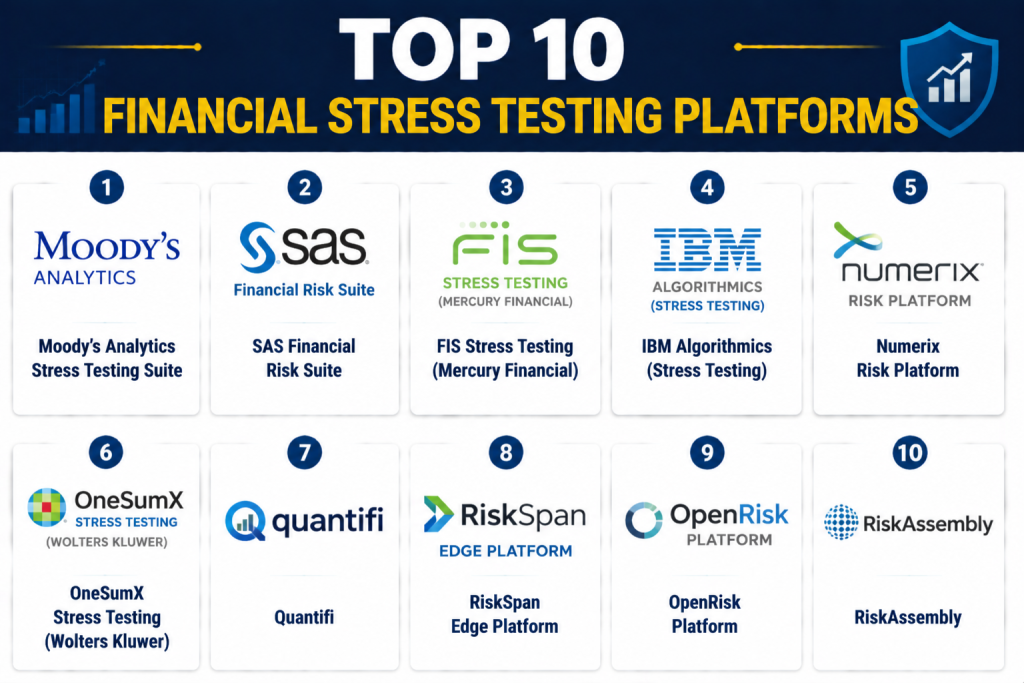
Top 10 Financial Stress Testing Platforms
1 — Moody’s Analytics Stress Testing Suite
Short description: Moody’s Analytics Stress Testing Suite enables banks and financial institutions to design, execute, and report on regulatory and enterprise stress scenarios with advanced analytics and comprehensive risk frameworks.
Key Features
- Regulatory stress test modules (Basel, CCAR, DFAST)
- Custom scenario design and macroeconomic integration
- Portfolio risk analytics and forecasting
- Real‑time dashboarding and reporting
- Integration with risk data stores
- Model governance and audit trails
Pros
- Strong regulatory focus with built‑in frameworks
- Rich analytics and scenario customization
Cons
- Licensing can be costly for smaller institutions
- Implementation may require technical resources
Platforms / Deployment
- Web / Cloud / Hybrid
Security & Compliance
- Encryption, role‑based access, audit logs
- Varies / N/A: Specific certifications
Integrations & Ecosystem
Moody’s integrates risk and financial data flows:
- ERP and GL systems
- Risk data warehouses
- External economic and market indicators
Support & Community
Documentation, onboarding support, and professional training services.
2 — SAS Financial Risk Suite
Short description: SAS Financial Risk Suite combines stress testing, credit risk modeling, and capital planning analytics for enterprise risk management and regulatory compliance.
Key Features
- Stress testing and scenario simulation
- Credit and market risk analytics
- Scenario automation and workflow
- Capital adequacy and loss projections
- Predictive modeling and back‑testing
- Comprehensive reporting
Pros
- Advanced analytical capabilities
- Scalable for large portfolios
Cons
- Requires analytics expertise to maximize value
- Higher infrastructure cost for on‑prem deployments
Platforms / Deployment
- Web / Cloud / Hybrid
Security & Compliance
- Encryption and audit logs
- Varies / N/A: Regulatory certifications
Integrations & Ecosystem
- Data warehouses
- Pricing and market risk feeds
- ERP systems
Support & Community
Vendor documentation, professional services, and user forums.
3 — FIS Stress Testing (Mercury Financial)
Short description: FIS provides an enterprise stress testing platform that supports scenario modeling, macroeconomic forecasting, and regulatory compliance for banks and financial institutions.
Key Features
- Scenario libraries for common regulatory frameworks
- Macro‑to‑micro scenario mapping
- Risk metric dashboards
- Automated reporting
- Integration with risk systems
- Scenario collaboration tools
Pros
- Strong support for banking stress frameworks
- Workflow collaboration for risk teams
Cons
- May require consulting support for setup
- Less flexible for non‑bank corporate scenarios
Platforms / Deployment
- Web / Cloud
Security & Compliance
- Encryption, access control, audit logs
- Varies / N/A: Certification claims not publicly stated
Integrations & Ecosystem
- Risk and finance systems
- Macroeconomic data sources
- Pricing and analytics platforms
Support & Community
Documentation and professional guidance available.
4 — IBM Algorithmics (Stress Testing)
Short description: IBM’s Algorithmics platform provides stress testing and enterprise risk analysis with scenario modeling, risk aggregation, and regulatory reporting capabilities.
Key Features
- Stress and scenario testing engines
- Risk aggregation and dashboards
- Reporting and visualization
- Scenario automation
- Integration APIs
- Predictive analytics
Pros
- Strong enterprise integration capabilities
- Scalable for large risk portfolios
Cons
- Complexity requires skilled administrators
- Implementation timelines can be long
Platforms / Deployment
- Web / Cloud / Hybrid
Security & Compliance
- Encryption, role‑based access
- Varies / N/A: Public certification info not available
Integrations & Ecosystem
- ERP and risk systems
- Data lakes
- BI and analytics tools
Support & Community
Documentation, training, and support.
5 — Numerix Risk Platform
Short description: Numerix offers stress testing and risk analytics for market, credit, and liquidity risk with sophisticated pricing models and scenario engines targeted at financial institutions.
Key Features
- Scenario simulation for market and credit portfolios
- Risk metrics and dashboards
- Custom stress scenarios
- Back‑testing and model validation
- Integration with pricing engines
- Reporting tools
Pros
- Deep analytics for market and credit stress scenarios
- Strong pricing and risk engine integration
Cons
- Best suited for financial institutions
- Requires quantitative expertise
Platforms / Deployment
- Web / Cloud / Hybrid
Security & Compliance
- Encryption and audit trails
- Varies / N/A: Regulatory certifications
Integrations & Ecosystem
- Risk systems
- Pricing engines
- Market data feeds
Support & Community
Documentation, professional services, and technical support.
6 — OneSumX Stress Testing (Wolters Kluwer)
Short description: OneSumX Stress Testing is a comprehensive platform supporting regulatory compliance and enterprise scenario analysis with robust reporting and integration capabilities.
Key Features
- Regulatory scenario libraries
- Scenario design and simulation
- Capital planning modules
- Forecasting and dashboards
- Reporting engines
- Data integration
Pros
- Focused regulatory support
- Strong reporting and analytics
Cons
- May be complex for smaller teams
- Premium cost structure
Platforms / Deployment
- Web / Cloud
Security & Compliance
- Encryption, audit logs
- Varies / N/A: Certifications
Integrations & Ecosystem
- ERP and risk systems
- Data warehouses
- BI tools
Support & Community
Vendor support and documentation.
7 — Quantifi
Short description: Quantifi provides stress testing and risk analytics with advanced modeling for trading, credit, and market portfolios, suitable for buy‑side and sell‑side firms.
Key Features
- Stress scenario libraries
- Risk metrics dashboards
- Scenario simulation
- Portfolio analysis
- Reporting and visualization
- Integration with market data
Pros
- Strong analytics for trading and market risk
- Adaptable for complex portfolios
Cons
- Primarily analytics focused
- Requires quantitative resources
Platforms / Deployment
- Web / Cloud / Hybrid
Security & Compliance
- Encryption, audit logs
- Varies / N/A: Certification details
Integrations & Ecosystem
- Market data integrations
- Risk systems
- Analytics platforms
Support & Community
Documentation and professional support.
8 — RiskSpan Edge Platform
Short description: RiskSpan Edge provides stress testing and risk analytics for credit, interest rate, and liquidity exposures with data integration and scenario modeling features.
Key Features
- Scenario design and execution
- Risk metric dashboards
- Data integration capabilities
- Forecasting and reporting
- Workflow automation
- API connectivity
Pros
- Flexible scenario modeling
- Strong data integration
Cons
- Enterprise pricing
- Requires data engineering support
Platforms / Deployment
- Web / Cloud
Security & Compliance
- Encryption, role‑based access
- Varies / N/A: Certifications
Integrations & Ecosystem
- ERP and risk systems
- Data warehouses
- External data feeds
Support & Community
Documentation and professional services.
9 — OpenRisk Platform
Short description: OpenRisk Platform delivers open and extensible stress testing tools with modular scenario generation and risk analytics suitable for both financial and corporate risk teams.
Key Features
- Modular scenario engines
- Predictive analytics
- Risk dashboards
- Data integration
- Workflow tools
- Reporting
Pros
- Extensible platform architecture
- Flexible for non‑bank use cases
Cons
- Smaller ecosystem compared to large vendors
- Requires internal technical capability
Platforms / Deployment
- Web / Cloud
Security & Compliance
- Encryption, audit logs
- Varies / N/A: Certifications
Integrations & Ecosystem
- ERP, GL, and risk systems
- Analytics tools
- APIs
Support & Community
Documentation, community support, and professional services.
10 — RiskAssembly
Short description: RiskAssembly combines risk modeling, stress testing, and enterprise analytics with collaborative workflows and reporting tools tailored for finance and risk teams.
Key Features
- Stress scenario simulation
- Risk scoring and dashboards
- Collaboration tools
- Reporting and alerts
- Integration capabilities
- Data analytics
Pros
- Focus on collaborative workflows
- Configurable dashboards
Cons
- Emerging platform with smaller footprint
- Limited global enterprise references
Platforms / Deployment
- Web / Cloud
Security & Compliance
- Encryption and audit logs
- Varies / N/A: Certifications
Integrations & Ecosystem
- ERP and risk systems
- Reporting tools
- APIs
Support & Community
Documentation and support services.
Comparison Table (Top 10)
| Tool Name | Best For | Platform(s) Supported | Deployment | Standout Feature | Public Rating |
|---|---|---|---|---|---|
| Moody’s Analytics Stress Testing | Banks & regulated entities | Web | Cloud / Hybrid | Regulatory scenario frameworks | N/A |
| SAS Financial Risk Suite | Large institutions | Web | Cloud / Hybrid | Advanced analytics | N/A |
| FIS Stress Testing | Banking portfolios | Web | Cloud | Macro to micro mapping | N/A |
| IBM Algorithmics | Enterprise risk teams | Web | Cloud / Hybrid | Enterprise integration | N/A |
| Numerix Risk Platform | Market & credit portfolios | Web | Cloud / Hybrid | Market risk stress models | N/A |
| OneSumX Stress Testing | Regulatory compliance | Web | Cloud | Compliance scenario libraries | N/A |
| Quantifi | Trading & market risk | Web | Cloud / Hybrid | Trading stress analytics | N/A |
| RiskSpan Edge | Credit & liquidity risk | Web | Cloud | Flexible scenario modeling | N/A |
| OpenRisk Platform | Extensible use cases | Web | Cloud | Modular architecture | N/A |
| RiskAssembly | Collaborative risk teams | Web | Cloud | Workflow collaboration | N/A |
Evaluation & Scoring of Financial Stress Testing Platforms
| Tool Name | Core (25%) | Ease (15%) | Integrations (15%) | Security (10%) | Performance (10%) | Support (10%) | Value (15%) | Weighted Total |
|---|---|---|---|---|---|---|---|---|
| Moody’s Analytics | 9 | 7 | 8 | 8 | 8 | 8 | 7 | 8.1 |
| SAS Financial Risk | 9 | 7 | 8 | 8 | 9 | 7 | 7 | 8.1 |
| FIS Stress Testing | 8 | 7 | 8 | 7 | 8 | 7 | 7 | 7.6 |
| IBM Algorithmics | 8 | 6 | 7 | 8 | 8 | 7 | 7 | 7.5 |
| Numerix Risk | 8 | 7 | 7 | 7 | 8 | 7 | 7 | 7.4 |
| OneSumX Stress | 8 | 7 | 7 | 7 | 8 | 7 | 7 | 7.6 |
| Quantifi | 7 | 7 | 7 | 7 | 8 | 7 | 7 | 7.2 |
| RiskSpan Edge | 7 | 7 | 7 | 7 | 7 | 7 | 7 | 7.1 |
| OpenRisk Platform | 7 | 6 | 7 | 7 | 7 | 6 | 7 | 6.9 |
| RiskAssembly | 7 | 6 | 7 | 7 | 7 | 6 | 7 | 6.9 |
Interpreting the Scores: Weighted totals offer comparative views on core features, integrations, ease of use, performance, security, support, and value. High scoring tools balance deep simulation capabilities with enterprise readiness and workflow automation.
Which Financial Stress Testing Tool Is Right for You?
Solo / Freelancer
- Typically not necessary unless building specialized models; spreadsheet or analytics tools may suffice.
SMB Firms
- OpenRisk Platform or RiskAssembly offer extensible and affordable stress frameworks.
Mid‑Market Organizations
- FIS Stress Testing, Numerix Risk, or OneSumX balance analytical power with usability for growing institutions.
Enterprise & Regulated Banks
- Moody’s Analytics Stress Testing, SAS Financial Risk Suite, and IBM Algorithmics deliver comprehensive regulatory support, scalability, and analytics.
Budget vs Premium
- Smaller firms can start with extensible, modular tools; large institutions should adopt fully integrated enterprise platforms.
Feature Depth vs Ease of Use
- Premium platforms offer deep scenario engines and compliance libraries; mid‑market tools prioritize configurability and workflow ease.
Integrations & Scalability
- Look for strong ERP, risk data warehouse, and market feed integrations for enterprise resilience.
Security & Compliance Needs
- Ensure encryption, audit logs, IAM, and regulatory audit readiness as part of stress test governance.
Frequently Asked Questions (FAQs)
1— What pricing models are typical?
Subscription, usage‑based, or enterprise licensing; some vendors offer module‑based pricing.
2— How long does implementation take?
SMB setups may take weeks; large enterprise deployments with integrations can require 3–6 months.
3— Can stress testing tools integrate with ERP?
Yes, leading platforms support API or native connectors to ERP, GL, and risk systems.
4— Are predictive analytics essential?
Yes, predictive insights expedite identification of risk amplifiers and future vulnerability.
5— Do these platforms support regulatory compliance?
Many include built‑in scenario libraries aligned to Basel, CCAR, DFAST, and internal governance standards.
6— How secure are these systems?
Enterprise products offer encryption, audit trails, role‑based access, and compliance standards.
7— Can these handle multiple asset classes?
Yes, financial institutions require cross‑asset and portfolio risk assessments.
8— What common mistakes should organizations avoid?
Neglecting model validation, ignoring data quality, and skipping user training are frequent pitfalls.
9— Are cloud deployments secure?
Cloud deployments provide scalability and security, provided underlying governance and encryption standards are met.
10— Should non‑financial enterprises use these tools?
Yes, large corporates can leverage stress testing for scenario planning and resilience.
Conclusion
Financial Stress Testing Platforms are vital for evaluating risk exposures, forecasting stress outcomes, and supporting regulatory and strategic decision‑making. Enterprise solutions like Moody’s Analytics Stress Testing and SAS Financial Risk Suite offer deep regulatory and analytics capabilities, while mid‑market tools like FIS Stress Testing and OpenRisk Platform provide flexibility and extensibility. shortlist platforms based on regulatory needs, scenario complexity, and integration requirements; conduct in‑house pilots to validate model accuracy; and scale deployment with robust governance and training.
