Introduction
CPQ (Configure, Price, Quote) for SaaS B2B E-commerce Platforms refers to software that enables companies to efficiently configure complex product or service offerings, generate accurate pricing, and produce quotes tailored for B2B buyers. These platforms are critical in modern SaaS and e-commerce ecosystems where customization, volume pricing, and multi-tiered product bundles are common.
In , B2B e-commerce has shifted toward highly personalized offerings, dynamic pricing, and real-time quoting. CPQ solutions help sales teams accelerate deal cycles, reduce errors in quotes, and maintain compliance with pricing policies. They also enable seamless integration with e-commerce storefronts, ERP systems, and subscription management platforms.
Real-world use cases include:
- Automating quote generation for subscription-based SaaS packages.
- Configuring complex bundles with add-ons, custom services, and multi-tier pricing.
- Streamlining approvals and workflows for enterprise B2B orders.
- Integrating CPQ outputs directly with e-commerce checkout and ERP for order fulfillment.
- Tracking pricing exceptions and audit trails for governance and compliance.
What buyers should evaluate:
- Ease of configuration and user interface
- Real-time pricing calculations and multi-currency support
- Product bundling and custom package capabilities
- Integration with CRM, ERP, and e-commerce platforms
- AI-assisted recommendations or deal optimization
- Workflow automation and approval routing
- Security and compliance standards
- Scalability for enterprise or SMB teams
- Analytics, dashboards, and reporting
- Support, training, and community ecosystem
Best for: Sales operations, e-commerce managers, and SaaS product teams in mid-market to enterprise B2B organizations. Ideal for companies with configurable offerings, subscription models, or multi-tier pricing.
Not ideal for: Small businesses or simple product catalogs with static pricing, where manual quoting or spreadsheet-based workflows may suffice.
Key Trends in CPQ for SaaS B2B E-commerce Platforms
- AI-assisted product recommendations for cross-sell and upsell opportunities.
- Real-time integration with e-commerce storefronts and subscription billing engines.
- Dynamic pricing engines based on volume, contract length, or market conditions.
- Cloud-native CPQ with mobile accessibility for field sales teams.
- Embedded workflow approvals with automated exception routing.
- Self-service portals for enterprise buyers with guided configuration.
- Integration with analytics to monitor margin impact and deal performance.
- APIs and extensibility for connecting with ERP, CRM, and external marketplaces.
- Advanced reporting dashboards with predictive insights for deal closures.
- Subscription and usage-based pricing modeling for SaaS packages.
How We Selected These Tools (Methodology)
- Market adoption and brand presence in B2B SaaS e-commerce.
- Feature completeness including configuration, pricing, quoting, approvals, and analytics.
- Reliability and performance signals from customer reviews and uptime records.
- Security posture including SSO, MFA, and compliance standards.
- Integration flexibility with ERP, CRM, and e-commerce platforms.
- Fit across business segments including SMB, mid-market, and enterprise.
- Workflow automation capabilities and AI-assisted features.
- Support infrastructure, training, and community resources.
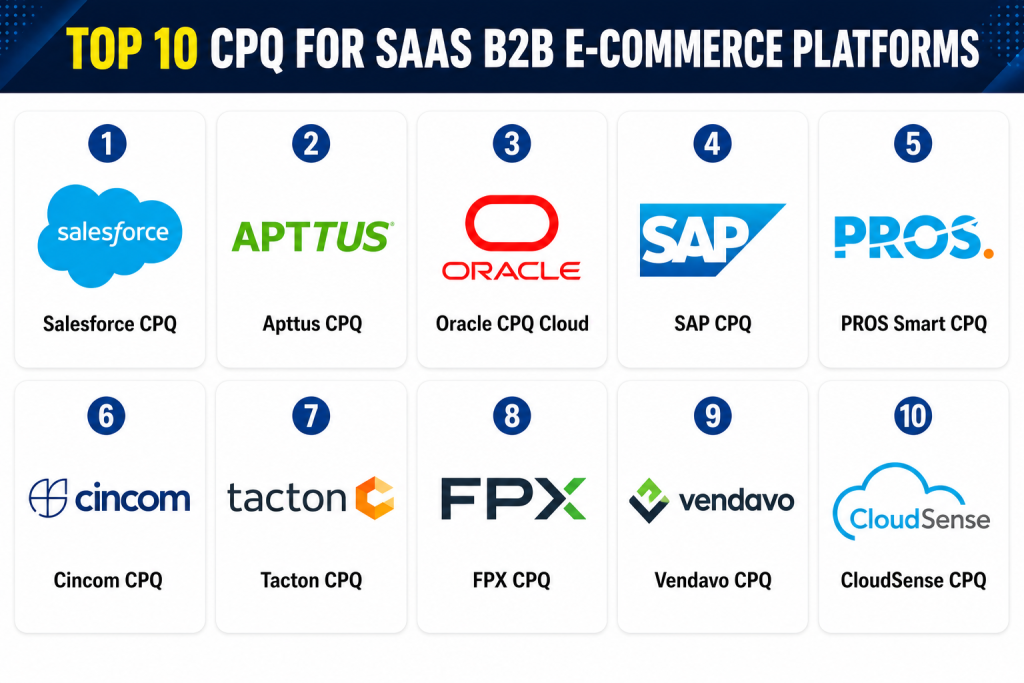
Top 10 CPQ for SaaS B2B E-commerce Platforms
1- Salesforce CPQ
Short description: Salesforce CPQ automates complex configurations, pricing, and quotes for B2B SaaS and e-commerce teams. It is suitable for enterprises requiring tight CRM integration and advanced approval workflows.
Key Features
- Guided product configuration
- Real-time pricing and discounting
- Multi-currency and subscription support
- Approval workflows and automated quote routing
- Integration with Salesforce CRM and analytics
- Quote-to-cash automation
- AI-assisted recommendations
Pros
- Seamless Salesforce ecosystem integration
- Scalable for large enterprise teams
- Strong reporting and analytics capabilities
Cons
- High cost for smaller businesses
- Implementation can be complex
Platforms / Deployment
- Web, iOS, Android
- Cloud
Security & Compliance
- SSO/SAML, MFA, encryption, audit logs
- SOC 2, ISO 27001, GDPR
Integrations & Ecosystem
Supports broad enterprise connectivity:
- Salesforce CRM
- ERP systems (SAP, Oracle)
- E-commerce platforms (Shopify Plus, Magento)
- API extensibility for custom workflows
Support & Community
- 24/7 enterprise support
- Extensive online documentation and training
- Large user community
2- Apttus CPQ
Short description: Apttus CPQ streamlines complex SaaS pricing, product bundles, and contract generation. Targeted at mid-market and enterprise B2B organizations, it emphasizes guided selling and quote-to-cash automation.
Key Features
- Guided selling and configuration
- Contract and proposal automation
- Subscription and usage-based pricing
- Workflow approvals and alerts
- Analytics dashboards
Pros
- Strong deal automation
- Flexible product bundle handling
- Enterprise-grade security
Cons
- Can be complex to deploy
- Requires internal training
Platforms / Deployment
- Web
- Cloud / Hybrid
Security & Compliance
- Encryption, MFA, SSO
- Not publicly stated
Integrations & Ecosystem
- Salesforce CRM, Microsoft Dynamics
- ERP and billing platforms
- API connectors
Support & Community
- Dedicated support team
- Training modules and knowledge base
- Active community forums
3- Oracle CPQ Cloud
Short description: Oracle CPQ Cloud enables SaaS B2B companies to automate complex quoting, pricing, and approval workflows. It is ideal for enterprise sales teams handling multi-tier product and service configurations.
Key Features
- Configurable product rules and bundles
- Automated pricing and discounting
- Guided selling for sales reps
- Approval workflows and audit trails
- Quote-to-cash automation
Pros
- Scales for large enterprises
- Strong integration with Oracle ERP and CRM
- Compliance and audit-ready reporting
Cons
- Requires Oracle ecosystem adoption
- Moderate learning curve
Platforms / Deployment
- Web, iOS
- Cloud
Security & Compliance
- SSO, MFA, encryption
- SOC 2
Integrations & Ecosystem
- Oracle ERP, NetSuite
- E-commerce platforms
- API access for custom workflows
Support & Community
- Enterprise support options
- Training and certification programs
- Large knowledge repository
4- SAP CPQ
Short description: SAP CPQ simplifies configuration, pricing, and quoting for SaaS and B2B e-commerce. Best for enterprises using SAP ERP for integrated order-to-cash processes.
Key Features
- Product configuration and rules
- Dynamic pricing and discounting
- Approval workflows
- Guided selling
- Quote and proposal automation
Pros
- Deep ERP integration
- Scalable and enterprise-ready
- Advanced analytics
Cons
- SAP-centric ecosystem
- Setup complexity
Platforms / Deployment
- Web
- Cloud / Hybrid
Security & Compliance
- Encryption, audit logs, SSO
- ISO 27001
Integrations & Ecosystem
- SAP ERP
- CRM and billing systems
- API for custom integrations
Support & Community
- Enterprise support tiers
- Training and certification
- SAP community resources
5- PROS Smart CPQ
Short description: PROS Smart CPQ delivers AI-assisted pricing, quoting, and deal optimization for B2B SaaS e-commerce. Suitable for mid-market and enterprise teams aiming to maximize revenue per quote.
Key Features
- AI-driven pricing suggestions
- Guided selling and product configuration
- Automated approval workflows
- Quote-to-cash automation
- Analytics dashboards
Pros
- AI-assisted deal optimization
- Fast quote generation
- Supports subscription and usage-based pricing
Cons
- AI features may require tuning
- Limited SMB-focused features
Platforms / Deployment
- Web
- Cloud
Security & Compliance
- SSO, encryption
- Not publicly stated
Integrations & Ecosystem
- CRM integration (Salesforce, Microsoft)
- ERP connectors
- API access
Support & Community
- Customer success team
- Online training modules
- Community forum
6- Cincom CPQ
Short description: Cincom CPQ provides configuration, pricing, and quote automation for complex B2B SaaS offerings. Focused on enterprises with multi-product catalogs and international pricing requirements.
Key Features
- Product configuration rules
- Pricing engines and discounts
- Workflow approvals
- Quote generation
- Analytics and reporting
Pros
- Handles complex pricing scenarios
- Supports global B2B e-commerce
Cons
- May require specialized training
- Enterprise pricing
Platforms / Deployment
- Web
- Cloud / Hybrid
Security & Compliance
- SSO, MFA, encryption
- Not publicly stated
Integrations & Ecosystem
- ERP and CRM integration
- E-commerce platform connectivity
- APIs for automation
Support & Community
- Dedicated support
- Training and documentation
- Knowledge base
7- Tacton CPQ
Short description: Tacton CPQ is tailored for B2B companies with configurable products, offering automated pricing, guided selling, and approval workflows for SaaS and e-commerce teams.
Key Features
- Configurable product rules
- Automated pricing and quotes
- Guided selling
- Workflow approvals
- Analytics dashboards
Pros
- Strong configurator for complex products
- Easy-to-follow guided selling
Cons
- Focused on configurable products
- Enterprise-centric pricing
Platforms / Deployment
- Web
- Cloud
Security & Compliance
- Encryption, SSO
- Not publicly stated
Integrations & Ecosystem
- ERP and CRM connectors
- API support
- Integration with e-commerce platforms
Support & Community
- Customer support tiers
- Training resources
- Active knowledge base
8- FPX CPQ
Short description: FPX CPQ automates configuration, pricing, and quoting for SaaS and e-commerce B2B teams. It supports subscription management, complex bundles, and approval workflows.
Key Features
- Product configuration and rules
- Pricing and discount management
- Quote generation
- Workflow approvals
- Analytics dashboards
Pros
- Good for subscription-based SaaS
- Flexible approval routing
Cons
- SMB-friendly features limited
- Enterprise pricing
Platforms / Deployment
- Web
- Cloud
Security & Compliance
- Encryption, SSO
- Not publicly stated
Integrations & Ecosystem
- ERP, CRM, e-commerce systems
- API access
- Integration with billing engines
Support & Community
- Dedicated customer success team
- Online training
- Knowledge base
9- Vendavo CPQ
Short description: Vendavo CPQ focuses on AI-assisted pricing, quoting, and deal guidance for B2B SaaS and e-commerce platforms. It targets mid-market and enterprise sales teams.
Key Features
- AI-assisted pricing and recommendations
- Guided selling
- Workflow automation
- Quote-to-cash integration
- Analytics and reporting
Pros
- Optimizes margins using AI
- Fast quote generation
Cons
- Limited for SMBs
- Enterprise implementation
Platforms / Deployment
- Web
- Cloud
Security & Compliance
- SSO, encryption
- Not publicly stated
Integrations & Ecosystem
- ERP, CRM, e-commerce systems
- API support
Support & Community
- Customer success team
- Training resources
- Active user community
10- CloudSense CPQ
Short description: CloudSense CPQ delivers quoting, pricing, and configuration automation for B2B SaaS and e-commerce, with strong Salesforce and ERP integration capabilities.
Key Features
- Guided product configuration
- Real-time pricing and discounts
- Quote approvals and workflow automation
- Analytics dashboards
- Contract generation
Pros
- Seamless integration with Salesforce and ERP
- Scales for enterprise operations
Cons
- Pricing may be prohibitive for SMBs
- Setup complexity
Platforms / Deployment
- Web, iOS, Android
- Cloud
Security & Compliance
- SSO, encryption
- Not publicly stated
Integrations & Ecosystem
- Salesforce CRM
- ERP systems (SAP, Oracle)
- API support
Support & Community
- Customer success team
- Training and certification
- Knowledge base
Comparison Table (Top 10)
| Tool Name | Best For | Platform(s) Supported | Deployment | Standout Feature | Public Rating |
|---|---|---|---|---|---|
| Salesforce CPQ | Enterprise SaaS teams | Web, iOS, Android | Cloud | Guided selling + CRM integration | N/A |
| Apttus CPQ | Mid-market/enterprise | Web | Cloud / Hybrid | Contract automation | N/A |
| Oracle CPQ Cloud | Large enterprise | Web, iOS | Cloud | Quote-to-cash automation | N/A |
| SAP CPQ | SAP ecosystem | Web | Cloud / Hybrid | ERP integration | N/A |
| PROS Smart CPQ | Revenue optimization | Web | Cloud | AI-assisted pricing | N/A |
| Cincom CPQ | Complex catalogs | Web | Cloud / Hybrid | Multi-tier pricing | N/A |
| Tacton CPQ | Configurable products | Web | Cloud | Guided selling | N/A |
| FPX CPQ | Subscription SaaS | Web | Cloud | Flexible approval routing | N/A |
| Vendavo CPQ | AI pricing | Web | Cloud | AI-assisted margins | N/A |
| CloudSense CPQ | Enterprise B2B SaaS | Web, iOS, Android | Cloud | Salesforce + ERP integration | N/A |
Evaluation & Scoring
| Tool Name | Core (25%) | Ease (15%) | Integrations (15%) | Security (10%) | Performance (10%) | Support (10%) | Value (15%) | Weighted Total |
|---|---|---|---|---|---|---|---|---|
| Salesforce CPQ | 9 | 8 | 9 | 9 | 9 | 8 | 7 | 8.7 |
| Apttus CPQ | 8 | 7 | 8 | 8 | 8 | 7 | 7 | 7.8 |
| Oracle CPQ | 9 | 7 | 9 | 8 | 8 | 7 | 7 | 8.1 |
| SAP CPQ | 9 | 6 | 9 | 9 | 9 | 7 | 7 | 8.2 |
| PROS Smart CPQ | 8 | 8 | 8 | 7 | 8 | 7 | 7 | 7.7 |
| Cincom CPQ | 8 | 7 | 8 | 7 | 8 | 7 | 7 | 7.6 |
| Tacton CPQ | 8 | 8 | 8 | 7 | 8 | 7 | 7 | 7.7 |
| FPX CPQ | 8 | 8 | 7 | 7 | 8 | 7 | 7 | 7.6 |
| Vendavo CPQ | 8 | 7 | 7 | 7 | 8 | 7 | 7 | 7.4 |
| CloudSense CPQ | 8 | 7 | 8 | 7 | 8 | 7 | 7 | 7.6 |
Interpretation: Weighted scores are comparative. Higher totals indicate broader functionality, better integrations, and ease of use. Organizations should prioritize based on specific SaaS B2B e-commerce requirements.
Which CPQ Tool Is Right for You?
Solo / Freelancer
- Logic-light CPQs for guided pricing and quoting, such as FPX or Tacton (entry-level configuration).
SMB
- Apttus or PROS Smart CPQ for streamlined quoting with workflow automation.
Mid-Market
- Salesforce CPQ or CloudSense for integrated CRM and e-commerce workflows.
Enterprise
- SAP CPQ, Oracle CPQ, or Cincom for complex bundles, multi-region pricing, and ERP integration.
Budget vs Premium
- Budget: FPX, Tacton
- Premium: Salesforce CPQ, SAP CPQ, Oracle CPQ
Feature Depth vs Ease of Use
- Depth: SAP CPQ, Salesforce CPQ
- Ease of use: PROS Smart CPQ, FPX
Integrations & Scalability
- Enterprise-grade integrations: SAP, Salesforce, Oracle ecosystems
- API-friendly mid-market solutions: PROS Smart CPQ, CloudSense
Security & Compliance Needs
- Enterprise-grade security and audit compliance: Salesforce CPQ, SAP CPQ, Oracle CPQ
Frequently Asked Questions (FAQs)
1- What pricing models do CPQ platforms use?
Most adopt subscription-based SaaS pricing, often with per-user or per-transaction tiers. Enterprise solutions may require custom quotes.
2- How long does onboarding take?
Simple deployments: 2–4 weeks. Enterprise implementations: 2–6 months due to customization, integration, and training.
3- Can CPQ handle subscription-based SaaS pricing?
Yes, leading platforms support recurring, tiered, and usage-based pricing, as well as contract lifecycle management.
4- Do these CPQs integrate with e-commerce platforms?
Yes, Salesforce, CloudSense, and others provide connectors to Shopify, Magento, and custom B2B storefronts.
5- Are AI-assisted pricing features common?
Increasingly, AI assists in margin optimization, discounting, and upsell recommendations for B2B deals.
6- What security measures are standard?
SSO, MFA, encryption, audit logs, and sometimes SOC 2 or ISO certifications for enterprise deployments.
7- Can CPQs generate legal-compliant quotes?
Yes, contract-ready quote generation is standard in enterprise-grade platforms like Oracle CPQ and Salesforce CPQ.
8- Are mobile apps available?
Most leading CPQs have iOS/Android apps for on-the-go sales reps to configure, quote, and approve deals.
9- What’s the ROI of implementing CPQ?
ROI comes from reduced quote errors, faster deal cycles, improved margin management, and streamlined approvals.
10- Can SMBs benefit from enterprise CPQs?
Yes, but SMBs should consider lighter or mid-market versions to avoid complexity and high costs.
Conclusion
CPQ platforms are essential for SaaS B2B e-commerce teams in to streamline quoting, pricing, and configuration. Enterprises benefit most from Salesforce, SAP, and Oracle, while mid-market companies can leverage PROS Smart CPQ or CloudSense. Smaller teams may adopt FPX or Tacton for simpler workflows. Buyers should assess integration, ease of use, security, AI features, and scalability before selecting a solution.
