Introduction
Employee Experience Platforms (DEX) are digital tools that help organizations collect, analyze, and act on insights about employee interactions with technology, workflows, and workplace culture. They provide real-time data on productivity, engagement, and satisfaction, allowing HR and IT teams to improve experiences, reduce friction, and enhance overall employee performance. Unlike traditional HR or survey tools, DEX platforms unify behavioral, sentiment, and operational data to give a holistic view of employee experience.
Real-world use cases include:
- Monitoring digital workflow efficiency and identifying bottlenecks.
- Measuring engagement and employee sentiment across teams.
- Tracking and optimizing onboarding and training processes.
- Providing actionable insights to reduce employee burnout.
- Aligning employee experiences with performance metrics for retention.
What buyers should evaluate:
- Breadth and depth of experience data collected.
- AI/ML-driven analytics for actionable insights.
- Integration with HRIS, ITSM, collaboration, and performance tools.
- Security, compliance, and privacy controls.
- Scalability across global and hybrid workforces.
- Ease of use for employees and admins.
- Real-time dashboards and reporting capabilities.
- Personalization and guided experiences for employees.
- Vendor support, training, and community ecosystem.
Best for: HR leaders, IT operations managers, DE&I teams, and enterprises with hybrid or distributed workforces.
Not ideal for: Small organizations with minimal digital workflows where DEX analytics may provide limited ROI.
Key Trends in Employee Experience Platforms
- AI-driven predictive insights to anticipate burnout, engagement, and attrition.
- Real-time experience monitoring replacing traditional quarterly surveys.
- Integration with collaboration, IT, and HR platforms for holistic data.
- Privacy-first analytics ensuring GDPR and global compliance.
- Support for hybrid and remote workforce experience tracking.
- Automated nudges, recommendations, and workflow improvements.
- Micro-experiences personalized to employee role and work patterns.
- Benchmarking against internal and industry-wide metrics.
- Subscription or outcome-based pricing models.
- Low-code tools for customizing dashboards, alerts, and interventions.
How We Selected These Tools (Methodology)
- Market adoption and recognition among enterprise and mid-market firms.
- Feature completeness across analytics, automation, and reporting.
- Reliability and performance in enterprise deployments.
- Security posture including encryption, SSO, MFA, and audit logging.
- Integration with HRIS, ITSM, collaboration, and performance tools.
- Scalability for SMBs, mid-market, and enterprise organizations.
- AI/ML capabilities for insights, anomaly detection, and predictive analytics.
- Support quality, onboarding, and community engagement.
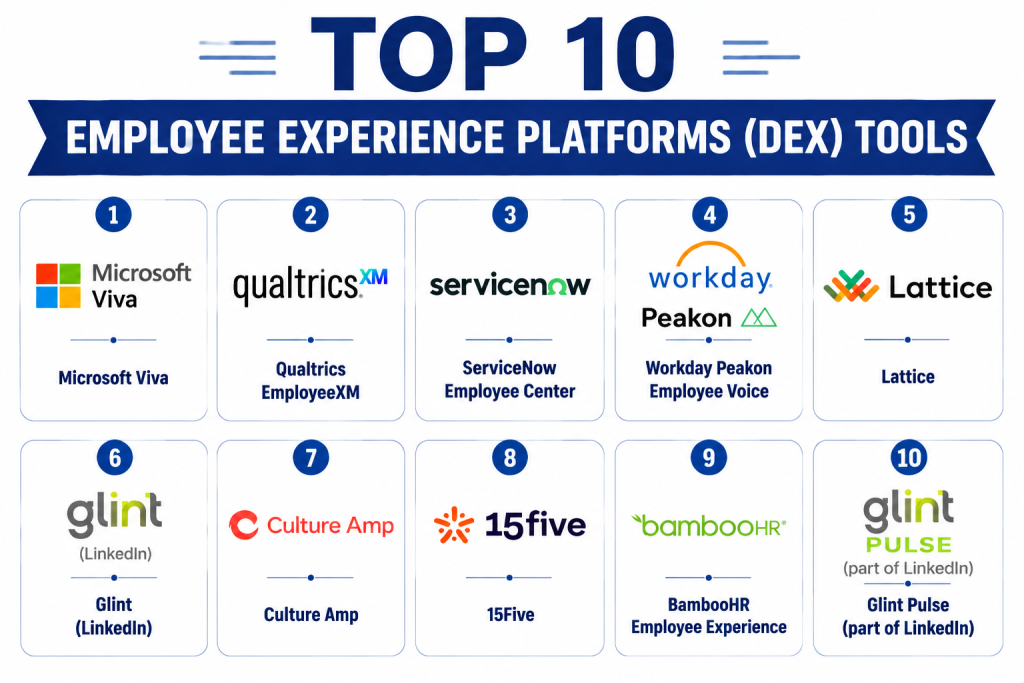
Top 10 Employee Experience Platforms (DEX) Tools
1- Microsoft Viva
Short description: Microsoft Viva integrates with Microsoft 365 to provide insights into employee productivity, well-being, learning, and knowledge discovery. It enables organizations to track experience metrics and guide employees with personalized recommendations.
Key Features
- Productivity and collaboration analytics
- Well-being tracking and recommendations
- Learning pathways and knowledge sharing
- Role-based dashboards and insights
- Integration with Teams, Outlook, and Office apps
- Personalized employee guidance
Pros
- Deep integration with Microsoft ecosystem
- Combines productivity, learning, and wellbeing insights
- AI-driven experience insights
Cons
- Best value when fully integrated with Microsoft 365
- Advanced analytics require premium licensing
- Limited outside Microsoft ecosystem
Platforms / Deployment
- Web, Windows, macOS, iOS, Android
- Cloud
Security & Compliance
- Enterprise-grade security via Azure AD, SSO, encryption
- Compliance standards include SOC 2, ISO, GDPR
Integrations & Ecosystem
- Teams, Outlook, SharePoint
- Power BI dashboards
- HRIS integration via APIs
Support & Community
- Extensive documentation
- Global enterprise support
- Large user community and third-party extensions
2- Qualtrics EmployeeXM
Short description: Qualtrics EmployeeXM captures employee sentiment, behavior, and feedback to provide actionable insights. It combines surveys, passive experience telemetry, and analytics to optimize engagement and retention strategies.
Key Features
- Advanced survey design and pulse feedback
- Text and sentiment analytics
- Experience benchmarking
- Real-time dashboards and alerts
- Action planning and workflow automation
- Multi-language support
Pros
- Powerful engagement and sentiment insights
- Highly customizable analytics and reporting
- Supports continuous listening and action loops
Cons
- Requires training to fully leverage analytics
- Premium pricing for large organizations
- Passive telemetry may need integrations
Platforms / Deployment
- Web, Mobile
- Cloud
Security & Compliance
- RBAC, encryption, audit logging
- Compliance varies by deployment
Integrations & Ecosystem
- HRIS, ITSM, CRM platforms
- API for custom integrations
- Collaboration and workflow tools
Support & Community
- Rich documentation
- Dedicated support tiers
- Active user forums and resources
3- ServiceNow Employee Center
Short description: ServiceNow Employee Center centralizes employee support requests and experience workflows. It combines analytics with guided service experiences for IT, HR, and finance, improving digital experiences across departments.
Key Features
- Unified service portal
- Guided workflow automation
- Experience analytics
- Knowledge base and self-service catalog
- Role-based dashboards and alerts
- Multi-department integration
Pros
- Streamlined employee services
- Deep workflow automation
- Enterprise-grade security
Cons
- Most effective within full ServiceNow suite
- Implementation can be complex
- Analytics may require admin expertise
Platforms / Deployment
- Web, iOS, Android
- Cloud / Hybrid
Security & Compliance
- SSO, MFA, RBAC, audit logs
- Enterprise compliance controls
Integrations & Ecosystem
- ITSM, HRIS, CMDB
- Collaboration platforms
- API extensions
Support & Community
- Enterprise support tiers
- Documentation and training
- Developer and admin communities
4- Workday Peakon Employee Voice
Short description: Workday Peakon collects continuous employee feedback and engagement data, providing predictive insights on engagement, retention, and satisfaction for HR leaders.
Key Features
- Continuous listening and surveys
- Predictive analytics on engagement and attrition
- Manager dashboards and alerts
- Action planning tools
- Integration with Workday HCM
Pros
- Real-time engagement insights
- Predictive modeling for retention
- Clear action recommendations
Cons
- Works best within Workday ecosystem
- Survey fatigue possible
- Advanced predictive features depend on data quality
Platforms / Deployment
- Web, Mobile
- Cloud
Security & Compliance
- Encryption, access controls
- Compliance with enterprise standards
Integrations & Ecosystem
- Workday HCM
- HRIS systems
- API for data export
Support & Community
- Workday support and training
- Documentation and best practices
- HR community engagement
5- Lattice
Short description: Lattice offers a unified platform for employee engagement, performance management, and growth, combining feedback, recognition, and analytics to improve employee experience.
Key Features
- Engagement and pulse surveys
- Performance review and goal tracking
- Career development planning
- Feedback and recognition features
- Team health analytics
Pros
- Combines engagement and performance management
- Intuitive user interface
- Actionable analytics for managers
Cons
- Less focus on digital workflow telemetry
- Advanced insights may require data integrations
- Some analytics limited to HR perspective
Platforms / Deployment
- Web, iOS, Android
- Cloud
Security & Compliance
- SSO, RBAC, encryption
- Not publicly stated
Integrations & Ecosystem
- HRIS systems
- Collaboration platforms
- API access for custom workflows
Support & Community
- Documentation and onboarding
- Standard support tiers
- Growing community
6- Glint (LinkedIn)
Short description: Glint provides continuous employee engagement measurement, analytics, and real-time reporting, helping managers understand workforce sentiment and take action.
Key Features
- Engagement pulse surveys
- Real-time analytics and dashboards
- Manager-level reporting
- Predictive insights on attrition
- Integration with LinkedIn and HR systems
Pros
- Strong engagement measurement
- Real-time insights for managers
- Predictive retention analytics
Cons
- Limited operational telemetry
- Works best with LinkedIn HR data
- Pricing may be high for SMBs
Platforms / Deployment
- Web, Mobile
- Cloud
Security & Compliance
- Encryption, access controls
- Not publicly stated
Integrations & Ecosystem
- HRIS and collaboration tools
- API support for data integration
- Learning and development platforms
Support & Community
- Documentation and training
- Customer support tiers
- LinkedIn community access
7- Culture Amp
Short description: Culture Amp is an employee experience platform that combines engagement surveys, performance insights, and actionable analytics to improve organizational culture and employee outcomes.
Key Features
- Continuous engagement measurement
- Performance analytics
- Action planning and insights
- Team-level dashboards
- Feedback collection tools
Pros
- Easy-to-use interface
- Actionable employee insights
- Strong survey and analytics capabilities
Cons
- Focused on engagement more than IT telemetry
- Advanced integrations may require customization
- Limited workforce automation
Platforms / Deployment
- Web, Mobile
- Cloud
Security & Compliance
- SSO, encryption, RBAC
- Not publicly stated
Integrations & Ecosystem
- HRIS, collaboration tools
- APIs for custom workflows
- Learning management systems
Support & Community
- Documentation and tutorials
- Customer support tiers
- Active community
8- 15Five
Short description: 15Five focuses on continuous performance management, feedback, and recognition, capturing employee sentiment to drive engagement and development.
Key Features
- Engagement and pulse surveys
- Performance tracking
- Feedback and recognition
- Goal alignment
- Analytics dashboards
Pros
- Strong performance and feedback combination
- Intuitive UI
- Frequent insights for managers
Cons
- Limited endpoint or IT telemetry
- Reporting capabilities basic for enterprises
- Some features require premium tiers
Platforms / Deployment
- Web, iOS, Android
- Cloud
Security & Compliance
- SSO, RBAC, encryption
- Not publicly stated
Integrations & Ecosystem
- HRIS, Slack, Teams
- API access
- Collaboration platforms
Support & Community
- Documentation
- Standard support tiers
- Online community
9- BambooHR Employee Experience
Short description: BambooHR provides employee experience tools focused on engagement, feedback, and performance management for small to mid-market organizations.
Key Features
- Pulse surveys
- Performance reviews
- Analytics dashboards
- Employee feedback tools
- Recognition and goal tracking
Pros
- Simple and intuitive interface
- Affordable for SMBs
- Engagement and performance combined
Cons
- Limited predictive analytics
- Less suited for large enterprises
- Minimal integration with IT telemetry
Platforms / Deployment
- Web, iOS, Android
- Cloud
Security & Compliance
- SSO, encryption
- Not publicly stated
Integrations & Ecosystem
- HRIS and payroll systems
- Collaboration platforms
- API for basic integration
Support & Community
- Documentation and tutorials
- Email support
- Small but active community
10- Glint Pulse (part of LinkedIn)
Short description: Glint Pulse provides real-time employee sentiment analysis and engagement insights, allowing leaders to make informed decisions on engagement strategies.
Key Features
- Real-time engagement dashboards
- Continuous feedback collection
- Analytics and trend tracking
- Actionable manager alerts
- Reporting on key metrics
Pros
- Predictive engagement insights
- Real-time data for decision-making
- Scalable for enterprise organizations
Cons
- Best integrated with LinkedIn HR data
- Limited operational or IT telemetry
- Premium pricing for small organizations
Platforms / Deployment
- Web, Mobile
- Cloud
Security & Compliance
- Encryption, RBAC
- Not publicly stated
Integrations & Ecosystem
- HRIS and collaboration tools
- API access
- Learning management platforms
Support & Community
- Documentation
- Dedicated support tiers
- Community access via LinkedIn
Comparison Table (Top 10)
| Tool Name | Best For | Platform(s) Supported | Deployment | Standout Feature | Public Rating |
|---|---|---|---|---|---|
| Microsoft Viva | Enterprise | Web, Windows, macOS, iOS, Android | Cloud | Productivity + learning + wellbeing | N/A |
| Qualtrics EmployeeXM | Enterprise | Web, Mobile | Cloud | Continuous listening and sentiment analytics | N/A |
| ServiceNow Employee Center | Enterprise | Web, iOS, Android | Cloud / Hybrid | Unified service portal + analytics | N/A |
| Workday Peakon | Enterprise | Web, Mobile | Cloud | Continuous feedback + predictive insights | N/A |
| Lattice | SMB/Mid-market | Web, iOS, Android | Cloud | Engagement + performance insights | N/A |
| Glint | Enterprise | Web, Mobile | Cloud | Continuous engagement insights | N/A |
| Culture Amp | SMB/Mid-market | Web, Mobile | Cloud | Surveys + analytics dashboards | N/A |
| 15Five | SMB/Mid-market | Web, iOS, Android | Cloud | Continuous performance + feedback | N/A |
| BambooHR | SMB | Web, iOS, Android | Cloud | Engagement + performance for SMB | N/A |
| Glint Pulse | Enterprise | Web, Mobile | Cloud | Real-time sentiment dashboards | N/A |
Evaluation & Scoring of Employee Experience Platforms
| Tool Name | Core (25%) | Ease (15%) | Integrations (15%) | Security (10%) | Performance (10%) | Support (10%) | Value (15%) | Weighted Total |
|---|---|---|---|---|---|---|---|---|
| Microsoft Viva | 9 | 7 | 9 | 9 | 9 | 8 | 6 | 8.4 |
| Qualtrics EmployeeXM | 9 | 6 | 8 | 8 | 8 | 7 | 6 | 7.9 |
| ServiceNow Employee Center | 8 | 7 | 8 | 8 | 8 | 7 | 7 | 7.8 |
| Workday Peakon | 8 | 7 | 8 | 8 | 8 | 7 | 6 | 7.7 |
| Lattice | 7 | 8 | 7 | 7 | 7 | 7 | 8 | 7.4 |
| Glint | 8 | 7 | 8 | 8 | 8 | 7 | 6 | 7.7 |
| Culture Amp | 7 | 8 | 7 | 7 | 7 | 6 | 7 | 7.0 |
| 15Five | 7 | 8 | 6 | 7 | 7 | 6 | 8 | 7.1 |
| BambooHR | 6 | 9 | 5 | 7 | 6 | 6 | 9 | 7.0 |
| Glint Pulse | 8 | 7 | 8 | 8 | 8 | 7 | 6 | 7.7 |
Interpretation: Weighted totals compare core functionality, ease, integrations, security, performance, support, and value. Higher totals indicate stronger capabilities, but the right choice depends on organizational needs, size, and workforce structure.
Which Employee Experience Platform Is Right for You?
Solo / Freelancer
- 15Five or Lattice for small teams focusing on engagement and feedback.
SMB
- Lattice, BambooHR, or Culture Amp for affordable, easy-to-use engagement platforms.
Mid-Market
- Workday Peakon or Qualtrics EmployeeXM for continuous insights and predictive analytics.
Enterprise
- Microsoft Viva, ServiceNow Employee Center, Glint, or Glint Pulse for comprehensive telemetry, analytics, and workflow integration.
Budget vs Premium
- Budget: BambooHR, 15Five, Culture Amp
- Premium: Microsoft Viva, Qualtrics EmployeeXM, ServiceNow Employee Center, Glint
Feature Depth vs Ease of Use
- Feature-rich: Microsoft Viva, ServiceNow, Qualtrics
- Easy adoption: 15Five, BambooHR, Lattice
Integrations & Scalability
- Enterprise integration: Microsoft Viva, ServiceNow, Qualtrics, Glint
- SMB: Lattice, BambooHR, 15Five
Security & Compliance Needs
- Enterprise-grade security: Microsoft Viva, ServiceNow, Qualtrics
- SMB needs: Lattice, 15Five, BambooHR
Frequently Asked Questions (FAQs)
1- What is an Employee Experience Platform (DEX)?
A DEX platform collects and analyzes data on employee interactions, workflows, and sentiment to improve engagement, productivity, and well-being across the organization.
2- How complex is deployment?
SMB platforms deploy quickly, while enterprise solutions may require weeks for integration, configuration, and training.
3- Are AI features included?
Enterprise DEX platforms often use AI for predictive engagement, anomaly detection, and personalized recommendations; SMB tools may have limited AI.
4- Can these platforms integrate with HRIS?
Yes, most platforms integrate with HRIS, ITSM, collaboration tools, and performance systems for unified analytics.
5- Are mobile and remote employees supported?
Yes, leading platforms provide cross-platform access for desktops, mobile, and remote users.
6- How is data security managed?
Platforms typically include encryption, SSO, MFA, RBAC, and audit logging. Enterprise-grade solutions may have SOC 2, ISO, and GDPR compliance.
7- What pricing models are common?
Pricing can be subscription-based, per-user, or tiered depending on features, organization size, and platform scope.
8- Can these platforms scale to large enterprises?
Yes, enterprise-focused DEX platforms support global workforces and multi-department integration.
9- Common mistakes when selecting a DEX tool?
Ignoring integration needs, underestimating training requirements, or selecting a platform that does not align with workflow or cultural initiatives.
10- Are open-source alternatives viable?
Few open-source options exist; they may require significant technical setup and offer limited analytics and support.
Conclusion
Employee Experience Platforms (DEX) provide organizations with actionable insights into engagement, productivity, and well-being. SMBs benefit from lightweight tools like 15Five, Lattice, or BambooHR, while enterprises gain from Microsoft Viva, Qualtrics EmployeeXM, ServiceNow Employee Center, and Glint for comprehensive telemetry, analytics, and workflow automation. Start by shortlisting 2–3 platforms, pilot insights and feedback loops, validate integrations and security, and scale adoption to improve overall employee experience.
