Introduction
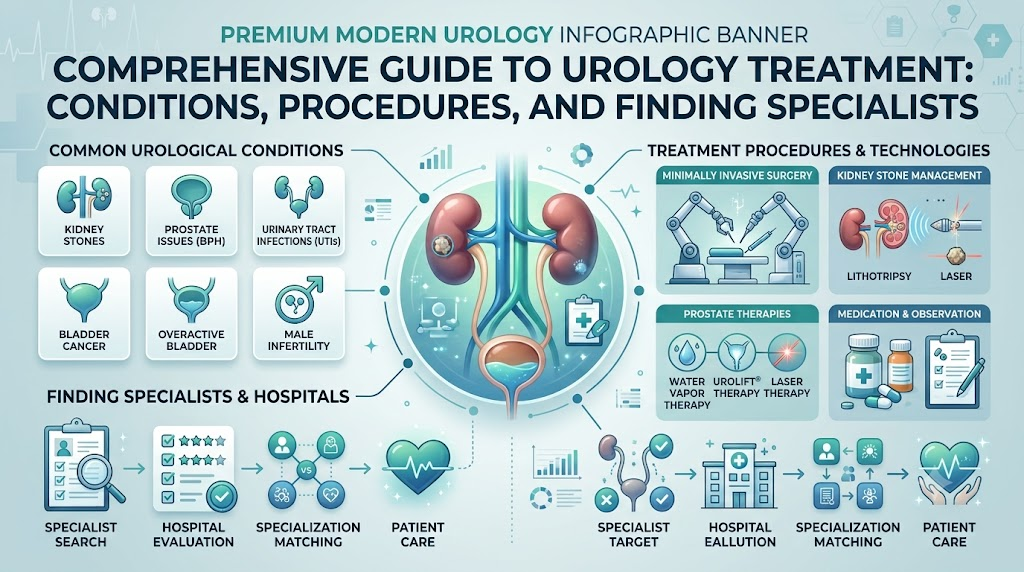
Persistent pelvic discomfort, subtle changes in urinary habits, or unexpected back pain can cause significant anxiety. Many people hesitate to seek guidance because they are unsure which medical specialist evaluates these symptoms or what diagnostic steps come next. Finding reliable, accurate guidance is the first step toward regaining peace of mind. Educational platforms such as UrologyHospitals.com help patients understand complex urinary and reproductive health topics and navigate their healthcare choices with confidence. Medical evaluation for urinary, kidney, bladder, and male reproductive conditions involves specialized diagnostic protocols and tailored interventions. This guide breaks down common urological conditions, explains modern diagnostic pathways, details varied medical and surgical procedures, and clarifies how to locate qualified urology specialists and accredited facilities.
Understanding the Urological System and Modern Urology Treatment
The urological system includes the kidneys, ureters, urinary bladder, and urethra. In men, it also encompasses the prostate gland and male reproductive organs. These organs filter waste products from the bloodstream, regulate fluid balance, store and eliminate urine, and support reproductive function.
Urological care addresses disruptions across this system. It includes benign issues such as urinary tract infections or kidney stones, structural problems like benign prostatic hyperplasia, and complex conditions like bladder or prostate cancer.
Patients often seek medical advice when an acute issue, such as severe flank pain, or a chronic change, such as waking multiple times at night to urinate, interferes with daily life. Modern care is not one-size-fits-all. It ranges from lifestyle modifications and regular observation to prescription therapies, non-invasive procedures, and advanced surgical interventions.
2. Common Symptoms and Warning Signs
Urological symptoms can develop gradually or appear suddenly. Because different conditions can trigger similar symptoms, professional evaluation is essential to identify the underlying cause.
- Flank, Lower Back, or Groin Pain: Sharp, intermittent, or cramping discomfort beneath the ribs or extending toward the groin often points to kidney stones or urinary tract obstructions.
- Changes in Urination Frequency and Urgency: Needing to urinate much more frequently than usual, particularly throughout the night (nocturia), or experiencing an abrupt, uncontrollable urge to void.
- Difficulty with Urination: A weak or interrupted stream, straining to empty the bladder, a delayed start to urination, or a feeling of incomplete emptying.
- Hematuria (Blood in the Urine): Urine appearing pink, red, or tea-colored. While trace blood may only be visible under a microscope, gross hematuria visible to the naked eye requires prompt medical assessment.
- Burning Sensation or Pain During Urination (Dysuria): A stinging sensation often associated with inflammation or infection within the lower urinary tract.
- Pelvic, Perineal, or Testicular Discomfort: Ongoing aching or pressure in the lower abdomen, pelvic floor, or scrotum.
These symptoms do not automatically point to a severe disease. An enlarged prostate, an infection, or a small stone can cause overlapping complaints. However, persistent or worsening signs should be assessed by a physician.
3. Causes and Underlying Risk Factors
Urological issues stem from diverse physiological, structural, and behavioral factors:
- Age: The risk of prostate enlargement and certain cancers increases as individuals grow older. Natural tissue relaxation in the pelvic floor can also affect bladder control over time.
- Metabolic and Dietary Factors: Inadequate fluid intake, high dietary sodium, and metabolic changes that increase urinary calcium or uric acid contribute directly to stone formation.
- Anatomical and Structural Characteristics: A naturally narrower urethra, congenital urinary tract variations, or pelvic organ prolapse can affect urine storage and drainage.
- Bacterial Colonization: Bacteria entering the urethra can migrate upward into the bladder or kidneys, leading to acute or recurring infections.
- Family History and Genetics: A family history of stone disease, prostate cancer, or renal disorders increases individual susceptibility.
- Lifestyle Factors: Tobacco use is a primary known risk factor for urothelial conditions, particularly bladder cancer, as filtered toxins concentrate in the bladder before excretion.
4. Diagnosis and Diagnostic Testing
Accurate diagnosis determines whether a condition requires active treatment or regular monitoring. Clinicians evaluate individual symptoms, medical history, and specific diagnostic findings.
- Medical History and Physical Exam: A detailed discussion of symptoms, fluid habits, medications, and general health, along with abdominal, pelvic, or digital rectal examinations where appropriate.
- Urinalysis and Urine Culture: Laboratory checks for microscopic red blood cells, white blood cells, protein levels, and bacterial strains to identify infections or occult bleeding.
- Blood Testing: Serum creatinine and blood urea nitrogen evaluate overall kidney filtration. Prostate-Specific Antigen (PSA) screening may be ordered for male patients depending on age, risk, and symptoms.
- Diagnostic Imaging: Ultrasound evaluates kidney shape, bladder emptying, and prostate size without radiation. Non-contrast low-dose CT scans identify small or obscure stones, while MRI provides clear detail for soft tissue assessment.
- Cystoscopy: A specialized thin, lighted instrument is guided into the urethra to directly inspect the lining of the urethra and bladder wall.
- Urodynamic Studies: Diagnostic tests that measure pressures inside the bladder to evaluate storage and emptying performance in complex urinary dysfunction.
5. Primary Treatment Pathways in Modern Care
Kidney Stone Treatment
Approaches to kidney stones depend on stone dimensions, exact position, composition, and whether urinary flow is blocked:
- Hydration and Medical Expulsive Therapy: Small stones measuring only a few millimeters may pass naturally with adequate fluid intake, temporary pain relievers, and medications that relax the lower ureter.
- Extracorporeal Shock Wave Lithotripsy (ESWL): Uses focused acoustic sound waves directed from outside the body to shatter stones into smaller fragments that pass during urination.
- Ureteroscopy (URS): A delicate endoscope passes through the urethra and bladder into the ureter or kidney. A miniature holmium or thulium laser breaks the stone into fragments for extraction.
- Percutaneous Nephrolithotomy (PCNL): For larger or complex staghorn stones, a surgeon creates a small incision in the back to access and fragment the stone directly within the kidney.
Enlarged Prostate Treatment (BPH)
Benign prostatic hyperplasia (BPH) causes non-cancerous growth of the prostate gland that compresses the urethra:
- Lifestyle and Active Monitoring: Limiting fluids right before bedtime, reducing caffeine, and scheduling routine checkups may be sufficient for mild symptoms.
- Medication: Alpha-blockers relax smooth muscle fibers around the prostate and bladder neck, while 5-alpha-reductase inhibitors can slowly reduce prostate volume over time.
- Minimally Invasive Interventions: Techniques that use steam, mechanical implants, or localized heat relieve urethral obstruction while minimizing side effects.
- Surgical Interventions: Transurethral resection of the prostate (TURP) or laser enucleation removes obstructing inner tissue to restore unobstructed urinary flow.
Prostate Cancer Treatment
Prostate cancer care varies widely based on cellular grade, PSA trends, imaging findings, stage, and individual life expectancy:
- Active Surveillance: Closely monitoring localized, low-risk tumors with regular PSA testing, periodic MRIs, and repeat biopsies avoids the potential side effects of immediate treatment.
- Surgical Resection (Radical Prostatectomy): Surgical removal of the prostate gland, often performed using robotic-assisted techniques to preserve surrounding nerves and tissue planes.
- Radiation Therapy: External beam radiation or brachytherapy (radioactive seed implantation) directs targeted energy to eliminate malignant cells.
- Systemic and Androgen Deprivation Therapies: Medications that suppress testosterone help slow disease progression in advanced stages.
Urinary Tract Infection Treatment
Urinary tract infections (UTIs) require accurate diagnosis to ensure antibiotics are used responsibly:
- Targeted Antibiotic Protocols: Prescribed based on urine culture results to eliminate specific bacterial strains and reduce the risk of antibiotic resistance.
- Symptom Relief: Short courses of urinary analgesics can soothe burning during urination while antibiotics take effect.
- Preventative Strategies for Recurrent Cases: Daily hydration goals, post-coital voiding, localized hormonal therapies for postmenopausal women, and identifying any anatomical abnormalities that cause incomplete bladder emptying.
Bladder Cancer Treatment
Bladder cancer management is guided by whether the disease affects only the superficial lining or invades the deeper muscular wall:
- Transurethral Resection of Bladder Tumor (TURBT): A diagnostic and therapeutic procedure to resect abnormal tissue from the inner bladder wall for lab analysis.
- Intravesical Therapy: Liquid medications, such as immunotherapy or chemotherapy agents, are instilled directly into the bladder to reduce the chance of superficial recurrence.
- Radical Cystectomy: For muscle-invasive tumors, surgical removal of the bladder and reconstruction of a new urinary diversion may be necessary.
Robotic Urology Surgery
Robotic-assisted surgery uses specialized mechanical instruments controlled directly by a trained urologist seated at an adjacent console.
- Clinical Application: Commonly used for complex procedures such as radical prostatectomy, partial nephrectomy, pyeloplasty, and reconstructive pelvic operations.
- Surgical Benefits: Offers high-definition, three-dimensional magnification and articulated micro-instruments that exceed human hand dexterity in narrow anatomic corridors.
- Patient Considerations: May result in smaller incisions, less intraoperative blood loss, and shorter hospital stays. However, overall outcomes depend heavily on the surgeon’s training and experience rather than the robotic system alone.
6. How to Evaluate Urology Hospitals and Specialists
Choosing the right facility and specialist helps ensure safe, effective care, particularly for complex diagnoses. Consider the following factors:
- Physician Qualifications and Focus: Many urologists complete advanced fellowship training in specific areas, such as urologic oncology, female pelvic medicine, endourology, or reconstructive surgery. Match your specific diagnosis to their area of clinical practice.
- Hospital Diagnostic Facilities: Reliable care relies on on-site access to high-resolution cross-sectional imaging, modern endoscopy units, pathology laboratories, and specialized urodynamic equipment.
- Multidisciplinary Tumor Boards: For cancer care, select institutions that hold routine interdisciplinary conferences where urologists, medical oncologists, radiation oncologists, and pathologists review complex cases together.
- Surgical Volume and Facility Experience: Centers that regularly perform specific complex interventions, such as robotic reconstructions or percutaneous stone procedures, generally have more standardized perioperative care and lower complication rates.
- Emergency and Critical Care Support: Facilities must have 24/7 emergency departments, intensive care support, and readily available interventional radiology services to manage unforeseen post-procedural complications safely.
7. Understanding the “Urologist Near Me” Search Intent
Searching locally for care is practical, but balancing convenience with expertise is important. Keep these points in mind:
- Align Condition Severity with Facility Level: Straightforward issues, such as an initial uncomplicated UTI, can be managed by an outpatient general urologist. Complex issues, like recurring staghorn stones or invasive tumors, may warrant traveling to a dedicated regional urology center.
- Verify Diagnostic Access: Confirm whether the local clinic performs standard diagnostic procedures, such as flexible cystoscopy, flow rate testing, and ultrasound, on-site to minimize repeated visits across different facilities.
- Inquire About Hospital Affiliations: Clarify which hospitals your local physician admits patients to in case an unexpected surgical need or acute admission arises.
- Review Follow-Up Protocols: Inquire how post-procedure concerns, medication adjustments, and routine recovery questions are managed between visits.
8. Practical Questions to Ask Your Urology Specialist
Preparing questions ahead of your appointment helps ensure an informative discussion:
- What underlying factors are most likely contributing to my symptoms?
- Which specific diagnostic tests are necessary right now, and what will they tell us?
- What are the medical and surgical treatment options for my diagnosis?
- What are the potential complications, side effects, and benefits of each approach?
- Is active surveillance or lifestyle modification an acceptable starting point for my condition?
- How many procedures of this specific type do you and this hospital perform each year?
- What does a typical recovery timeline involve, including physical limits and time away from work?
- What signs or symptoms should prompt me to contact the clinic or seek emergency medical care?
- If this initial treatment approach is unsuccessful, what would be our next step?
- Would it be helpful to obtain a second opinion before finalizing this treatment plan?
Relevant Comparison Table
| Approach | Typical Clinical Role | Potential Benefits | Key Considerations |
| Observation & Surveillance | Low-risk prostate cancer, small non-obstructive stones | Avoids procedural side effects and recovery periods | Requires strict follow-up visits and imaging schedules |
| Prescription Medications | Uncomplicated infections, moderate BPH, overactive bladder | Non-surgical, accessible, non-invasive | Relies on ongoing adherence; potential for side effects |
| Minimally Invasive Interventions | Moderate kidney stones, BPH tissue reduction | Reduced tissue trauma, shorter recovery, minimal blood loss | Equipment-dependent; not suitable for every anatomical variation |
| Open or Reconstructive Surgery | Complex masses, large stones, extensive reconstruction | Direct structural access to treat complex anatomy | Longer post-operative recovery and standard surgical risks |
| Robotic-Assisted Surgery | Prostatectomy, partial nephrectomy, pyeloplasty | Enhanced visibility, fine movement precision | Requires an experienced surgeon; higher institutional equipment costs |
Practical Examples
- Hypothetical Example 1: Evaluating Acute Flank PainA 42-year-old individual experiences sudden, severe right-sided back pain that radiates downward. An urgent care evaluation with a low-dose non-contrast CT scan identifies a 4 mm stone in the lower third of the ureter without signs of systemic infection. Because the stone is small and the pain is managed, the patient and their physician choose hydration, alpha-blocker medication to relax the ureter, and scheduled follow-up imaging. The stone passes spontaneously ten days later, avoiding surgical intervention.
- Hypothetical Example 2: Managing Progressive Urinary ObstructionA 67-year-old individual notices a progressively weakening urine stream, frequent nighttime awakenings, and a sensation that the bladder never fully empties. A physical evaluation and ultrasound show benign prostate enlargement and post-void residual urine. The patient begins a daily alpha-blocker, which improves symptoms within several weeks. Because symptoms remain manageable and no urinary retention develops, the patient opts to continue medical therapy alongside annual prostate evaluations.
- Hypothetical Example 3: Navigating a Local Specialist SearchA patient with gross hematuria (visible blood in the urine) searches for a local specialist. Recognizing that painless blood in the urine requires thorough evaluation, they schedule a consultation with a local urologist who can coordinate both a CT urogram and an in-office flexible cystoscopy within the same week. This timely access rules out invasive upper-tract conditions and pinpoints an isolated bladder mucosal lesion for appropriate management.
Decision-Making Framework
- Step 1: Document Symptoms Clearly: Record symptom frequency, severity, dietary habits, and fluid intake before your initial consultation.
- Step 2: Obtain an Objective Diagnostic Evaluation: Complete recommended laboratory tests and imaging studies to understand the precise cause of your symptoms.
- Step 3: Review All Valid Options: Ask your physician to explain conservative, medical, minimally invasive, and surgical options based on your test results.
- Step 4: Assess Benefits and Risks: Weigh the potential improvements in your quality of life against procedural risks, expected recovery times, and medication side effects.
- Step 5: Verify Hospital and Surgeon Experience: Ensure the medical center and provider frequently manage your specific condition with modern equipment and appropriate support staff.
- Step 6: Confirm Recovery and Support Plans: Confirm post-procedure access to emergency care, checkup visits, and nursing support.
- Step 7: Finalize an Informed Path Forward: Choose a treatment plan together with your healthcare team that matches your health needs, lifestyle, and goals.
Common Mistakes to Avoid
- Ignoring Intermittent Symptoms: Assuming that because urinary pain, intermittent bleeding, or voiding difficulties subside temporarily, the underlying cause has resolved on its own.
- Self-Medicating with Leftover Antibiotics: Using past antibiotic prescriptions for new urinary symptoms without a verified urine culture. This can obscure accurate testing and foster drug-resistant bacteria.
- Assuming Surgery is the Only Solution: Forgetting that many conditions, such as early-stage BPH or small stones, can be managed conservatively with lifestyle adjustments or medications.
- Overlooking Hospital and Provider Volume: Choosing a surgical center based purely on promotional materials rather than verifying the clinical team’s direct experience with your specific procedure.
- Equating Robotic Surgery with an Automatic Guarantee: Believing that robotic platforms eliminate all surgical risk. The skill, judgment, and experience of the surgeon operating the equipment remain the primary factors in your outcome.
- Skipping Post-Procedure Follow-Up Appointments: Neglecting long-term follow-up once acute symptoms improve, which can lead to missed recurrences of stones, infections, or cellular abnormalities.
Key Takeaways
- Urological conditions span the kidneys, bladder, ureters, urethra, and male reproductive anatomy, with treatment plans tailored to each specific diagnosis.
- Symptoms such as visible blood in the urine, unmanageable flank pain, or sudden urinary retention require timely professional medical evaluation.
- Diagnostic testing, such as urinalysis, blood tests, ultrasound, CT scans, and cystoscopy, allows clinicians to tailor treatment plans rather than relying on guesswork.
- Treatment pathways range from active surveillance and medication to minimally invasive laser procedures and robotic-assisted surgeries.
- When selecting care, evaluate the specialist’s training, the hospital’s clinical volume, and the facility’s diagnostic capabilities rather than convenience alone.
- Maintain open communication with your clinical team by preparing questions about treatment risks, alternatives, recovery timelines, and follow-up schedules.
10 Frequently Asked Questions
- What conditions fall under the specialty of a urologist?Urologists diagnose and treat conditions affecting the urinary tracts of both men and women, as well as the male reproductive system. These include kidney stones, urinary tract infections, bladder dysfunction, incontinence, structural narrowing, pelvic pain, benign prostatic hyperplasia, and cancers of the kidneys, bladder, prostate, and testicles.
- When should urinary symptoms be evaluated by a medical professional?You should seek prompt evaluation if you notice visible blood in your urine, severe flank or pelvic pain, fever accompanied by urinary burning, an inability to empty your bladder, or persistent urinary frequency that disrupts your regular daytime activities and sleep.
- How are kidney stones accurately diagnosed?Clinicians diagnose kidney stones through a medical history, physical examination, urinalysis to check for blood or infection, and diagnostic imaging. A non-contrast low-dose computed tomography (CT) scan is the gold standard for identifying stone location, size, and density.
- What non-surgical treatments exist for kidney stones?Small stones may pass spontaneously with increased oral fluid intake, temporary pain relievers, and medications that relax the ureter’s smooth muscle. Shock wave lithotripsy (ESWL) uses external acoustic waves to fragment stones non-invasively, allowing fragments to pass naturally.
- What are common treatments for an enlarged prostate (BPH)?Treatment options include lifestyle modifications, prescription medications to relax or shrink prostate tissue, minimally invasive office therapies utilizing steam or mechanical implants, and surgical approaches such as transurethral resection (TURP) or laser enucleation for significant urinary obstruction.
- How is prostate cancer treated once diagnosed?Management depends on cancer stage, cellular risk categorization, patient age, and overall health. Options include active surveillance, radical prostatectomy (often performed with robotic assistance), external beam radiation therapy, brachytherapy, and systemic hormonal medications.
- Why is gross hematuria (blood in urine) considered an important warning sign?Hematuria can stem from benign causes like infections or kidney stones, but it can also be an early sign of bladder, kidney, or prostate cancer. A complete evaluation with imaging and cystoscopy is necessary to identify the source.
- What is robotic urology surgery and what are its benefits?Robotic urology surgery is a minimally invasive technique where the surgeon controls micro-instruments and a high-definition camera through a dedicated console. It provides enhanced precision, reduced blood loss, and often shorter hospital stays compared to traditional open surgery.
- How should a patient evaluate a urology hospital?Look for specialized urology departments with fellowship-trained physicians, high surgical procedure volumes, on-site modern diagnostic imaging and endoscopy, intensive care units, multidisciplinary tumor boards, and structured post-procedure patient care.
- What should I consider when searching for a local urologist?Consider the specialist’s training and focus, their affiliated hospitals, the availability of comprehensive in-office diagnostic testing, scheduling access for urgent concerns, insurance compatibility, and positive indicators of clear physician-patient communication.
Conclusion
Navigating urological symptoms can feel challenging, but understanding the diagnostic and therapeutic options helps make your care journey straightforward and manageable. Whether you are dealing with a painful kidney stone, persistent urinary frequency, or a complex oncological diagnosis, modern medical science offers a wide spectrum of approaches, ranging from simple lifestyle modifications and medications to advanced minimally invasive and robotic procedures. Prioritize timely, professional evaluation when warning signs appear, and actively discuss the risks, benefits, and alternatives of each pathway with your physician. Reliable educational resources and care-navigation platforms, such as UrologyHospitals.com, can assist you in finding qualified specialists, understanding diagnostic findings, and selecting hospitals equipped to provide safe, comprehensive, and patient-centered care.
