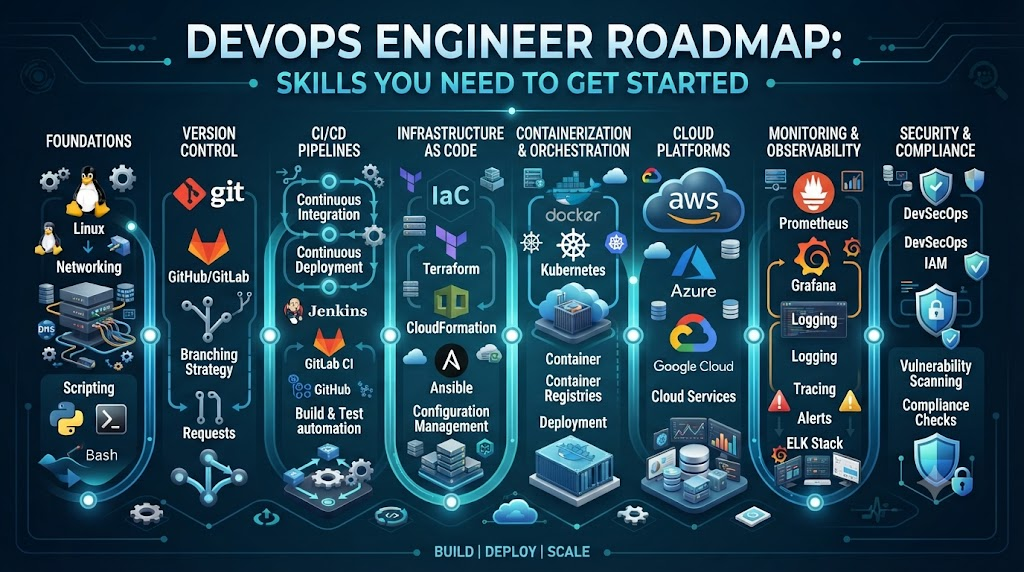
It is very hard to know where to begin in cloud engineering today. There are too many new tools to learn. Beginners often feel lost. You might watch random video tutorials but still feel stuck. You need clear step-by-step guidance to succeed. A good plan saves you time and stress. Random videos do not show the big picture. You need a trusted guide to show you the way. This is where DevOpsSchool.org comes in. It is an open community guide. We will help you understand cloud basics easily. Let us explore how you can start your journey today.
What is DevOpsSchool.org
DevOpsSchool.org is a completely free place to learn. It gives you clear 90-day study guides. You can find a huge open tool directory here. This directory lists helpful software for your daily work. The site also has a massive exam registry. This registry helps you find the exact tests to take. It also offers free career assistance for beginners. You can ask industry experts for help. We built it to support your learning journey. You will never feel alone here. The community is kind and ready to help. You can trust our resources to guide you.
Starting with a Step-by-Step Learning Plan
Having an ordered timeline is very important for success. It saves you months of wasted study time. You need a solid DevOps roadmap to begin. A roadmap is a clear map for your career. It shows you exactly what to learn first. Next, you need a smart DevOps learning path. This path guides your daily study habits perfectly. You will not get lost if you follow it closely. It makes big topics feel very small and easy. First, you learn basic computer commands. Then, you learn how to write simple code. Finally, you connect everything together.
Skills Needed to Become a Full Engineer
You must learn daily basics to do well. First, learn the Linux system. Linux is the main operating system for cloud servers. Next, learn version control properly. Version control safely saves your code history. Git is a very popular version control tool. You must also learn simple scripting. Scripting means writing small code to automate tasks. These basic skills form a strong DevOps engineer roadmap. You follow this map to grow your technical career. Do not skip these important basic steps. They help you solve very big problems later. Every expert started with these same skills.
Choosing the Right Software for Daily Work
Engineers use many programs to save time. People call these helpful programs DevOps tools. They automate slow and boring daily tasks. Automation means making machines do the hard work. For example, continuous integration tools test your code automatically. Infrastructure tools help you set up servers quickly. You must choose the right tools for your team. Start with one simple tool first. Learn how it works completely before moving on. Do not try to learn everything at once. Small steps always lead to big wins.
Evaluating Technology Options Side by Side
There are many options for software today. You must compare them carefully to decide. A good DevOps tools comparison is very helpful. It shows you which platform is best. First, look at container platforms like Docker. Containers pack your code into neat small boxes. Next, compare code pipelines to see how they work. Pipelines move your code to the live server. Then, look at monitoring tools to keep things safe. Compare their costs, speeds, and features. Pick the one that is very easy to use. DevOpsSchool.org has simple guides to help.
Core Engineering Areas & Beginner Projects
Here is a simple look at core skills. You can build these beginner projects easily.
| Skill Area | Key Focus | Beginner Project | Why It Matters |
| Operating Systems | Linux basics | Set up a free web server | Runs all cloud apps |
| Coding | Scripting tasks | Write a backup script | Saves you manual work |
| Version Control | Saving code | Make a GitHub profile | Tracks all code changes |
| Containers | Packing apps | Run a simple web app | Makes apps run anywhere |
| Continuous Integration | Moving code | Build an automatic test | Catches errors early |
Exploring System Reliability and Uptime
Big websites must run all the time. Site reliability specialists make sure this always happens. They keep web apps running without any downtime. Downtime means the website is broken and offline. You can follow an SRE roadmap to learn this job. This clear map teaches you how to fix broken servers. You learn to spot problems before they even happen. You also learn to write code to fix system errors. It is a very exciting and important career path. Companies pay very well for these rare skills.
Understanding Internal Developer Platforms
Some engineers build tools for other engineers to use. Teams call these tools internal self-service systems. Developers use them to work much faster. You can follow a Platform Engineering roadmap to learn this. Platform engineers create a very smooth path for coding. They remove roadblocks for the rest of the team. This makes the whole company move much faster. It is like building a fast highway for modern cars. You set up the safe roads and traffic lights. Then, developers just drive their new code safely.
Validating Skills with Industry Exams
You can show your great skills to bosses. Official tests show employers you understand cloud concepts. People call these important tests DevOps certifications. They prove you know how to use the tools safely. Many big companies look for these certificates. They help you stand out from the large crowd. You study hard and pass the difficult exam. Then, you get a digital badge for your profile. You can put this bright badge on your resume. It makes you look very professional and ready to work.
Planning Your Exam Journey in Order
Do not take hard exams first. You need a smart DevOps certification roadmap. This simple map helps you plan your tests correctly. First, take simple foundational tests. They cover the basic cloud ideas and terms. Once you pass them, you gain a lot of confidence. Next, try the advanced practitioner exams. These tough exams test your deep practical knowledge. Plan your study time every single week. Use practice tests to get fully ready. DevOpsSchool.org helps you find the right order.
Comparing Career Paths & Exam Priorities
This table shows what to study first.
| Target Role | Best Starting Track | Helpful First Exam | Top Goal |
| Cloud Admin | Basic Linux & Cloud | AWS Cloud Practitioner | Manage cloud servers |
| Automation Pro | Coding & Pipelines | Certified Kubernetes Admin | Automate daily tasks |
| Reliability Expert | Monitoring & Linux | Datadog Fundamentals | Stop system crashes |
| Platform Builder | Systems & Security | Terraform Associate | Build developer tools |
Finding Employment and Landing Interviews
Learning is only the first part of the journey. Next, you must find great DevOps jobs. You need to show your hard work to managers. First, build a strong online GitHub portfolio. Share your code projects openly with the world. Write clear notes about what you built and why. Then, connect with professional people online. Talk to hiring managers on career networks. Show them you are very eager to learn. Ask them for quick feedback on your recent work. Stay positive and keep applying every week.
Real-Life Learner Journeys
Many people switch to this career successfully every year. Here are some real examples of brave career changes:
- A system administrator moves to cloud automation by learning simple scripts.
- A college graduate builds small servers to get tech jobs.
- A software developer learns deployment pipelines to launch code faster.
- A network worker studies cloud security to protect company data.
Common Mistakes to Avoid When Learning Cloud Skills
Many beginners make the exact same errors when starting. Avoid these common mistakes to learn much faster:
- Memorizing hard commands without doing hands-on practice.
- Collecting many certificates without building real projects.
- Trying to learn every single tool at the same time.
- Ignoring basic Linux skills and moving too fast.
- Not asking the open community for help when stuck.
- Watching long videos without typing the code yourself.
- Skipping version control basics like the Git tool.
- Giving up when the first red error message appears.
How DevOpsSchool.org Can Help
DevOpsSchool.org is always here to support you. We provide clear, open roadmaps for everyone to use. You can read daily community contributions to learn new tricks. We also have totally free career directories. These directories list companies actively looking for beginners. Our tone is always welcoming, warm, and kind. We want you to feel safe asking any questions. You can share your new projects with us anytime. We will give you helpful tips to improve them. Come and join our friendly group today.
A Simple 7-Step Career Launch Plan
Follow these exact steps to start your tech career. They are very easy to use and follow.
- Goal: Decide exactly what job you want first.
- Search: Look for the basic skills needed for that job.
- Shortlist: Pick three important tools to learn deeply.
- Compare: Look at options and choose the easiest one.
- Ask: Talk to the friendly community for good advice.
- Verify: Test your new knowledge with a small project.
- Decide: Apply for jobs using your new skills.
Frequently Asked Questions
Question 1: Do I need to know how to code?
You do not need to be an expert coder. But you must know basic scripting. Scripting helps you automate slow tasks. You should learn simple languages like Python. These are very easy to start with. You can write small scripts to save time. Practice writing short code every day.
Question 2: How long does it take to learn these skills?
It depends on how much you practice. Most people need about six months of steady work. You should study for a few hours every week. Consistency is more important than rushing. Build small projects to test your memory. Take your time and learn things the right way.
Question 3: What is the best operating system to use?
Linux is the best operating system for this work. Almost all cloud servers run on Linux today. You should learn basic Linux commands first. Windows and Mac are good for your personal laptop. But you must know how to manage Linux servers securely. It is a vital career skill.
Question 4: Are cloud exams really necessary for beginners?
Exams are not mandatory, but they help a lot. They show managers that you know the tools. A good certificate makes your new resume stand out. Start with a basic cloud practitioner exam first. Do not collect certificates without building real projects. Hands-on skills are still the most important.
Question 5: What is the difference between SRE and DevOps?
They are very similar but have different main goals. DevOps focuses on moving code quickly and safely. It bridges the gap between writing and releasing code. SRE focuses on keeping the systems running perfectly. SRE fixes errors and stops the website from crashing. Both teams work together daily.
Question 6: Can I get a job without a college degree?
Yes, you can absolutely get a job without one. Tech companies care more about your actual skills. They want to see your public code portfolio. Build projects and share them online with others. Explain how your projects solve real problems. Hard work and real skills matter most today.
Question 7: Which cloud provider should I learn first?
Amazon Web Services is a great place to start. It is the biggest provider in the world today. Many companies use it for their modern websites. Google Cloud and Azure are also very good choices. Pick just one provider to learn first. The main ideas are the same everywhere.
Question 8: How do I build a good project portfolio?
Start by making a free GitHub account today. Put all your learning scripts and projects there safely. Write clear instructions so others can read them easily. Build a simple web server or a backup script. A good portfolio acts like a visual resume for employers.
Question 9: What does continuous integration actually mean?
Continuous integration is a big term for a simple idea. It means testing new code automatically every day. When developers write code, the system checks it for bugs. It runs small tests to ensure it is safe. This stops bad code from reaching the users. It makes work faster.
Question 10: Where can I find free resources to study?
DevOpsSchool.org is a fantastic place to find free resources. You can read guides and tool comparisons there. Video platforms also have many free beginner courses. Always look for open community groups online. They love to share free tutorials and helpful books. The technology world changes very quickly.
Question 11: Why is version control so important for teams?
Version control acts like a save button for code. It tracks every single change a developer makes. If something breaks, you can undo the change easily. It also lets many people edit code at the same time. Git is the most famous version control tool today.
Question 12: How do I avoid feeling overwhelmed by new tools?
It is normal to feel overwhelmed at first. The secret is to learn one thing at a time. Ignore the complex tools until you master the basics. Follow a structured path and stick to it strictly. Talk to friends in the community when you feel stuck or lost.
Conclusion
Starting a new career can feel like a huge mountain. But you can climb it with the right steps. Always remember to stay consistent with your daily study. Build real labs to practice your new skills. Follow a structured schedule to avoid wasting time. Keep learning with the friendly community every day. Ask questions when you do not understand a topic. We are all learning together. Your hard work will pay off very soon. Tech is a great field with many bright opportunities. You can visit DevOpsSchool.org to find more free guides. Start building your future today!
