You restart the same services by hand every Monday. You follow the same checklist, in the same order, and you know it by heart. Lately you wonder if a machine could do this work instead.
Many IT professionals ask the same thing. NoOpsSchool is a specialized IT education, certification, and consulting platform. It focuses on NoOps, an approach that automates routine operational work. It also covers cloud infrastructure automation and modern software delivery. The platform is based in India and serves an international English-speaking technical audience. This article shows what it offers to learners and what it advertises for organizations.
A Closer Look at NoOpsSchool
NoOpsSchool is built for people who want to run IT with less manual effort. It serves DevOps engineers, cloud architects, platform engineers, software developers, system administrators, and IT managers. It also serves organizations that want to cut repeated operational work through automation.
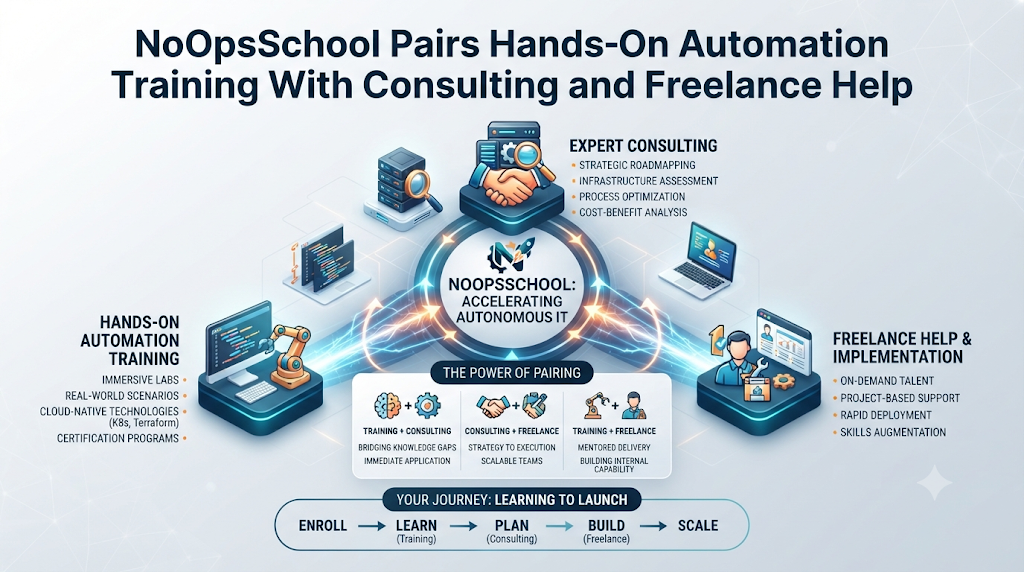
The platform brings five things together. It has training courses and professional certification programs. It shares educational resources and practical guidance on adopting automated IT operations. The site also advertises consulting services. Finally, it advertises access to specialized freelance professionals.
Learners will mostly use the first three. Organizations may look at the last two. Training and professional services reach people online.
One point matters from the start. Automation reduces operational workload, but it does not remove accountability. People still oversee the work.
Two Audiences, Two Paths
Two groups visit NoOpsSchool, and their needs differ. This table puts both paths side by side.
| Area | For Learners and Professionals | For Organizations |
|---|---|---|
| Main purpose | Build skills in automated IT operations | Reduce manual operational work through automation |
| What the site offers | Training, certification tracks, and educational resources | Advertised consulting and access to freelance professionals |
| Skills and topics | Cloud automation and modern delivery practices | Strategy, modernization, setup, and security automation |
| Practical focus | Hands-on labs and real-world scenarios | Assessing current work, then putting automation in place |
| Next step | Pick the program that matches your role | Confirm service details with the site |
Read down a column to follow one group’s path. Read across a row to compare the two. Part One explains the topics in plain words.
Part One: Learning Automation, From First Ideas to Certification
NoOps in plain words
Many engineers search for what is NoOps before they enroll in anything. Here is one plain answer. NoOps aims to automate operational work. Teams then spend less time on manual, repeated tasks.
Operations means running software and systems day to day. In a NoOps approach, tools handle more of that routine work. People still plan, watch, and decide. Human oversight and accountability remain.
Try this: Write down three tasks you repeat each week. Keep them in mind as you read. They show you where automation might help.
Comparing two related ideas
People often search for NoOps vs DevOps. One way to look at it is this. DevOps is a set of practices that brings development and operations teams together. NoOps aims to automate operational work so teams do less by hand.
The two ideas are related. Real teams may use parts of both. Neither one removes the need for people, because human oversight and accountability remain.
One habit that helps: Don’t treat the comparison as a contest. Ask which habits fit your team. Then look at what NoOpsSchool teaches before you decide.
Who NoOpsSchool is for
The platform serves DevOps engineers, cloud architects, platform engineers, software developers, system administrators, and IT managers. These roles differ, but the goal is shared. Each person wants the skills to build, run, and improve highly automated cloud environments. A cloud environment is a set of computing resources that you run online instead of in your own server room.
If you spend many hours on repeated manual tasks, this audience includes you. The same goes for managers who plan skills for a team.
Try this: Match your own job to the roles on the site. If none fits exactly, read the program pages to see which comes closest.
What the training covers
A NoOps training course on the site covers many topics. Here is each one in plain words.
Infrastructure as code means you describe servers and networks in files, not by hand. Cloud-native computing means building software to run well in the cloud. Docker packs an app and what it needs into one portable unit called a container. Kubernetes helps run and manage many containers at once. Terraform is a tool that creates cloud resources from written instructions. GitOps manages changes to systems through tracked, reviewed files. CI/CD automation moves code through build, test, and release steps on its own. Serverless architecture lets you run code without managing servers. Observability means seeing what is happening inside your systems. AI-powered operations, also called AIOps, uses AI to help run IT systems.
Before you enroll, pick one topic that feels new. Start there.
Hands-on labs, real-world scenarios, and self-healing systems
Training materials stress hands-on labs. A lab is a practice space where you try the work yourself. They also stress real-world automation scenarios, which are problems like those teams meet at work.
Two more ideas appear often. Self-healing infrastructure is a setup that fixes some problems on its own. Automated incident response means software reacts to an issue before a person steps in. Practical platform engineering concepts are part of the mix too. People still review what happened and decide what to change.
Try this: Don’t only read. Practice each idea in a lab, then explain it in your own words.
Tools and technologies you will meet
Many learners search for NoOps automation tools. The site lists Kubernetes, Docker, Terraform, GitOps, and CI/CD as topics in its course content. You met each one in plain words above.
This list helps developers, administrators, and architects who want to see which skills the training touches. It gives you a map before you begin. The site does not say here which role covers which topic, so check the program pages.
Practical tip: Choose one name from the list. Learn what problem it solves. Then move to the next one. Small steps keep the list from feeling heavy.
How certification tracks work
The site offers certification tracks that match its learning programs. Many professionals search for NoOps certification and find a wide range of results. It helps to know what this site itself lists. Each learning program has a matching track.
This article does not describe exam details, fees, or what a certificate means. It also does not say what a certificate leads to. The site is the place to confirm those facts.
Before you enroll, read the track description on the site. Write down every question you still have. Ask the site directly.
The engineer track
The site offers a learning program for NoOps Engineers, with a matching certification track. People who search for NoOps engineer certification can start with that program. The site holds the detail on content, so this article adds none.
This track helps professionals who see themselves in the engineer role. It sits beside the three other role programs.
Try this: Open the program page and compare its topics with your current work. Note which topics feel familiar and which feel new. That list shows you where to begin.
The architect track
A separate program exists for NoOps Architects, with its own certification track. Readers who look for NoOps architect training will find this program listed on the site. The facts about its content stay on the site, not here.
This track suits cloud architects and others who plan how systems fit together. You may see yourself in that description, or you may not.
One habit that helps: Sketch one system you know well. Then read the program page. Check whether its topics match the questions your sketch raises.
The manager track
IT managers have a place too. The site lists a program for NoOps Managers, with a matching certification track. Anyone who searches for NoOps manager certification can read about that path on the site.
This track helps people who lead teams and plan skills for them. Managers often decide which skills a team should build next.
Practical tip: Ask your team which skills they want to grow. Compare their answers with the programs on the site. Confirm any detail about the track with the site itself.
The professional track
The fourth program is for NoOps Professionals, and it also has a matching certification track. The site lists it beside the other three programs. Details about its content sit on the program page.
This track helps working professionals who want structured learning in automated operations. It may suit you if the other role names don’t match your job title.
Try this: Read all four program pages before you pick one. A calm comparison can save you from choosing in a rush. Then confirm your choice with the site.
Matching Your Need to an Offering
Not sure which offering fits? This table matches each one to a need.
| Offering | What It Covers | Who It Helps |
|---|---|---|
| Training courses | Automation topics taught with labs and realistic scenarios | Technical professionals and IT managers |
| Certification tracks | One track for each learning program | Professionals following a role program |
| Educational resources | NoOps basics, architecture, tools, and practical guidance | People adopting automated IT operations |
| Consulting services | Assessments, strategy, modernization, provisioning, CI/CD, AIOps, security | Organizations cutting manual operational work |
| Freelance professionals | Terraform, Kubernetes, cloud platforms, monitoring, self-healing systems | Organizations seeking outside expertise |
Details can change, so confirm current information on the site.
Part Two: Help for Organizations
What the site advertises for consulting
The site advertises NoOps consulting services for organizations. The portfolio covers operational assessments, automation strategy, cloud-native modernization, infrastructure provisioning, CI/CD implementation, AIOps integration, and security automation. The next sections explain each area in plain words.
This helps organizations that want to cut manual operational work but need outside help. This article does not describe any process, price, timeline, or result.
Practical tip: Before you contact anyone, write down what you hope to change. Then confirm all service details with the site.
Assessments and automation strategy
An operational assessment is a review of how work gets done today. An automation strategy is a plan for which tasks to automate and in what order. The two often go together, because a plan works best when it starts from facts.
These services help organizations that don’t know where to begin. They may also help teams that feel buried in repeated tasks.
Try this: List your manual tasks first. Mark the ones that are repeated, slow, or easy to get wrong. That list gives any conversation a clear starting point.
Modernizing for the cloud and setting up systems
Cloud-native modernization means updating existing systems so they fit the cloud. Infrastructure provisioning means setting up servers and networks for your software to use. Teams can do this work by hand or through code.
The site lists both areas in its consulting portfolio. They help organizations whose older setups take a lot of manual care. This article does not say how the work is done or how long it takes.
One habit that helps: Name the one system that causes the most manual work. Start your questions with that system.
Pipelines, AI-powered operations, and security automation
CI/CD implementation means setting up the pipeline that builds, tests, and releases your code. AIOps integration means adding AI-powered tools to your IT operations. Security automation means letting software handle routine security checks.
The site lists all three in its consulting portfolio. They help organizations that want more of their daily work handled by tools.
Practical tip: Pick the area that matters most to you right now. Ask the site what it advertises for that area. Keep your list short so the conversation stays clear.
Access to freelance professionals
Some organizations search for ways to hire NoOps freelancers. The site advertises access to specialized freelance professionals. The freelancer section focuses on expertise in Terraform, Kubernetes, cloud platforms, automated monitoring, and self-healing systems.
This helps organizations that need a certain skill but don’t want to build it in-house. This article does not describe any hiring steps, rates, vetting, or contract terms.
Try this: Write down the exact skill you need. Then confirm with the site what it offers and how it works.
Setting Fair Expectations for Automation
NoOps reduces operational workload. It does not remove accountability. It does not remove human oversight either. Someone still decides what to automate and checks how it behaves.
Set goals that match this truth. For example, aim to cut manual, repeated tasks. Don’t expect a system that runs with no people. This article makes no promise about outages, cost, or speed.
NoOpsSchool materials stress self-healing infrastructure and automated incident response. Those ideas shift some work to software. People still design the setup, watch it, and step in when needed.
It also helps to start small. A small, clear goal is easier to judge than a big, vague one. When a plan feels too large, cut it into parts. Then review each part with your team.
Tips for Learners and Organizations
For learners
- Start with the basics: Learn what NoOps means before you open the tool topics.
- Pick the track that fits your job: The site lists separate programs for four roles.
- Practice in hands-on labs: Doing the work helps ideas stick.
- Learn one topic at a time: Small steps are easier to remember than big jumps.
For organizations
- Review your manual work first: A list of repeated tasks shows where automation may help.
- Set realistic goals: Aim to reduce manual work, not to remove people.
- Keep humans in the loop: Someone must stay accountable for automated systems.
- Confirm details with the site: Consulting and freelance help are advertised, so check before you decide.
A Hypothetical Scenario: A Small Company Looks for Automation Help
This is a hypothetical example, not a real story. Imagine a small company with a short IT team. The team spends much of its week on repeated manual tasks. The owner wants to cut that work.
First, the team reviews its manual work. They list each repeated task and note why it takes so long. Next, they read the educational resources on NoOpsSchool to learn the basics. They see that NoOps reduces workload but keeps people accountable.
Then they look at what the site advertises. They find NoOps consulting services that include operational assessments and automation strategy. They also find access to freelance professionals with skills in Terraform and automated monitoring.
They don’t guess about rates or timing. Instead, they confirm every detail with the site first. In the end, they have a clear task list, a better grasp of the topic, and a set of questions to ask. No result is promised. Still, the next step is clear.
Answers to Common Questions About NoOpsSchool
Where is the platform based, and who does it serve?
NoOpsSchool is based in India. It serves an international English-speaking technical audience. Training and professional services reach people online.
Does NoOps mean nobody has to watch the systems?
No. NoOps reduces operational workload, but human oversight and accountability remain. Teams still plan, review, and decide.
Which job roles have their own programs?
The site lists programs for NoOps Engineers, NoOps Architects, NoOps Managers, and NoOps Professionals. Each one has a matching certification track.
Will I get to practice, or only read?
Training materials stress hands-on labs and real-world automation scenarios. Check the site for the exact format of each program.
What tools and topics show up in the lessons?
Course content covers Kubernetes, Docker, Terraform, GitOps, and CI/CD. It also covers infrastructure as code, cloud-native computing, serverless architecture, observability, and AI-powered operations.
How would I explain self-healing infrastructure to a coworker?
Say it is a setup that fixes some problems by itself. Automated incident response is related, because software reacts to an issue first. People still oversee the process.
Is a manager-level track an option for IT managers?
Yes. The site lists a program for NoOps Managers with a matching certification track. IT managers are among the people the platform serves.
Can a company get consulting through the site?
The site advertises NoOps consulting services for organizations. These include assessments, automation strategy, and security automation, among other areas. Confirm the details with the site.
Who can help if my team lacks a certain skill?
The site advertises access to specialized freelance professionals. The section focuses on Terraform, Kubernetes, cloud platforms, automated monitoring, and self-healing systems. Ask the site how it works.
Are there resources beyond the courses?
Yes. The site shares educational content on topics such as what NoOps is, comparisons with DevOps, architecture, and automation tools. It also offers practical guidance for adopting automated IT operations.
Wrapping Up
NoOpsSchool gives learners a way to build automation skills through training, hands-on practice, and role-based certification tracks. It gives organizations a look at advertised consulting and freelance help. Both paths share one idea: let software handle more of the routine work.
That idea has limits. People stay accountable, and people still oversee the systems. With realistic goals and a quick check of the site for current details, you can choose your next step calmly.