Step onto a suburban platform in Mumbai during the morning rush and you immediately feel the city’s heartbeat. Millions of office workers, students, traders, and families move across island Mumbai and the suburbs every single day—often relying on a mix of commuter rail, metro lines, buses, and walkability. A practical Mumbai local train guide helps first-time visitors, newcomers, and daily commuters understand how the rail network works alongside newer transit options so you can plan trips with less stress.
At MumbaiOrbit, we focus on everyday Mumbai life—connecting practical city details with local perspectives from residents, travelers, and newcomers. Alongside rail and metro basics, this guide covers key city stops, neighbourhood living, food and shopping spots, weekend trips, and starting a small business in Mumbai.
How Mumbai’s Suburban Rail and Transit Network Works
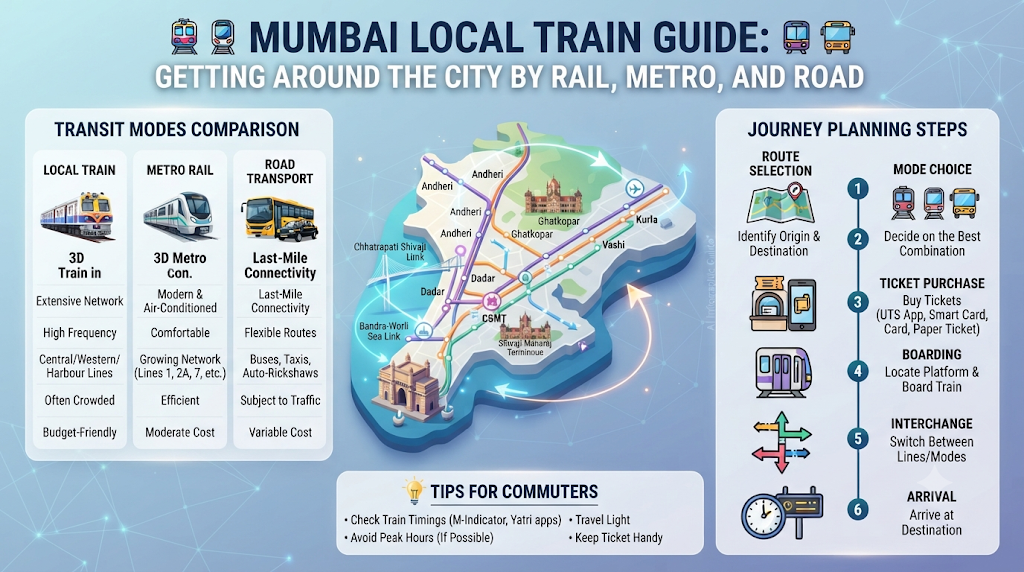
Mumbai stretches north-south from the southern tip (Colaba and Fort) through central hubs (Dadar and Kurla) into the western and central suburbs and across the harbour. Because road traffic can slow down during peak hours, suburban trains remain the backbone of daily commuting.
The Three Main Suburban Rail Corridors
- Western Railway: Runs along the western side from Churchgate and Mumbai Central north through Dadar, Bandra, Andheri, Borivali, and beyond into the northern suburbs.
- Central Railway: Runs from Chhatrapati Shivaji Maharaj Terminus (CSMT) and Dadar through Kurla and Thane toward Kalyan, Kasara, and Karjat.
- Harbour Line: Connects CSMT with Navi Mumbai (such as Vashi and Panvel) and links toward Goregaon/Andheri on the western side via specific services.
Local Trains vs. Mumbai Metro Line 3
Suburban trains cover long distances at frequent intervals, while the metro network expands urban rail coverage across key corridors. If you are looking for a Mumbai Metro Line 3 guide, keep in mind that Line 3 (the Aqua Line) is Mumbai’s underground metro corridor designed to link Colaba in South Mumbai with areas toward Bandra Kurla Complex (BKC), the airport zone, and SEEPZ—offering an air-conditioned alternative along its operational stretches. Always check current station openings, timings, and ticketing rules on official Mumbai Metro Rail Corporation (MMRC) channels before travelling, as phases and schedules can update.
| Transit Mode | Best For | Key Practical Tips |
|---|---|---|
| Mumbai Local Trains | Fast north-south and suburban/Navi Mumbai travel | Watch platform indicators, avoid peak crush hours if carrying luggage, and check fast vs. slow trains |
| Mumbai Metro (incl. Line 3) | Air-conditioned transit along covered metro corridors | Check current operational stretches and station interchanges before starting your trip |
| BEST Buses & Taxis/Autos | Last-mile links, coastal stretches, and areas away from stations | Keep small change/digital payment ready; auto-rickshaws operate mostly in suburbs rather than core South Mumbai |
Step-by-Step: Planning a Local Train Journey Safely
If you have never taken a Mumbai suburban train before, a few simple steps prevent missed stops or confusion:
- Confirm Your Start and End Stations: Note whether your destination sits on the Western, Central, or Harbour corridor, and check if you need to change at an interchange like Dadar or Kurla.
- Check “Fast” vs. “Slow” Trains: Slow trains stop at every station along the route; Fast trains skip several smaller halts to save time on longer commutes.
- Read the Platform Indicator: Look at the overhead display or station indicator for the train’s final destination and whether it is a Fast or Slow service.
- Get the Right Ticket or Pass: Buy a ticket or pass for the exact origin and destination via official ticketing channels or approved mobile/station options before boarding.
- Mind Coach Types and Doors: Look for designated compartments (such as ladies’ or first-class coaches where applicable) and hold onto grab poles—platforms can be crowded during peak morning and evening hours.
- Plan the Final Stretch: Once you step out at your destination station, check whether your final spot is a short walk or requires a bus, taxi, or auto-rickshaw.
Places to Visit in Mumbai and a Practical 3-Day Plan
Mumbai mixes colonial-era architecture, bustling markets, coastal promenades, museums, and neighbourhood cafés. Rather than zig-zagging across the city in one day, group places to visit in Mumbai by area so travel time stays reasonable.
Sample Mumbai 3 Day Itinerary
A balanced Mumbai 3 day itinerary might look like this (adjusting hours and closures before you go):
- Day 1 — South Mumbai Heritage & Coast: Start in the Fort/Colaba area to see historic landmarks and tree-lined streets, visit a museum or cultural spot, and spend the evening along Marine Drive or Girgaon Chowpatty as the sea breeze picks up.
- Day 2 — Bandra, Linking Road & West Coast: Head north toward Bandra to explore vibrant lanes, local bakeries and eateries, street shopping around Hill Road or Linking Road, and coastal sunset viewpoints like Bandstand or Juhu.
- Day 3 — Local Markets, Food & Neighbourhood Culture: Spend the day exploring traditional bazaars, tasting local snacks in established food lanes, or visiting a neighbourhood temple or park before wrapping up your trip.
Best Areas to Live in Mumbai: What to Weigh
Choosing among the best areas to live in Mumbai depends less on hype and more on your daily commute, budget, and lifestyle.
- South Mumbai (e.g., Colaba, Fort, Mahalaxmi, Worli): Close to business districts, heritage sites, and seafronts, often with older buildings alongside high-rises and higher housing costs.
- Bandra, Khar, Santacruz & Andheri: Popular western suburb hubs with strong rail/metro links, lively dining and retail streets, and varied housing options from apartments to shared rentals.
- Powai, Dadar & Matunga: Well-connected central and eastern pockets—Dadar and Matunga are classic central transit and cultural hubs, while Powai offers lakefront surroundings and commercial/tech proximity.
- Thane & Navi Mumbai (e.g., Vashi, Nerul): Wider planned layouts and newer residential complexes across the creek or up the central corridor, balanced against longer commute times into island Mumbai.
Before signing a lease or buying property, test your exact commute during peak hours, check building water/maintenance rules, and verify proximity to hospitals, groceries, and schools.
Street Food, Shopping Markets, and Weekend Getaways
Street Food and Local Flavours
Sampling the best street food in Mumbai is part of everyday city life—from crispy vada pav and sev puri to masala pav, bun maska with chai, and coastal seafood or Maharashtrian thalis in local eateries. If you have a sensitive stomach, choose busy stalls with high ingredient turnover, prefer freshly cooked or hot items, and drink bottled or filtered water.
Shopping Markets in Mumbai
Exploring shopping markets in Mumbai ranges from bargain street stalls to heritage arcades and wholesale hubs:
- Colaba Causeway & Fort: Great for books, souvenirs, accessories, and casual apparel alongside historic buildings.
- Bandra (Hill Road & Linking Road): Popular for trendy clothing, footwear, and accessories.
- Crawford Market (Mahatma Jyotiba Phule Mandai) & Kalbadevi/Zaveri Bazaar: Known for spices, household goods, textiles, and traditional trade.
- Dadar Market: Busy flower, produce, and everyday shopping hub right near major rail connections.
Weekend Getaways From Mumbai
When city noise gets heavy, several weekend getaways from Mumbai are within easy reach by road or train—such as Lonavala and Khandala in the Sahyadri hills, Alibaug across the water for beaches and forts, Karjat or Matheran for greenery and short escapes, and Igatpuri or Mahabaleshwar for longer weekend breaks. Monsoon months bring lush waterfalls and mist, while winter offers cooler weather; check road and ferry conditions during heavy rains.
Starting a Small Business in Mumbai
Many entrepreneurs ask how to start a small business in Mumbai because the city offers deep customer demand, diverse neighbourhoods, and strong service networks—alongside high commercial rents and stiff competition.
- Pinpoint a Clear Local Need: Pick a focused niche—such as tiffin/cloud kitchens, neighbourhood repair or tutoring services, niche retail, or B2B support—rather than competing head-on with giant chains on price alone.
- Test Demand Before Signing a Long Lease: Start with a small footprint, pop-up, home-based/online model, or flexible space to validate customer demand.
- Estimate Real Cash Flow: Factor in security deposits, commercial rent, staff wages, utilities, marketing, and a buffer for slow initial months.
- Complete Required Registrations: Check applicable business registration, Udyam (MSME) registration, Goods and Services Tax (GST), and local municipal shop/establishment or health/trade licenses via official government portals.
- Pick Location by Customer Habits: Match footfall and delivery reach to your product—high-street visibility helps retail and cafés, while central connectivity helps service providers.
Everyday Tips, Mistakes to Avoid, and MumbaiOrbit Community
- Avoid Peak-Hour Surprises: Morning (roughly 8:30–10:30 AM) and evening (roughly 5:30–8:00 PM) commutes see heavy crowds on trains and main roads.
- Don’t Rely on Outdated Timings or Fares: Always verify current rail, metro, ferry, and attraction schedules before heading out.
- Plan for Monsoon Conditions: Heavy rain between June and September can slow local trains, flood low-lying streets, and affect hill or coastal travel.
On MumbaiOrbit, you can explore local guides and join the Mumbai community forum to ask practical questions—whether you are checking a commute route in Trains & Transport, comparing neighbourhoods in Housing, looking for food spots in Khau Galli, exploring regional trips in Maharashtra Matters, or posting general city queries in Ask Mumbai.
Frequently Asked Questions (FAQs)
1. How does a beginner use the Mumbai local train guide basics?
Start by identifying whether your station is on the Western, Central, or Harbour line, check whether you need a Slow or Fast train, buy a valid ticket or pass beforehand, and watch the platform indicator for the destination.
2. What is the difference between Fast and Slow local trains in Mumbai?
Slow trains stop at every station along the route, while Fast trains skip several intermediate stations to reach major hubs faster.
3. How does Mumbai Metro Line 3 help commuters?
Mumbai Metro Line 3 provides an underground metro link connecting parts of South Mumbai toward Bandra Kurla Complex, the airport area, and northern suburbs; check official MMRC updates for active stations and timings.
4. Which places to visit in Mumbai fit a short trip?
Popular spots include South Mumbai’s heritage precincts and Marine Drive, Bandra’s promenades and shopping streets, local markets like Colaba or Crawford Market, and coastal areas such as Juhu or Girgaon Chowpatty.
5. Can you cover the highlights in a Mumbai 3 day itinerary?
Yes—three days is enough to see major South Mumbai landmarks and coastlines, explore Bandra/western suburbs, and sample local markets and food if you group nearby places together.
6. Which are the best areas to live in Mumbai for newcomers?
It depends on your workplace and budget: western suburbs like Andheri, Santacruz, or Bandra suit many professionals and students, Dadar/Matunga offer central connectivity, and Thane or Navi Mumbai suit those preferring larger layouts or commuting to those regions.
7. Where can visitors try the best street food in Mumbai?
Popular street food experiences are found across busy local lanes, coastal promenades like Chowpatty and Juhu, and neighbourhood markets—just choose clean, high-turnover stalls and safe drinking water.
8. Which shopping markets in Mumbai are best for budget and local buys?
Colaba Causeway, Linking Road and Hill Road in Bandra, Crawford Market, and Dadar are well-known spots for clothing, accessories, household goods, and local items.
9. What are easy weekend getaways from Mumbai?
Lonavala, Khandala, Alibaug, Matheran, and Karjat are popular nearby escapes, with places like Igatpuri or Mahabaleshwar also chosen for weekend trips depending on season and travel time.
10. What is a smart first step for how to start a small business in Mumbai?
Validate local customer demand and calculate full startup/rent costs first, then complete applicable registrations (such as Udyam, GST, and local municipal licenses) through official government portals.
11. How can I get local help on a Mumbai community forum?
You can browse guides on MumbaiOrbit and post specific questions in relevant sections like Ask Mumbai, Trains & Transport, or Housing to hear from others familiar with the city.
Conclusion
Getting around and living well in Mumbai becomes much smoother once you understand how the suburban railways, metro corridors, and neighbourhoods connect. Whether you are planning a quick visit, picking a place to stay, hunting for street food and markets, taking a weekend break, or starting a small venture, checking current schedules and local realities saves time and money. Visit MumbaiOrbit to read more Mumbai guides and join community discussions whenever you have local questions to ask or share.