Introduction
Blockchain wallets are software applications or hardware devices that allow users to securely store, manage, send, receive, and interact with cryptocurrencies, digital assets, NFTs, decentralized applications (dApps), and blockchain networks. Contrary to common belief, wallets do not physically store cryptocurrencies; instead, they manage the private keys that provide access to blockchain-based assets.
As blockchain adoption continues to expand across finance, gaming, tokenization, decentralized finance, and enterprise applications, selecting the right wallet has become increasingly important. Modern blockchain wallets now offer advanced security controls, multi-chain support, NFT management, staking capabilities, DeFi integrations, and seamless connectivity to Web3 ecosystems.
Real-World Use Cases
- Managing cryptocurrency portfolios
- Participating in DeFi protocols
- NFT trading and collection management
- Enterprise digital asset custody
- Staking and governance participation
What Buyers Should Evaluate
- Security architecture
- Private key management
- Multi-chain support
- User experience
- Hardware wallet compatibility
- NFT and Web3 support
- Backup and recovery options
- Mobile and desktop availability
- Transaction management features
- Ecosystem integrations
Best for: Crypto investors, traders, Web3 developers, NFT collectors, enterprises managing digital assets, blockchain startups, and decentralized application users.
Not ideal for: Organizations that do not interact with blockchain assets or users who require only traditional banking and payment services.
Key Trends in Blockchain Wallets
- AI-powered transaction risk detection is becoming more common.
- Multi-chain wallets are replacing single-network solutions.
- Institutional custody features continue expanding.
- Passkey-based authentication is improving wallet usability.
- Embedded wallets are simplifying onboarding for Web3 applications.
- Wallets increasingly support tokenized real-world assets.
- Regulatory compliance tools are becoming more important.
- Cross-chain asset management capabilities are improving.
- Advanced phishing and scam detection features are emerging.
- Hardware and software wallet integrations are becoming more seamless.
How We Selected These Tools (Methodology)
- Evaluated market adoption and wallet popularity.
- Assessed security reputation and key management capabilities.
- Reviewed supported blockchain ecosystems.
- Analyzed Web3 and dApp integration capabilities.
- Considered user experience across devices.
- Evaluated community trust and longevity.
- Assessed developer and enterprise support options.
- Reviewed feature completeness for modern blockchain use cases.
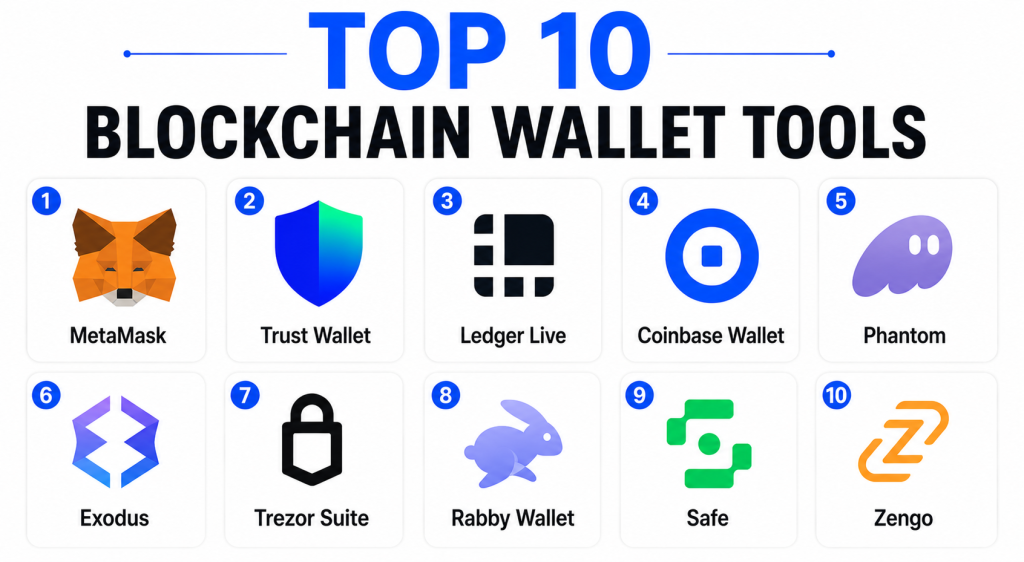
Top 10 Blockchain Wallet Tools
1- MetaMask
Short description:
MetaMask is one of the most widely used blockchain wallets in the Web3 ecosystem. It enables users to manage Ethereum-based assets, interact with decentralized applications, access NFT marketplaces, and participate in decentralized finance. Available as both a browser extension and mobile application, MetaMask has become a standard wallet for Web3 users. Its extensive ecosystem compatibility makes it attractive for developers and investors alike. The wallet supports multiple EVM-compatible chains and offers hardware wallet integrations for enhanced security.
Key Features
- Multi-chain support
- Browser extension wallet
- Mobile wallet
- NFT management
- dApp connectivity
- Hardware wallet integration
- Token swapping
Pros
- Extensive Web3 compatibility
- Easy onboarding process
- Large ecosystem support
Cons
- Primarily focused on EVM networks
- Can be targeted by phishing attacks
- Advanced features may overwhelm beginners
Platforms / Deployment
- Web
- Windows
- macOS
- Linux
- iOS
- Android
Security & Compliance
- Local key storage
- Hardware wallet support
- Encryption
- Seed phrase recovery
- Not publicly stated regarding enterprise compliance certifications
Integrations & Ecosystem
MetaMask integrates with thousands of decentralized applications and Web3 services.
- Ethereum ecosystem
- Polygon
- Arbitrum
- Optimism
- NFT marketplaces
- DeFi protocols
Support & Community
One of the largest blockchain wallet communities with extensive documentation and educational resources.
2- Trust Wallet
Short description:
Trust Wallet is a popular mobile-first cryptocurrency wallet supporting numerous blockchain networks and digital assets. It provides users with a simple interface for storing, managing, and trading cryptocurrencies while accessing decentralized applications. The wallet appeals to beginners and experienced investors seeking broad blockchain compatibility.
Key Features
- Multi-chain support
- NFT storage
- Staking support
- dApp browser
- Asset management
- Token swaps
- Mobile-first experience
Pros
- Supports many blockchains
- User-friendly interface
- Strong mobile experience
Cons
- Limited desktop functionality
- Advanced analytics are limited
- Security depends on user practices
Platforms / Deployment
- iOS
- Android
Security & Compliance
- Encrypted private keys
- Recovery phrase support
- Biometric authentication
- Not publicly stated certifications
Integrations & Ecosystem
- Ethereum
- BNB Chain
- Polygon
- Solana
- NFT platforms
- DeFi applications
Support & Community
Strong global community and comprehensive help resources.
3- Ledger Live
Short description:
Ledger Live works alongside Ledger hardware wallets to provide secure cryptocurrency storage and portfolio management. It is widely recognized for emphasizing self-custody and hardware-based protection. Users can manage thousands of digital assets while maintaining private key isolation.
Key Features
- Hardware wallet integration
- Portfolio management
- Staking support
- NFT management
- Multi-asset support
- Security-first architecture
Pros
- Strong security model
- Supports many assets
- Trusted hardware ecosystem
Cons
- Hardware purchase required
- Less convenient than software wallets
- Learning curve for new users
Platforms / Deployment
- Windows
- macOS
- Linux
- iOS
- Android
Security & Compliance
- Hardware-based key protection
- Secure element technology
- PIN protection
- Recovery phrase support
Integrations & Ecosystem
- Hardware wallets
- Staking providers
- NFT platforms
- Multiple blockchain networks
Support & Community
Strong support ecosystem with extensive educational content.
4- Coinbase Wallet
Short description:
Coinbase Wallet provides self-custody asset management separate from the Coinbase exchange. It enables users to access decentralized applications, NFTs, and Web3 services while maintaining control of their private keys.
Key Features
- Self-custody wallet
- NFT support
- Multi-chain access
- dApp connectivity
- Cloud backup options
- Token management
Pros
- Beginner-friendly interface
- Easy onboarding
- Strong ecosystem integration
Cons
- Advanced users may want more customization
- Some features depend on ecosystem availability
- Limited enterprise controls
Platforms / Deployment
- Web
- iOS
- Android
Security & Compliance
- Encryption
- Recovery phrase management
- Biometric authentication
- Not publicly stated certifications
Integrations & Ecosystem
- Ethereum ecosystem
- NFT platforms
- DeFi services
- Coinbase ecosystem
Support & Community
Large user base and extensive educational resources.
5- Phantom
Short description:
Phantom has emerged as one of the leading wallets for the Solana ecosystem while expanding support for additional blockchain networks. It offers a streamlined user experience focused on NFTs, staking, and decentralized applications.
Key Features
- Solana ecosystem support
- NFT management
- Staking
- Token swaps
- Browser extension
- Mobile wallet
Pros
- Excellent user experience
- Strong NFT support
- Fast transaction handling
Cons
- Originally ecosystem-specific
- Smaller ecosystem than MetaMask
- Enterprise features limited
Platforms / Deployment
- Web
- iOS
- Android
Security & Compliance
- Private key encryption
- Seed phrase recovery
- Hardware wallet compatibility
Integrations & Ecosystem
- Solana dApps
- NFT marketplaces
- Staking platforms
- DeFi applications
Support & Community
Highly regarded community with active ecosystem growth.
6- Exodus
Short description:
Exodus combines attractive design with broad cryptocurrency support, making it popular among individual investors. It offers desktop and mobile experiences while integrating exchange and portfolio management functionality.
Key Features
- Multi-asset support
- Portfolio tracking
- Built-in exchange
- NFT support
- Hardware wallet integration
- User-friendly design
Pros
- Excellent interface
- Easy portfolio management
- Broad asset support
Cons
- Limited advanced controls
- Not open source
- Enterprise functionality limited
Platforms / Deployment
- Windows
- macOS
- Linux
- iOS
- Android
Security & Compliance
- Local key storage
- Encryption
- Hardware wallet support
Integrations & Ecosystem
- Exchange integrations
- Hardware wallets
- NFT platforms
- Multi-chain assets
Support & Community
Strong customer support and extensive educational materials.
7- Trezor Suite
Short description:
Trezor Suite provides management software for Trezor hardware wallets, focusing on secure self-custody and transparent security practices. It appeals to security-conscious users and long-term investors.
Key Features
- Hardware wallet support
- Open-source components
- Asset management
- Security controls
- Transaction verification
- Portfolio tracking
Pros
- Strong security reputation
- Hardware isolation
- Open-source transparency
Cons
- Hardware required
- Less convenient for active traders
- Higher upfront cost
Platforms / Deployment
- Windows
- macOS
- Linux
Security & Compliance
- Hardware key storage
- Recovery systems
- PIN protection
- Passphrase support
Integrations & Ecosystem
- Hardware devices
- Asset management tools
- Multiple blockchain networks
Support & Community
Strong documentation and respected security community.
8- Rabby Wallet
Short description:
Rabby Wallet focuses on enhancing the user experience for Ethereum-compatible networks. It automatically selects appropriate chains and provides transaction risk analysis features.
Key Features
- Multi-chain management
- Transaction simulation
- Risk detection
- Hardware wallet support
- Token management
- DeFi compatibility
Pros
- Excellent multi-chain experience
- Strong transaction visibility
- Security-focused design
Cons
- Smaller ecosystem
- Limited mobile availability
- Primarily EVM focused
Platforms / Deployment
- Web
- Windows
- macOS
Security & Compliance
- Hardware wallet support
- Transaction simulation
- Security-focused architecture
Integrations & Ecosystem
- Ethereum
- Arbitrum
- Polygon
- DeFi protocols
- Web3 applications
Support & Community
Growing developer community and active support resources.
9- Safe
Short description:
Safe is a multi-signature wallet platform widely used by DAOs, Web3 organizations, and enterprises managing significant digital assets. It focuses on governance, approvals, and secure treasury management.
Key Features
- Multi-signature controls
- Treasury management
- Governance workflows
- Access controls
- Transaction approvals
- Enterprise support
Pros
- Excellent security controls
- Strong governance features
- Enterprise-ready workflows
Cons
- More complex setup
- Not ideal for beginners
- Requires multiple participants
Platforms / Deployment
- Web
- Cloud
Security & Compliance
- Multi-signature security
- Role-based controls
- Auditability features
Integrations & Ecosystem
- DAO tools
- Governance platforms
- Treasury management systems
- Ethereum ecosystem
Support & Community
Widely trusted within DAO and enterprise blockchain communities.
10- Zengo
Short description:
Zengo uses multi-party computation technology instead of traditional seed phrases, simplifying wallet recovery while maintaining strong security. It targets mainstream users seeking easier self-custody experiences.
Key Features
- MPC security model
- No seed phrase
- Asset management
- NFT support
- Mobile-first design
- Recovery mechanisms
Pros
- Simplified recovery process
- Beginner-friendly
- Strong security approach
Cons
- Less traditional custody model
- Limited advanced controls
- Smaller ecosystem
Platforms / Deployment
- iOS
- Android
Security & Compliance
- MPC-based security
- Biometric protection
- Encryption
Integrations & Ecosystem
- Multiple blockchain networks
- NFT platforms
- Asset management tools
Support & Community
Strong onboarding experience and growing user community.
Comparison Table (Top 10)
| Tool Name | Best For | Platform(s) Supported | Deployment | Standout Feature | Public Rating |
|---|---|---|---|---|---|
| MetaMask | Web3 Users | Web, Mobile | Self-custody | Largest dApp ecosystem | N/A |
| Trust Wallet | Mobile Users | iOS, Android | Self-custody | Multi-chain support | N/A |
| Ledger Live | Security Focused Users | Desktop, Mobile | Hardware-based | Hardware security | N/A |
| Coinbase Wallet | Beginners | Web, Mobile | Self-custody | Easy onboarding | N/A |
| Phantom | Solana Users | Web, Mobile | Self-custody | NFT experience | N/A |
| Exodus | Portfolio Management | Desktop, Mobile | Self-custody | User-friendly design | N/A |
| Trezor Suite | Long-Term Holders | Desktop | Hardware-based | Open security model | N/A |
| Rabby Wallet | DeFi Users | Desktop, Web | Self-custody | Transaction simulation | N/A |
| Safe | DAOs & Enterprises | Web | Cloud | Multi-signature controls | N/A |
| Zengo | Beginners | Mobile | Self-custody | MPC security | N/A |
Evaluation & Scoring of Blockchain Wallets
| Tool Name | Core | Ease | Integrations | Security | Performance | Support | Value | Weighted Total |
|---|---|---|---|---|---|---|---|---|
| MetaMask | 10 | 8 | 10 | 8 | 9 | 10 | 9 | 9.2 |
| Trust Wallet | 9 | 9 | 8 | 8 | 9 | 8 | 9 | 8.7 |
| Ledger Live | 9 | 8 | 8 | 10 | 9 | 8 | 8 | 8.8 |
| Coinbase Wallet | 8 | 9 | 8 | 8 | 8 | 9 | 8 | 8.3 |
| Phantom | 8 | 9 | 8 | 8 | 9 | 8 | 8 | 8.3 |
| Exodus | 8 | 9 | 7 | 8 | 8 | 8 | 9 | 8.2 |
| Trezor Suite | 8 | 7 | 7 | 10 | 8 | 8 | 8 | 8.0 |
| Rabby Wallet | 8 | 8 | 8 | 9 | 8 | 7 | 8 | 8.1 |
| Safe | 9 | 7 | 9 | 10 | 8 | 8 | 7 | 8.5 |
| Zengo | 8 | 9 | 7 | 9 | 8 | 8 | 8 | 8.2 |
These scores represent comparative evaluations based on publicly available capabilities, ecosystem maturity, and practical usability. Organizations should prioritize criteria most relevant to their use cases. Security-focused users may prioritize Ledger, Trezor, or Safe, while Web3 users may prefer MetaMask or Phantom. Scores should be treated as directional guidance rather than absolute rankings.
Which Blockchain Wallet Tool Is Right for You?
Solo / Freelancer
MetaMask, Trust Wallet, and Exodus provide excellent ease of use, broad asset support, and strong Web3 connectivity for individual users.
SMB
Coinbase Wallet, Trust Wallet, and Safe provide a balance between usability, security, and operational management.
Mid-Market
Safe, Ledger Live, and MetaMask offer stronger governance and asset management capabilities for growing organizations.
Enterprise
Safe, Ledger Live, and Trezor Suite are attractive for organizations requiring advanced security, treasury controls, and governance.
Budget vs Premium
Free software wallets such as MetaMask and Trust Wallet provide excellent value. Hardware-backed solutions like Ledger and Trezor offer stronger security at additional cost.
Feature Depth vs Ease of Use
MetaMask offers extensive ecosystem depth, while Coinbase Wallet and Zengo focus on simplified onboarding experiences.
Integrations & Scalability
MetaMask leads in Web3 integrations. Safe excels in organizational scalability, while Trust Wallet supports a broad multi-chain ecosystem.
Security & Compliance Needs
Ledger Live, Trezor Suite, Safe, and Zengo are strong choices for users prioritizing security, custody controls, and asset protection.
Frequently Asked Questions (FAQs)
1- What is a blockchain wallet?
A blockchain wallet is a tool that manages the private keys required to access and control cryptocurrencies, NFTs, and other blockchain-based assets. It enables users to send, receive, store, and interact with digital assets securely.
2- Are blockchain wallets safe?
Most leading wallets implement strong cryptographic protections. However, user practices such as securing recovery phrases, enabling authentication features, and avoiding phishing attacks remain critical to maintaining security.
3- What is the difference between a hardware and software wallet?
Software wallets run on mobile devices, browsers, or computers, while hardware wallets store private keys in dedicated devices. Hardware wallets generally provide stronger protection against online threats.
4- Which wallet is best for beginners?
Coinbase Wallet, Trust Wallet, and Zengo are often considered beginner-friendly because of their straightforward onboarding processes and simplified user experiences.
5- Can one wallet support multiple blockchains?
Yes. Many modern wallets support multiple blockchain networks and digital assets, allowing users to manage diverse portfolios from a single interface.
6- Do blockchain wallets charge fees?
Most wallets are free to download and use. However, blockchain network fees, transaction costs, staking fees, or premium services may apply depending on the wallet and network.
7- What happens if I lose my recovery phrase?
In many self-custody wallets, losing the recovery phrase may permanently prevent access to assets. Some newer wallet models use alternative recovery methods, but users should always understand recovery procedures before storing funds.
8- Are blockchain wallets required for NFTs?
Yes. NFT ownership is typically managed through blockchain wallets that support NFT standards. Wallets also allow users to connect to NFT marketplaces and decentralized applications.
9- Can enterprises use blockchain wallets?
Absolutely. Enterprise-focused wallets such as Safe and hardware-backed solutions offer governance controls, approval workflows, treasury management, and enhanced security for organizational asset management.
10- How should organizations choose a blockchain wallet?
Organizations should evaluate security, governance requirements, blockchain support, integration capabilities, user experience, recovery mechanisms, and long-term scalability. Conducting pilot testing before large-scale adoption is highly recommended.
Conclusion
Blockchain wallets have evolved from simple cryptocurrency storage tools into comprehensive platforms for managing digital assets, NFTs, decentralized finance participation, governance activities, and enterprise treasury operations. MetaMask continues to dominate the Web3 ecosystem, while Trust Wallet and Coinbase Wallet simplify onboarding for mainstream users. Ledger Live and Trezor Suite remain leaders in hardware-based security, and Safe provides enterprise-grade governance capabilities for organizations and DAOs. The right wallet ultimately depends on your security requirements, blockchain preferences, operational complexity, and growth plans. Rather than choosing solely based on popularity, organizations and individuals should shortlist two or three wallets, evaluate security controls, test integrations, validate recovery processes, and select the solution that best aligns with their long-term digital asset strategy.
