Introduction
Open Data Portals are software platforms that allow governments, organizations, and institutions to publish, share, and manage datasets in a structured and searchable way. These portals make data accessible to the public, researchers, businesses, nonprofits, and developers. By centralizing datasets from multiple sources and publishing them with metadata and search tools, open data portals help improve transparency, support innovation, enhance evidence‑based policymaking, and enable civic technologies that leverage public information.
Open data portals matter because they transform raw information into accessible, reusable assets that support transparency, accountability, innovation, research, and public service delivery. Whether tracking budgets, environmental data, health outcomes, transportation metrics, census figures, or infrastructure details, open data fosters an ecosystem of reuse and analysis that benefits citizens and institutions alike.
Real‑world use cases include municipalities sharing budget and spending data to improve transparency, national agencies publishing health or crime statistics for researchers, environmental organizations releasing climate or pollution datasets, transit authorities publishing schedules and traffic patterns, and nonprofits building tools on top of publicly available data.
What buyers should evaluate includes dataset management tools, search and discovery capabilities, metadata standards support, API access, data visualization features, user access control, data governance, scalability, performance under load, compliance with open data standards, and support/community resources.
Best for: Government data teams, IT departments, open data advocates, policy analysts, researchers, civic technologists, data journalists, and public stakeholders engaged in data reuse.
Not ideal for: Organizations that only need closed internal data repositories or simple document repositories with no public access requirements.
Key Trends in Open Data Portals
- Cloud‑native, scalable data platforms that support large volumes of data
- Standardized metadata frameworks to improve data discoverability
- APIs for real‑time data access and developer reuse
- Automated data publishing pipelines from internal systems
- Data visualization and charting tools built into portals
- Interoperability with EOSC and data exchange standards
- Mobile‑friendly search and dataset access
- Advanced search with filters, tags, and spatial search
- Open licensing and governance workflows
- Integration with analytics and machine‑readable formats
How We Selected These Tools
- Market adoption by governments, research institutions, and public sector organizations
- Feature completeness including search/discovery, APIs, metadata, and governance
- Integration capabilities with data warehouses, analytics tools, and workflows
- Security and compliance including access control and audit capabilities
- Scalability and performance for high traffic and data volume
- User experience for administrators and external users
- Support, documentation, and community presence
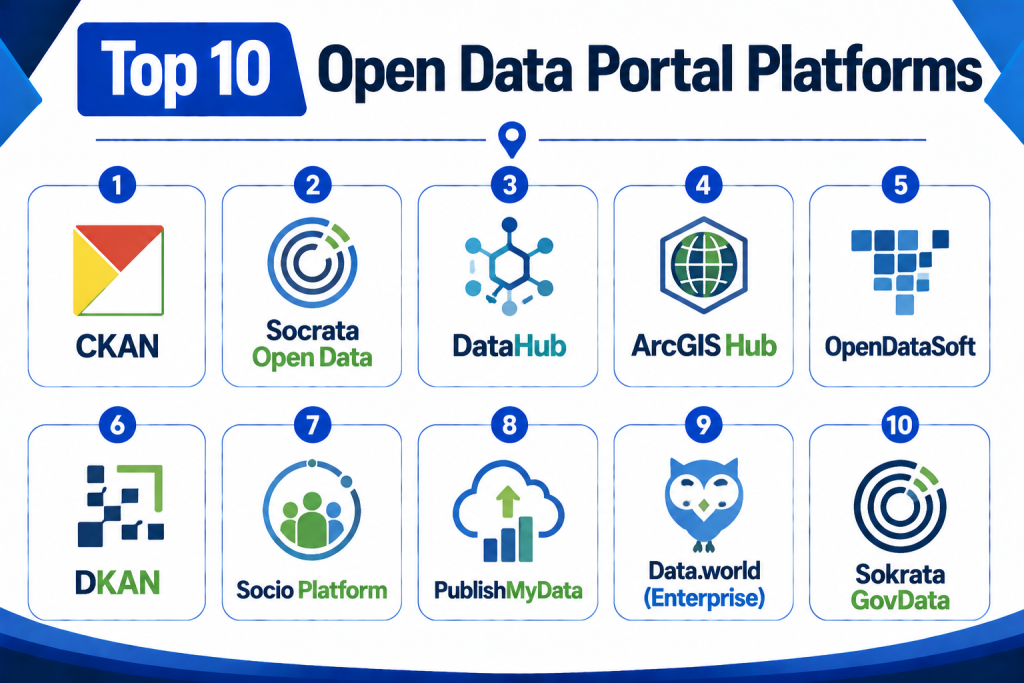
Top 10 Open Data Portal Platforms
1 — CKAN
Short Description:
CKAN is a widely adopted open data portal platform that helps organizations publish, manage, and share datasets. It includes tools for dataset search, tagging, metadata, API access, and community contributions.
Key Features
- Powerful search with filters and tag clouds
- Dataset metadata management
- API for dataset access and integration
- User permissions and roles
- Extensions marketplace for additional functionality
- Data preview and simple visualizations
- Multilingual support
Pros
- Mature and widely deployed
- Large extension ecosystem
- Strong API support
Cons
- Requires maintenance and hosting
- Advanced features may need add‑ons
- Default UI may need customization
Platforms / Deployment
Web / Desktop
Cloud / On‑premise / Hybrid
Security & Compliance
Role‑based access, audit logs, secure authentication
SOC 2 / ISO 27001: Not publicly stated
Integrations & Ecosystem
One short paragraph + bullets:
CKAN connects with analytics tools, database systems, GIS, and data workflows to support publishing, visualization, and automated ingestion.
- Database connections
- GIS systems
- ETL pipelines
- Analytics dashboards
- API clients
Support & Community
Large open source community, documentation, commercial support options available.
2 — Socrata Open Data
Short Description:
Socrata is an enterprise open data portal platform used by governments and agencies to publish datasets, provide analytics, and support public access through APIs and dashboards.
Key Features
- Searchable open data catalog
- Visualizations and dashboards
- APIs for developers
- Data governance workflows
- Metadata and tagging
- Citizen engagement features
Pros
- Strong built‑in visualization tools
- Easy API access
- Government focus
Cons
- Enterprise licensing required
- Less customizable than open source platforms
- May require onboarding support
Platforms / Deployment
Web / Mobile
Cloud
Security & Compliance
Role‑based access, encryption, audit logs
SOC 2 / ISO 27001: Not publicly stated
Integrations & Ecosystem
- Analytics engines
- Public communication systems
- Authentication providers
Support & Community
Professional support, documentation, and community forums.
3 — DataHub
Short Description:
DataHub is an open data catalog platform that makes it easier to publish, search, and manage datasets with rich metadata and user engagement features.
Key Features
- Dataset catalog and search
- Metadata schemas and tagging
- API access
- Data preview
- User roles and permissions
- Simple visualizations
Pros
- Elegant metadata management
- API first design
- Clean user interface
Cons
- Smaller ecosystem than some competitors
- Visualization features are basic
- Requires deployment planning
Platforms / Deployment
Web / Desktop
Cloud / On‑premise / Hybrid
Security & Compliance
Role‑based access, audit logs
SOC 2 / ISO 27001: Not publicly stated
Integrations & Ecosystem
- Data pipelines
- Analytics tools
- Authentication systems
Support & Community
Documentation and developer community.
4 — ArcGIS Hub
Short Description:
ArcGIS Hub extends GIS capabilities into civic engagement and open data. It allows agencies to publish spatial datasets, engage the public with initiatives, and provide discovery via maps and dashboards.
Key Features
- Spatial dataset publishing
- Story maps and dashboards
- Initiative and community engagement pages
- Search and discovery
- APIs and developer tools
- Data governance workflows
Pros
- Strong spatial integration
- Visual mapping and tools
- Good for GIS‑centric open data
Cons
- Requires GIS expertise
- Licensing can be complex
- Overkill for non‑spatial datasets
Platforms / Deployment
Web / Desktop / Mobile
Cloud / Hybrid
Security & Compliance
Role‑based access, audit logs, secure authentication
SOC 2 / ISO 27001: Not publicly stated
Integrations & Ecosystem
- GIS servers
- Spatial analytics
- Storytelling tools
Support & Community
Vendor support, documentation, and GIS community resources.
5 — OpenDataSoft
Short Description:
OpenDataSoft is a platform that makes it easy to publish data and create visual experiences like charts, maps, and real‑time dashboards for public consumption.
Key Features
- Data catalog search
- Dashboards and visualizations
- API generation
- Data corruption and quality tools
- Metadata tagging
- User access control
Pros
- Great visual data storytelling tools
- Clean, intuitive interface
- Real‑time data support
Cons
- Enterprise pricing model
- Visualization extras may cost more
- Hosting may require vendor support
Platforms / Deployment
Web / Mobile
Cloud
Security & Compliance
Role‑based access, encryption
SOC 2 / ISO 27001: Not publicly stated
Integrations & Ecosystem
- Analytics engines
- ETL tools
- Public communication systems
Support & Community
Documentation and professional support.
6 — DKAN
Short Description:
DKAN is an open source open data portal built on content management frameworks with strong metadata and search capabilities.
Key Features
- Dataset publishing
- Advanced search with facets
- API access
- Metadata and catalog tools
- User roles
- Content workflows
Pros
- Open source and customizable
- Built on familiar frameworks
- Good community support
Cons
- Requires development resources
- Visualizations require add‑ons
- Performance tuning needed at scale
Platforms / Deployment
Web
Cloud / On‑premise / Hybrid
Security & Compliance
Role‑based access, audit logs
SOC 2 / ISO 27001: Not publicly stated
Integrations & Ecosystem
- GIS systems
- Data pipelines
- Authentication systems
Support & Community
Open source community and documentation.
7 — Socio Platform
Short Description:
Socio Platform supports open data publishing combined with event engagement tools, workflows for community feedback, and communication channels tied to data visualizations.
Key Features
- Open data catalog
- Event and engagement workflows
- Data visual dashboards
- APIs
- User access roles
- Data governance tools
Pros
- Blends engagement with data publishing
- Good event integration
- Mobile‑friendly
Cons
- Engagement tools may be unnecessary for pure data use
- Custom workflows require planning
- Integration complexity
Platforms / Deployment
Web / Mobile
Cloud / Hybrid
Security & Compliance
Role‑based access, encryption
SOC 2 / ISO 27001: Not publicly stated
Integrations & Ecosystem
- Analytics tools
- Communication systems
- Event tools
Support & Community
Documentation and customer support.
8 — PublishMyData
Short Description:
PublishMyData is a portal platform focused on Linked Data, metadata standards, and interoperability with semantic web technologies.
Key Features
- Linked data publishing
- SPARQL endpoint for queries
- Metadata tools
- Search and discovery
- API access
- Ontology support
Pros
- Strong semantic web support
- Excellent metadata capabilities
- Good for research applications
Cons
- Requires expertise in linked data
- Not as user‑friendly for general audiences
- Visualizations must be built externally
Platforms / Deployment
Web / Desktop
Cloud / On‑premise
Security & Compliance
Role‑based access, audit logs
SOC 2 / ISO 27001: Not publicly stated
Integrations & Ecosystem
- Semantic web tools
- Analytics pipelines
- Data workflows
Support & Community
Documentation and research community resources.
9 — Data.world (Enterprise)
Short Description:
Data.world provides a modern data catalog with collaboration tools, dataset governance, and discovery capabilities ideal for internal and public datasets.
Key Features
- Dataset catalog and search
- Collaboration and tagging
- APIs and ingestion pipelines
- Governance and lineage
- Dashboards and analytics
- User roles and permissions
Pros
- Strong collaboration tools
- Modern interface
- Good for hybrid public and internal datasets
Cons
- Enterprise pricing model
- Public portal support may require configuration
- Some visualization features need add‑ons
Platforms / Deployment
Web / Desktop / Mobile
Cloud
Security & Compliance
Role‑based access, audit logs, encryption
SOC 2 / ISO 27001: Not publicly stated
Integrations & Ecosystem
- Data warehouses
- Analytics engines
- Identity systems
Support & Community
Documentation and professional support.
10 — Sokrata GovData
Short Description:
Sokrata GovData is a government‑focused open data portal with strong analytics, visualization, and governance workflows tailored for public sector needs.
Key Features
- Data publishing
- Visual dashboards
- Search and discovery
- API access
- Data governance tools
- Integration with analytics
Pros
- Tailored for government use
- Strong visualization
- Governance features
Cons
- Enterprise pricing model
- Customization may require support
- Deployment planning needed
Platforms / Deployment
Web / Mobile
Cloud / Hybrid
Security & Compliance
Role‑based access, audit logs
SOC 2 / ISO 27001: Not publicly stated
Integrations & Ecosystem
- Analytics tools
- GIS systems
- Communication systems
Support & Community
Vendor support and documentation.
Comparison Table
| Tool Name | Best For | Platforms Supported | Deployment | Standout Feature | Public Rating |
|---|---|---|---|---|---|
| CKAN | Open source, customizable | Web, Desktop | Cloud / On‑premise / Hybrid | Large extension ecosystem | N/A |
| Socrata Open Data | Government transparency | Web, Mobile | Cloud | Visualization + APIs | N/A |
| DataHub | Clean catalog and API | Web, Desktop | Cloud / On‑premise / Hybrid | Simple interface | N/A |
| ArcGIS Hub | Spatial data focus | Web, Desktop, Mobile | Cloud / Hybrid | Strong GIS integration | N/A |
| OpenDataSoft | Visual storytelling | Web, Mobile | Cloud | Dashboards & real‑time | N/A |
| DKAN | Open source Drupal‑based | Web | Cloud / On‑premise / Hybrid | Customizable + metadata | N/A |
| Socio Platform | Engagement + data | Web, Mobile | Cloud / Hybrid | Engagement integrations | N/A |
| PublishMyData | Linked data | Web | Cloud / On‑premise | Semantic web support | N/A |
| Data.world | Collaboration | Web, Desktop, Mobile | Cloud | Strong collaboration | N/A |
| Sokrata GovData | Government use | Web, Mobile | Cloud / Hybrid | Governance features | N/A |
Evaluation & Scoring Table
| Tool Name | Core 25% | Ease 15% | Integrations 15% | Security 10% | Performance 10% | Support 10% | Value 15% | Weighted Total |
|---|---|---|---|---|---|---|---|---|
| CKAN | 9 | 8 | 8 | 8 | 8 | 8 | 8 | 8.30 |
| Socrata Open Data | 8 | 8 | 8 | 8 | 8 | 8 | 8 | 8.00 |
| DataHub | 8 | 8 | 7 | 8 | 8 | 8 | 8 | 7.95 |
| ArcGIS Hub | 8 | 7 | 9 | 8 | 8 | 8 | 8 | 8.05 |
| OpenDataSoft | 8 | 8 | 8 | 8 | 8 | 8 | 8 | 8.00 |
| DKAN | 8 | 7 | 8 | 8 | 8 | 7 | 8 | 7.90 |
| Socio Platform | 7 | 8 | 7 | 8 | 8 | 8 | 8 | 7.85 |
| PublishMyData | 8 | 7 | 7 | 8 | 8 | 7 | 8 | 7.75 |
| Data.world | 8 | 8 | 8 | 8 | 8 | 8 | 8 | 8.00 |
| Sokrata GovData | 8 | 7 | 8 | 8 | 8 | 8 | 8 | 8.00 |
Scoring reflects comparative strengths across open data features, usability, integrations, security, performance, support, and value.
Which Open Data Portal Platform Is Right for You?
Small Agencies & Nonprofits
Platforms like CKAN, DataHub, and DKAN are solid open‑source choices with customization and minimal licensing cost.
Government Transparency Initiatives
Socrata Open Data, Sokrata GovData, and OpenDataSoft offer strong visualization, governance, and public engagement tools.
GIS and Spatial Data Focus
ArcGIS Hub is ideal if spatial datasets and mapping visualizations are core to your portal strategy.
Semantic Web & Research
PublishMyData excels where linked data and semantic interoperability matter for research or advanced data integration.
Collaboration & Hybrid Workflows
Data.world provides modern collaboration features with catalog and governance tools suitable for both public and internal data use.
Engagement + Data
Socio Platform blends civic engagement workflows with open data publishing for community outreach and interaction.
Frequently Asked Questions
1‑ What is an Open Data Portal?
An open data portal is a software platform used to publish, manage, and share datasets with the public or specific communities in accessible formats.
2‑ Who uses open data portals?
Government data teams, research institutions, analysts, developers, journalists, civic technologists, and the general public use open data portals.
3‑ Are APIs supported?
Most platforms provide APIs to access data programmatically for integration or developer reuse.
4‑ Can portals handle large datasets?
Yes, scalable platforms like CKAN, Socrata, and ArcGIS Hub are designed for large data volumes.
5‑ Do these systems include visualization tools?
Many include visualization tools or dashboards to help users explore datasets without external tools.
6‑ Are open data portals secure?
Yes, platforms include access controls, audit logs, encryption, and compliance features to safeguard data.
7‑ Can they publish spatial data?
Yes, platforms like ArcGIS Hub and CKAN support spatial data and map visualizations.
8‑ Is metadata important?
Metadata is critical for discoverability, context, and reuse; good portals support rich metadata standards.
9‑ Are open source options available?
Yes, platforms like CKAN and DKAN are open source and customizable.
10‑ How do integration features work?
Portals integrate with analytics, ETL pipelines, research systems, communication tools, and authentication providers.
Conclusion
Open data portals empower organizations to share structured, searchable data with citizens, researchers, and developers. From open source platforms like CKAN and DKAN to enterprise‑grade systems like Socrata and Sokrata GovData, each platform offers different strengths in search, APIs, analytics, and data governance. Agencies should evaluate deployment models, scalability, visualization needs, spatial data support, and security requirements when selecting a tool. Shortlist two to three platforms, run pilot implementations, validate integrations, and plan for governance and maintenance to maximize the value of public data.
