Introduction
Public Safety Dispatch Computer-Aided Dispatch systems, commonly known as CAD systems, are software platforms used by emergency communication centers, law enforcement agencies, fire departments, emergency medical services, and public safety organizations to receive, prioritize, dispatch, track, and manage emergency incidents. These systems serve as the operational backbone of modern emergency response environments.
As emergency response operations become increasingly data-driven, agencies require faster dispatch workflows, real-time situational awareness, mobile connectivity, GIS integration, and interoperability with multiple public safety systems. Modern CAD platforms help reduce response times, improve resource allocation, enhance communication, and support coordinated incident management across agencies.
Real-world use cases include:
- Emergency call intake and dispatch operations
- Police, fire, and EMS coordination
- Multi-agency incident response
- Real-time unit tracking and status monitoring
- Disaster and large-scale event management
Evaluation Criteria for Buyers
- Dispatch speed and reliability
- GIS and mapping capabilities
- Mobile unit support
- Incident management workflows
- Interoperability with public safety systems
- Reporting and analytics
- Scalability and performance
- Security and compliance controls
- User experience and training requirements
- Vendor support and implementation services
Best for: Public safety answering points, emergency communication centers, law enforcement agencies, fire departments, EMS organizations, municipal governments, and regional emergency response networks.
Not ideal for: Small private security teams, organizations without emergency dispatch operations, or agencies needing only basic incident logging.
Key Trends in Public Safety Dispatch CAD Systems
- AI-assisted call prioritization and incident classification.
- Real-time situational awareness dashboards.
- Cloud-native public safety platforms.
- Enhanced GIS and geospatial intelligence capabilities.
- Mobile-first responder workflows.
- Integration with body cameras, drones, and IoT devices.
- Automated unit recommendation and dispatch suggestions.
- Increased cybersecurity requirements for emergency operations.
- Data sharing across jurisdictions and agencies.
- Analytics-driven operational performance management.
Methodology
The tools in this guide were selected based on:
- Adoption among public safety agencies.
- CAD feature depth and maturity.
- Dispatch reliability and uptime.
- Mapping and location intelligence capabilities.
- Security and access controls.
- Integration ecosystem.
- Mobile responder support.
- Vendor reputation and support quality.
- Scalability across agency sizes.
- Operational effectiveness in real-world deployments.
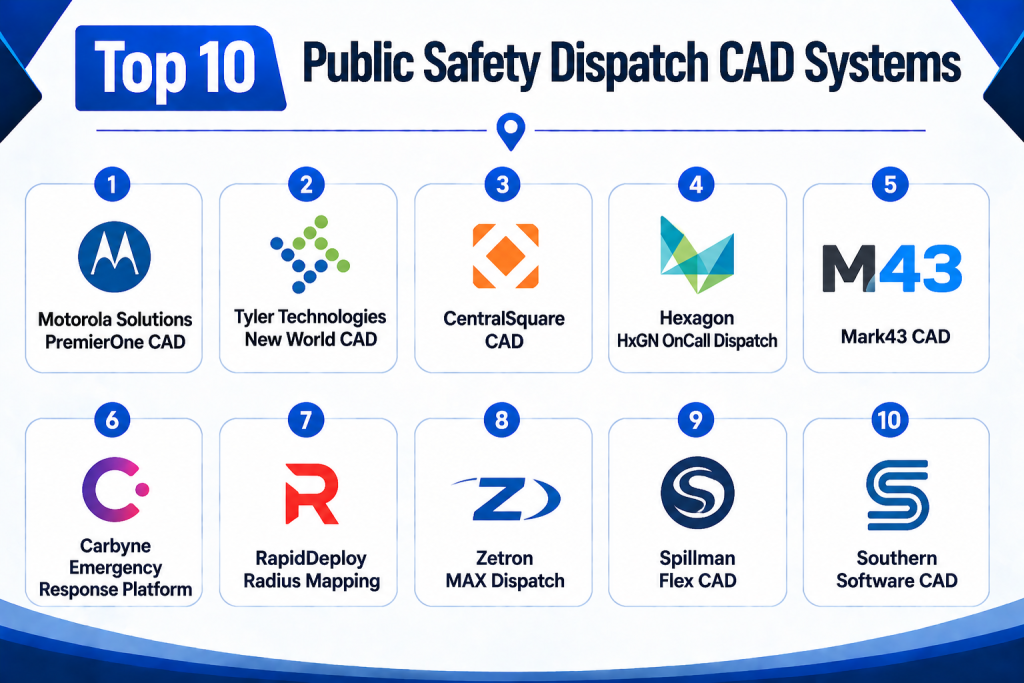
1- Motorola Solutions PremierOne CAD
Short Description
Motorola Solutions PremierOne CAD is an enterprise-grade dispatch platform used by large public safety agencies and regional communication centers. It supports emergency call handling, dispatch management, unit tracking, resource coordination, and real-time situational awareness. The platform is designed to improve operational efficiency while supporting complex multi-agency environments. PremierOne CAD integrates with broader Motorola public safety ecosystems and supports scalable deployments. It is particularly well suited for large metropolitan agencies requiring advanced operational capabilities.
Key Features
- Advanced dispatch workflows
- Real-time unit tracking
- GIS mapping integration
- Multi-agency coordination
- Incident management
- Mobile responder support
- Analytics and reporting
Pros
- Strong enterprise capabilities
- Extensive public safety ecosystem
- Highly scalable
Cons
- Significant implementation effort
- Enterprise pricing
- Training requirements
Platforms / Deployment
- Web
- Cloud / Hybrid
Security & Compliance
- RBAC
- Audit logs
- Encryption
- Authentication controls
Integrations & Ecosystem
Integrates with Motorola public safety technologies and emergency response systems.
- Records management systems
- Mobile applications
- Radio systems
- GIS platforms
- Analytics tools
Support & Community
Strong enterprise support, implementation services, and long-term vendor assistance.
2- Tyler Technologies New World CAD
Short Description
Tyler Technologies New World CAD provides dispatch, emergency communications, and incident management capabilities for public safety agencies. It helps dispatchers manage calls, track units, and coordinate resources. The platform supports police, fire, and EMS operations while integrating with Tyler’s broader public safety portfolio.
Key Features
- Call intake workflows
- Incident management
- Unit recommendations
- GIS support
- Mobile integration
- Resource tracking
- Reporting tools
Pros
- Mature public safety platform
- Strong integration options
- Good operational visibility
Cons
- Implementation complexity
- Training required
- Enterprise-focused pricing
Platforms / Deployment
- Web
- Cloud / Hybrid
Security & Compliance
- User permissions
- Audit logging
- Authentication controls
Integrations & Ecosystem
- RMS platforms
- GIS systems
- Mobile responder tools
- Reporting systems
- Public safety applications
Support & Community
Comprehensive onboarding and implementation support.
3- CentralSquare CAD
Short Description
CentralSquare CAD helps public safety organizations manage emergency calls, dispatch operations, and incident workflows. The platform focuses on improving communication center efficiency and providing responders with real-time information. It supports agencies of varying sizes and integrates with other public safety technologies.
Key Features
- Dispatch management
- GIS mapping
- Unit recommendations
- Mobile access
- Incident tracking
- Reporting
- Resource management
Pros
- Broad public safety focus
- Strong dispatch capabilities
- Flexible deployment options
Cons
- Complex implementations
- Customization may require support
- Enterprise procurement cycle
Platforms / Deployment
- Web
- Cloud / Hybrid
Security & Compliance
- Role-based permissions
- Audit trails
- Access controls
Integrations & Ecosystem
- Public safety systems
- GIS platforms
- Mobile responder applications
- Reporting tools
- Third-party integrations
Support & Community
Vendor-led support and professional services.
4- Hexagon HxGN OnCall Dispatch
Short Description
HxGN OnCall Dispatch provides emergency communication centers with CAD, situational awareness, mapping, and operational coordination capabilities. It is designed to support high-volume dispatch environments and improve emergency response efficiency.
Key Features
- CAD workflows
- GIS intelligence
- Resource recommendations
- Incident management
- Mobile integration
- Reporting
- Real-time awareness
Pros
- Advanced GIS capabilities
- Enterprise scalability
- Strong situational awareness tools
Cons
- Enterprise complexity
- Specialized training
- Higher implementation effort
Platforms / Deployment
- Web
- Cloud / Hybrid
Security & Compliance
- Access controls
- User management
- Audit capabilities
Integrations & Ecosystem
- GIS systems
- Public safety technologies
- Mobile responder tools
- Analytics platforms
Support & Community
Strong enterprise support structure.
5- Mark43 CAD
Short Description
Mark43 CAD is a modern cloud-based public safety platform that focuses on usability, operational efficiency, and mobility. It supports dispatch operations, incident management, and real-time responder communication.
Key Features
- Cloud-native architecture
- Mobile responder support
- Dispatch management
- Incident workflows
- Mapping tools
- Analytics
- Reporting
Pros
- Modern interface
- Cloud deployment
- Mobile-first design
Cons
- May require migration planning
- Enterprise pricing
- Limited fit for very small agencies
Platforms / Deployment
- Web
- Cloud
Security & Compliance
- Authentication controls
- Audit logging
- Access management
Integrations & Ecosystem
- Public safety records
- Mobile applications
- Reporting tools
- GIS platforms
Support & Community
Strong implementation and customer success support.
6- Carbyne Emergency Response Platform
Short Description
Carbyne enhances emergency dispatch operations with modern communication technologies, location intelligence, and real-time incident awareness. It helps dispatch centers gather richer incident information and improve emergency response outcomes.
Key Features
- Enhanced caller location
- Multimedia incident information
- Dispatch support
- Incident management
- Real-time awareness
- Communication tools
- Analytics
Pros
- Modern emergency communication features
- Improved situational awareness
- Strong location intelligence
Cons
- Not always a full standalone CAD replacement
- Integration requirements
- Implementation planning needed
Platforms / Deployment
- Web
- Cloud
Security & Compliance
- Access controls
- User permissions
- Encryption
Integrations & Ecosystem
- CAD systems
- Emergency communications
- GIS tools
- Public safety platforms
Support & Community
Professional implementation and support services.
7- RapidDeploy Radius Mapping
Short Description
RapidDeploy Radius Mapping provides advanced mapping, location intelligence, and operational awareness capabilities for emergency communications centers. It helps dispatchers identify incidents faster and improve response coordination.
Key Features
- Advanced mapping
- Caller location intelligence
- Incident visualization
- Operational dashboards
- Dispatch support
- Resource tracking
- Reporting
Pros
- Strong mapping capabilities
- Modern user experience
- Improved response visibility
Cons
- Often complements existing CAD systems
- Mapping-focused rather than full CAD
- Additional integration work
Platforms / Deployment
- Web
- Cloud
Security & Compliance
- User access controls
- Authentication management
Integrations & Ecosystem
- CAD platforms
- GIS tools
- Emergency communications systems
- Dispatch workflows
Support & Community
Vendor-led implementation and support.
8- Zetron MAX Dispatch
Short Description
Zetron MAX Dispatch supports emergency communications centers with dispatch management, incident tracking, and responder coordination capabilities. It is used by agencies seeking reliable operational workflows and interoperability.
Key Features
- Dispatch management
- Incident tracking
- GIS integration
- Resource coordination
- Reporting
- Mobile support
- Communications integration
Pros
- Reliable dispatch workflows
- Broad interoperability
- Flexible deployments
Cons
- Interface modernization varies
- Training requirements
- Customization complexity
Platforms / Deployment
- Web
- Cloud / Hybrid
Security & Compliance
- User permissions
- Audit logging
- Access controls
Integrations & Ecosystem
- Communications systems
- GIS tools
- Mobile responder applications
- Public safety platforms
Support & Community
Professional support and deployment assistance.
9- Spillman Flex CAD
Short Description
Spillman Flex CAD supports dispatch operations, incident management, responder coordination, and public safety workflows. It is used by agencies seeking integrated operational capabilities and field responder support.
Key Features
- Dispatch operations
- Unit management
- GIS integration
- Mobile access
- Reporting
- Incident tracking
- Resource coordination
Pros
- Public safety focus
- Mobile responder support
- Strong operational workflows
Cons
- Implementation effort
- Enterprise purchasing cycle
- Training needs
Platforms / Deployment
- Web
- Cloud / Hybrid
Security & Compliance
- Role-based access
- User controls
- Audit capabilities
Integrations & Ecosystem
- Public safety systems
- Mobile tools
- GIS platforms
- Reporting environments
Support & Community
Vendor support and onboarding resources available.
10- Southern Software CAD
Short Description
Southern Software CAD provides dispatch management and public safety operational support for agencies seeking a streamlined dispatch platform. It supports emergency communications workflows and resource coordination.
Key Features
- Dispatch management
- Incident tracking
- Mapping support
- Resource allocation
- Reporting
- Unit status management
- Operational dashboards
Pros
- Focused dispatch functionality
- Simpler operational workflows
- Public safety orientation
Cons
- Smaller ecosystem
- Fewer enterprise features
- Integration capabilities vary
Platforms / Deployment
- Web
- Cloud / Hybrid
Security & Compliance
- User permissions
- Access controls
Integrations & Ecosystem
- GIS systems
- Reporting tools
- Public safety workflows
- Dispatch operations
Support & Community
Support and implementation assistance available.
Comparison Table
| Tool Name | Best For | Platforms Supported | Deployment | Standout Feature | Public Rating |
|---|---|---|---|---|---|
| Motorola PremierOne CAD | Large agencies | Web | Cloud/Hybrid | Enterprise dispatch operations | N/A |
| Tyler New World CAD | Multi-agency operations | Web | Cloud/Hybrid | Integrated public safety suite | N/A |
| CentralSquare CAD | Mid-to-large agencies | Web | Cloud/Hybrid | Operational flexibility | N/A |
| HxGN OnCall Dispatch | GIS-driven dispatch | Web | Cloud/Hybrid | Situational awareness | N/A |
| Mark43 CAD | Modern cloud agencies | Web | Cloud | Cloud-native CAD | N/A |
| Carbyne | Emergency communications | Web | Cloud | Enhanced caller intelligence | N/A |
| RapidDeploy Radius | Location intelligence | Web | Cloud | Advanced mapping | N/A |
| Zetron MAX Dispatch | Dispatch coordination | Web | Cloud/Hybrid | Interoperability | N/A |
| Spillman Flex CAD | Public safety operations | Web | Cloud/Hybrid | Mobile responder support | N/A |
| Southern Software CAD | Streamlined dispatch | Web | Cloud/Hybrid | Simplicity | N/A |
Evaluation & Scoring Table
| Tool | Core | Ease | Integrations | Security | Performance | Support | Value | Weighted Total |
|---|---|---|---|---|---|---|---|---|
| Motorola PremierOne | 10 | 7 | 9 | 9 | 10 | 9 | 7 | 8.85 |
| Tyler New World | 9 | 7 | 9 | 8 | 9 | 9 | 7 | 8.45 |
| CentralSquare | 9 | 8 | 8 | 8 | 9 | 8 | 8 | 8.40 |
| HxGN OnCall | 9 | 7 | 9 | 8 | 9 | 8 | 7 | 8.30 |
| Mark43 | 9 | 9 | 8 | 8 | 8 | 8 | 7 | 8.30 |
| Carbyne | 8 | 8 | 8 | 8 | 8 | 8 | 8 | 8.00 |
| RapidDeploy | 8 | 9 | 8 | 8 | 8 | 8 | 8 | 8.10 |
| Zetron MAX | 8 | 7 | 8 | 8 | 8 | 8 | 8 | 7.90 |
| Spillman Flex | 8 | 7 | 8 | 8 | 8 | 8 | 7 | 7.75 |
| Southern Software | 7 | 8 | 7 | 7 | 8 | 7 | 8 | 7.45 |
These scores are comparative and intended to help buyers evaluate relative strengths. Organizations should prioritize the criteria most important to their operational requirements rather than relying solely on total scores.
Which Public Safety Dispatch CAD System Is Right for You?
Solo / Small Agency
Southern Software CAD and RapidDeploy can be suitable for agencies seeking focused functionality without extensive enterprise complexity.
SMB
CentralSquare CAD and Mark43 CAD provide strong functionality, usability, and scalability for growing agencies.
Mid-Market
Tyler New World CAD, CentralSquare CAD, and HxGN OnCall Dispatch offer balanced operational capabilities and integration options.
Enterprise
Motorola PremierOne CAD, Tyler New World CAD, and HxGN OnCall Dispatch are strong choices for large agencies with complex operational requirements.
Budget vs Premium
- Budget-oriented: Southern Software CAD, RapidDeploy
- Premium: Motorola PremierOne CAD, HxGN OnCall Dispatch
Feature Depth vs Ease of Use
- Deep capabilities: Motorola PremierOne, Tyler New World, HxGN OnCall
- Easier usability: Mark43, RapidDeploy
Integrations & Scalability
Organizations requiring extensive integrations should evaluate Motorola, Tyler, CentralSquare, and Hexagon solutions.
Security & Compliance Needs
Agencies with strict governance requirements should prioritize enterprise-grade platforms with strong authentication, access controls, and audit capabilities.
Frequently Asked Questions
1- What is a Public Safety Dispatch CAD system?
A CAD system helps emergency communication centers manage calls, dispatch responders, track incidents, and coordinate resources. It serves as the operational hub for emergency response activities.
2- How does CAD improve emergency response?
CAD systems automate dispatch workflows, provide location intelligence, improve communication, and help dispatchers allocate resources more effectively.
3- Who uses CAD systems?
Police departments, fire departments, EMS organizations, emergency communication centers, and public safety agencies use CAD systems daily.
4- Are CAD systems cloud-based?
Many modern platforms support cloud deployments, while others offer hybrid or on-premises deployment options depending on agency requirements.
5- Can CAD systems integrate with GIS?
Yes. GIS integration is a core capability for most modern CAD platforms and supports location intelligence and routing decisions.
6- What security features are important?
Important features include authentication controls, audit logs, user permissions, access controls, and encryption.
7- How difficult is implementation?
Implementation complexity varies by agency size, integrations, and operational requirements. Enterprise deployments typically require structured planning and training.
8- Can agencies switch CAD systems?
Yes, but migration planning is essential because incident history, integrations, workflows, and training requirements can make transitions complex.
9- What common mistakes should buyers avoid?
Agencies should avoid overlooking integration requirements, training needs, scalability considerations, and long-term operational costs.
10- What should be tested during a pilot?
Test dispatch workflows, GIS accuracy, response coordination, reporting, integrations, user experience, and operational reliability before full deployment.
Conclusion
Public Safety Dispatch CAD systems are critical for modern emergency response operations. The best solution depends on agency size, operational complexity, integration requirements, and security expectations. Large agencies may benefit from Motorola PremierOne CAD, Tyler New World CAD, or HxGN OnCall Dispatch, while growing agencies may find Mark43 or CentralSquare better aligned with their needs. Shortlist two or three solutions, conduct a pilot, validate integrations, review security controls, and ensure the platform supports both current and future operational requirements.
