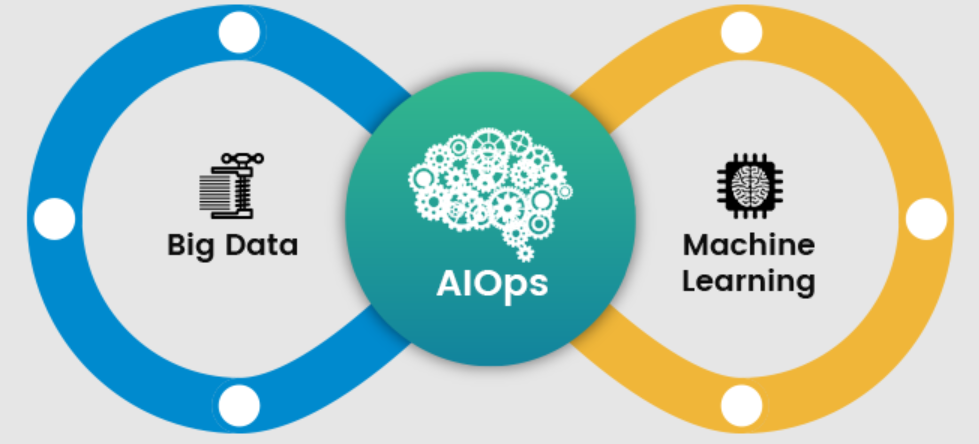
Overview of AIOps
Revolutionizing IT Operations with AIOps: Overview and Key Concepts
AIOps, or Artificial Intelligence for IT Operations, represents a transformative approach to managing IT systems and operations. In today’s complex and dynamic technological landscape, traditional methods of monitoring and managing IT environments are becoming inadequate. AIOps leverages the power of artificial intelligence (AI) and machine learning (ML) to analyze vast amounts of data generated by IT systems, providing actionable insights, predictive capabilities, and automated responses.
At its core, AIOps combines data collection, data analysis, and automation to streamline IT operations and enhance decision-making. It involves processing data from various sources, such as logs, metrics, events, and user interactions, to gain a holistic view of an organization’s IT environment. AI and ML algorithms then analyze this data to identify patterns, anomalies, and correlations that might be impossible to detect through manual means.
Why AIOps is Important
The Significance of AIOps in Modern IT Operations
AIOps is gaining rapid traction due to its crucial role in addressing challenges posed by the increasing complexity, scale, and pace of modern IT environments. Here’s why AIOps has become indispensable:
- Data Overload: Modern IT ecosystems generate massive volumes of data, making it challenging for IT teams to manually process and interpret this data. AIOps automates data analysis, extracting valuable insights and patterns.
- Proactive Incident Management: AIOps enables organizations to predict and prevent incidents before they impact users. By identifying anomalies and trends, it minimizes downtime and service disruptions.
- Efficiency and Automation: Manual IT management is time-consuming and error-prone. AIOps automates routine tasks, allowing IT teams to focus on strategic initiatives and innovation.
- Root Cause Analysis: When incidents occur, AIOps can rapidly analyze data to identify the root causes, reducing Mean Time to Resolution (MTTR) and preventing recurrence.
- Resource Optimization: AIOps optimizes resource allocation by providing insights into usage patterns and identifying areas of inefficiency, leading to cost savings.
- Enhanced User Experience: By ensuring optimal performance of applications and services, AIOps enhances user experiences and customer satisfaction.
- Data-Driven Decisions: AIOps empowers IT teams with data-driven insights, enabling them to make informed decisions and align IT operations with business goals.
How to Implement AIOps Using TheAiOps
Implementing AIOps with TheAiOps: Step-by-Step Guide
TheAiOps provides a comprehensive platform to implement AIOps effectively. Here’s a step-by-step guide to implementing AIOps using TheAiOps:
- Assessment and Planning:
- Understand your organization’s goals, challenges, and IT environment.
- Identify areas where AIOps can provide the most value, such as incident management, resource optimization, or performance monitoring.
- Data Collection and Integration:
- Gather data from various sources, including logs, metrics, events, and monitoring tools.
- Integrate and centralize this data in TheAiOps platform for analysis.
- AI Model Development:
- Collaborate with data scientists to develop AI models tailored to your organization’s needs.
- Train these models using historical data to enable predictive capabilities.
- Integration and Configuration:
- Integrate TheAiOps platform into your existing IT infrastructure.
- Configure data sources, APIs, and connections to relevant tools.
- Real-time Monitoring and Analysis:
- Utilize TheAiOps for real-time data analysis, anomaly detection, and event correlation.
- Leverage AI-driven insights to identify patterns and potential issues.
- Incident Response and Remediation:
- Configure automated workflows within TheAiOps to trigger responses to incidents.
- Utilize AI insights to identify root causes and facilitate efficient incident resolution.
- Human-AI Collaboration:
- Train your IT teams to collaborate effectively with TheAiOps platform.
- Encourage teams to incorporate AI insights into their decision-making processes.
- Continuous Improvement:
- Continuously monitor the performance of your AIOps implementation.
- Gather feedback from IT teams and stakeholders to refine processes and enhance AI models.
Best AIOps Tools
- Splunk: Splunk is a popular data analytics platform that can be used for AIOps. It can collect data from a variety of sources and use machine learning to identify patterns and anomalies.
- New Relic: New Relic is another popular data analytics platform that can be used for AIOps. It can collect data from a variety of sources and use machine learning to identify patterns and anomalies.
- Datadog: Datadog is a monitoring and observability platform that can be used for AIOps. It can collect data from a variety of sources and use machine learning to identify patterns and anomalies.
- IBM Watson AIOps: IBM Watson AIOps is an AIOps platform that uses machine learning to automate IT operations tasks. It can identify and resolve problems, optimize IT resources, and predict future events.
- Google Cloud AIOps: Google Cloud AIOps is an AIOps platform that uses machine learning to automate IT operations tasks. It can identify and resolve problems, optimize IT resources, and predict future events.
Best AIOps Courses
- AIOps Fundamentals: This course provides an introduction to AIOps and the concepts, technologies, and use cases.
- AIOps for IT Operations: This course is designed for IT professionals who want to learn how to use AIOps to improve the performance of their IT operations.
- The Complete AIOps Course: This course is a comprehensive guide to AIOps. It covers the concepts, technologies, use cases, and implementation of AIOps.
Top AIOps Certification
- AIOps Certified Professional: This certification is designed for IT professionals who want to demonstrate their expertise in AIOps.
Best AIOps Trainer
There are many great AIOps trainers out there, but some of the most popular include:
- Rajesh Kumar: Rajesh Kumar is a certified AIOps trainer and consultant. He has over 10 years of experience in IT operations and has worked with a variety of organizations to implement AIOps solutions.
- Jesse White: Jesse White is a certified AIOps trainer and consultant. He has over 15 years of experience in IT operations and has worked with a variety of organizations to implement AIOps solutions.
- Saikrishna Velumani: Saikrishna Velumani is a certified AIOps trainer and consultant. He has over 10 years of experience in IT operations and has worked with a variety of organizations to implement AIOps solutions.
