Introduction
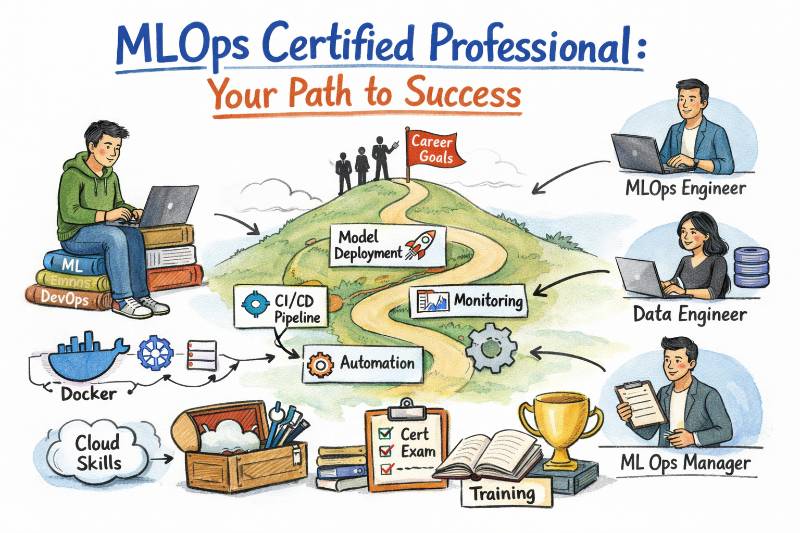
Machine Learning (ML) is transforming industries globally, and organizations are increasingly relying on it to stay competitive. However, deploying machine learning models at scale comes with its own set of challenges—this is where MLOps (Machine Learning Operations) comes into play. MLOps is a combination of machine learning, DevOps, and data engineering, aimed at streamlining the process of deploying, managing, and scaling ML models in production environments. If you’re a professional looking to solidify your expertise in this growing field, the MLOps Certified Professional (MLOCP) certification is the perfect way to gain the skills and recognition you need. In this guide, we will take you through everything you need to know about the MLOCP certification program—what it is, who should take it, what skills you’ll gain, and how you can prepare to pass the exam successfully.
What is MLOps Certified Professional (MLOCP)?
The MLOps Certified Professional (MLOCP) certification is designed for professionals who want to demonstrate their expertise in managing the complete lifecycle of machine learning models. From model development to deployment and monitoring, MLOCP validates your ability to apply DevOps principles in machine learning environments.
In essence, MLOCP ensures that you have the skills necessary to integrate machine learning into the DevOps lifecycle, thus enabling more efficient model development, deployment, and continuous improvement in production.
Who Should Take the MLOCP Certification?
The MLOCP certification is ideal for professionals who are already working with machine learning, DevOps, or data engineering and want to specialize in MLOps. This certification is also beneficial for anyone who wants to move into roles where integrating machine learning into DevOps practices is key.
MLOCP is best suited for:
- Data Engineers: Looking to deploy and monitor ML models effectively in production.
- Machine Learning Engineers: Wanting to extend their knowledge to production-grade machine learning systems.
- DevOps Engineers: Keen to integrate machine learning pipelines into the DevOps cycle.
- Platform Engineers: Focused on optimizing infrastructure for ML models.
- Managers: Who want to better understand MLOps to lead teams in machine learning deployments.
By earning MLOCP, professionals can qualify for roles like MLOps Engineer, Machine Learning Operations Manager, and DevOps Engineer with an ML specialization.
Skills You’ll Gain
Upon completing the MLOCP certification, you will gain essential skills that are in demand globally. These skills cover the full spectrum of MLOps, from deploying machine learning models to ensuring that they continue to perform at a high level in production.
Key Skills You’ll Gain:
- MLOps Fundamentals: A solid understanding of how machine learning integrates into DevOps and the cloud.
- Model Deployment: Proficiency in deploying ML models to production using Docker, Kubernetes, and cloud services (AWS, GCP, Azure).
- Continuous Integration/Continuous Delivery (CI/CD): Automating the model pipeline to continuously train, test, and deploy models.
- Monitoring and Performance Tracking: Tools and techniques to track model performance in real-time and address any performance degradation.
- Cloud Infrastructure: Managing cloud environments and scaling ML models across distributed systems.
- Version Control for ML Models: Implementing versioning for models and datasets to ensure reproducibility.
These skills will make you an expert in ensuring that machine learning models are not only deployed but also monitored and optimized throughout their lifecycle.
Real-World Projects You Should Be Able to Do After It
After achieving the MLOCP certification, you’ll be ready to handle real-world challenges and contribute significantly to your organization’s MLOps initiatives. You will be able to manage the entire lifecycle of machine learning models, from development to production, and ensure their continuous improvement.
Projects You Should Be Able to Handle:
- Deploying Machine Learning Models: Deploy models into a production environment, ensuring scalability and reliability.
- Automating ML Pipelines: Build end-to-end machine learning pipelines that automate model training, testing, and deployment.
- Real-Time Model Monitoring: Set up systems to monitor model performance and automatically trigger retraining when necessary.
- Versioning and Managing Datasets: Implement version control for both models and datasets to ensure reproducibility and integrity.
- Optimizing Machine Learning Infrastructure: Use cloud platforms and containerization tools to optimize infrastructure for running ML models efficiently.
Preparation Plan: Ready to Get Started?
Effective preparation is the key to passing the MLOCP exam. Depending on your level of expertise and how much time you can dedicate, here’s a comprehensive plan for preparing for the exam:
7–14 Days Plan (Intensive)
- Start with the basics: Review machine learning fundamentals and DevOps concepts.
- Hands-on practice: Focus on deploying ML models in the cloud and working with tools like Docker, Kubernetes, and CI/CD pipelines.
- Mock exams: Take online mock exams to get a feel for the certification exam format.
30 Days Plan (Moderate)
- Dive deeper into MLOps tools like MLflow, Kubeflow, and cloud platforms (AWS, GCP, Azure).
- Build projects: Create simple ML deployment pipelines and experiment with model monitoring.
- Hands-on projects: Focus on building scalable machine learning systems.
60 Days Plan (Comprehensive)
- Master the full MLOps lifecycle: Cover everything from model development to deployment and optimization.
- End-to-End Projects: Work on more complex projects that simulate real-world environments.
- Mock exams and revision: Regularly take mock exams to test your knowledge and ensure you’re ready for the certification exam.
Common Mistakes to Avoid
Many candidates struggle with specific aspects of the exam or the subject itself. Here are some common mistakes to avoid during your preparation:
- Neglecting model monitoring: Many focus on deployment and forget the importance of ongoing performance monitoring.
- Skipping version control: Failing to version models and datasets can lead to reproducibility issues.
- Manual workflows: MLOps is about automation. Avoid manual intervention in model pipelines and deployment.
- Not collaborating effectively: MLOps is a team effort, so lack of collaboration with data scientists, DevOps engineers, and software developers can hinder success.
Best Next Certification After MLOCP
Once you achieve MLOCP, there are several paths you can take to further your career in MLOps and beyond:
1. Same Track: MLOps Advanced Professional (MAP)
The MLOps Advanced Professional (MAP) certification takes your MLOps expertise to the next level, focusing on advanced topics such as automated machine learning, distributed systems, and model optimization at scale.
2. Cross-Track: DevOps Certified Professional (DCP)
The DevOps Certified Professional (DCP) certification will broaden your expertise in DevOps practices, which complement MLOps and are essential for managing infrastructure, automation, and model deployment at scale.
3. Leadership Track: Certified DevOps Manager (CDM)
If you’re aiming for leadership roles, the Certified DevOps Manager (CDM) certification will help you develop the skills to lead teams working on MLOps, ensuring that processes are streamlined and that teams are collaborating effectively.
Choose Your Path: Learning Paths to Explore
The MLOps space intersects with various disciplines in technology. Depending on your interests and career goals, you can explore different learning paths:
- DevOps: If you’re interested in automating infrastructure and streamlining development cycles, DevOps is a perfect choice.
- DevSecOps: This path integrates security with DevOps practices, focusing on building secure machine learning models.
- SRE (Site Reliability Engineering): Learn how to ensure reliability, scalability, and performance in ML production environments.
- AIOps/MLOps: A combination of AI and MLOps, focusing on AI-driven automation in operations.
- DataOps: If you’re passionate about managing data pipelines and ensuring real-time data flow for ML models, DataOps is your ideal path.
- FinOps: FinOps focuses on optimizing costs in cloud infrastructure, a crucial skill when scaling ML models at the enterprise level.
Role → Recommended Certifications
Here’s a handy table that maps various roles to their recommended certifications:
| Role | Recommended Certifications |
|---|---|
| DevOps Engineer | DevOps Certified Professional, MLOCP |
| SRE | SRE Certified Professional, MLOCP |
| Platform Engineer | Kubernetes Certified Administrator, MLOCP |
| Cloud Engineer | AWS Certified Solutions Architect, MLOCP |
| Security Engineer | Certified Cloud Security Professional, MLOCP |
| Data Engineer | DataOps Certified Professional, MLOCP |
| FinOps Practitioner | FinOps Certified Professional, MLOCP |
| Engineering Manager | Leadership Track Certifications, MLOCP |
FAQs General
1. How difficult is the MLOCP certification exam?
The exam is moderately challenging, testing both theoretical knowledge and practical skills. It covers topics like model deployment, CI/CD pipelines, cloud management, and monitoring.
2. How much time should I dedicate to studying for MLOCP?
You should allocate 30–60 days depending on your prior experience. Beginners may need more time for hands-on practice, while experienced professionals can prepare in less time.
3. What are the prerequisites for MLOCP?
A strong foundation in machine learning, DevOps, and cloud platforms is recommended. Familiarity with tools like Docker, Kubernetes, and CI/CD will be beneficial.
4. What is the sequence of learning for MLOCP?
Start with ML basics and DevOps principles, then dive into MLOps concepts, covering deployment, monitoring, and cloud integration. Hands-on experience with tools is key.
5. What value does the MLOCP certification bring?
MLOCP demonstrates your ability to manage the entire ML lifecycle, from development to deployment and monitoring, making you highly sought after in the rapidly growing MLOps field.
6. How will this certification impact my career outcomes?
Completing MLOCP opens doors to roles such as MLOps Engineer, Data Engineer, and Machine Learning Operations Manager, with the potential for higher salaries and career growth.
7. How long is the MLOCP certification valid?
The MLOCP certification is valid for 3 years. After that, you’ll need to renew it through continued education or re-examination.
8. What is the passing score for the MLOCP exam?
You need to score at least 70% to pass the MLOCP exam, which includes multiple-choice questions and practical scenarios.
9. What skills do I gain from MLOCP?
You’ll gain expertise in model deployment, cloud infrastructure, CI/CD pipelines, model monitoring, and version control for models and data.
10. Is MLOCP suitable for beginners in MLOps?
Yes, but it’s recommended to have some background in machine learning and DevOps. If you’re new, expect to spend more time on foundational concepts.
11. What are the best resources for preparing for MLOCP?
Use online courses, mock exams, and hands-on projects with MLOps tools like Kubeflow, MLflow, and AWS to solidify your knowledge.
12. What career opportunities can MLOCP lead to?
MLOCP qualifies you for roles in MLOps, machine learning engineering, data engineering, and cloud operations, all of which are in high demand globally.
FAQs on MLOps Certified Professional (MLOCP)
1. How difficult is the MLOCP certification exam?
The MLOCP exam is moderately challenging and includes both conceptual questions and practical tasks. It requires a good understanding of the MLOps lifecycle, including model deployment, automation, CI/CD pipelines, and cloud services.
2. How much time should I dedicate to studying for MLOCP?
You should allocate 30–60 days for preparation depending on your familiarity with MLOps tools and DevOps practices. Beginners may require more time for hands-on practice, while professionals with experience may need less time.
3. What are the prerequisites for MLOCP?
A solid understanding of machine learning, DevOps, and cloud platforms is recommended. Experience with Docker, Kubernetes, and CI/CD tools will also be helpful.
4. What is the sequence of learning for MLOCP?
Start by learning the fundamentals of ML and DevOps. Then, dive into MLOps concepts like model deployment, monitoring, version control, and cloud integration. Finish by getting hands-on with tools like MLflow, Kubeflow, and cloud platforms.
5. What value does the MLOCP certification bring?
The MLOCP certification validates your ability to manage machine learning models in production environments. It opens doors to high-demand roles such as MLOps Engineer, Machine Learning Operations Manager, and Data Engineer.
6. How will this certification impact my career outcomes?
Achieving MLOCP significantly improves your career prospects, making you a desirable candidate for roles in machine learning operations. It shows that you have the skills to manage scalable, efficient machine learning systems in production.
7. What are the best resources for preparing for MLOCP?
Use online courses, hands-on practice with MLOps tools, official training programs, and mock exams to prepare. Make sure you get familiar with tools like MLflow, Kubernetes, and AWS.
8. What is the passing score for the MLOCP exam?
A score of 70% or higher is required to pass the MLOCP exam. Ensure you focus on both theory and practical application of MLOps concepts while preparing.
Top Institutions Offering MLOps Certification and Training
Choosing the right training partner can dramatically impact your learning path and career trajectory. Below are reputable institutions that offer high‑quality training + certification support for the MLOps Certified Professional (MLOCP). Each brings unique strengths — including hands‑on practice, real‑world use cases, industry insights, and mentor‑led guidance.
1. DevOpsSchool
DevOpsSchool is widely recognized for its industry‑aligned MLOps certification training program. It combines practical workflows with theoretical foundations, giving learners both the why and the how of MLOps.
Why it’s worth considering:
- Focuses on real‑world application of MLOps principles.
- Blends machine learning model development with modern DevOps practices.
- Mentorship from experienced instructors with years of industry exposure.
- Projects and labs that prepare you for real MLOps challenges in production.
DevOpsSchool is particularly good if you want a structured path from beginner to professional level, with a strong emphasis on hands‑on learning.
2. Cotocus
Cotocus is known for its tailored, personalized training experience. Their MLOps programs emphasize deep conceptual clarity backed by practical implementation.
Strengths of Cotocus:
- Focuses on building real case studies from scratch.
- Excellent support for cloud platforms (AWS, GCP, Azure).
- Helps learners understand architecture and pipeline automation end‑to‑end.
- Offers guidance and troubleshooting support for learners throughout the program.
Cotocus is ideal if you prefer small group coaching or personalized attention while mastering MLOps tooling.
3. Scmgalaxy
Scmgalaxy stands out for its expert‑led courses and clear progression from fundamentals to advanced practices in MLOps.
What makes Scmgalaxy valuable:
- Comprehensive material covering ML model lifecycle, CI/CD pipelines, and monitoring.
- Hands‑on labs using tools like MLflow, Kubeflow, and Kubernetes.
- Practical guidance on real deployments and production scenarios.
- Supportive learning ecosystem for learners transitioning from DevOps to MLOps.
Scmgalaxy is a strong choice for those who want deep technical grounding complemented by real‑world workflows.
4. BestDevOps
BestDevOps specializes in bridging traditional DevOps with machine learning operations. Their training programs emphasize automation and scalability.
Key advantages of BestDevOps:
- Focus on automation best practices and cloud‑native deployment.
- Lessons on optimizing performance and scaling ML pipelines.
- Real‑world scenarios that prepare learners for enterprise environments.
- Emphasis on modern MLOps tools and workflows integrated with DevOps.
BestDevOps works well if your goal is to build highly automated MLOps pipelines and handle production‑level challenges.
5. DevSecOpsSchool
DevSecOpsSchool brings a unique lens to MLOps — combining machine learning workflows with rigorous security practices. This is particularly valuable in industries where security compliance is critical.
Why DevSecOpsSchool stands out:
- Specialized training on secure ML pipeline design.
- Focus on vulnerability management, secure deployments, and compliance.
- Helps learners implement MLOps workflows with security baked in.
If your organization deals with sensitive data or you want to be well‑versed in secure MLOps deployments, this institution is a great fit.
6. SRESchool
SRESchool integrates Site Reliability Engineering (SRE) principles with MLOps training. This combination is powerful for those who want to ensure reliability and performance at scale.
Advantages of SRESchool:
- Focus on uptime, resilience, observability, and performance in ML systems.
- Training on monitoring, logging, and alerting practices for ML pipelines.
- Emphasis on reliability engineering — critical for production‑scale MLOps.
This is perfect for professionals who want to become MLOps engineers focused on service reliability and uptime.
7. AIOpsSchool
AIOpsSchool bridges the gap between AIOps (AI in operations) and MLOps. It teaches learners how to apply AI techniques to manage and automate operations more efficiently.
What you get with AIOpsSchool:
- Training on how AI can be used to optimize operational tasks.
- Lessons on automated anomaly detection and predictive analytics in operations.
- Focus on intelligent automation in MLOps environments.
AIOpsSchool is best if you are interested in leveraging AI within operations itself, not just for ML model deployment.
8. DataOpsSchool
DataOpsSchool focuses on the data pipeline aspect of MLOps. Since data is the foundation of all machine learning, managing it effectively is critical.
Why DataOpsSchool is important:
- Teaches how to design, automate, and scale data pipelines.
- Helps learners understand data quality, lineage, and governance.
- Emphasizes integration between data workflows and ML model pipelines.
This institution is ideal if you want to become a DataOps + MLOps expert, especially in data‑intensive environments.
9. FinOpsSchool
FinOpsSchool brings a financial lens to cloud infrastructure and MLOps. Running machine learning models at scale can get expensive — FinOps principles help you manage those costs effectively.
Core benefits of training here:
- Training on financial optimization of cloud deployments.
- Best practices for cost‑efficient resource utilization.
- Focus on balancing performance and operational cost.
FinOpsSchool is perfect for professionals involved in budget management, cloud operations, and cost optimization alongside MLOps responsibilities.
Conclusion: Start Your MLOps Journey Today!
MLOps Certified Professional (MLOCP) certification is a game-changer for professionals who want to master the entire machine learning lifecycle, from model development and deployment to continuous monitoring. This certification provides you with the skills needed to automate ML pipelines, manage cloud infrastructure, and ensure model performance at scale. As demand for MLOps professionals continues to grow, this certification helps you stand out in roles like MLOps Engineer, Machine Learning Operations Manager, and Data Engineer. By earning MLOCP, you’re not only enhancing your expertise but also opening doors to new career opportunities in the rapidly expanding world of machine learning operations. Start your MLOps journey today and take the next step in your career. Start your journey today, and unlock new career opportunities in the exciting world of MLOps!
