Introduction
Nobody likes opening an inbox stuffed with generic sales pitches. It feels just as frustrating to visit an online store and see pop-ups for products you would never buy. Blanketed marketing treats everyone like a number on a spreadsheet, which quickly drives buyers away.
Smart software changes this dynamic completely. By learning what people actually want, modern systems help brands welcome each visitor like a regular in a neighborhood shop. You can explore hands-on workflows and smart customer journeys directly on AIUniverse.xyz to see how real businesses put these tools to work.
This guide breaks down the core pieces of real-time personalization into plain language. You will discover practical ways to recommend products, cut down on buyer churn, avoid common traps, and build authentic customer loyalty.
Simple Definition & Basics
AI customer personalization is the practice of using smart software to automatically tailor web content, product picks, and messages to each person’s unique habits.
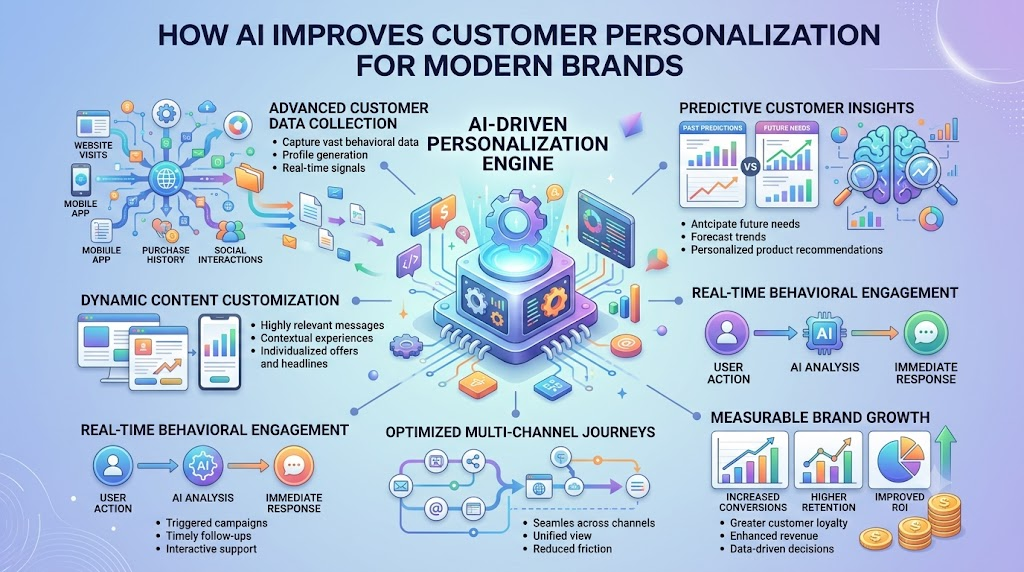
Old marketing setups relied on stiff, manual rules like “if someone clicks link A, send email B three days later.” These old rules break down because real people do not shop in straight lines. Someone might browse running shoes on their phone during lunch, view winter coats on a laptop that evening, and buy nothing until the weekend.
Static rules miss these fast shifts in intent. Modern machine learning systems adjust right away by looking at live actions instead of fixed assumptions.
6 Core Pillars of AI Customer Personalization
Real-Time Browsing Telemetry
- Instant signal reading: Software watches which items a user views, skips, or searches for right now.
- Live session tuning: The site updates page layouts while the shopper is still browsing.
- Zero wait time: Teams do not need to wait for overnight batch updates to see what people want.
Smart Product Recommendations
- Contextual pairing: Systems suggest items that match the user’s taste rather than just generic top sellers.
- Hidden link discovery: Machine learning models find subtle connections between products that humans might miss.
- Fewer dead ends: Visitors see relevant alternatives when their first search comes up empty.
Dynamic Content Blocks
- Tailored banners: Web headers change based on the visitor’s past interests and current needs.
- Relevant headlines: First-time buyers see helpful guides, while repeat buyers see quick reorder links.
- Consistent copy: Emails, mobile alerts, and web pages share the exact same tailored tone.
Predictive Churn Warnings
- Early warning flags: The system spots when an active subscriber starts visiting less often.
- Preemptive care: Support teams receive alerts to reach out with helpful guidance before the user leaves.
- Smarter retention: Brands protect subscription revenue without offering unnecessary discounts to everyone.
Automated Tailored Offers
- Right-time delivery: Discounts arrive only when a shopper shows clear signs of hesitation at checkout.
- Custom price points: Promos match the buyer’s typical spending habits instead of a single flat rate.
- Protected profit margins: Loyal customers who plan to buy at full price are not showered with unneeded coupons.
Unified Customer Profiles
- Single source of truth: In-store purchases, app taps, and support chats merge into one complete record.
- Clean data inputs: The system wipes out duplicate records and fixes broken fields automatically.
- Shared team visibility: Marketers, support agents, and product leads all see the exact same customer story.
How AI Improves Customer Personalization
Think about your favorite local coffee shop. An observant barista spots you walking through the door, remembers your favorite drink, knows you prefer oat milk, and asks about your morning. You feel valued because they pay attention.
That is exactly how machine learning recommendation systems work across digital storefronts. Instead of greeting every visitor with a blank stare, the system acts like that observant barista. It notices the small details that show real buyer intent.
Understanding Buyer Intent
When someone searches for “lightweight travel gear,” they might be planning a weekend flight or a mountain trek. Old search bars merely match exact words on the page. Smart models check the search terms, recent filter choices, and browsing speed to grasp the true goal.
If the user browses compact backpacks right after reading about carry-on limits, the platform highlights airline-friendly bags. It solves the shopper’s immediate problem without forcing them to click through dozens of irrelevant menus.
Predicting the Perfect Moment
Timing matters just as much as the message itself. Sending a renewal reminder too early annoys people, but sending it too late means they might forget entirely.
Smart software tracks how often each person uses a service. It figures out the best time of day to deliver a nudge, whether that means a morning mobile alert or an evening email summary. Messages arrive when the person is actually ready to read them.
Updating Layouts Automatically
No two shoppers need to see the exact same digital storefront. A first-time visitor often wants clear reviews, simple brand promises, and easy return policies. A long-time customer simply wants to see tracking updates or complementary accessories for past orders.
Automated systems adjust homepages, navigation links, and product carousels in real time. Each shopper gets a clear path to what they need without wading through clutter.
Protecting Privacy and Trust
Great customer care never feels creepy or intrusive. Helpful personalization relies on honest, permission-based data that users knowingly share.
Modern systems focus on on-site actions rather than buying sketchy third-party tracking lists. They give customers simple settings to control their preferences, clear opt-out toggles, and total control over their data history.
AIUniverse.xyz Guide to Implementing AI Personalization
You do not need a massive team or millions of dollars to start personalizing customer journeys. Small teams can make major progress by starting with small, practical experiments.
Begin by installing a simple product recommendation block on your checkout or cart page. Focus entirely on showing items that genuinely complement what is already in the cart, like matching cables for electronics.
Next, divide your audience into three broad groups: brand-new visitors, one-time buyers, and repeat regulars. Tailor your main homepage banner to speak directly to those three distinct groups.
Finally, measure how these simple changes move your key metrics. Track whether visitors spend more time on site, click your recommendations, and finish their orders. Expanding slowly lets you see clear returns without overwhelming your daily operations.
Real-World Applications
- Streaming Media Watchlists: Entertainment apps look past simple genres to study viewing time, skipped titles, and replay habits to suggest shows you will actually finish.
- Online Retail Stores: Clothing platforms match outfits based on size history, preferred colors, and local weather patterns where the customer lives.
- Travel Booking Engines: Flight and hotel apps spotlight quiet getaways for weekend travelers while showing practical business amenities to frequent corporate flyers.
- Banking App Dashboards: Financial platforms place common features like quick bill payments up front while offering tailored tips to help users meet personal savings goals.
Comparison: Old Static Rules vs. AI-Driven Personalization
| Criteria | Old Static Marketing Rules | AI-Driven Real-Time Personalization |
| Setup Effort | Heavy manual setup requiring complex branching logic trees | Fast setup using software that learns continuously from live data |
| Adaptability | Rigid and easily broken by unexpected customer behavior | Flexible and able to adjust to new shopping trends on the fly |
| Customer Experience | Repetitive, generic, and often shows irrelevant offers | Helpful, natural, and feels tailored to individual needs |
| Message Timing | Fixed schedules based on arbitrary calendar dates | Dynamic triggers that send messages when users show genuine interest |
| Conversion Impact | Modest gains that tend to stall over time | Strong, steady lift across repeat sales and order values |
Why Smarter Personalization Matters
Customers reward businesses that respect their time. When people find what they want in a few quick taps, their overall stress drops and their trust in your brand climbs.
This smooth experience leads directly to higher repeat sales. Buyers return to apps and stores that make life simple and avoid irrelevant noise.
Better targeting also takes pressure off your support team. When customers receive timely order updates and clear guides before they have to ask, support queues stay manageable and customer happiness grows.
Common Pitfalls & How to Avoid Them
- Over-Targeting Customers: Following people around the web with ads for an item they already checked can make them uncomfortable. Keep display caps low and stop showing ads once an item is viewed several times without action.
- Recommending Bought Items: Few things look sloppier than sending coupons for a coffee maker the customer bought yesterday. Connect your purchase records to your ad tools so recent buyers move directly into helpful care sequences instead.
- Relying on Messy Data: If your customer database contains duplicate names and broken email fields, your automated tools will deliver strange results. Run automated cleanup scripts regularly to keep your records tidy and reliable.
- Ignoring Plain Human Common Sense: Never let software run on pure autopilot without regular check-ins. Have your marketing team review automated messages weekly to verify that the tone stays warm, clear, and helpful.
5 Easy Steps to Personalize Your User Journey Today
- Audit Your Customer Touchpoints: List every spot where buyers interact with your brand, from signup forms to receipt emails.
- Clean Your Core Records: Remove duplicate contacts, fix broken fields, and delete old profiles to give your software a clean foundation.
- Pick One High-Impact Page: Start small by adding a tailored recommendation block to your shopping cart or confirmation page.
- Run a Simple Split Test: Show your new tailored layout to half your visitors while keeping the standard layout for the rest.
- Review the True Results: Check whether the personalized experience led to higher order values and lower cart drops before rolling it out across your entire site.
Career Roles in AI & Customer Experience
- CX Strategist: Plans the complete journey to make sure every customer touchpoint feels friendly and helpful.
- Growth Marketing Specialist: Uses live performance data to test new messages, improve conversion rates, and build brand awareness.
- Personalization Engineer: Connects data pipes and machine learning models to live web and mobile apps.
- CRM Operations Lead: Keeps customer databases clean, organized, and properly connected to automated messaging tools.
- Product Experience Designer: Creates clean, easy-to-use digital interfaces that present tailored information without confusing the user.
Future Trends in Personalization
- Helpful Voice Shopping Guides: Spoken assistants will answer product questions and walk shoppers through options using natural, friendly conversation.
- Privacy-First On-Device Learning: Smart phones will tailor web content locally so sensitive user habits never need to leave the owner’s personal device.
- Automated Visual Matching: Websites will tweak layouts, colors, and button styles automatically to match the readability needs of each individual user.
- Predictive Service Care: Connected products will detect wear and tear early and order replacement parts before equipment breaks down.
Common Myths Debunked
- Myth 1: Personalization is only for giant tech firms.Reality: Affordable modern tools let businesses of any size install smart recommendation blocks in just a few clicks.
- Myth 2: Personalizing means sending twice as many emails.Reality: Smart systems actually send fewer messages because each note is far more relevant and useful.
- Myth 3: Smart tools replace human marketing teams.Reality: Software takes care of routine data sorting so human teams have more time to craft creative strategies.
- Myth 4: Tailored content requires invasive personal spying.Reality: The most effective recommendations rely entirely on direct on-site actions that users openly and willingly share.
Frequently Asked Questions
1. What is the main difference between static marketing and AI customer personalization?
Static marketing relies on rigid, manual rules that treat wide groups of people the same way. AI customer personalization watches live actions to adjust content, product picks, and timing for each individual visitor.
2. Can small online stores use machine learning recommendations without a dedicated data team?
Yes, many modern e-commerce platforms offer simple plug-and-play tools that handle recommendations automatically. You can turn them on with a few clicks and let the built-in models do the heavy lifting.
3. Does dynamic personalization slow down website load speeds?
Well-built personalization tools run asynchronously in the background so they do not hold up the main page load. Your core text and images appear right away while the custom elements fill in smoothly.
4. How does real-time personalization protect customer privacy?
Modern systems look at first-party actions on the site itself rather than purchasing sensitive tracking files from outside brokers. They also provide clear settings so shoppers can view or wipe their saved preferences whenever they wish.
5. How long does it take for recommendation models to produce useful results?
Most tools start finding helpful shopping patterns within a few weeks of tracking live visits. The accuracy of the suggestions continues to improve as more shoppers interact with your catalog.
6. Will automated customer journeys make my brand voice feel cold and robotic?
No, smart automation actually frees up your team to write warmer, more helpful copy. The software simply ensures that your human-written messages reach the right people at the right moments.
7. What is the most common mistake companies make with customer personalization?
The most common mistake is recommending products that the customer has already bought. Connecting your checkout records directly to your promotional software prevents this awkward error.
8. Which metric best shows the real value of personalized experiences?
Repeat purchase rate and customer lifetime value offer the clearest look at overall success. They prove that visitors enjoy their experience enough to return and spend more over time.
9. Can dynamic content delivery help reduce cart abandonment?
Yes, smart tools can detect when a shopper pauses at checkout and show a helpful tip, size guide, or reassurance about easy returns. This simple help keeps buyers from leaving the site in frustration.
10. What is the easiest first step to take when starting out with AI personalization?
The easiest first step is adding a related-product block to your post-purchase thank-you page. It introduces helpful suggestions to proven buyers without adding risk to your main checkout flow.
Building a memorable digital presence does not require complex tricks or pushy sales tactics. It simply takes a willingness to pay attention to what your visitors need and the right tools to serve them well. Platforms like AIUniverse.xyz help you bridge the gap between technical concepts and genuine customer care. Focus on making each interaction clear, respectful, and helpful, and your audience will reward you with lasting loyalty.
