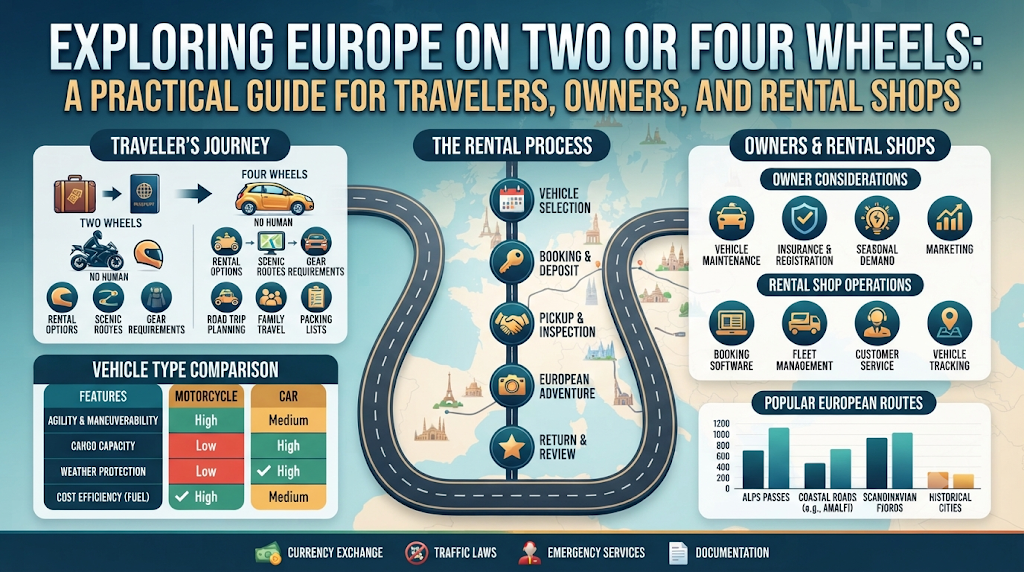
Getting around Europe is much easier when you have your own set of wheels. Trains connect big cities, yet the best coastal cliffs, mountain passes, and quiet villages sit far away from train stations. At the same time, thousands of personal bikes and cars sit parked in garages across Europe every week, while small rental shops struggle to track bookings on paper. Modern online platforms like MotoShare Europe solve both sides of this puzzle by connecting travelers with local vehicle owners and giving small rental shops simple tools to run their daily work.
Whether you want to book a bike for your next holiday, earn extra cash from a spare vehicle, or organize a growing rental shop, this guide walks you through everything you need to know. You will learn how European rentals work, what prices to expect, how private owners list vehicles safely, and why digital software keeps small fleets running smoothly.
Why Travelers Choose Flexible Vehicle Rentals in Europe
Europe is made up of more than 40 countries, each with its own road style, terrain, and local transport habits. In historic cities like Rome, Barcelona, or Athens, narrow stone streets make scooters and light bikes the fastest way to move. Across the Alps or the Scottish Highlands, touring motorcycles and compact cars give you freedom to stop wherever the view looks best.
When searching for a motorcycle rental Europe trip, riders today look for three simple things:
- Clear Upfront Pricing: Knowing the full daily rate, deposit amount, and gear costs before arriving at the pickup spot.
- Flexible Pickup Times: Meeting a local host or shop at a time that matches your flight or train arrival.
- Right-Sized Vehicles: Picking a light city scooter for short errands or a comfortable touring bike for a week-long cross-country ride.
How Peer to Peer Motorcycle Rental Europe Changes the Game
For decades, travelers only had one choice: walk up to a big corporate counter at an airport and accept whatever vehicle was left in the lot. Today, a peer to peer motorcycle rental Europe model offers a smarter, more personal option.
In a peer-to-peer marketplace, private riders and small neighborhood shops list their own vehicles online. Travelers browse real photos, read honest descriptions, and message the owner directly before booking.
Key Differences Between Big Agencies and Peer-to-Peer Hosts
| What Matters Most | Large Corporate Rental Chains | Peer-to-Peer Marketplace Hosts |
| Vehicle Selection | Standard fleet models bought in bulk | Personal bikes, classic models, and local shop fleets |
| Local Knowledge | Scripted counter service | Direct route tips and parking advice from local riders |
| Booking Flexibility | Strict desk hours and fixed pickup rules | Direct chat to arrange custom pickup times |
| Fee Transparency | Extra counter charges for helmets or second riders | Clear listing details agreed upon before payment |
This direct connection builds trust on both sides. Riders treat a fellow enthusiast’s bike with extra care, and hosts take pride in keeping their machines clean and road-ready.
Breaking Down Motorcycle Rental Cost Europe
Travel budgets vary a lot depending on where and when you ride. Understanding the motorcycle rental cost Europe landscape helps you compare offers fairly and avoid surprise bills.
Here are the main items that shape your final rental price:
- Country and Local Taxes: Renting a bike in Switzerland, Norway, or Iceland costs noticeably more than renting in Portugal, Spain, or Croatia due to local wages and tax rates.
- Engine Size and Category: A 50cc or 125cc scooter is the most budget-friendly choice. Mid-size naked bikes cost moderately more, while large adventure bikes sit at the top of the price range.
- Time of Year: Peak summer travel (June through August) brings the highest demand and highest daily rates. Traveling in May, September, or October often unlocks lower prices and cooler riding weather.
- Trip Length: Renting for 7 to 14 days usually reduces the daily price compared to a single weekend rental.
- Security Deposit: Providers temporarily hold a refundable deposit on your payment card to cover potential scratches, traffic fines, or late returns.
- Insurance Tier: Basic third-party liability insurance is required by law across Europe, while optional collision waivers that lower your out-of-pocket risk add a daily fee.
- Kilometer Limits and Fuel: Check whether your rate includes unlimited kilometers or caps daily distance. Most rentals use a full-to-full fuel policy.
Illustrative Budget Scenario for a 4-Day Coastal Ride
Note: This example is purely illustrative to show how rental math works and does not reflect an actual listing or quote.
Suppose a traveler books a 650cc street bike in Portugal for 4 days in October. The owner sets the base rate at €60 per day (€240 total). The traveler adds a helmet and jacket package for €12 per day (€48 total) and selects a reduced-excess protection plan for €10 per day (€40 total). The complete rental comes to €328, alongside a refundable €600 deposit held until the bike returns on time with a full tank.
European Driving Licences and Border Rules Explained
Because Europe is a collection of independent nations rather than one single state, driving laws change when you cross borders. Checking your paperwork before booking saves you from cancelled trips or fines.
- EU Licence Tiers: European motorcycle permits follow four clear levels: AM (mopeds up to 50cc), A1 (light bikes up to 125cc), A2 (medium motorcycles up to 35 kW), and A (unrestricted heavy bikes). Always match the bike’s power to the exact code printed on your licence.
- Using a Car Licence for 125cc Scooters: Countries like Italy, Spain, and France allow experienced Category B car drivers to ride 125cc scooters inside their own national borders under specific rules. However, this privilege does not automatically allow you to ride that scooter into a neighboring country.
- International Driving Permits (IDP): Visitors arriving from outside Europe—such as the US, India, Australia, or Canada—should carry an IDP together with their original home driving licence, especially if the home permit is not in the local language.
- Cross-Border Permission: Never ride a rented vehicle into another country without written approval from the owner or rental shop. Standard insurance policies often become invalid the moment you cross an unapproved border.
Turning Idle Vehicles into Income: A Guide for Owners
Owning a motorcycle, scooter, or car comes with year-round costs like annual road tax, insurance, and routine servicing. Sharing your vehicle with verified travelers helps recover those expenses while keeping the engine active.
Step-by-Step: How to Rent Out My Motorcycle
If you are asking yourself, “What is the safest way to rent out my motorcycle?” follow a clear, repeatable routine before every booking:
- Confirm Legal and Insurance Rules: Check your country’s rules on private vehicle sharing and ask your insurer whether paid peer-to-peer rentals are covered. Never assume personal commuting insurance covers a paying guest.
- Complete a Pre-Ride Safety Check: Check tire pressure, tread depth, brake pad thickness, oil level, and chain lubrication. A well-maintained bike prevents roadside breakdowns.
- Create a Clear Online Listing: Upload bright, sharp photos showing the front, sides, rear, dashboard, and any minor wear. Mention seat height, luggage space, and included locks or helmets.
- Screen the Rider at Pickup: Always inspect the renter’s physical driving licence and passport or national ID in person before handing over the keys.
- Record Condition Together: Walk around the bike with the renter and take timestamped photos at both pickup and return.
Step-by-Step: How to List My Car for Rent
If you have an extra car parked at home and want to list my car for rent, the same habits apply. Vacuum the cabin, remove personal items, check windshield washer fluid, and place the registration card and emergency warning triangle in an easy-to-find spot. Remind visiting drivers whether the car uses petrol, diesel, or electric charging so they never put the wrong fuel in the tank.
Smart Tools for Independent Rental Shops
Small and medium rental businesses face a completely different challenge: volume. Managing 15 scooters, 20 bicycles, or 10 rental cars using wall calendars, sticky notes, or basic spreadsheets quickly creates confusion during busy tourist weekends. One missed note can cause two customers to show up for the exact same vehicle at the same hour.
Adopting free vehicle rental management software gives small operators a clean, organized control center without adding heavy monthly software bills.
Essential Digital Features for Every Fleet Type
Different rental shops need tools tailored to how their customers book and ride:
- Vehicle Rental Booking System: Lets travelers view open dates online, compare prices, and send reservation requests 24/7 while automatically blocking booked dates on your calendar.
- Scooter Rental Software: Speeds up quick city check-ins, tracks helmet sizes, logs short hourly or daily rentals, and keeps digital copies of rider IDs.
- Bike Rental Software: Helps bicycle and e-bike shops track frame sizes, battery charge levels, lock codes, and family group bookings without paper clutter.
- Free Car Rental Software: Organizes multi-day car reservations, records starting and ending odometer readings, tracks fuel levels, and stores signed rental terms cleanly.
Paper Logs vs. Digital Rental Software: A Quick Comparison
Moving daily shop tasks onto one digital platform frees up hours of desk work every week.
| Shop Operation | Paper Notebooks & Spreadsheets | Digital Rental Management System |
| Fleet Availability | Requires manual checking across pages | Live calendar showing free and rented vehicles |
| Booking Conflicts | Easy to accidentally double-book | Automatic date locking once a trip is confirmed |
| Customer Database | Scattered across emails and paper forms | Central profile with licence and contact history |
| Payment & Revenue | Slow manual math at the end of the week | Clear payment tracking and revenue summaries |
| Vehicle Handovers | Paper checklists that get lost or torn | Organized digital records for every trip |
Common Mistakes That Hurt Renters, Owners, and Shops
Avoiding a few simple errors protects your wallet and your reputation:
- Renters Skipping the Walk-Around: Driving away in a hurry without taking photos of existing scratches can lead to deposit disputes later.
- Owners Guessing Insurance Coverage: Renting out a personal vehicle without confirming valid rental insurance puts the owner at serious financial risk.
- Shops Waiting Too Long to Go Digital: Sticking with paper logs until peak summer arrives often leads to lost bookings, slow check-ins, and stressed staff.
Four Golden Rules for Stress-Free European Rentals
Keep these four habits in mind whether you are booking, hosting, or managing a fleet:
- Put Everything in Writing: Confirm pickup times, mileage limits, fuel rules, and border permissions inside your booking messages.
- Check Licences Twice: Match the exact vehicle engine size to the driver’s legal licence category before starting the engine.
- Inspect in Good Light: Always check tires, brakes, lights, and body panels in daylight at both ends of the trip.
- Use Organized Tools: Keep all reservations, customer details, and payment logs in one reliable digital system.
How MotoShare Europe Supports the Ecosystem
MotoShare Europe brings travelers, private owners, and independent rental businesses together on one online marketplace. Focused on motorcycles, scooters, bicycles, and cars across Europe, the platform allows riders to browse listings, compare transparent prices, and send direct booking requests to local hosts and shops.
Alongside its consumer marketplace, MotoShare Europe promotes free vehicle rental management software built for independent shops and small fleet operators. Its advertised tools are designed to help businesses manage vehicle listings, reservations, customer records, fleet availability, payments, revenue tracking, and operational reporting from a single dashboard. Because availability and specific software features can vary by country and business setup, travelers and operators should always check current platform details directly before finalizing plans.
Final Thoughts
Exploring Europe on a motorcycle, scooter, or car gives you freedom that fixed train schedules simply cannot match. By understanding local licence tiers, seasonal rental pricing, and clear handover habits, travelers enjoy safer journeys while vehicle owners earn extra income with confidence. At the same time, independent rental shops can save hours of admin work by moving from paper logs to modern digital booking tools.
Start by checking your driving licence categories or organizing your vehicle records today, and explore transparent marketplaces that make European mobility easier for everyone.
Frequently Asked Questions (FAQs)
1. What is the easiest way to find a reliable motorcycle rental Europe option?
Start by comparing established local shops and verified peer-to-peer marketplaces online well before your trip. Look for clear daily pricing, honest photos, detailed bike specs, and written rules on deposits and mileage so you know the exact cost before arriving.
2. How does a peer to peer motorcycle rental Europe platform protect both sides?
Peer-to-peer platforms use verified user profiles, transparent messaging, clear listing rules, and structured handover checklists. Both the rider and the owner inspect the bike together at pickup and return, creating a shared record of the vehicle’s condition.
3. Why does motorcycle rental cost Europe vary so much between countries?
Daily prices depend on local taxes, insurance rates, wages, and tourist demand. Renting a bike in Northern or Central Europe typically costs more than renting the same model in Southern or Eastern Europe, especially during the busy summer holiday season.
4. Can I ride a 125cc scooter in Europe with a standard car driving licence?
In several European countries—such as Spain, Italy, and France—drivers who have held a Category B car licence for a set number of years may ride 125cc scooters locally. However, rules differ by nation, and this local allowance usually does not permit crossing into another country.
5. What documents do non-European tourists need to rent a vehicle in Europe?
Non-EU visitors generally need a valid passport, their original home driving licence covering the right vehicle class, and an International Driving Permit (IDP) if their licence was issued outside Europe or is not written in the local alphabet.
6. What should I check before I rent out my motorcycle to a stranger?
Always check your local laws and verify with your insurance provider that peer-to-peer rentals are covered. Next, inspect your tires, brakes, lights, and fluids, and make sure you check the renter’s physical driving licence before handing over the keys.
7. How can I safely list my car for rent when I am not using it?
Clean the car inside and out, verify that your insurance covers rental use, take clear daylight photos of the exterior and interior, and set clear rules for daily mileage and fuel. Always check the driver’s licence in person at pickup.
8. How does free vehicle rental management software help small rental shops?
It replaces messy paper notebooks with a single digital dashboard where shop owners can track vehicle availability, manage customer reservations, store driver records, and monitor payments without paying high monthly software fees.
9. What makes scooter rental software and bike rental software different from car tools?
Scooter and bike tools focus on fast, high-turnover rentals—often lasting just a few hours or one day—with quick ID checks, helmet or lock tracking, and e-bike battery status logs, whereas car tools focus more on multi-day odometer logs and fuel levels.
10. Why is a digital vehicle rental booking system better than taking bookings by email?
A digital booking system shows live availability to customers and automatically blocks dates once a reservation is confirmed. Email bookings require slow back-and-forth replies and carry a high risk of accidental double bookings during busy weekends.
11. Can small agencies really run daily operations using free car rental software?
Yes, small independent car agencies can use free car rental software to manage core tasks like tracking vehicle calendars, recording customer details, logging payments, and preventing scheduling overlaps as their fleet grows.
12. Are security deposits required for all vehicle rentals in Europe?
Almost all traditional shops and many peer-to-peer hosts require a refundable security deposit. This amount is temporarily held on your payment card to cover potential minor damage, missing gear, or unreturned fuel, and is released after a clean return.