Introduction
Capital Project Management Software refers to platforms designed to plan, execute, and control large-scale capital investments such as infrastructure development, industrial plants, energy projects, and public sector assets. In simple terms, it helps organizations manage high-value, long-duration projects involving complex budgets, multiple stakeholders, and strict governance requirements.
In and beyond, these platforms are becoming more critical due to rising project costs, tighter regulatory oversight, ESG requirements, and the increasing complexity of global infrastructure programs. AI-driven forecasting, real-time capital tracking, and integrated risk management are now expected capabilities.
Real-world use cases include:
- Managing large infrastructure projects like highways, railways, and airports.
- Tracking multi-billion-dollar energy and utility projects.
- Coordinating engineering, procurement, and construction (EPC) workflows.
- Monitoring capital expenditure (CAPEX) across global enterprises.
- Managing compliance-heavy government and public sector projects.
What buyers should evaluate:
- Capital budgeting and forecasting accuracy.
- Portfolio-level project visibility and control.
- Risk management and compliance tracking.
- Integration with ERP, BIM, and financial systems.
- Real-time cost tracking and variance analysis.
- Workflow automation for approvals and governance.
- Resource allocation across multiple projects.
- Document control and audit readiness.
- Scalability for enterprise portfolios.
- Security, access control, and compliance support.
Best for: Government agencies, infrastructure companies, energy & utilities, EPC contractors, manufacturing giants, and enterprise PMO teams managing large capital portfolios.
Not ideal for: Small project teams or organizations managing short-term operational projects without capital investment complexity.
Key Trends in Capital Project Management Software
- AI-powered capital forecasting and cost overrun prediction.
- Digital twins for real-time project simulation and monitoring.
- Integrated ESG and sustainability reporting.
- Cloud-native capital portfolio management systems.
- Real-time CAPEX tracking across global portfolios.
- Predictive risk management using machine learning.
- Deep integration with ERP and financial systems.
- BIM + 5D cost integration for capital planning.
- Automated compliance and audit documentation.
- Low-code customization for enterprise workflows.
How We Selected These Tools (Methodology)
The tools in this list were selected based on:
- Market adoption in capital-intensive industries.
- Depth of project and portfolio management capabilities.
- Integration with ERP, finance, and engineering systems.
- Scalability for large capital programs.
- Risk and governance management capabilities.
- Financial planning and CAPEX tracking features.
- Industry reputation in infrastructure and energy sectors.
- Security, compliance, and audit readiness.
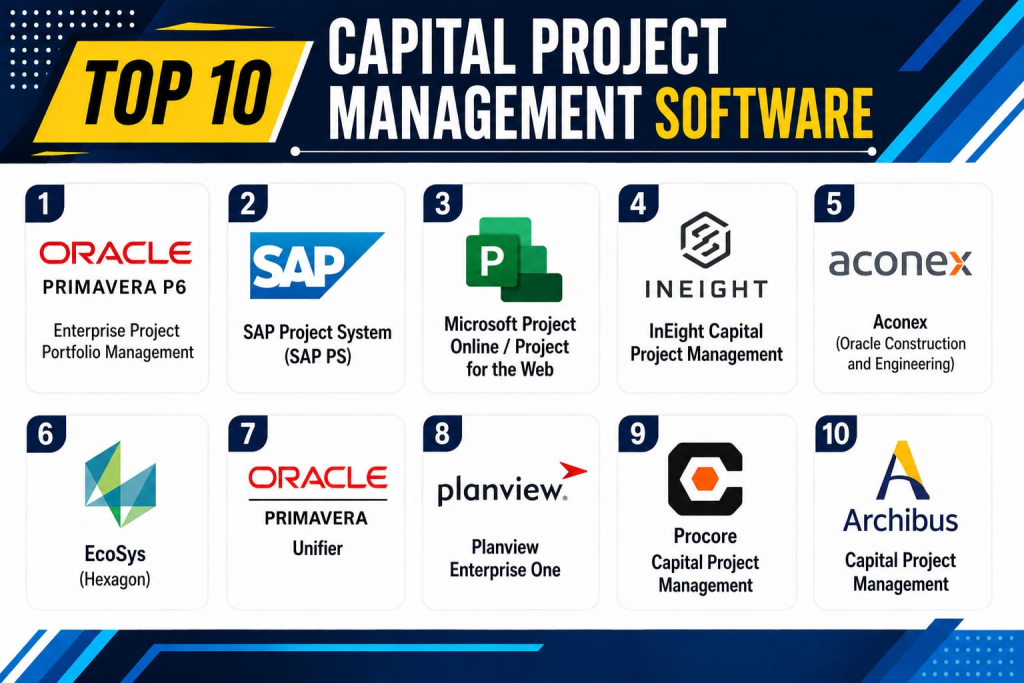
Top 10 Capital Project Management Software
1- Oracle Primavera P6 Enterprise Project Portfolio Management
Short description:
Oracle Primavera P6 is one of the most widely used capital project management platforms for large-scale infrastructure and engineering projects. It supports complex scheduling, resource planning, and portfolio-level control. It is widely used in construction, energy, and government sectors. The platform enables advanced project planning and risk analysis. It is ideal for enterprise capital programs requiring high precision. It provides deep visibility into multi-project environments.
Key Features
- Advanced project scheduling and planning.
- Portfolio-level project management.
- Resource allocation and optimization.
- Risk and delay analysis tools.
- Capital budgeting and forecasting.
- Gantt chart and CPM scheduling.
- Multi-project tracking dashboards.
Pros
- Extremely powerful scheduling engine.
- Ideal for mega capital projects.
- Strong enterprise scalability.
Cons
- Very complex interface.
- Requires expert training.
- High implementation cost.
Platforms / Deployment
- Web
- Windows
- Cloud / On-premise / Hybrid
Security & Compliance
- SSO/SAML
- MFA
- Encryption
- RBAC
- Audit logs
- Oracle enterprise compliance standards
Integrations & Ecosystem
- Oracle ERP
- BIM tools
- Financial systems
- APIs
- Construction software
- Enterprise analytics tools
Support & Community
Strong enterprise-level global support
2- SAP Project System (SAP PS)
Short description:
SAP Project System is a powerful enterprise module within SAP ERP designed for managing capital projects, budgeting, and financial control. It integrates deeply with procurement, finance, and asset management. It is widely used in manufacturing, utilities, and government sectors. The platform supports full CAPEX lifecycle management. It is ideal for SAP-centric enterprises. It ensures strong financial governance and control.
Key Features
- Capital budgeting and cost control.
- Project lifecycle management.
- Integration with SAP Finance.
- Procurement and procurement tracking.
- Resource planning tools.
- Work breakdown structure (WBS).
- Real-time financial reporting.
Pros
- Strong financial integration.
- Excellent governance control.
- Enterprise scalability.
Cons
- Complex configuration.
- Requires SAP ecosystem dependency.
- High implementation cost.
Platforms / Deployment
- Web
- Cloud / On-premise / Hybrid
Security & Compliance
- SSO/SAML
- MFA
- Encryption
- RBAC
- Audit logs
- SAP enterprise compliance framework
Integrations & Ecosystem
- SAP ERP
- SAP S/4HANA
- Finance systems
- Procurement systems
- APIs
- Enterprise analytics
Support & Community
Strong enterprise SAP global support
3- Microsoft Project Online / Project for the Web
Short description:
Microsoft Project is a widely used project and capital portfolio management tool integrated within the Microsoft ecosystem. It supports planning, scheduling, and portfolio tracking for capital projects. It is widely used in enterprise PMO environments. The platform enables collaboration across distributed teams. It is ideal for Microsoft-centric organizations. It provides strong integration with Power Platform and Azure.
Key Features
- Project scheduling and planning.
- Portfolio management dashboards.
- Resource allocation tracking.
- Gantt chart visualization.
- Budget and cost tracking.
- Workflow automation via Power Platform.
- Real-time collaboration tools.
Pros
- Strong Microsoft ecosystem integration.
- Easy collaboration across teams.
- Flexible project planning.
Cons
- Limited deep capital governance features.
- Can become complex at scale.
- Requires Microsoft licensing stack.
Platforms / Deployment
- Web
- Windows
- Cloud
Security & Compliance
- Azure AD SSO
- MFA
- Encryption
- RBAC
- Audit logs
- Microsoft enterprise compliance
Integrations & Ecosystem
- Microsoft 365
- Power BI
- Power Automate
- Dynamics 365
- APIs
- ERP systems
Support & Community
Strong enterprise Microsoft support
4- InEight Capital Project Management
Short description:
InEight is a leading capital project management platform designed for complex infrastructure and engineering projects. It provides end-to-end project controls including cost management, forecasting, and risk analysis. It is widely used in construction, energy, and mining industries. The platform supports real-time capital tracking. It is ideal for large EPC and infrastructure programs. It improves financial and operational visibility.
Key Features
- Capital cost management.
- Project forecasting tools.
- Risk management system.
- Portfolio-level dashboards.
- Document control system.
- Change management workflows.
- Progress tracking tools.
Pros
- Strong capital control capabilities.
- Excellent forecasting tools.
- Built for infrastructure scale.
Cons
- Complex onboarding.
- High enterprise cost.
- Requires training.
Platforms / Deployment
- Web
- Cloud
Security & Compliance
- SSO/SAML
- MFA
- Encryption
- RBAC
- Audit logs
- Enterprise-grade compliance
Integrations & Ecosystem
- ERP systems
- BIM platforms
- Financial tools
- APIs
- Construction software
- Analytics systems
Support & Community
Strong enterprise support
5- Aconex (Oracle Construction and Engineering)
Short description:
Aconex is a widely used capital project collaboration platform designed for large infrastructure and engineering projects. It focuses on document control, workflow management, and project communication. It is widely used in construction and public infrastructure projects. The platform ensures traceability and compliance across project data. It is ideal for multi-stakeholder capital projects. It improves collaboration and document governance.
Key Features
- Document management system.
- Workflow approval automation.
- Project communication tracking.
- Capital project collaboration tools.
- Audit trails and compliance tracking.
- RFI and submittal management.
- Progress tracking dashboards.
Pros
- Strong document control.
- Excellent collaboration features.
- High compliance visibility.
Cons
- Limited financial planning tools.
- Complex for small teams.
- Enterprise-focused pricing.
Platforms / Deployment
- Web
- Cloud
Security & Compliance
- SSO/SAML
- MFA
- Encryption
- RBAC
- Audit logs
- Oracle enterprise compliance
Integrations & Ecosystem
- Oracle ERP
- BIM tools
- APIs
- Project management systems
- Construction platforms
- Enterprise systems
Support & Community
Strong global enterprise support
6- EcoSys (Hexagon)
Short description:
EcoSys is a capital project controls platform designed for portfolio-level financial and project management. It helps organizations manage budgets, forecasts, and project performance across large capital programs. It is widely used in energy and infrastructure sectors. The platform focuses on cost control and governance. It is ideal for capital-intensive enterprises. It ensures financial accuracy and transparency.
Key Features
- Capital budgeting and forecasting.
- Portfolio management tools.
- Cost control systems.
- Project performance dashboards.
- Risk tracking tools.
- Resource allocation planning.
- Financial reporting.
Pros
- Strong financial governance.
- Good portfolio visibility.
- Excellent for capital programs.
Cons
- Complex setup.
- High cost structure.
- Requires training.
Platforms / Deployment
- Web
- Cloud
Security & Compliance
- SSO/SAML
- MFA
- Encryption
- RBAC
- Audit logs
- Enterprise compliance standards vary
Integrations & Ecosystem
- ERP systems
- Financial platforms
- APIs
- BI tools
- Construction systems
- Engineering tools
Support & Community
Strong enterprise support
7- Primavera Unifier
Short description:
Primavera Unifier is a capital planning and project lifecycle management platform designed for large infrastructure and government projects. It focuses on cost control, workflows, and capital planning. It is widely used alongside Primavera P6. The platform supports end-to-end capital lifecycle management. It is ideal for large organizations managing multiple capital projects. It ensures structured governance and control.
Key Features
- Capital planning workflows.
- Budget and cost control.
- Project lifecycle management.
- Workflow automation engine.
- Portfolio dashboards.
- Contract and change management.
- Reporting tools.
Pros
- Strong capital governance.
- Excellent workflow automation.
- Highly scalable.
Cons
- Complex interface.
- High implementation cost.
- Requires expert users.
Platforms / Deployment
- Web
- Cloud / Hybrid
Security & Compliance
- SSO/SAML
- MFA
- Encryption
- RBAC
- Audit logs
- Oracle enterprise compliance
Integrations & Ecosystem
- Primavera P6
- ERP systems
- BIM tools
- APIs
- Financial systems
- Construction platforms
Support & Community
Strong Oracle enterprise support
8- Planview Enterprise One
Short description:
Planview Enterprise One is a portfolio and capital project management platform designed for enterprise-level strategic planning and execution. It enables organizations to manage capital investments across portfolios. It is widely used in IT, engineering, and infrastructure sectors. The platform provides strong resource and financial planning capabilities. It is ideal for enterprise PMO teams. It improves capital allocation efficiency.
Key Features
- Portfolio management tools.
- Capital planning and tracking.
- Resource allocation optimization.
- Financial forecasting tools.
- Scenario planning.
- Performance dashboards.
- Risk management.
Pros
- Strong portfolio visibility.
- Good strategic planning tools.
- Enterprise scalability.
Cons
- Complex setup.
- High cost.
- Requires training.
Platforms / Deployment
- Web
- Cloud
Security & Compliance
- SSO/SAML
- MFA
- Encryption
- RBAC
- Audit logs
- Enterprise compliance frameworks
Integrations & Ecosystem
- ERP systems
- Financial tools
- APIs
- BI platforms
- Project tools
- Enterprise systems
Support & Community
Strong enterprise support
9- Procore Capital Project Management
Short description:
Procore is a widely used construction management platform that also supports capital project tracking and financial management. It provides end-to-end visibility into project execution and cost control. It is widely used in commercial construction and infrastructure projects. The platform connects field and office teams in real time. It is ideal for construction-driven capital projects. It improves operational transparency.
Key Features
- Project management tools.
- Cost tracking system.
- Document control system.
- Field collaboration tools.
- Budget tracking dashboards.
- Change order management.
- Reporting tools.
Pros
- Strong field-to-office integration.
- Excellent collaboration.
- Easy visibility.
Cons
- High cost.
- Requires training.
- Limited deep financial planning.
Platforms / Deployment
- Web
- iOS
- Android
- Cloud
Security & Compliance
- SSO/SAML
- MFA
- Encryption
- RBAC
- Audit logs
- Enterprise compliance standards
Integrations & Ecosystem
- ERP systems
- BIM tools
- APIs
- Accounting systems
- Scheduling tools
- Construction ecosystem
Support & Community
Strong enterprise support
10- Archibus Capital Project Management
Short description:
Archibus is an integrated workplace and capital project management platform used for facility and infrastructure planning. It supports capital project tracking, asset management, and space planning. It is widely used in government and large enterprises. The platform focuses on asset lifecycle management. It is ideal for facility-heavy capital portfolios. It improves long-term capital planning efficiency.
Key Features
- Capital project tracking.
- Asset lifecycle management.
- Space planning tools.
- Budget tracking systems.
- Maintenance integration.
- Reporting dashboards.
- Portfolio visibility tools.
Pros
- Strong asset + capital integration.
- Good enterprise scalability.
- Comprehensive lifecycle management.
Cons
- Complex setup.
- Less focused on construction execution.
- Requires training.
Platforms / Deployment
- Web
- Cloud / Hybrid
Security & Compliance
- SSO/SAML
- MFA
- Encryption
- RBAC
- Audit logs
- Enterprise compliance varies
Integrations & Ecosystem
- ERP systems
- BIM platforms
- Facility management tools
- APIs
- Financial systems
- Enterprise software
Support & Community
Strong enterprise support
Comparison Table
| Tool Name | Best For | Platform(s) Supported | Deployment | Standout Feature | Public Rating |
|---|---|---|---|---|---|
| Primavera P6 | Infrastructure mega projects | Windows, Web | Hybrid | Advanced scheduling engine | N/A |
| SAP PS | SAP enterprises | Web | Hybrid | ERP financial control | N/A |
| Microsoft Project | PMO teams | Web, Windows | Cloud | Microsoft integration | N/A |
| InEight | EPC projects | Web | Cloud | Cost forecasting | N/A |
| Aconex | Document-heavy projects | Web | Cloud | Document governance | N/A |
| EcoSys | Energy projects | Web | Cloud | Capital cost control | N/A |
| Primavera Unifier | Capital lifecycle mgmt | Web | Cloud | Workflow automation | N/A |
| Planview | Portfolio planning | Web | Cloud | Strategic capital planning | N/A |
| Procore | Construction capital projects | Web, Mobile | Cloud | Field collaboration | N/A |
| Archibus | Facility capital planning | Web | Cloud | Asset lifecycle management | N/A |
Evaluation & Scoring of Capital Project Management Software
| Tool Name | Core | Ease | Integrations | Security | Performance | Support | Value | Total |
|---|---|---|---|---|---|---|---|---|
| Primavera P6 | 10 | 7 | 10 | 10 | 10 | 9 | 7 | 8.9 |
| SAP PS | 10 | 7 | 10 | 10 | 9 | 9 | 7 | 8.8 |
| Microsoft Project | 9 | 9 | 9 | 9 | 9 | 9 | 9 | 9.0 |
| InEight | 10 | 8 | 10 | 10 | 9 | 9 | 8 | 9.0 |
| Aconex | 9 | 8 | 9 | 10 | 9 | 9 | 8 | 8.8 |
| EcoSys | 9 | 8 | 9 | 9 | 9 | 9 | 8 | 8.8 |
| Primavera Unifier | 10 | 7 | 10 | 10 | 9 | 9 | 7 | 8.9 |
| Planview | 9 | 8 | 9 | 9 | 9 | 9 | 8 | 8.8 |
| Procore | 9 | 9 | 9 | 9 | 9 | 9 | 8 | 8.9 |
| Archibus | 8 | 7 | 8 | 9 | 8 | 8 | 8 | 8.1 |
These scores reflect differences in capital planning depth, financial governance, scalability, and enterprise integration. High-end tools excel in portfolio-level control and forecasting, while mid-market platforms prioritize usability and collaboration. The best choice depends on capital complexity, industry type, and governance requirements.
Frequently Asked Questions
1. What is capital project management software?
It is software used to plan, track, and manage large capital investment projects like infrastructure or energy projects.
2. Who uses these tools?
Government agencies, EPC contractors, energy companies, and large enterprises use them.
3. Is it different from construction software?
Yes, it focuses more on capital planning, budgeting, and portfolio-level control.
4. Do these tools support financial tracking?
Yes, most include CAPEX tracking and financial forecasting.
5. Are they suitable for small projects?
No, they are designed for large-scale capital-intensive projects.
6. Do they integrate with ERP systems?
Yes, integration with ERP systems is a core feature.
7. Do they support BIM?
Many tools support BIM integration for project planning.
8. Is AI used in these platforms?
Yes, AI is used for forecasting, risk prediction, and scheduling.
9. What is the biggest benefit?
Improved control over large, complex capital investments.
10. Are they cloud-based?
Most modern solutions are cloud-based with hybrid options.
Conclusion
Capital Project Management Software is essential for organizations managing large, high-value infrastructure and industrial investments. Platforms like Primavera P6, SAP Project System, and InEight dominate enterprise capital governance, while Microsoft Project and Procore provide more accessible and flexible solutions. The right choice depends on project scale, financial complexity, and integration needs. Organizations should evaluate governance, forecasting accuracy, and portfolio visibility before selecting a platform and validate it through real capital project scenarios.
