Introduction
Dock Scheduling Software is a type of warehouse management solution designed to optimize inbound and outbound dock operations. In plain English, these platforms help warehouses, distribution centers, and logistics hubs schedule truck arrivals, assign dock doors, track appointments, and manage labor and equipment resources efficiently. By coordinating dock activity, businesses can reduce congestion, improve turnaround times, and maintain on-time deliveries.
The importance of dock scheduling has grown in due to increasing e-commerce volumes, just-in-time supply chains, and labor optimization pressures. Real-world use cases include:
- Appointment Scheduling: Coordinating carrier arrivals to minimize wait times at the dock.
- Load Prioritization: Assigning dock doors and labor based on shipment priority and delivery schedules.
- Visibility and Tracking: Monitoring inbound and outbound shipments in real-time to detect delays.
- Resource Optimization: Aligning forklifts, staff, and loading equipment with dock schedules.
- Data-Driven Decisions: Using analytics to forecast peak periods and optimize staffing and dock allocation.
What buyers should evaluate:
- Ease of scheduling and calendar management
- Real-time visibility into dock activities
- Carrier communication and self-service portals
- Integration with WMS, TMS, and ERP systems
- Automated alerts and notifications
- Reporting and performance analytics
- Scalability across multiple facilities
- Security and compliance features
- Mobile access and workforce support
Best for: Warehouse managers, logistics coordinators, distribution center operators, mid-size to large enterprises in retail, manufacturing, and 3PL.
Not ideal for: Small warehouses with limited truck traffic or operations that already rely on manual or fully automated scheduling systems.
Key Trends in Dock Scheduling Software
- AI-Powered Appointment Forecasting: Predict truck arrival patterns and dynamically assign dock doors.
- Automated Dock Allocation: Use algorithms to optimize door assignments for efficiency and throughput.
- Cloud-Native Platforms: Enable multi-site management, real-time updates, and remote monitoring.
- Mobile Self-Service Portals: Allow carriers to confirm appointments, receive updates, and adjust schedules.
- Integration with WMS/TMS: Seamless flow of data for accurate inventory and shipment tracking.
- Predictive Analytics for Congestion: Identify peak hours and allocate resources proactively.
- Compliance & Safety Monitoring: Track labor and vehicle safety compliance in real-time.
- Flexible Pricing Models: SaaS subscription, per-truck, or per-dock fees to suit operational scale.
- Collaboration & Communication Tools: Real-time messaging between carriers, warehouse staff, and operations.
- IoT & Sensor Integration: Monitor dock usage, gate activity, and equipment utilization.
How We Selected These Tools (Methodology)
- Evaluated market adoption and mindshare among 3PLs, retail, and manufacturing warehouses.
- Assessed feature completeness, including scheduling, visibility, notifications, and analytics.
- Reviewed performance and reliability, focusing on uptime and latency.
- Analyzed security posture, including access controls, audit logs, and encryption.
- Considered integration capabilities with WMS, TMS, ERP, and IoT devices.
- Measured fit across operational scales, from mid-market to enterprise.
- Reviewed ease of use for both administrators and carrier-facing portals.
- Balanced AI/automation capabilities with practical workflow improvements.
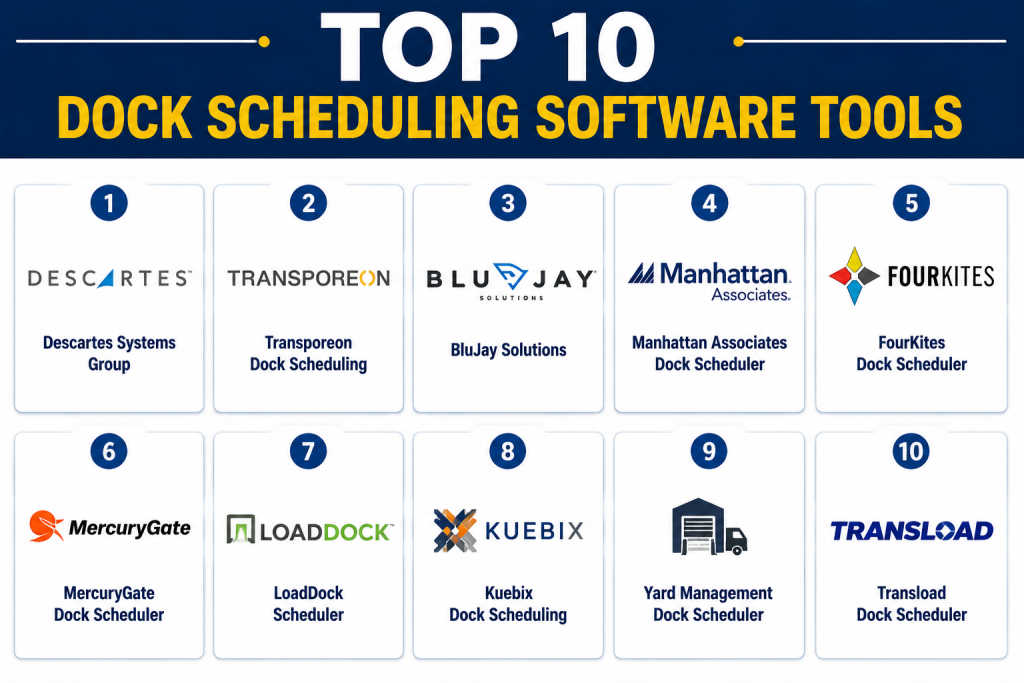
Top 10 Dock Scheduling Software Tools
1- Descartes Systems Group
Short description: Descartes provides a comprehensive dock scheduling platform that allows warehouses to manage appointments, assign docks, and monitor truck activity. Designed for mid-size to enterprise logistics operations, it supports high-volume distribution centers.
Key Features
- Intelligent appointment scheduling and dock assignment
- Real-time tracking of inbound/outbound shipments
- Automated alerts and carrier notifications
- Integration with WMS and TMS systems
- Performance analytics dashboards
- Mobile carrier self-service portals
Pros
- Reduces congestion and wait times
- Provides actionable insights for dock operations
Cons
- Enterprise pricing may be high for smaller operations
- Advanced analytics may require additional modules
Platforms / Deployment
- Web / iOS / Android
- Cloud
Security & Compliance
- Not publicly stated
Integrations & Ecosystem
Integrates with major WMS/TMS systems and supports API connectivity:
- ERP and 3PL platforms
- Mobile and IoT device connectivity
- Custom workflow automation
Support & Community
- Vendor documentation and onboarding
- Tiered customer support
- Moderate professional user community
2- Transporeon Dock Scheduling
Short description: Transporeon focuses on collaborative dock scheduling, allowing carriers and warehouses to coordinate arrivals. It is suited for high-volume manufacturing and retail distribution centers.
Key Features
- Carrier self-service appointment booking
- Real-time dock status and notifications
- Integration with WMS and ERP
- Analytics for capacity planning
- Alerts for late arrivals and exceptions
Pros
- Streamlines carrier communication
- Reduces manual scheduling workload
Cons
- May require process adaptation for carriers
- Limited customization in reporting
Platforms / Deployment
- Web / Mobile
- Cloud
Security & Compliance
- Not publicly stated
Integrations & Ecosystem
- WMS and ERP connectivity
- API for third-party logistics systems
- Carrier portal integration
Support & Community
- Online help center
- Vendor support packages
- Moderate industry adoption
3- BluJay Solutions
Short description: BluJay offers dock scheduling as part of its broader supply chain execution suite, focusing on efficiency and visibility for global logistics networks.
Key Features
- Automated dock assignment
- Real-time shipment tracking
- Carrier collaboration tools
- KPI reporting and dashboards
- Integration with warehouse automation
Pros
- Strong integration with global logistics networks
- Real-time visibility improves throughput
Cons
- Complexity for small warehouses
- Requires professional services for full implementation
Platforms / Deployment
- Web / iOS / Android
- Cloud / Hybrid
Security & Compliance
- Not publicly stated
Integrations & Ecosystem
- TMS, WMS, ERP integration
- APIs for third-party connectivity
- Mobile and IoT device support
Support & Community
- Comprehensive documentation
- Dedicated support tiers
- Enterprise user community
4- Manhattan Associates Dock Scheduler
Short description: Manhattan Associates provides AI-driven dock scheduling integrated with its WMS. It is suitable for large-scale, multi-site distribution centers seeking optimized throughput.
Key Features
- Predictive scheduling based on historical traffic
- Real-time dock door monitoring
- Integration with labor and equipment management
- Alerts for missed appointments
- Analytics for capacity utilization
Pros
- Scales well for enterprise operations
- Reduces dock congestion
Cons
- Higher cost
- Setup can be resource-intensive
Platforms / Deployment
- Web / iOS / Android
- Cloud / Hybrid
Security & Compliance
- Not publicly stated
Integrations & Ecosystem
- WMS and TMS systems
- API connectivity for 3PL and carriers
- Mobile portal for carriers
Support & Community
- Vendor documentation and onboarding
- Professional services available
- Enterprise user community
5- FourKites Dock Scheduler
Short description: FourKites provides real-time visibility and dock appointment management, enabling warehouses and carriers to coordinate efficiently and reduce dwell times.
Key Features
- Real-time truck tracking
- Automated dock door assignment
- Carrier self-service portals
- Alerts for delays and exceptions
- Analytics dashboards
Pros
- Improves on-time performance
- Easy carrier adoption
Cons
- Less customization for complex operations
- May require integration support
Platforms / Deployment
- Web / iOS / Android
- Cloud
Security & Compliance
- Not publicly stated
Integrations & Ecosystem
- WMS and TMS systems
- API access for custom workflows
- Mobile tracking and notifications
Support & Community
- Documentation and knowledge base
- Vendor support
- Moderate user community
6- MercuryGate Dock Scheduler
Short description: MercuryGate offers dock scheduling as part of its logistics and transportation suite, focusing on automated workflows and carrier collaboration.
Key Features
- Appointment scheduling automation
- Carrier self-service tools
- Real-time dock monitoring
- Reporting and KPI dashboards
- Integration with logistics platforms
Pros
- Strong automation capabilities
- Reduces manual scheduling errors
Cons
- Enterprise-focused pricing
- Training required for full adoption
Platforms / Deployment
- Web / Mobile
- Cloud
Security & Compliance
- Not publicly stated
Integrations & Ecosystem
- TMS and WMS integration
- API support
- Mobile carrier interfaces
Support & Community
- Professional services
- Documentation and guides
- Limited community forums
7- LoadDock Scheduler
Short description: LoadDock specializes in appointment scheduling for mid-size warehouses, offering a simple interface and mobile-friendly dashboards for carriers and warehouse staff.
Key Features
- Appointment calendar management
- Real-time notifications and alerts
- KPI tracking for dock utilization
- Mobile portal for carriers
- Analytics for capacity planning
Pros
- Easy to implement
- Affordable for SMBs
Cons
- Limited enterprise features
- Integration ecosystem is smaller
Platforms / Deployment
- Web / Mobile
- Cloud
Security & Compliance
- Not publicly stated
Integrations & Ecosystem
- WMS integration
- API for ERP
- Mobile carrier access
Support & Community
- Documentation and tutorials
- Vendor support
- Small user community
8- Kuebix Dock Scheduling
Short description: Kuebix provides dock scheduling within its transportation management system, designed to improve appointment coordination and reduce truck idle time.
Key Features
- Automated appointment booking
- Carrier notifications
- Real-time dock door status
- Integration with TMS and ERP
- Reporting dashboards
Pros
- Reduces congestion
- Good visibility for staff and carriers
Cons
- Less suited for very large multi-site operations
- Advanced analytics may require additional modules
Platforms / Deployment
- Web / iOS / Android
- Cloud
Security & Compliance
- Not publicly stated
Integrations & Ecosystem
- TMS and ERP integration
- API for third-party connectivity
- Mobile support for carriers
Support & Community
- Vendor documentation
- Customer support tiers
- Moderate user base
9- Yard Management Dock Scheduler
Short description: Yard Management offers dock scheduling with an emphasis on gate management, yard tracking, and appointment coordination for distribution centers.
Key Features
- Dock appointment management
- Yard and gate tracking
- Alerts for late arrivals
- KPI reporting
- Integration with WMS
Pros
- Streamlines yard operations
- Enhances on-time performance
Cons
- Limited multi-WMS support
- Training may be required
Platforms / Deployment
- Web / Mobile
- Cloud / Hybrid
Security & Compliance
- Not publicly stated
Integrations & Ecosystem
- WMS and ERP connections
- API support
- Mobile access for carriers
Support & Community
- Vendor documentation
- Customer support
- Small professional community
10- Transload Dock Scheduler
Short description: Transload Dock Scheduler focuses on cross-docking and transloading facilities, enabling precise appointment scheduling and real-time visibility.
Key Features
- Appointment management for inbound/outbound
- Real-time dock utilization tracking
- Carrier self-service portal
- Alerts and exception management
- Integration with TMS/WMS
Pros
- Effective for transload and cross-dock operations
- Reduces truck dwell time
Cons
- Less suitable for small warehouses
- Advanced features may require professional setup
Platforms / Deployment
- Web / Mobile
- Cloud
Security & Compliance
- Not publicly stated
Integrations & Ecosystem
- WMS/TMS integration
- API for third-party apps
- Mobile carrier access
Support & Community
- Vendor guides and documentation
- Support packages
- Limited public community
Comparison Table (Top 10)
| Tool Name | Best For | Platform(s) Supported | Deployment | Standout Feature | Public Rating |
|---|---|---|---|---|---|
| Descartes Systems Group | Mid-size to enterprise DCs | Web/iOS/Android | Cloud | Intelligent dock assignment | N/A |
| Transporeon Dock Scheduling | High-volume manufacturing | Web/Mobile | Cloud | Carrier self-service portals | N/A |
| BluJay Solutions | Global logistics networks | Web/iOS/Android | Cloud/Hybrid | Real-time visibility | N/A |
| Manhattan Associates Scheduler | Large multi-site DCs | Web/iOS/Android | Cloud/Hybrid | AI-driven scheduling | N/A |
| FourKites Dock Scheduler | Distribution centers | Web/iOS/Android | Cloud | Real-time truck tracking | N/A |
| MercuryGate Dock Scheduler | Enterprise logistics suites | Web/Mobile | Cloud | Automated workflow | N/A |
| LoadDock Scheduler | Mid-size warehouses | Web/Mobile | Cloud | Simple appointment interface | N/A |
| Kuebix Dock Scheduling | Transportation-heavy DCs | Web/iOS/Android | Cloud | Integrated with TMS | N/A |
| Yard Management Dock Scheduler | Yard and gate management | Web/Mobile | Cloud/Hybrid | Yard visibility and alerts | N/A |
| Transload Dock Scheduler | Cross-docking/transloading | Web/Mobile | Cloud | Dock utilization tracking | N/A |
Evaluation & Scoring
| Tool Name | Core (25%) | Ease (15%) | Integrations (15%) | Security (10%) | Performance (10%) | Support (10%) | Value (15%) | Weighted Total |
|---|---|---|---|---|---|---|---|---|
| Descartes Systems Group | 9 | 8 | 8 | 7 | 9 | 7 | 7 | 8.1 |
| Transporeon Dock Scheduling | 8 | 8 | 7 | 7 | 8 | 7 | 8 | 7.8 |
| BluJay Solutions | 8 | 7 | 8 | 7 | 8 | 7 | 7 | 7.7 |
| Manhattan Associates Scheduler | 9 | 7 | 8 | 7 | 9 | 7 | 7 | 8.0 |
| FourKites Dock Scheduler | 8 | 8 | 7 | 7 | 8 | 7 | 7 | 7.7 |
| MercuryGate Dock Scheduler | 8 | 7 | 7 | 7 | 8 | 7 | 7 | 7.5 |
| LoadDock Scheduler | 7 | 8 | 6 | 6 | 7 | 6 | 7 | 6.9 |
| Kuebix Dock Scheduling | 7 | 8 | 6 | 6 | 7 | 6 | 7 | 6.9 |
| Yard Management Dock Scheduler | 7 | 7 | 6 | 6 | 7 | 6 | 7 | 6.8 |
| Transload Dock Scheduler | 7 | 7 | 6 | 6 | 7 | 6 | 7 | 6.8 |
Interpretation: Higher weighted totals indicate stronger overall alignment with 2026+ operational requirements for dock scheduling, including AI/automation, integration, performance, and ease of use. Scores are comparative across the top 10 tools.
Which Dock Scheduling Tool Is Right for You?
Solo / Freelancer
For small warehouses with minimal truck traffic, LoadDock or Kuebix provide simple, cloud-based solutions with quick setup.
SMB
Mid-sized distribution centers benefit from Transporeon or FourKites, offering carrier self-service portals and real-time visibility.
Mid-Market
Warehouses with moderate complexity should consider BluJay or MercuryGate for workflow automation and integration with existing logistics systems.
Enterprise
Large multi-site operations require Descartes, Manhattan, or FourKites for AI-driven scheduling, analytics, and multi-carrier coordination.
Budget vs Premium
Budget-conscious buyers can use LoadDock or Kuebix. Premium features like predictive AI scheduling and multi-site integration are offered by Manhattan or Descartes.
Feature Depth vs Ease of Use
Enterprise tools provide deep analytics and AI optimization. Tools like LoadDock or Kuebix prioritize ease of use for smaller teams.
Integrations & Scalability
Multi-site, multi-carrier operations benefit from BluJay, Manhattan, and Descartes due to broader integration ecosystems and scalability.
Security & Compliance Needs
Enterprises with strict compliance or audit requirements should favor Descartes and Manhattan, which offer advanced security frameworks and logging.
Frequently Asked Questions (FAQs)
1- What are common pricing models for dock scheduling software?
Most platforms offer SaaS subscriptions, often per warehouse, per dock, or per carrier transaction, with enterprise options including multi-site fees.
2- How long does implementation take?
SMB warehouses can implement in a few weeks, while enterprise setups may take several months depending on integration complexity.
3- Can these tools integrate with WMS/TMS/ERP?
Yes, all top platforms provide APIs or native connectors for seamless integration with existing supply chain management systems.
4- Are mobile portals available for carriers?
Yes, most solutions provide mobile apps or portals for carriers to manage appointments and receive updates.
5- How do tools handle peak traffic periods?
AI-driven forecasting and dynamic dock allocation help manage seasonal peaks, minimizing congestion and optimizing resources.
6- Is real-time visibility supported?
Yes, real-time dashboards allow managers to monitor dock status, track shipments, and receive alerts for delays or missed appointments.
7- How secure are these platforms?
Enterprise tools implement authentication, encryption, and access controls. Certification details vary; if unknown, it is noted as not publicly stated.
8- Can multiple warehouses be managed centrally?
Yes, cloud-native solutions support multi-site operations with centralized dashboards and reporting.
9- How does AI improve dock scheduling?
AI predicts arrival patterns, optimizes dock assignments, and anticipates congestion to reduce wait times and improve throughput.
10- Are alerts and exception management included?
Yes, tools provide automated alerts for late arrivals, reschedules, and conflicts to ensure operational continuity.
Conclusion
Dock Scheduling Software is essential for warehouses and distribution centers seeking efficient, real-time coordination of truck arrivals, dock doors, and labor. The “best” platform depends on warehouse size, complexity, integration requirements, and budget. Enterprise operations benefit from Descartes, Manhattan, or BluJay for AI-powered optimization and multi-site scalability, while SMB warehouses can leverage LoadDock, Kuebix, or FourKites for simplicity and cost efficiency. Begin by shortlisting , run a pilot, and validate integration, performance, and security before scaling operations.
