Introduction
Facilities Space Planning Tools are software platforms designed to help organizations plan, design, allocate, and optimize physical space across offices, campuses, hospitals, and large facilities. In simple terms, they help facility managers and workplace teams decide how space is used, who occupies it, and how to optimize layouts for efficiency, cost savings, and employee experience.
In and beyond, space planning has become a strategic function due to hybrid work models, rising real estate costs, ESG targets, and the need for flexible workplaces. AI-driven space optimization, digital twins, and real-time occupancy analytics are now core expectations.
Real-world use cases include:
- Designing hybrid office layouts for flexible seating models
- Optimizing campus space utilization across multiple buildings
- Managing hospital and healthcare facility layouts
- Planning retail store layouts and customer flow optimization
- Tracking occupancy and reducing unused real estate costs
What buyers should evaluate:
- Space utilization analytics and reporting accuracy
- CAD/BIM integration for floorplan design
- Occupancy tracking and sensor integration
- Scenario planning and “what-if” modeling
- Portfolio-level multi-building management
- Integration with IWMS, CMMS, and HR systems
- Ease of drag-and-drop space planning tools
- Mobile and cloud accessibility
- Collaboration features for teams and stakeholders
- Security, compliance, and audit readiness
Best for: Enterprises, corporate real estate teams, facility managers, hospitals, universities, and organizations managing large physical infrastructure portfolios.
Not ideal for: Small businesses with no complex space allocation needs or single-location offices without planning complexity.
Key Trends in Facilities Space Planning Tools
- AI-driven space optimization and workplace design recommendations
- Hybrid workplace modeling with dynamic desk booking systems
- Digital twin-based facility simulation and planning
- IoT-based real-time occupancy tracking integration
- ESG-focused space efficiency and carbon reduction planning
- Cloud-native IWMS convergence with space planning modules
- Scenario modeling for cost, capacity, and workforce distribution
- AR/VR-based immersive space visualization
- Automated move management workflows (M&A, office shifts)
- Integration with HR systems for workforce-aware planning
How We Selected These Tools (Methodology)
- Market adoption in facility and workplace management sectors
- Depth of space modeling and planning capabilities
- CAD/BIM integration strength
- Occupancy analytics and sensor compatibility
- Scalability for enterprise and multi-site portfolios
- Integration with IWMS, CMMS, and ERP systems
- Usability for facility managers and workplace planners
- Security, compliance, and enterprise readiness
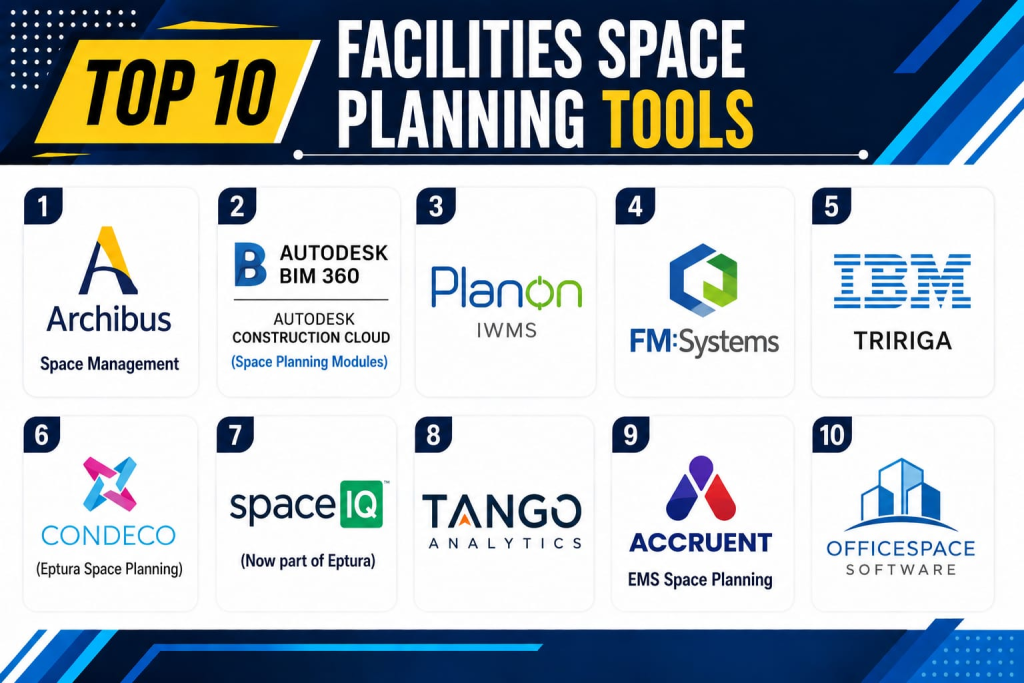
Top 10 Facilities Space Planning Tools
1- Archibus Space Management
Short description:
Archibus is a leading enterprise facilities management and space planning platform used by large organizations, universities, and government agencies. It enables detailed space allocation, occupancy tracking, and facility optimization. It supports long-term strategic space planning and operational management. The platform integrates with building systems and workplace tools. It is ideal for large facility portfolios. It improves visibility and control over space utilization.
Key Features
- Space inventory management
- Occupancy tracking and reporting
- Move management workflows
- Space utilization analytics
- Floor plan management
- Portfolio-level planning
- Scenario modeling tools
Pros
- Strong enterprise capability
- Excellent portfolio management
- Deep facility integration
Cons
- Complex implementation
- Requires training
- High cost structure
Platforms / Deployment
- Web
- Cloud / Hybrid
Security & Compliance
- SSO/SAML
- MFA
- Encryption
- RBAC
- Audit logs
- Enterprise compliance varies
Integrations & Ecosystem
Archibus integrates with enterprise facility and workplace systems:
- IWMS systems
- BIM platforms
- ERP systems
- IoT sensors
- APIs
- HR systems
Support & Community
Strong enterprise support and global user base
2- Autodesk BIM 360 / Autodesk Construction Cloud (Space Planning Modules)
Short description:
Autodesk Construction Cloud provides BIM-based space planning and facility modeling capabilities used in architecture, engineering, and construction industries. It enables 3D space visualization and planning through BIM integration. It is widely used for building lifecycle planning. The platform supports collaboration between design and facility teams. It is ideal for BIM-driven organizations. It improves spatial accuracy and coordination.
Key Features
- BIM-based space modeling
- 3D visualization tools
- Floor plan coordination
- Occupancy simulation
- Design collaboration tools
- Document management
- Issue tracking
Pros
- Strong BIM integration
- Excellent visualization
- Design-to-facility continuity
Cons
- Complex learning curve
- Requires Autodesk ecosystem
- Not standalone space planner
Platforms / Deployment
- Web
- Windows
- Cloud
Security & Compliance
- SSO/SAML
- MFA
- Encryption
- RBAC
- Audit logs
- Autodesk enterprise security framework
Integrations & Ecosystem
- Revit
- AutoCAD
- BIM tools
- ERP systems
- APIs
- Facility systems
Support & Community
Strong global Autodesk ecosystem support
3- Planon IWMS
Short description:
Planon IWMS is a comprehensive integrated workplace and facility management platform that includes advanced space planning capabilities. It helps organizations manage space, assets, maintenance, and workplace operations. It is widely used in large enterprises and corporate real estate portfolios. The platform supports real-time space optimization. It is ideal for enterprise facility management. It improves operational efficiency and space utilization.
Key Features
- Space planning and allocation
- Workplace analytics
- Occupancy management
- Move management system
- Facility asset tracking
- Portfolio reporting
- Scenario modeling
Pros
- Strong IWMS integration
- Excellent enterprise scalability
- Good analytics capabilities
Cons
- Complex deployment
- High cost
- Requires expertise
Platforms / Deployment
- Web
- Cloud / Hybrid
Security & Compliance
- SSO/SAML
- MFA
- Encryption
- RBAC
- Audit logs
- Enterprise compliance standards vary
Integrations & Ecosystem
- ERP systems
- HR systems
- IoT sensors
- BIM platforms
- APIs
- Facility systems
Support & Community
Strong enterprise support
4- FM:Systems
Short description:
FM:Systems is a workplace and facilities management platform that provides advanced space planning, occupancy tracking, and workplace analytics. It is widely used in corporate real estate and higher education institutions. It helps optimize office space usage and workplace experience. The platform supports hybrid workplace planning. It is ideal for organizations managing dynamic office environments. It improves space efficiency and employee experience.
Key Features
- Space planning tools
- Occupancy analytics
- Workplace dashboards
- Move management
- Floor plan visualization
- Scenario planning
- IoT integration
Pros
- Strong workplace analytics
- Good hybrid work support
- Easy visualization tools
Cons
- Limited deep BIM capabilities
- Enterprise customization required
- Higher pricing tiers
Platforms / Deployment
- Web
- Cloud
Security & Compliance
- SSO/SAML
- MFA
- Encryption
- RBAC
- Audit logs
- Not publicly stated certifications
Integrations & Ecosystem
- HR systems
- IoT sensors
- ERP platforms
- APIs
- Workplace tools
- BI systems
Support & Community
Strong enterprise workplace support
5- IBM TRIRIGA
Short description:
IBM TRIRIGA is an enterprise IWMS platform that includes advanced space planning and facility optimization capabilities. It is widely used in government, healthcare, and large enterprise environments. It supports lifecycle management of facilities and real estate assets. The platform enables data-driven space utilization decisions. It is ideal for large-scale facility portfolios. It improves operational efficiency and compliance.
Key Features
- Space management and allocation
- Workplace planning tools
- Real estate portfolio tracking
- Move management workflows
- Asset tracking
- Sustainability reporting
- Occupancy analytics
Pros
- Strong enterprise governance
- Excellent compliance features
- Highly scalable
Cons
- Complex setup
- High cost
- Requires specialized training
Platforms / Deployment
- Web
- Cloud / On-premise / Hybrid
Security & Compliance
- SSO/SAML
- MFA
- Encryption
- RBAC
- Audit logs
- Enterprise-grade compliance
Integrations & Ecosystem
- IBM Maximo
- ERP systems
- IoT platforms
- BIM tools
- APIs
- Facility systems
Support & Community
Strong IBM enterprise support
6- Condeco (Eptura Space Planning)
Short description:
Condeco, part of Eptura, is a workplace and space management platform designed for hybrid office environments. It enables desk booking, meeting room scheduling, and space utilization tracking. It is widely used in corporate offices. The platform supports hybrid workplace optimization. It is ideal for modern office environments. It improves space efficiency and employee experience.
Key Features
- Desk and room booking
- Space utilization analytics
- Hybrid workplace planning
- Occupancy tracking
- Mobile booking tools
- Floor plan visualization
- Reporting dashboards
Pros
- Strong hybrid workplace support
- Easy user experience
- Good visualization tools
Cons
- Limited deep BIM integration
- Focused on office environments only
- Advanced features require upgrades
Platforms / Deployment
- Web
- iOS
- Android
- Cloud
Security & Compliance
- SSO/SAML
- MFA
- Encryption
- RBAC
- Audit logs
- Enterprise compliance varies
Integrations & Ecosystem
- Microsoft Teams
- Outlook
- Google Workspace
- APIs
- HR systems
- Workplace tools
Support & Community
Strong enterprise workplace support
7- SpaceIQ (Now part of Eptura)
Short description:
SpaceIQ is a workplace space management platform focused on space planning, occupancy analytics, and workplace optimization. It is widely used by enterprise facility teams. It helps organizations manage real estate efficiently. The platform supports scenario planning and move management. It is ideal for hybrid workplace optimization. It improves decision-making for space usage.
Key Features
- Space planning tools
- Occupancy analytics
- Move management
- Scenario modeling
- Floor plan visualization
- Workplace dashboards
- Reporting tools
Pros
- Strong analytics
- Easy visualization
- Good enterprise adoption
Cons
- Limited BIM depth
- Requires ecosystem integration
- Not full IWMS suite
Platforms / Deployment
- Web
- Cloud
Security & Compliance
- SSO/SAML
- MFA
- Encryption
- RBAC
- Audit logs
- Not publicly stated certifications
Integrations & Ecosystem
- HR systems
- Microsoft 365
- APIs
- IoT systems
- Workplace tools
- Facility systems
Support & Community
Strong enterprise support via Eptura
8- Tango Analytics
Short description:
Tango Analytics is a space and location intelligence platform that helps enterprises optimize real estate portfolios. It provides space planning, lease management, and occupancy analytics. It is widely used in retail and corporate real estate. The platform supports data-driven space decisions. It is ideal for multi-location enterprises. It improves portfolio efficiency.
Key Features
- Space planning tools
- Location intelligence analytics
- Portfolio optimization
- Occupancy tracking
- Scenario planning
- Lease integration
- Reporting dashboards
Pros
- Strong analytics focus
- Good for retail portfolios
- Data-driven insights
Cons
- Complex setup
- Requires data maturity
- Higher enterprise cost
Platforms / Deployment
- Web
- Cloud
Security & Compliance
- SSO/SAML
- MFA
- Encryption
- RBAC
- Audit logs
- Enterprise compliance varies
Integrations & Ecosystem
- ERP systems
- GIS tools
- APIs
- BI platforms
- CRM systems
- Facility systems
Support & Community
Strong enterprise analytics support
9- Accruent EMS Space Planning
Short description:
Accruent EMS is a workplace and space management platform designed for scheduling, space planning, and facility optimization. It is widely used in corporate and educational environments. It supports room scheduling and space utilization tracking. The platform improves operational efficiency. It is ideal for campus and enterprise environments. It enhances space visibility and planning.
Key Features
- Room and space scheduling
- Space utilization tracking
- Move management
- Floor plan visualization
- Reporting tools
- Scenario planning
- Workplace analytics
Pros
- Strong scheduling capabilities
- Good campus management
- Easy usability
Cons
- Limited advanced BIM integration
- Requires add-ons for enterprise depth
- Basic AI capabilities
Platforms / Deployment
- Web
- Cloud
Security & Compliance
- SSO/SAML
- MFA
- Encryption
- RBAC
- Audit logs
- Not publicly stated certifications
Integrations & Ecosystem
- Microsoft 365
- Google Workspace
- APIs
- HR systems
- Facility tools
- Workplace systems
Support & Community
Good enterprise support
10- OfficeSpace Software
Short description:
OfficeSpace Software is a modern space planning and workplace management platform focused on visual floor planning and hybrid workplace optimization. It is widely used in corporate offices and enterprise real estate teams. It supports desk booking, space visualization, and occupancy tracking. The platform emphasizes ease of use and flexibility. It is ideal for hybrid workplaces. It improves space utilization and employee experience.
Key Features
- Visual space planning
- Desk booking system
- Occupancy analytics
- Floor plan management
- Move management
- Reporting dashboards
- Hybrid workplace tools
Pros
- Easy-to-use interface
- Strong visualization tools
- Good hybrid support
Cons
- Limited deep enterprise BIM features
- Requires integration for full IWMS
- Not ideal for infrastructure-scale planning
Platforms / Deployment
- Web
- iOS
- Android
- Cloud
Security & Compliance
- SSO/SAML
- MFA
- Encryption
- RBAC
- Audit logs
- Enterprise compliance varies
Integrations & Ecosystem
- Microsoft Teams
- Google Workspace
- APIs
- HR systems
- Workplace tools
- IoT systems
Support & Community
Strong enterprise customer support
Comparison Table
| Tool Name | Best For | Platform(s) Supported | Deployment | Standout Feature | Public Rating |
|---|---|---|---|---|---|
| Archibus | Enterprise facilities | Web | Hybrid | Full IWMS space control | N/A |
| Autodesk BIM 360 | BIM organizations | Web, Windows | Cloud | 3D BIM modeling | N/A |
| Planon IWMS | Corporate real estate | Web | Hybrid | Workplace analytics | N/A |
| FM:Systems | Hybrid offices | Web | Cloud | Occupancy insights | N/A |
| IBM TRIRIGA | Government/enterprise | Web | Hybrid | Asset + space lifecycle | N/A |
| Condeco | Office environments | Web, Mobile | Cloud | Desk booking system | N/A |
| SpaceIQ | Enterprise workplaces | Web | Cloud | Space analytics | N/A |
| Tango Analytics | Multi-site enterprises | Web | Cloud | Location intelligence | N/A |
| Accruent EMS | Campuses | Web | Cloud | Room scheduling system | N/A |
| OfficeSpace | Hybrid workplaces | Web, Mobile | Cloud | Visual planning tools | N/A |
Evaluation & Scoring of Facilities Space Planning Tools
| Tool Name | Core | Ease | Integrations | Security | Performance | Support | Value | Total |
|---|---|---|---|---|---|---|---|---|
| Archibus | 10 | 7 | 10 | 10 | 9 | 9 | 8 | 8.9 |
| Autodesk BIM 360 | 10 | 7 | 10 | 10 | 9 | 9 | 8 | 8.9 |
| Planon | 10 | 8 | 10 | 10 | 9 | 9 | 8 | 9.0 |
| FM:Systems | 9 | 9 | 9 | 9 | 9 | 9 | 8 | 8.8 |
| IBM TRIRIGA | 10 | 7 | 10 | 10 | 9 | 9 | 7 | 8.8 |
| Condeco | 9 | 9 | 9 | 9 | 9 | 9 | 9 | 9.0 |
| SpaceIQ | 9 | 9 | 9 | 9 | 9 | 9 | 8 | 8.9 |
| Tango Analytics | 9 | 8 | 9 | 9 | 9 | 9 | 8 | 8.8 |
| Accruent EMS | 8 | 9 | 8 | 8 | 8 | 8 | 9 | 8.4 |
| OfficeSpace | 8 | 9 | 8 | 8 | 9 | 8 | 9 | 8.6 |
These scores reflect differences in enterprise space intelligence, BIM integration, usability, and hybrid workplace support. Enterprise IWMS platforms excel in governance and large-scale planning, while modern tools prioritize usability and hybrid workplace optimization.
Frequently Asked Questions
1. What are Facilities Space Planning Tools?
They are software platforms used to plan and optimize office, campus, and facility spaces.
2. Who uses these tools?
Facility managers, corporate real estate teams, universities, and enterprises use them.
3. Do they support hybrid work planning?
Yes, most modern tools support hybrid workplace optimization.
4. Can they integrate with BIM systems?
Yes, many tools integrate with BIM platforms like Autodesk.
5. Do they track occupancy?
Yes, many include occupancy tracking and analytics.
6. Are these tools cloud-based?
Most modern platforms are cloud-based.
7. Do they support mobile apps?
Yes, many include mobile booking and visualization tools.
8. What is the biggest benefit?
Better space utilization and cost optimization.
9. Are they suitable for small offices?
Usually no, they are designed for complex multi-space environments.
10. Do they support AI features?
Yes, newer platforms include AI-driven space optimization.
Conclusion
Facilities Space Planning Tools are essential for modern organizations aiming to optimize space utilization, reduce real estate costs, and support hybrid work environments. Platforms like Archibus, Planon, and IBM TRIRIGA dominate enterprise-grade facility planning, while OfficeSpace, Condeco, and FM:Systems provide strong hybrid workplace solutions. The right choice depends on organizational size, facility complexity, and integration needs. Businesses should evaluate analytics depth, BIM support, and usability before selecting a platform and validate it through real workspace planning scenarios.
