Introduction
Invoice-to-Cash (I2C) Platforms are specialized systems that manage the entire invoicing and accounts receivable process, helping businesses streamline billing, payment collection, cash application, and revenue recognition. These platforms are particularly valuable in as companies increasingly deal with subscription-based billing, influencer marketing agreements, recurring revenue models, and multi-currency invoicing. By automating the invoice-to-cash cycle, organizations reduce errors, improve cash flow, and gain real-time visibility into receivables.
Real-world use cases include:
- Automated invoicing: Generate accurate invoices immediately after order fulfillment or subscription activation.
- Payment collection: Automate reminders, dunning, and reconcile payments efficiently.
- Cash application: Match payments to open invoices to reduce manual accounting work.
- Revenue recognition: Ensure compliance with accounting standards and reporting requirements.
- Analytics and forecasting: Track receivables, predict cash flow, and monitor customer payment behaviors.
Key buyer evaluation criteria:
- Invoice generation automation and accuracy
- Payment collection workflows and dunning capabilities
- Cash application efficiency
- Integration with ERP, CRM, and payment systems
- Analytics and reporting dashboards
- Multi-currency and multi-country support
- Security and compliance features
- Ease of onboarding and user experience
- Scalability for enterprise or SMB use
- Vendor support and training resources
Best for: Finance teams, accounts receivable departments, CFOs, and revenue operations in SMBs to enterprise organizations managing high-volume invoicing and collections.
Not ideal for: Small companies with low invoice volumes or simple billing needs where manual invoicing or lightweight accounting tools are sufficient.
Key Trends in Invoice-to-Cash Platforms
- AI-driven collections: Predict which invoices are at risk of late payment and automate reminders.
- Automated cash application: Use AI/ML to match payments to invoices with minimal manual intervention.
- Real-time receivables dashboards: Provide finance teams with live insights into outstanding invoices and cash flow.
- Integration-first architecture: Seamless connections with ERP, CRM, payment gateways, and accounting systems.
- Support for subscription and recurring billing models for SaaS and influencer marketing agreements.
- Multi-currency and localization capabilities for global enterprises.
- Automated dispute and exception handling to reduce delays in collections.
- Compliance and audit-ready reporting for SOC 2, GDPR, and IFRS/GAAP standards.
- Self-service portals for customers to view invoices and make payments online.
- Flexible pricing models for SMBs, mid-market, and enterprise clients.
How We Selected These Tools (Methodology)
- Evaluated market adoption and mindshare among SMB, mid-market, and enterprise organizations.
- Reviewed feature completeness, including invoicing, payment processing, collections, and cash application.
- Analyzed reliability and performance signals, such as uptime, payment accuracy, and processing speed.
- Assessed security posture, including encryption, SSO/MFA, and audit logs.
- Verified integration capabilities with ERP, CRM, billing, payment gateways, and reporting tools.
- Considered fit across business sizes from SMBs to global enterprises.
- Evaluated ease of onboarding and adoption for finance teams.
- Checked scalability to handle high-volume invoice processing and multi-currency operations.
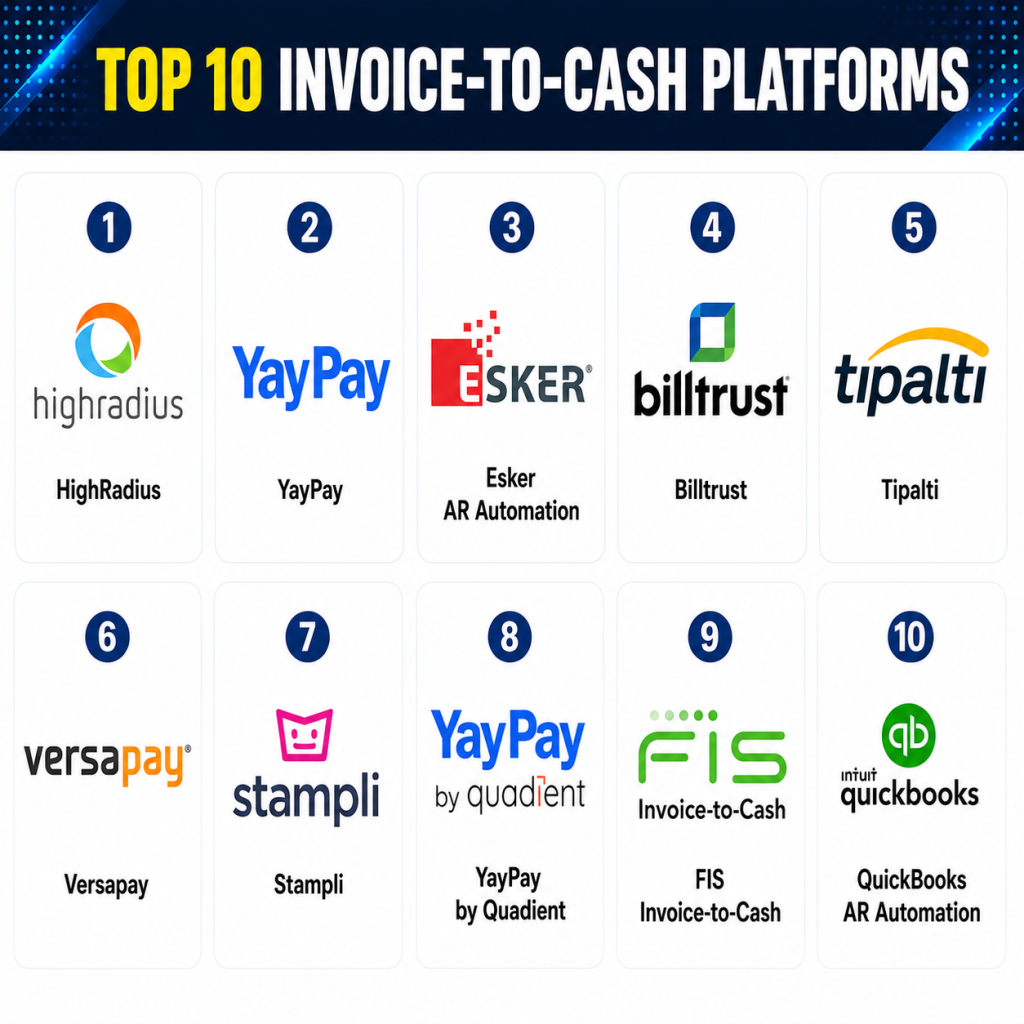
Top 10 Invoice-to-Cash Platforms
1- HighRadius
Short description: HighRadius provides AI-powered automation for invoicing, payment collection, and cash application. It is ideal for enterprises seeking to reduce manual accounts receivable tasks and accelerate cash flow.
Key Features
- Automated invoice generation and delivery
- AI-driven cash application
- Payment reminders and dunning
- Dispute management
- Multi-currency support
- Analytics dashboards and forecasting
- ERP integration
Pros
- Reduces manual AR effort
- Accelerates cash collection
- Scalable for global enterprises
Cons
- Enterprise pricing may be high
- Implementation requires planning
- Learning curve for advanced AI modules
Platforms / Deployment
- Web
- Cloud
Security & Compliance
- SSO, encryption, audit logs
- SOC 2, GDPR
Integrations & Ecosystem
Integrates with:
- ERP systems (SAP, Oracle, NetSuite)
- CRM systems
- Payment gateways
- APIs for custom workflows
Support & Community
- Enterprise support tiers
- Documentation and training
2- YayPay
Short description: YayPay automates the accounts receivable workflow for mid-market to enterprise companies, offering predictive analytics and AI-based collections.
Key Features
- Automated invoice delivery
- Collections workflow automation
- Cash application
- AI-based payment prediction
- Customer self-service portal
- Analytics dashboards
Pros
- Reduces DSO (days sales outstanding)
- Predictive insights for collections
- Easy integration with existing ERP
Cons
- Less enterprise-grade functionality than some competitors
- Mid-market focus may limit scalability for global enterprises
- Learning curve for AI features
Platforms / Deployment
- Web
- Cloud
Security & Compliance
- SSO, encryption
- SOC 2, GDPR
Integrations & Ecosystem
- ERP (NetSuite, SAP)
- CRM (Salesforce)
- Payment gateways
- APIs
Support & Community
- Support via documentation and ticketing
- Online training resources
3- Esker AR Automation
Short description: Esker provides automated invoicing and accounts receivable processing for enterprises, with strong workflow and exception handling.
Key Features
- Automated invoice creation and delivery
- Electronic payment processing
- Exception and dispute management
- Cash application automation
- Analytics and dashboards
- Multi-currency invoicing
Pros
- Mature enterprise-grade platform
- Exception handling capabilities
- Scalable for high-volume invoicing
Cons
- Enterprise implementation costs
- Learning curve for workflow setup
- Mid-market suitability limited
Platforms / Deployment
- Web
- Cloud / Hybrid
Security & Compliance
- SSO, encryption
- SOC 2, GDPR
Integrations & Ecosystem
- ERP (SAP, Oracle, NetSuite)
- Payment gateways
- API for custom integration
Support & Community
- Enterprise support
- Documentation and partner network
4- Billtrust
Short description: Billtrust focuses on automating invoicing and payment collection for SMBs and mid-market companies with subscription and recurring revenue support.
Key Features
- Invoice automation and delivery
- Payment reminders
- Recurring billing support
- Cash application automation
- Analytics dashboards
Pros
- Easy to deploy
- Reduces manual AR tasks
- SMB and mid-market friendly
Cons
- Less advanced AI features
- Enterprise scale may be limited
- Integration options may require custom work
Platforms / Deployment
- Web
- Cloud
Security & Compliance
- Encryption and access controls
- SOC 2, GDPR
Integrations & Ecosystem
- ERP systems (NetSuite, Sage, QuickBooks)
- Payment gateways
- API support
Support & Community
- Documentation and online help
- Email and phone support
5- Tipalti
Short description: Tipalti automates payment processing, vendor and influencer payouts, and cash application for SMBs and mid-market companies.
Key Features
- Invoice processing automation
- Multi-currency payment processing
- Vendor and influencer payouts
- Payment reconciliation
- Tax compliance automation
- Analytics and reporting
Pros
- Simplifies global payments
- Reduces manual reconciliation
- Compliance-focused
Cons
- Less focused on enterprise AR workflow
- May require ERP integration for full cash application
- SMB-centric features
Platforms / Deployment
- Web
- Cloud
Security & Compliance
- SSO, encryption
- SOC 2, GDPR, ISO 27001
Integrations & Ecosystem
- ERP and accounting systems
- Payment gateways
- API for custom workflows
Support & Community
- Email and phone support
- Documentation
6- Versapay
Short description: Versapay automates invoice delivery, payments, and AR workflow, emphasizing collaboration between finance teams and customers.
Key Features
- Invoice delivery automation
- Customer self-service portal
- Payment matching and reconciliation
- Collections workflow automation
- Analytics dashboards
Pros
- Improves customer payment experience
- Reduces manual AR effort
- Collaborative workflows
Cons
- Enterprise scale may be limited
- Implementation requires configuration
- AI features are basic
Platforms / Deployment
- Web
- Cloud
Security & Compliance
- Encryption, SSO
- SOC 2, GDPR
Integrations & Ecosystem
- ERP systems
- Payment gateways
- APIs
Support & Community
- Support plans and online help
- Documentation
7- Stampli
Short description: Stampli automates accounts receivable and invoice approvals with AI-driven workflow and collaboration tools, suitable for mid-market companies.
Key Features
- Automated invoice processing
- AI-assisted exception handling
- Workflow approvals
- Cash application automation
- Analytics dashboards
Pros
- Collaborative invoice processing
- Reduces manual tasks
- AI-driven exception resolution
Cons
- SMB to mid-market focus
- Enterprise integration may require effort
- Learning curve for workflow design
Platforms / Deployment
- Web
- Cloud
Security & Compliance
- Encryption and access controls
- SOC 2, GDPR
Integrations & Ecosystem
- ERP, payment gateways
- APIs for custom workflows
Support & Community
- Documentation and training
- Email support
8- YayPay by Quadient
Short description: YayPay focuses on AR automation and predictive cash flow, helping finance teams accelerate collections and reduce DSO.
Key Features
- Automated AR workflows
- Predictive cash forecasting
- Payment reminders and collections
- Cash application
- Analytics dashboards
Pros
- Predictive insights improve collections
- Reduces manual AR workload
- Multi-currency support
Cons
- Enterprise scale limited
- Advanced features require training
- Integration setup needed
Platforms / Deployment
- Web
- Cloud
Security & Compliance
- SSO, encryption
- SOC 2, GDPR
Integrations & Ecosystem
- ERP and accounting systems
- Payment gateways
- APIs
Support & Community
- Documentation and support tickets
- Online help
9- FIS Invoice-to-Cash
Short description: FIS provides enterprise-scale automation for invoicing, payment collection, and AR management, targeting large global organizations.
Key Features
- Invoice automation and delivery
- Payment reconciliation
- Collections workflow
- Analytics dashboards
- ERP integration
Pros
- Enterprise-grade reliability
- Handles high volume
- Global compliance support
Cons
- Enterprise pricing
- Complex implementation
- Learning curve for teams
Platforms / Deployment
- Web
- Cloud / Hybrid
Security & Compliance
- SSO, encryption, audit logs
- SOC 2, GDPR, ISO 27001
Integrations & Ecosystem
- ERP, CRM, payment gateways
- APIs
Support & Community
- Enterprise support tiers
- Documentation and training
10- QuickBooks AR Automation
Short description: QuickBooks AR modules help SMBs automate invoicing, collections, and payment reconciliation in a simplified, easy-to-deploy system.
Key Features
- Invoice creation automation
- Payment collection tracking
- Cash application support
- Analytics dashboards
- Recurring billing support
Pros
- Easy to use for SMBs
- Quick deployment
- Affordable
Cons
- Limited enterprise scalability
- Basic automation
- Integration options may be limited
Platforms / Deployment
- Web / Windows / macOS / Mobile
- Cloud
Security & Compliance
- Encryption and access controls
- SOC 2, GDPR
Integrations & Ecosystem
- Payment gateways
- ERP and accounting systems
- APIs
Support & Community
- Online help center
- Support tiers for SMBs
Comparison Table (Top 10)
| Tool Name | Best For | Platform(s) Supported | Deployment | Standout Feature | Public Rating |
|---|---|---|---|---|---|
| HighRadius | Enterprise AR | Web | Cloud | AI-driven cash application | N/A |
| YayPay | Mid-market AR | Web | Cloud | Predictive collections | N/A |
| Esker AR Automation | Enterprise | Web | Cloud/Hybrid | Exception management | N/A |
| Billtrust | SMB / Mid-market | Web | Cloud | Automated billing | N/A |
| Tipalti | SMB / Mid-market | Web | Cloud | Global payments & tax compliance | N/A |
| Versapay | SMB / Mid-market | Web | Cloud | Customer self-service | N/A |
| Stampli | Mid-market | Web | Cloud | AI-assisted workflow | N/A |
| YayPay by Quadient | Mid-market | Web | Cloud | Predictive cash flow | N/A |
| FIS Invoice-to-Cash | Enterprise | Web | Cloud/Hybrid | High-volume AR automation | N/A |
| QuickBooks AR Automation | SMB | Web/Windows/macOS/Mobile | Cloud | Easy SMB AR | N/A |
Evaluation & Scoring
| Tool Name | Core (25%) | Ease (15%) | Integrations (15%) | Security (10%) | Performance (10%) | Support (10%) | Value (15%) | Weighted Total |
|---|---|---|---|---|---|---|---|---|
| HighRadius | 9 | 8 | 9 | 9 | 9 | 8 | 8 | 8.9 |
| YayPay | 8 | 8 | 7 | 8 | 8 | 7 | 8 | 7.9 |
| Esker AR Automation | 8 | 7 | 8 | 8 | 8 | 7 | 7 | 7.7 |
| Billtrust | 7 | 9 | 7 | 7 | 7 | 8 | 8 | 7.7 |
| Tipalti | 8 | 8 | 7 | 8 | 8 | 7 | 7 | 7.7 |
| Versapay | 7 | 8 | 7 | 7 | 7 | 7 | 7 | 7.2 |
| Stampli | 7 | 8 | 7 | 7 | 7 | 7 | 7 | 7.2 |
| YayPay by Quadient | 8 | 7 | 7 | 8 | 7 | 7 | 7 | 7.4 |
| FIS Invoice-to-Cash | 9 | 7 | 8 | 9 | 9 | 7 | 7 | 8.0 |
| QuickBooks AR Automation | 6 | 9 | 6 | 7 | 6 | 8 | 9 | 7.1 |
Interpretation: Weighted totals provide a comparative view of features, usability, integrations, security, performance, support, and value. Higher totals indicate stronger overall platforms.
Which Invoice-to-Cash Tool Is Right for You?
Solo / Freelancer
- QuickBooks AR Automation or Billtrust: easy setup, low volume
SMB
- Tipalti, Versapay, or YayPay: automated billing and collections
Mid-Market
- Stampli, YayPay by Quadient, Billtrust: predictive AR and workflow automation
Enterprise
- HighRadius, Esker, FIS Invoice-to-Cash: AI-driven cash application and global scalability
Budget vs Premium
- Budget: QuickBooks, Billtrust, Versapay
- Premium: HighRadius, Esker, FIS
Feature Depth vs Ease of Use
- Depth: HighRadius, Esker, FIS
- Ease: QuickBooks, Billtrust, Versapay
Integrations & Scalability
- Global ERP integration: HighRadius, Esker, FIS
- Simpler adoption: QuickBooks, Billtrust
Security & Compliance Needs
- High compliance: HighRadius, Esker, FIS
- SMB-level: QuickBooks, Tipalti
Frequently Asked Questions (FAQs)
1- What pricing models do Invoice-to-Cash platforms use?
Most are subscription-based, per user or enterprise. Premium modules (AI, analytics) may incur extra cost.
2- How long does onboarding take?
Small teams: a few days; enterprises with ERP integrations may require weeks.
3- Are these platforms suitable for subscription billing?
Yes, leading platforms handle recurring, usage-based, and hybrid models.
4- What are common implementation mistakes?
Skipping workflow planning, ignoring integration strategy, underestimating data migration.
5- How secure are these tools?
Enterprise-grade encryption, SSO/MFA, audit trails, SOC 2 and GDPR compliance.
6- Can existing invoices be imported?
Yes, most allow bulk import from spreadsheets or ERP.
7- Do these platforms provide analytics?
Yes — AR performance, cash flow, overdue invoices, and collection efficiency dashboards.
8- Are mobile apps available?
Many platforms provide mobile access for real-time invoice management.
9- Can automation improve collections?
Yes — automated reminders, dunning, and cash application reduce DSO.
10- What alternatives exist for small businesses?
Manual spreadsheets or lightweight accounting tools may suffice for low-volume invoicing.
Conclusion
Choosing the right Invoice-to-Cash platform depends on business size, invoice volume, complexity, integrations, and compliance requirements. SMBs benefit from QuickBooks, Tipalti, or Billtrust for cost-effective automation. Mid-market teams benefit from YayPay, Stampli, and Billtrust for workflow automation and predictive analytics. Enterprises should evaluate HighRadius, Esker, and FIS for AI-driven cash application, global compliance, and high-volume scalability.
