Introduction
Pipeline Integrity Management Software (PIMS) is designed to help operators of oil and gas pipelines ensure the structural health, safety, and reliability of pipeline networks. These platforms centralize inspection data, anomaly tracking, predictive analytics, and regulatory compliance reporting to reduce risks, prevent leaks, and optimize maintenance schedules. With pipelines spanning thousands of kilometers and operating under harsh conditions, such tools are critical for maintaining operational continuity and environmental safety in and beyond.
Real-world use cases include:
- Monitoring corrosion, pressure anomalies, and mechanical stress across pipelines.
- Scheduling and tracking inspections using in-line inspection (ILI) data.
- Analyzing pipeline risk and prioritizing maintenance.
- Regulatory compliance reporting for environmental and safety standards.
- Integrating sensor, SCADA, and GIS data for centralized decision-making.
What buyers should evaluate:
- Data integration from sensors, SCADA, and GIS systems.
- Predictive maintenance and anomaly detection capabilities.
- Pipeline risk scoring and prioritization modules.
- Compliance and reporting automation.
- Cloud, on-prem, and hybrid deployment flexibility.
- Security protocols and role-based access control.
- Real-time visualization and dashboards.
- Scalability for multi-region or cross-border pipeline networks.
- Vendor support, training, and updates.
Best for: Pipeline operators, integrity engineers, O&G midstream companies, and service providers managing large or critical pipeline networks.
Not ideal for: Small pipeline operators with limited infrastructure or low-risk pipelines where manual inspections suffice.
Key Trends in Pipeline Integrity Management Software
- AI-driven predictive maintenance to anticipate failures and optimize inspection schedules.
- Integration with IoT sensors and SCADA systems for real-time pipeline monitoring.
- GIS and mapping integration for spatial analysis and incident tracking.
- Cloud-native platforms providing centralized access to multi-region data.
- Automated regulatory reporting to ensure compliance with PHMSA, API, and other standards.
- Digital twin technology to simulate pipeline performance and risk scenarios.
- Enhanced cybersecurity to protect critical pipeline data.
- Edge computing to process remote sensor data with minimal latency.
- Mobile workforce enablement for field inspection and maintenance updates.
- Environmental risk and ESG analytics for sustainability tracking.
How We Selected These Tools (Methodology)
- Evaluated market adoption and recognition in pipeline integrity operations.
- Reviewed feature completeness including inspection management, analytics, and anomaly detection.
- Analyzed operational reliability and uptime performance in field deployments.
- Considered security posture, including access controls, encryption, and audit logging.
- Assessed integration capabilities with SCADA, IoT, GIS, and ERP systems.
- Evaluated suitability for different operator sizes and pipeline complexities.
- Reviewed vendor support quality, documentation, and training programs.
- Considered innovation in AI, predictive analytics, and cloud deployment.
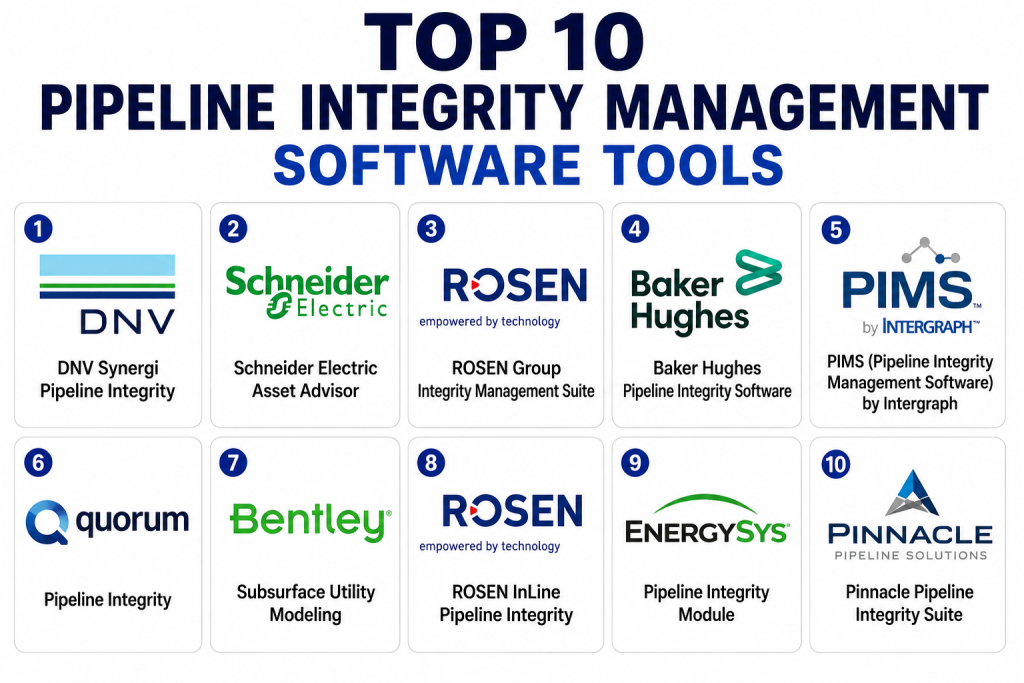
Top 10 Pipeline Integrity Management Software Tools
1- DNV Synergi Pipeline Integrity
Short description: DNV Synergi Pipeline Integrity provides end-to-end pipeline risk management and monitoring, combining inspection data analysis, anomaly tracking, and regulatory reporting for midstream operators.
Key Features
- Risk-based inspection planning
- Corrosion and defect analysis
- ILI and SCADA data integration
- Compliance reporting dashboards
- Pipeline performance benchmarking
Pros
- Strong risk analytics capabilities
- Comprehensive compliance tools
Cons
- Premium pricing
- Steep learning curve for new users
Platforms / Deployment
- Web / Windows
- Cloud / Hybrid
Security & Compliance
- Encryption and RBAC
- Not publicly stated
Integrations & Ecosystem
- SCADA, ILI, GIS integration
- ERP connectors
- API for custom analytics
Support & Community
- Vendor support and training
- Online documentation and forums
2- Schneider Electric Asset Advisor
Short description: Asset Advisor monitors pipeline assets, detects anomalies, and provides predictive maintenance insights, helping operators prevent failures and optimize performance.
Key Features
- Real-time pipeline monitoring
- Predictive maintenance analytics
- Pressure and flow anomaly detection
- Compliance reporting and audit trails
- Mobile inspection reporting
Pros
- User-friendly dashboards
- Strong predictive capabilities
Cons
- Advanced analytics require configuration
- Limited offline features
Platforms / Deployment
- Web / iOS / Android
- Cloud / Hybrid
Security & Compliance
- Encryption and access controls
- Not publicly stated
Integrations & Ecosystem
- SCADA systems
- IoT sensors and telemetry
- GIS mapping integration
Support & Community
- Vendor support tiers
- Documentation and training programs
3- ROSEN Group Integrity Management Suite
Short description: ROSEN’s IMS software provides pipeline inspection, risk analysis, and maintenance planning for oil and gas operators, integrating ILI and sensor data.
Key Features
- ILI data analysis and defect tracking
- Risk-based prioritization
- Inspection scheduling
- Compliance and reporting
- GIS-enabled visualization
Pros
- Strong inspection analytics
- Multi-site portfolio management
Cons
- Requires vendor expertise for setup
- Limited mobile features
Platforms / Deployment
- Web / Windows
- Cloud / Hybrid
Security & Compliance
- Encryption and RBAC
- Not publicly stated
Integrations & Ecosystem
- ILI, SCADA, GIS integration
- ERP system connectivity
- API for reporting
Support & Community
- Vendor onboarding and training
- Documentation
4- Baker Hughes Pipeline Integrity Software
Short description: Baker Hughes platform provides inspection, monitoring, and integrity risk analytics for pipelines, supporting preventive maintenance and regulatory compliance.
Key Features
- Risk and defect analysis
- Inspection data management
- Predictive maintenance recommendations
- Compliance dashboards
- Workflow automation
Pros
- Well-suited for complex pipeline networks
- Comprehensive reporting
Cons
- Complex interface
- Premium cost
Platforms / Deployment
- Web / Windows
- Cloud / Hybrid
Security & Compliance
- Not publicly stated
Integrations & Ecosystem
- SCADA, ILI, GIS
- ERP connectors
- IoT sensor integration
Support & Community
- Vendor support and documentation
- Technical training
5- PIMS (Pipeline Integrity Management Software) by Intergraph
Short description: Intergraph PIMS is designed for pipeline operators to manage inspections, assess integrity risks, and plan maintenance using centralized data analytics.
Key Features
- ILI and field inspection integration
- Defect classification and risk scoring
- Maintenance planning tools
- Regulatory compliance tracking
- Performance dashboards
Pros
- Enterprise-grade analytics
- Supports multiple inspection methods
Cons
- Implementation may require specialized staff
- Limited customization
Platforms / Deployment
- Web / Windows
- Cloud / Hybrid
Security & Compliance
- Encryption, RBAC
- Not publicly stated
Integrations & Ecosystem
- SCADA, ILI, GIS
- ERP integration
- API for reporting
Support & Community
- Vendor support
- Documentation and training resources
6- Quorum Pipeline Integrity
Short description: Quorum provides pipeline operators with software to track asset integrity, plan inspections, and manage regulatory compliance efficiently.
Key Features
- Inspection scheduling and tracking
- Risk and anomaly analysis
- Real-time dashboards
- Compliance and reporting
- Mobile inspection tools
Pros
- Easy to use interface
- Good mobile functionality
Cons
- Analytics depth limited compared to larger suites
- Scaling to enterprise size may require customization
Platforms / Deployment
- Web / iOS / Android
- Cloud
Security & Compliance
- Not publicly stated
Integrations & Ecosystem
- SCADA, IoT, GIS
- ERP connectors
- API for reporting
Support & Community
- Vendor support
- Documentation
7- Bentley Subsurface Utility Modeling
Short description: Bentley’s solution provides pipeline integrity tracking, defect analysis, and inspection management with strong GIS and mapping integration.
Key Features
- GIS-enabled visualization
- Inspection data integration
- Risk analysis and scoring
- Maintenance scheduling
- Regulatory reporting
Pros
- Strong spatial analysis
- Good for multi-site management
Cons
- Complexity in setup
- Learning curve
Platforms / Deployment
- Web / Windows
- Cloud / Hybrid
Security & Compliance
- Not publicly stated
Integrations & Ecosystem
- GIS, SCADA, ERP integration
- API connectivity
- IoT sensor integration
Support & Community
- Vendor support
- Documentation
8- ROSEN InLine Pipeline Integrity
Short description: Focused on inline inspection data, ROSEN InLine tracks defects, calculates risk, and recommends maintenance for oil and gas pipelines.
Key Features
- ILI data analytics
- Risk assessment dashboards
- Defect classification
- Maintenance planning
- Compliance reporting
Pros
- Highly accurate defect analysis
- Strong integration with inspection tools
Cons
- Limited mobile support
- High cost for small operators
Platforms / Deployment
- Web / Windows
- Cloud / Hybrid
Security & Compliance
- Not publicly stated
Integrations & Ecosystem
- ILI, SCADA, ERP integration
- GIS mapping integration
- API hooks
Support & Community
- Vendor support
- Documentation
9- EnergySys Pipeline Integrity Module
Short description: EnergySys provides a modular approach to pipeline integrity management, supporting risk assessment, inspection, and maintenance planning.
Key Features
- Risk-based inspection management
- Defect tracking and analysis
- Maintenance scheduling
- Compliance dashboards
- Data visualization
Pros
- Modular and scalable
- Good reporting features
Cons
- Smaller vendor ecosystem
- Limited mobile offline features
Platforms / Deployment
- Web / Windows
- Cloud / Hybrid
Security & Compliance
- Not publicly stated
Integrations & Ecosystem
- SCADA, GIS, ERP
- IoT integration
- API for analytics
Support & Community
- Vendor support
- Documentation
10- Pinnacle Pipeline Integrity Suite
Short description: Pinnacle provides inspection management, risk analytics, and compliance reporting for oil and gas pipeline operators, supporting preventive maintenance strategies.
Key Features
- Defect and corrosion tracking
- Risk prioritization
- Inspection workflow automation
- Compliance reporting dashboards
- Multi-site asset management
Pros
- Tailored for pipeline integrity workflows
- Strong preventive maintenance tools
Cons
- Enterprise-focused pricing
- Limited flexibility for small operators
Platforms / Deployment
- Web / Windows / iOS
- Cloud / Hybrid
Security & Compliance
- Not publicly stated
Integrations & Ecosystem
- SCADA and ILI data feeds
- GIS and ERP connectors
- API access
Support & Community
- Vendor support
- Documentation and training
Comparison Table (Top 10)
| Tool Name | Best For | Platform(s) Supported | Deployment | Standout Feature | Public Rating |
|---|---|---|---|---|---|
| DNV Synergi | Risk-based inspection | Web / Windows | Cloud / Hybrid | Corrosion & risk analytics | N/A |
| Schneider Asset Advisor | Predictive maintenance | Web / iOS / Android | Cloud / Hybrid | Real-time anomaly detection | N/A |
| ROSEN IMS | Inspection management | Web / Windows | Cloud / Hybrid | ILI data integration | N/A |
| Baker Hughes | Enterprise pipelines | Web / Windows | Cloud / Hybrid | Predictive maintenance | N/A |
| Intergraph PIMS | Multi-site pipeline | Web / Windows | Cloud / Hybrid | Risk-based prioritization | N/A |
| Quorum | Small-mid pipeline ops | Web / iOS / Android | Cloud | Mobile inspection tools | N/A |
| Bentley Subsurface | GIS-enabled | Web / Windows | Cloud / Hybrid | Spatial analysis | N/A |
| ROSEN InLine | Inline inspections | Web / Windows | Cloud / Hybrid | Defect analytics | N/A |
| EnergySys Module | Modular approach | Web / Windows | Cloud / Hybrid | Risk-based inspection | N/A |
| Pinnacle | Preventive maintenance | Web / Windows / iOS | Cloud / Hybrid | Workflow automation | N/A |
Evaluation & Scoring of Pipeline Integrity Management Tools
| Tool Name | Core (25%) | Ease (15%) | Integrations (15%) | Security (10%) | Performance (10%) | Support (10%) | Value (15%) | Weighted Total |
|---|---|---|---|---|---|---|---|---|
| DNV Synergi | 9 | 7 | 8 | 7 | 9 | 8 | 7 | 8.0 |
| Schneider Asset Advisor | 8 | 8 | 8 | 7 | 8 | 7 | 7 | 7.7 |
| ROSEN IMS | 8 | 7 | 8 | 7 | 8 | 7 | 7 | 7.5 |
| Baker Hughes | 9 | 7 | 8 | 7 | 9 | 7 | 7 | 7.9 |
| Intergraph PIMS | 8 | 7 | 8 | 7 | 8 | 7 | 7 | 7.5 |
| Quorum | 7 | 8 | 7 | 7 | 7 | 7 | 7 | 7.2 |
| Bentley Subsurface | 8 | 7 | 8 | 7 | 8 | 7 | 7 | 7.5 |
| ROSEN InLine | 8 | 7 | 7 | 7 | 8 | 7 | 7 | 7.4 |
| EnergySys Module | 7 | 7 | 7 | 7 | 7 | 7 | 7 | 7.0 |
| Pinnacle | 8 | 7 | 7 | 7 | 8 | 7 | 7 | 7.4 |
Interpretation:
Scores provide a comparative overview of core functionality, usability, integrations, security, performance, support, and value. Selection should align with pipeline complexity, site count, and operational priorities.
Which Pipeline Integrity Tool Is Right for You?
Solo / Freelancer
Not applicable; these tools are enterprise‑oriented for industrial pipelines.
SMB
Quorum and EnergySys Module offer cost‑effective solutions with essential inspection and maintenance features.
Mid‑Market
ROSEN IMS and Intergraph PIMS balance usability and analytics for mid-sized pipeline operators.
Enterprise
DNV Synergi, Baker Hughes, Schneider Asset Advisor, and Pinnacle provide advanced analytics, predictive maintenance, and compliance management across multi-site networks.
Budget vs Premium
Budget solutions focus on core inspections and maintenance tracking. Premium platforms include predictive analytics, ILI integration, and enterprise-grade dashboards.
Feature Depth vs Ease of Use
Enterprise platforms offer full analytics depth but require training. SMB solutions provide easier adoption with reduced functionality.
Integrations & Scalability
Platforms integrating SCADA, GIS, ERP, and IoT allow scalability for multi-region pipelines and complex operations.
Security & Compliance Needs
Evaluate encryption, RBAC, audit logging, and vendor adherence to PHMSA, API, and ESG standards.
Frequently Asked Questions (FAQs)
1— What is Pipeline Integrity Management Software?
Software that centralizes inspection, risk analysis, predictive maintenance, and compliance reporting for pipeline networks.
2— How much does PIMS cost?
Pricing depends on network size, number of assets, and advanced analytics features; enterprise solutions are premium.
3— Can PIMS integrate with SCADA?
Yes, most platforms integrate with SCADA, GIS, IoT sensors, and ERP systems.
4— Does PIMS support predictive maintenance?
Yes, AI-driven predictive modules identify risks and schedule maintenance before failures occur.
5— Is mobile field data capture supported?
Yes, enterprise platforms provide mobile apps for inspections and field reporting.
6— Can PIMS track multiple pipeline networks?
Yes, multi-region and multi-site management is standard in enterprise platforms.
7— How long does implementation take?
Ranges from weeks for small networks to several months for enterprise-scale pipelines.
8— Are there open-source options?
Limited; most credible pipeline integrity platforms are commercial.
9— Does it help with regulatory compliance?
Yes, platforms support PHMSA, API, and environmental reporting requirements.
10— How do I choose the right tool?
Consider pipeline network size, integration requirements, risk management needs, and operational complexity.
Conclusion
Pipeline Integrity Management Software is critical for maintaining safe, compliant, and efficient oil & gas pipelines. SMB operators may find Quorum and EnergySys Module sufficient for inspection and basic maintenance, while mid-market solutions like ROSEN IMS and Intergraph PIMS provide deeper analytics. Enterprise platforms such as DNV Synergi, Baker Hughes, and Schneider Asset Advisor deliver comprehensive predictive maintenance, risk scoring, and compliance capabilities. Start with a shortlist, pilot inspections and analytics, and validate integration with SCADA, GIS, and ERP before full deployment for maximum operational impact.
