Introduction
Product Traceability Systems (PTS) are software solutions designed to monitor, track, and record every stage of a product’s lifecycle, from raw materials to finished goods delivered to customers. These systems ensure transparency, quality control, regulatory compliance, and recall readiness. In, with increasingly complex supply chains, heightened consumer expectations, and regulatory requirements, PTS platforms have become critical for manufacturers, food and beverage companies, pharmaceuticals, and electronics producers.
Real-world use cases include:
- Tracing contaminated batches in food or beverage production to ensure swift recalls.
- Monitoring materials and components across multi-tier suppliers in electronics or automotive industries.
- Managing batch and lot tracking for pharmaceuticals and medical devices.
- Ensuring regulatory compliance with ISO, FDA, and EU standards.
- Providing audit-ready reporting and supply chain transparency to stakeholders.
Evaluation Criteria for Buyers:
- Real-time traceability across production and supply chain tiers
- Batch, lot, and serial number tracking
- Integration with ERP, MES, WMS, and quality management systems
- Compliance management for industry-specific regulations
- Recall and incident management capabilities
- Reporting and analytics dashboards
- Data security and audit trails
- Mobile and IoT sensor support
- User interface and ease of adoption
- Vendor support, training, and implementation services
Best for: supply chain managers, quality assurance teams, manufacturers in food, beverage, pharma, and electronics, large enterprises, and 3PLs requiring strict traceability.
Not ideal for: very small manufacturers or businesses with simple production processes that do not require multi-tier traceability or complex regulatory compliance.
Key Trends in Product Traceability Systems
- IoT and sensor integration for real-time tracking of products and materials.
- AI-driven analytics to detect anomalies and optimize traceability workflows.
- Blockchain-enabled traceability for immutable records and audit readiness.
- Cloud-native and hybrid deployments for global visibility and scalability.
- Regulatory compliance automation for FDA, EU, and ISO standards.
- End-to-end supply chain visibility across multi-tier suppliers and distributors.
- Mobile and handheld device support for warehouse and factory operators.
- Predictive alerts for product quality and recalls.
- Integration with ERP, MES, WMS, and CRM platforms for seamless workflows.
- Flexible pricing models for SMBs and enterprise operations.
How We Selected These Tools (Methodology)
- Evaluated market adoption and mindshare across manufacturing and logistics industries.
- Assessed feature completeness, including batch, lot, serial tracking, and compliance management.
- Reviewed performance and reliability for real-time updates and traceability accuracy.
- Verified security posture, including encryption, SSO/MFA, audit logs, and compliance certifications.
- Examined integration ecosystem with ERP, MES, WMS, and quality management systems.
- Considered customer fit across segments, from SMBs to global enterprises.
- Analyzed ease of use and learning curve for operational staff.
- Factored in vendor support, training, and community resources.
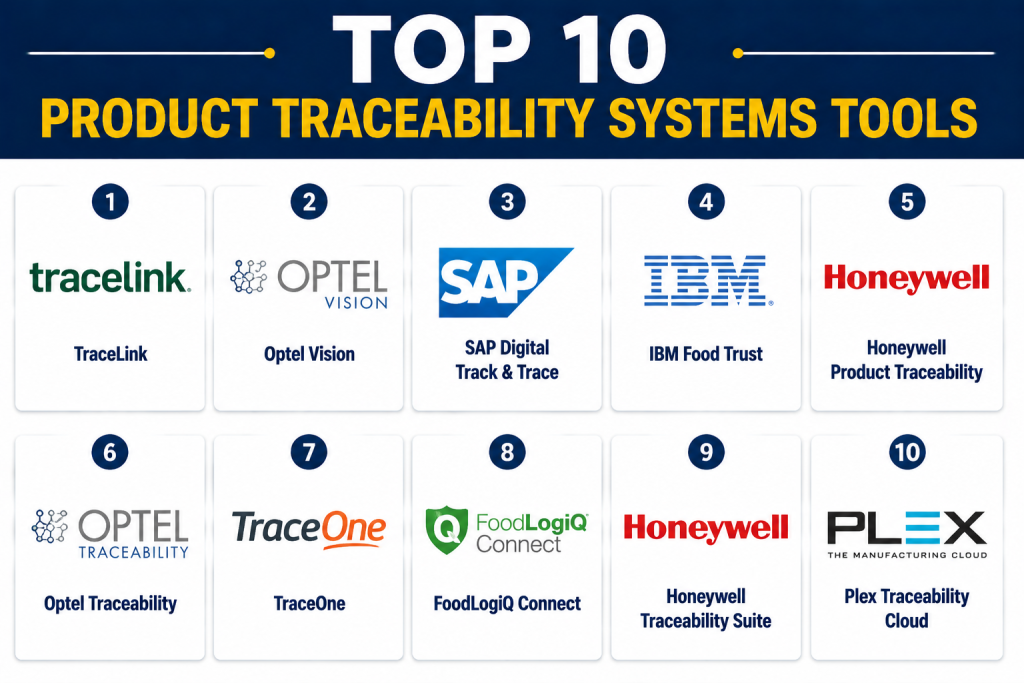
Top 10 Product Traceability Systems Tools
1- TraceLink
Short description: TraceLink provides a cloud-based platform for end-to-end product traceability, focusing on pharmaceuticals and medical devices. It enables real-time visibility and regulatory compliance across the supply chain.
Key Features
- Serialization and lot tracking
- Regulatory compliance management
- Recall and incident management
- Multi-tier supplier traceability
- Integration with ERP and MES systems
- Real-time analytics dashboards
Pros
- Strong regulatory compliance focus
- Cloud-native and scalable
Cons
- Premium pricing for smaller operations
- Requires onboarding for complex workflows
Platforms / Deployment
- Web / Cloud
Security & Compliance
- SSO, MFA, encryption
- ISO 27001, SOC 2, FDA compliance
Integrations & Ecosystem
Integrates with ERP, MES, and WMS systems:
- SAP, Oracle ERP
- Manufacturing execution systems
- API connectivity for suppliers and partners
Support & Community
Comprehensive documentation, training programs, and a strong global community.
2- Optel Vision
Short description: Optel Vision delivers product traceability solutions for life sciences, food, and beverage industries, enabling end-to-end visibility, compliance, and quality control.
Key Features
- Lot and batch tracking
- Serialization and aggregation
- Compliance reporting
- Recall management
- Real-time supply chain monitoring
- Integration with ERP and MES
Pros
- Suitable for regulated industries
- Real-time visibility improves operational control
Cons
- Implementation complexity
- Premium pricing
Platforms / Deployment
- Web / Cloud
Security & Compliance
- Encryption, audit logs
- ISO 9001, ISO 27001, FDA, EU FMD
Integrations & Ecosystem
- ERP and MES integration
- Quality management systems
- Supplier and partner connectivity
Support & Community
Professional onboarding, training, and dedicated support.
3- SAP Digital Track & Trace
Short description: SAP Digital Track & Trace helps enterprises monitor products across manufacturing, distribution, and retail. Ideal for global companies needing compliance and traceability at scale.
Key Features
- End-to-end product traceability
- Batch and serial tracking
- Regulatory compliance management
- Recall management and reporting
- Analytics dashboards
- Integration with SAP ERP and supply chain systems
Pros
- Tight ERP integration
- Supports multi-tier, global traceability
Cons
- High implementation complexity
- Premium pricing
Platforms / Deployment
- Web / Cloud / On-premises
Security & Compliance
- SSO, encryption, audit logs
- ISO 27001, SOC 2
Integrations & Ecosystem
- SAP ERP, WMS, MES
- API support for logistics partners
- Analytics platforms
Support & Community
Comprehensive SAP documentation, support tiers, active user community.
4- IBM Food Trust
Short description: IBM Food Trust focuses on product traceability for the food and beverage industry. It offers blockchain-based immutable records for supply chain transparency.
Key Features
- Blockchain-enabled traceability
- Batch and lot tracking
- Supplier and partner verification
- Recall management
- Real-time reporting and dashboards
Pros
- Immutable record for enhanced trust
- Optimized food supply chain visibility
Cons
- Blockchain complexity may require training
- Costly for smaller producers
Platforms / Deployment
- Web / Cloud
Security & Compliance
- Encryption, audit logs
- Not publicly stated
Integrations & Ecosystem
- ERP and WMS integration
- IoT sensors for tracking
- API connectivity for suppliers
Support & Community
Varies / Not publicly stated; professional onboarding included.
5- Honeywell Product Traceability
Short description: Honeywell provides traceability software with a focus on manufacturing and industrial goods, enabling end-to-end tracking and regulatory compliance.
Key Features
- Serial and batch tracking
- Quality and regulatory compliance
- Recall management
- Integration with MES and ERP
- Analytics and reporting dashboards
Pros
- Strong industrial manufacturing focus
- Scalable across multi-site operations
Cons
- Complex setup for smaller manufacturers
- Premium pricing
Platforms / Deployment
- Web / Cloud / Hybrid
Security & Compliance
- SSO, encryption
- ISO 27001, SOC 2
Integrations & Ecosystem
- ERP and MES connectors
- WMS integration
- Supplier network API
Support & Community
Documentation, onboarding services, dedicated support.
6- Optel Traceability
Short description: Optel Traceability supports batch and serial-level monitoring for pharmaceutical and medical device manufacturers, offering regulatory compliance and supply chain transparency.
Key Features
- Batch and serial tracking
- Regulatory reporting
- Recall management
- Supplier compliance verification
- Analytics dashboards
- ERP integration
Pros
- Supports highly regulated industries
- Cloud-based and scalable
Cons
- Implementation requires technical expertise
- Premium pricing
Platforms / Deployment
- Web / Cloud
Security & Compliance
- Encryption, SSO
- ISO 27001, FDA
Integrations & Ecosystem
- ERP and MES systems
- Supplier and distributor connectivity
- Analytics and reporting APIs
Support & Community
Professional onboarding, training, and customer support.
7- TraceOne
Short description: TraceOne offers product traceability solutions for food, beverage, and consumer packaged goods, focusing on compliance and supply chain collaboration.
Key Features
- Batch and lot tracking
- Supplier compliance verification
- Quality and regulatory compliance
- Recall and incident management
- Real-time supply chain visibility
Pros
- Enhances collaboration with suppliers
- Cloud-based visibility for global operations
Cons
- Limited to food and CPG industries
- May require integration support
Platforms / Deployment
- Web / Cloud
Security & Compliance
- Encryption, audit logs
- Not publicly stated
Integrations & Ecosystem
- ERP and WMS connectors
- Supplier APIs
- Reporting dashboards
Support & Community
Documentation and professional services included.
8- FoodLogiQ Connect
Short description: FoodLogiQ Connect is a cloud-based product traceability solution designed for food and beverage companies, enabling batch tracking, compliance, and recall readiness.
Key Features
- Batch and lot tracking
- Supplier compliance monitoring
- Recall management and alerts
- Regulatory reporting
- Mobile and IoT sensor integration
Pros
- Cloud-native and scalable
- Focused on food industry compliance
Cons
- Limited for other industries
- Premium pricing for small producers
Platforms / Deployment
- Web / Cloud
Security & Compliance
- Encryption, SSO
- Not publicly stated
Integrations & Ecosystem
- ERP, WMS, MES integration
- Supplier network connectivity
- API support
Support & Community
Professional onboarding and support included.
9- Honeywell Traceability Suite
Short description: A comprehensive traceability solution for industrial manufacturing and pharmaceuticals, enabling batch, lot, and serial tracking with compliance management.
Key Features
- Serial and batch tracking
- Regulatory compliance management
- Recall readiness
- Analytics and reporting
- Integration with MES and ERP
Pros
- Strong compliance and regulatory coverage
- Scalable across multiple production sites
Cons
- Complex setup for small manufacturers
- High cost
Platforms / Deployment
- Web / Cloud / Hybrid
Security & Compliance
- SSO, encryption
- ISO 27001, SOC 2
Integrations & Ecosystem
- ERP and MES systems
- WMS and supplier connectivity
- Analytics dashboards
Support & Community
Documentation, training, and dedicated support.
10- Plex Traceability Cloud
Short description: Plex Traceability Cloud provides end-to-end visibility for manufacturers, tracking products from raw materials to finished goods, with focus on compliance and analytics.
Key Features
- Lot, batch, and serial tracking
- Regulatory compliance
- Recall management
- Real-time dashboards and reporting
- ERP and MES integration
Pros
- Cloud-native and scalable
- Optimized for manufacturing operations
Cons
- Implementation complexity
- Premium pricing
Platforms / Deployment
- Web / Cloud
Security & Compliance
- Encryption, SSO
- Not publicly stated
Integrations & Ecosystem
- ERP, MES, WMS connectors
- Supplier and distributor APIs
- Analytics dashboards
Support & Community
Professional onboarding, training, and support services.
Comparison Table (Top 10)
| Tool Name | Best For | Platform(s) Supported | Deployment | Standout Feature | Public Rating |
|---|---|---|---|---|---|
| TraceLink | Pharma & medical devices | Web | Cloud | End-to-end traceability | N/A |
| Optel Vision | Life sciences & F&B | Web | Cloud | Multi-tier supply chain visibility | N/A |
| SAP Digital Track & Trace | Multinational enterprises | Web | Cloud / On-premises | ERP integration & global traceability | N/A |
| IBM Food Trust | Food & beverage | Web | Cloud | Blockchain-based traceability | N/A |
| Honeywell Product Traceability | Manufacturing | Web | Cloud / Hybrid | Industrial manufacturing focus | N/A |
| Optel Traceability | Pharma & medical devices | Web | Cloud | Regulatory compliance automation | N/A |
| TraceOne | Food & CPG | Web | Cloud | Supplier collaboration & traceability | N/A |
| FoodLogiQ Connect | Food & beverage | Web | Cloud | Batch tracking & recall readiness | N/A |
| Honeywell Traceability Suite | Industrial & pharma | Web | Cloud / Hybrid | Multi-site compliance & reporting | N/A |
| Plex Traceability Cloud | Manufacturing | Web | Cloud | End-to-end visibility & analytics | N/A |
Evaluation & Scoring of Product Traceability Tools
| Tool Name | Core (25%) | Ease (15%) | Integrations (15%) | Security (10%) | Performance (10%) | Support (10%) | Value (15%) | Weighted Total (0–10) |
|---|---|---|---|---|---|---|---|---|
| TraceLink | 9 | 7 | 9 | 8 | 9 | 8 | 7 | 8.3 |
| Optel Vision | 8 | 7 | 8 | 7 | 8 | 7 | 7 | 7.6 |
| SAP Digital Track & Trace | 9 | 7 | 9 | 9 | 9 | 8 | 7 | 8.3 |
| IBM Food Trust | 8 | 7 | 7 | 7 | 8 | 7 | 7 | 7.4 |
| Honeywell Product Traceability | 8 | 7 | 8 | 7 | 8 | 7 | 7 | 7.6 |
| Optel Traceability | 8 | 7 | 7 | 7 | 8 | 7 | 7 | 7.5 |
| TraceOne | 7 | 8 | 7 | 6 | 7 | 7 | 7 | 7.0 |
| FoodLogiQ Connect | 7 | 8 | 7 | 6 | 7 | 6 | 7 | 7.0 |
| Honeywell Traceability Suite | 8 | 7 | 8 | 7 | 8 | 7 | 7 | 7.6 |
| Plex Traceability Cloud | 8 | 7 | 8 | 7 | 8 | 7 | 7 | 7.6 |
Interpretation: Weighted scores provide a comparative overview based on core features, ease of use, integrations, security, performance, support, and value. Selection should consider the industry, regulatory requirements, and integration needs.
Which Product Traceability Tool Is Right for You?
Solo / Freelancer
- Typically unnecessary unless managing complex product batches; lightweight ERP features may suffice.
SMB
- FoodLogiQ Connect, TraceOne, or Optel Vision provide cloud-based traceability and compliance for smaller manufacturers.
Mid-Market
- Honeywell Product Traceability, Optel Traceability, or Plex Cloud balance operational depth and usability.
Enterprise
- SAP Digital Track & Trace, TraceLink, and Honeywell Traceability Suite offer global visibility, compliance automation, and ERP integration.
Budget vs Premium
- SMBs benefit from TraceOne or FoodLogiQ Connect; enterprises may require SAP or TraceLink for comprehensive features.
Feature Depth vs Ease of Use
- Enterprise tools provide full compliance and traceability but require training; SMB-focused tools prioritize simplicity and quicker adoption.
Integrations & Scalability
- Enterprises need robust ERP, MES, WMS, and supplier network integration; SMBs can rely on API-based connectors.
Security & Compliance Needs
- Ensure SOC 2, ISO 27001, encryption, MFA, and audit logs for sensitive product and supplier data.
Frequently Asked Questions (FAQs)
1- What pricing models are typical?
Most TCS solutions offer subscription-based pricing, often scaled by product volume and modules; enterprise implementations may include onboarding fees.
2- How long does implementation take?
SMBs can implement in weeks; enterprise deployment with ERP/MES integration may take 3–6 months.
3- Can PTS integrate with ERP or MES systems?
Yes, leading platforms provide APIs or prebuilt connectors for ERP, MES, WMS, and analytics platforms.
4- Are AI features common?
AI features include predictive quality alerts, anomaly detection, and automated compliance monitoring.
5- Can these systems handle multi-site operations?
Yes, enterprise-grade platforms provide end-to-end traceability across multiple factories and distribution centers.
6- How secure are PTS platforms?
Security measures often include encryption, SSO/MFA, audit logs, and compliance with ISO 27001 and SOC 2.
7- Do these platforms provide recall management?
Yes, most include tools for rapid identification and recall of affected batches or products.
8- Can these platforms scale with business growth?
Cloud-native solutions are designed to scale from mid-market operations to large global enterprises.
9- What mistakes should be avoided?
Avoid underestimating data integration complexity, skipping employee training, and neglecting audit readiness.
10- Are PTS platforms necessary for small manufacturers?
Not always; small-scale operations with simple workflows may manage traceability with ERP modules or spreadsheets.
Conclusion
Product Traceability Systems are critical for ensuring supply chain transparency, regulatory compliance, and quality assurance. Enterprise solutions like SAP Digital Track & Trace, TraceLink, and Honeywell Traceability Suite provide comprehensive global visibility and compliance automation, while mid-market solutions like Optel Vision, Plex Cloud, and FoodLogiQ Connect offer scalable, user-friendly platforms for smaller manufacturers. shortlist based on production complexity and industry requirements, run a pilot to validate integration and compliance features, and scale deployment while monitoring traceability accuracy and regulatory adherence.
