Introduction
Review management platforms are software solutions designed to help businesses capture, manage, and analyze customer reviews from multiple online sources. These platforms centralize reviews from Google, Yelp, industry directories, e-commerce sites, and social media to give organizations actionable insights into customer sentiment, satisfaction, and brand perception. Simply put, they allow companies to monitor what their customers are saying, respond to feedback quickly, and improve overall reputation.
In , customer reviews remain one of the most powerful factors influencing purchase decisions, search rankings, and brand trust. Businesses of all sizes rely on review management platforms to collect authentic feedback, manage reputational risk, and measure the impact of customer experience initiatives. Modern platforms incorporate AI, automation, and integrations with CRM and marketing systems to make review monitoring more proactive and scalable.
Real-World Use Cases:
- Reputation management: Monitor and respond to negative reviews before they escalate.
- Customer experience improvement: Identify recurring complaints or praise to inform product and service strategies.
- Multi-location management: Track and compare reviews across franchises, stores, or offices.
- Marketing amplification: Showcase positive reviews to boost trust and conversion rates.
- Competitor benchmarking: Analyze how your reviews compare to industry peers.
What Buyers Should Evaluate:
- Source coverage (Google, Yelp, Trustpilot, Amazon, social media)
- Review collection automation and solicitation features
- Real-time alerts and sentiment analysis
- Response workflow and task assignment
- Analytics dashboards and reporting
- Integration with CRM, helpdesk, and marketing systems
- Multi-location or multi-brand support
- AI-driven insights and predictive analytics
- User permissions and collaboration features
- Pricing model and scalability
Best for: Customer experience teams, marketing and PR teams, operations managers, franchise owners, and brand managers looking to actively manage and enhance online reputation.
Not ideal for: Organizations with minimal customer-facing interactions or where reviews are not a key business driver.
Key Trends in Review Management Platforms
- AI-driven sentiment and intent analysis: Advanced NLP models help detect nuanced tone and identify key drivers of customer satisfaction or dissatisfaction.
- Automated review solicitation: Platforms can trigger requests for reviews post-purchase or service completion, increasing feedback volume.
- Multi-channel review monitoring: Consolidates reviews from social, search, e-commerce, and niche industry sites.
- Real-time alerts and escalation: Immediate notifications for negative reviews, enabling faster response.
- Competitive benchmarking: Compare review ratings, sentiment, and volume across competitors.
- Customizable dashboards: Tailored reporting for executives, managers, and frontline teams.
- Integration with CRM and marketing tools: Synchronizes reviews and responses with customer profiles and campaigns.
- Predictive reputation analytics: Forecast potential reputation risks or opportunities based on trends.
- Compliance and privacy management: Ensures GDPR, CCPA, and other regulatory requirements are met in review handling.
- Mobile management: Mobile apps for responding to reviews on the go.
How We Selected These Tools (Methodology)
- Evaluated platform coverage, including the range of sites monitored and review collection methods.
- Assessed core features, such as automated review solicitation, response workflow, and sentiment analytics.
- Reviewed ease of use, including setup, dashboards, and user onboarding.
- Analyzed integration capabilities with CRM, helpdesk, marketing, and analytics platforms.
- Considered scalability for multi-location operations and large datasets.
- Evaluated security and compliance, including role-based access and data governance.
- Reviewed reporting and analytics capabilities, including real-time insights and dashboards.
- Prioritized market relevance for 2026, including AI capabilities, automation, and predictive insights.
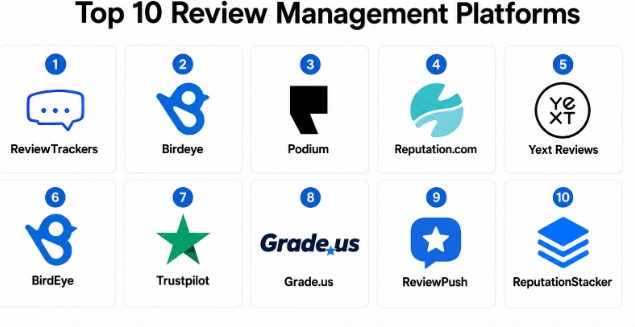
Top 10 Review Management Platforms
#1 — ReviewTrackers
Short description: ReviewTrackers is a platform designed for businesses to monitor and respond to customer reviews across multiple online channels, offering robust analytics and automated alerts.
Key Features
- Aggregates reviews from hundreds of review sites
- Real-time alerts for new reviews
- Sentiment and trend analysis
- Multi-location review management
- Centralized response dashboard
- Reporting and export options
Pros
- Strong multi-location management
- Real-time alerting and response workflow
Cons
- Focused primarily on online reviews, less on social media sentiment
- Advanced analytics require higher-tier subscriptions
Platforms / Deployment
- Web / iOS / Android
- Cloud
Security & Compliance
- Role-based access and encrypted data
- Not publicly stated for certifications
Integrations & Ecosystem
Integrates with CRM, helpdesk, and analytics tools for a unified workflow.
Support & Community
Documentation, training resources, and customer support.
#2 — Birdeye
Short description: Birdeye helps businesses collect, monitor, and respond to reviews across multiple platforms while enabling automated review requests to improve customer feedback and brand reputation.
Key Features
- Automated review solicitation
- Multi-platform monitoring
- Sentiment analysis and reporting
- Response workflows and task assignment
- Dashboard analytics
- Competitor benchmarking
Pros
- Automation improves review volume and engagement
- Multi-channel coverage including social and review sites
Cons
- Enterprise pricing can be high for small businesses
- Advanced reporting requires setup
Platforms / Deployment
- Web / iOS / Android
- Cloud
Security & Compliance
- Role-based access
- Encryption
- Not publicly stated
Integrations & Ecosystem
CRM, helpdesk, and marketing integrations available.
Support & Community
Customer success team and documentation.
#3 — Podium
Short description: Podium centralizes customer interactions, including review collection, messaging, and reputation management, with an emphasis on small and medium businesses.
Key Features
- Automated review requests via SMS and email
- Review monitoring across major platforms
- Messaging for customer engagement
- Dashboard reporting
- Multi-location management
Pros
- Easy for SMB adoption
- SMS-based engagement improves response rates
Cons
- Limited AI-driven insights compared to enterprise tools
- Less suited for large multi-brand organizations
Platforms / Deployment
- Web / iOS / Android
- Cloud
Security & Compliance
- Standard encryption and access controls
- Not publicly stated
Integrations & Ecosystem
Integrates with CRM and support platforms.
Support & Community
Documentation, tutorials, and customer support.
#4 — Reputation.com
Short description: Reputation.com offers enterprise-level review and reputation management with multi-channel monitoring, sentiment analysis, and automated workflows for large organizations.
Key Features
- Multi-channel review aggregation
- Sentiment analysis and trend detection
- Response workflow automation
- Competitive benchmarking
- Reporting and dashboards
Pros
- Enterprise-grade features and scalability
- Advanced analytics for decision-making
Cons
- Complex setup
- Pricing may be prohibitive for SMBs
Platforms / Deployment
- Web / Mobile
- Cloud
Security & Compliance
- Encryption and role-based access
- Not publicly stated
Integrations & Ecosystem
CRM, analytics, and marketing platforms.
Support & Community
Documentation and enterprise support.
#5 — Yext Reviews
Short description: Yext Reviews integrates review management with local business listings, helping multi-location brands manage reputation and drive customer feedback.
Key Features
- Review collection and monitoring
- Local listings integration
- Response management
- Analytics and sentiment reporting
Pros
- Strong local business focus
- Integrated with digital listings
Cons
- Limited social media monitoring
- Enterprise pricing
Platforms / Deployment
- Web / Mobile
- Cloud
Security & Compliance
- Access control and encryption
- Not publicly stated
Integrations & Ecosystem
Listings platforms, CRM, and analytics tools.
Support & Community
Documentation and support services.
#6 — BirdEye
Short description: BirdEye provides review monitoring, response, and marketing features, helping businesses improve customer experience and brand perception.
Key Features
- Multi-platform review monitoring
- Automated review requests
- Sentiment analysis
- Dashboard reporting
- Competitor comparison
Pros
- Effective for both SMBs and larger teams
- Automation increases review collection
Cons
- Analytics depth limited for advanced users
- Subscription cost for full features
Platforms / Deployment
- Web / iOS / Android
- Cloud
Security & Compliance
- Role-based access and encryption
- Not publicly stated
Integrations & Ecosystem
CRM, helpdesk, and marketing integrations.
Support & Community
Documentation and support.
#7 — Trustpilot
Short description: Trustpilot is a review platform for customer feedback, also providing tools for collecting, monitoring, and responding to reviews at scale.
Key Features
- Review collection
- Feedback monitoring
- Response tools
- Analytics and dashboards
- Ratings reporting
Pros
- Strong brand recognition for consumer trust
- Review-driven marketing benefits
Cons
- Limited monitoring outside Trustpilot ecosystem
- Less advanced workflow automation
Platforms / Deployment
- Web / Mobile
- Cloud
Security & Compliance
- Encryption and platform protections
- Not publicly stated
Integrations & Ecosystem
CRM and analytics exports.
Support & Community
Support and documentation.
#8 — Grade.us
Short description: Grade.us focuses on automating review collection and syndication across platforms for SMBs and agencies.
Key Features
- Automated review generation
- Multi-platform distribution
- Dashboard reporting
- Template-based responses
Pros
- Affordable and simple to implement
- Automation improves review volume
Cons
- Limited analytics and sentiment insights
- Not ideal for enterprise-scale monitoring
Platforms / Deployment
- Web
- Cloud
Security & Compliance
- Encryption and access controls
- Not publicly stated
Integrations & Ecosystem
CRM, marketing, and helpdesk tools.
Support & Community
Documentation and email support.
#9 — ReviewPush
Short description: ReviewPush centralizes review monitoring for SMBs, allowing alerts, response management, and analytics across multiple review platforms.
Key Features
- Multi-platform review tracking
- Email notifications for new reviews
- Dashboard analytics
- Response workflow
Pros
- Affordable and lightweight
- Simple monitoring and alerting
Cons
- Limited automation
- Less AI-driven analytics
Platforms / Deployment
- Web
- Cloud
Security & Compliance
- Standard encryption and access controls
- Not publicly stated
Integrations & Ecosystem
CRM and reporting exports.
Support & Community
Support documentation and help resources.
#10 — ReputationStacker
Short description: ReputationStacker automates review requests via email and SMS, consolidates incoming reviews, and provides response workflows.
Key Features
- Automated review requests
- Centralized review inbox
- Dashboard reporting
- Multi-location tracking
Pros
- Simplifies review collection and workflow
- Good for SMB and local businesses
Cons
- Limited analytics depth
- Focused primarily on review solicitation
Platforms / Deployment
- Web
- Cloud
Security & Compliance
- Access controls and standard encryption
- Not publicly stated
Integrations & Ecosystem
CRM and reporting tools.
Support & Community
Documentation and support resources.
Comparison Table (Top 10)
| Tool Name | Best For | Platforms Supported | Deployment | Standout Feature | Public Rating |
|---|---|---|---|---|---|
| ReviewTrackers | Multi-location review monitoring | Web, iOS, Android | Cloud | Aggregated reviews | N/A |
| Birdeye | SMB & enterprise review management | Web, iOS, Android | Cloud | Automated review requests | N/A |
| Podium | Customer engagement & reviews | Web, iOS, Android | Cloud | SMS & email review requests | N/A |
| Reputation.com | Enterprise reputation & reviews | Web, Mobile | Cloud | Multi-channel sentiment | N/A |
| Yext Reviews | Local business reviews | Web, Mobile | Cloud | Listings integration | N/A |
| BirdEye | Customer experience & reputation | Web, iOS, Android | Cloud | Automation & alerts | N/A |
| Trustpilot | Consumer reviews & reputation | Web, Mobile | Cloud | Review collection & marketing | N/A |
| Grade.us | SMB & agency automation | Web | Cloud | Review generation | N/A |
| ReviewPush | SMB & local businesses | Web | Cloud | Multi-platform alerts | N/A |
| ReputationStacker | Automated review requests | Web | Cloud | SMS/email review solicitation | N/A |
Evaluation & Scoring of Review Management Platforms
| Tool Name | Core Features | Ease | Integrations | Security | Performance | Support | Value | Weighted Total |
|---|---|---|---|---|---|---|---|---|
| ReviewTrackers | 9 | 8 | 8 | 8 | 9 | 8 | 8 | 8.4 |
| Birdeye | 9 | 8 | 8 | 8 | 8 | 8 | 8 | 8.3 |
| Podium | 8 | 9 | 8 | 7 | 8 | 8 | 8 | 8.1 |
| Reputation.com | 9 | 7 | 8 | 8 | 9 | 8 | 7 | 8.1 |
| Yext Reviews | 8 | 8 | 8 | 7 | 8 | 7 | 7 | 7.6 |
| BirdEye | 8 | 8 | 7 | 7 | 8 | 7 | 8 | 7.7 |
| Trustpilot | 7 | 8 | 7 | 7 | 7 | 7 | 7 | 7.2 |
| Grade.us | 7 | 9 | 7 | 7 | 7 | 7 | 8 | 7.6 |
| ReviewPush | 7 | 9 | 7 | 7 | 7 | 7 | 7 | 7.2 |
| ReputationStacker | 6 | 9 | 6 | 7 | 7 | 7 | 7 | 7.0 |
Which Review Management Tool Is Right for You?
Solo / Freelancer
- ReputationStacker, ReviewPush, and Grade.us are affordable, simple-to-use solutions for single-location businesses or personal brands.
SMB
- Podium, BirdEye, Birdeye, and ReviewTrackers offer automation and multi-platform review collection suitable for small teams.
Mid-Market
- Yext Reviews, Podium, and BirdEye provide workflow, analytics, and multi-location support for growing companies.
Enterprise
- Reputation.com, ReviewTrackers, and Birdeye offer enterprise-grade automation, sentiment analytics, multi-channel integration, and reporting dashboards.
Budget vs Premium
- Budget: ReputationStacker, Grade.us, ReviewPush
- Premium: Reputation.com, ReviewTrackers, Birdeye
Feature Depth vs Ease of Use
- Depth: Reputation.com, ReviewTrackers, Birdeye
- Ease: Podium, Grade.us, ReputationStacker
Integrations & Scalability
- Enterprise solutions integrate with CRM, marketing automation, helpdesk, and analytics platforms for scalable workflows.
Security & Compliance Needs
- Look for encryption, role-based access, and privacy governance for regulated industries.
Frequently Asked Questions (FAQs)
1— Do review management platforms increase review volume?
Yes — automated review requests and follow-up campaigns increase feedback collection and improve overall review volume.
2— Can these platforms respond to reviews automatically?
Most platforms provide templates and workflows but require human review for personalized responses.
3— Are these tools useful for multi-location businesses?
Yes — platforms like ReviewTrackers, Birdeye, and Podium offer multi-location monitoring and management dashboards.
4— How do I measure ROI from reviews?
Track engagement, sentiment trends, star ratings, conversion influence, and search visibility improvements.
5— Do platforms support multiple languages?
Many enterprise platforms do, enabling global monitoring and sentiment analysis.
6— Can reviews be integrated with CRM?
Yes — most platforms offer integrations to sync reviews and customer data for unified profiles.
7— How quickly are alerts triggered?
Real-time alerts are standard; some platforms notify within minutes of new reviews.
8— Do they provide competitor insights?
Yes — tools like Reputation.com and Birdeye allow benchmarking against competitor reviews and sentiment.
9— Are analytics customizable?
Yes — dashboards, reports, and export options can often be tailored for specific stakeholders.
10— Are mobile apps available?
Most leading platforms include mobile apps for on-the-go monitoring and responses.
Conclusion
Review management platforms are critical for managing brand reputation, improving customer experience, and influencing purchase decisions. Small teams benefit from lightweight, affordable tools like ReputationStacker, ReviewPush, and Grade.us. SMBs gain automation and multi-channel capabilities through Podium, BirdEye, and Birdeye, while mid-market teams benefit from Yext Reviews and Podium. Enterprise organizations can leverage Reputation.com, ReviewTrackers, and Birdeye for multi-location, AI-driven insights and reporting dashboards.
