Introduction
Route Dispatch & Scheduling Software helps organizations plan, assign, and optimize routes and schedules for field teams, deliveries, technicians, and mobile workers. These platforms combine routing algorithms, real-time tracking, workforce scheduling, and dispatch automation to ensure the right person reaches the right place at the right time with maximum efficiency.
In and beyond, businesses are under pressure to reduce fuel costs, improve delivery speed, and manage dynamic workforce operations. Manual scheduling using spreadsheets is no longer scalable. Modern route dispatch platforms use AI-driven optimization, real-time traffic data, and predictive scheduling to improve operational performance.
These tools are widely used across logistics, last-mile delivery, field services, utilities, healthcare visits, and on-demand workforce operations.
Real-world use cases include:
- Last-mile delivery optimization for eCommerce and logistics
- Field technician scheduling for maintenance and repairs
- Healthcare home visits and mobile care scheduling
- Utility inspection and service route planning
- On-demand workforce dispatch (cleaning, repair, installation)
- Fleet management and driver route optimization
What buyers should evaluate:
- Route optimization accuracy and AI capabilities
- Real-time tracking and ETA updates
- Scheduling flexibility and automation rules
- Mobile app support for field teams
- Integration with CRM, ERP, and logistics systems
- Multi-stop route planning efficiency
- Driver communication and dispatch tools
- Scalability for large fleets or workforce teams
- Offline support for remote operations
- Reporting and analytics dashboards
Best for: Logistics companies, delivery services, field service organizations, healthcare providers, and enterprises managing mobile workforce operations.
Not ideal for: Very small teams with minimal routing needs or businesses without field operations.
Key Trends in Route Dispatch & Scheduling Software
- AI-powered dynamic route optimization in real time
- Predictive scheduling based on demand forecasting
- Electric vehicle (EV) route optimization support
- Hyperlocal micro-dispatching for faster fulfillment
- Integration with IoT-enabled fleet tracking systems
- Automated workforce scheduling using machine learning
- Real-time ETA recalculation with live traffic data
- Sustainability-focused route optimization (fuel reduction)
- Unified field service + logistics platforms
- Voice-assisted dispatching for field operators
How We Selected These Tools (Methodology)
- Market adoption in logistics and field service industries
- Accuracy of route optimization algorithms
- Real-time dispatch and scheduling capabilities
- Integration with fleet, CRM, and ERP systems
- Mobile workforce usability and app experience
- Scalability for enterprise-grade operations
- Reliability of tracking and reporting systems
- Security and compliance readiness
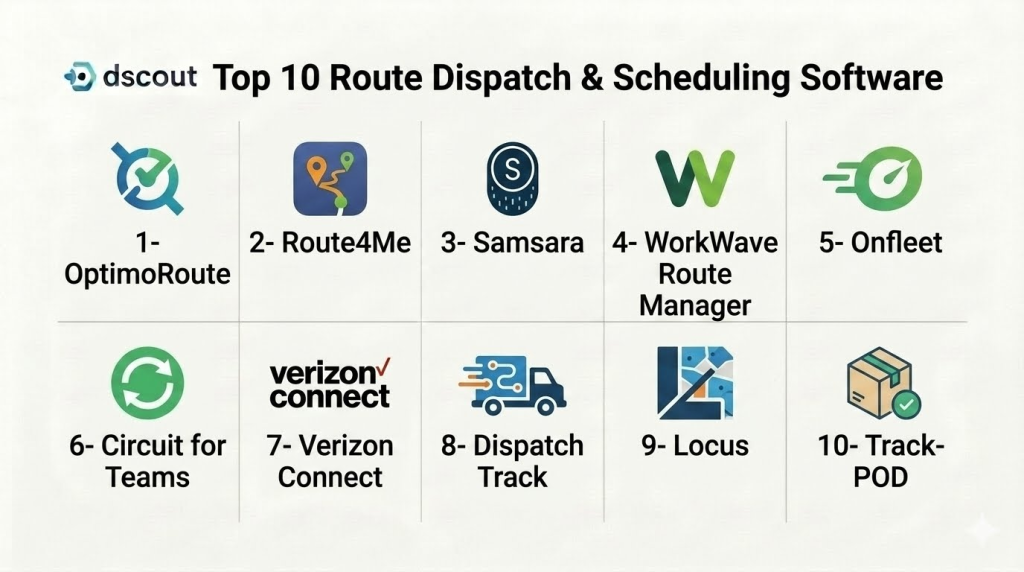
Top 10 Route Dispatch & Scheduling Software
1- OptimoRoute
Short description:
OptimoRoute is a powerful route planning and scheduling platform designed for delivery and field service businesses. It helps optimize multi-stop routes, automate scheduling, and improve fleet efficiency. The platform is widely used in logistics, retail delivery, and service industries. It supports real-time tracking and dynamic route adjustments. OptimoRoute is known for its strong optimization algorithms. It is suitable for SMB and mid-market businesses.
Key Features
- AI-based route optimization
- Multi-stop scheduling
- Real-time driver tracking
- Delivery time windows
- Mobile driver app
- Automated dispatching
- Performance analytics
Pros
- Excellent route optimization
- Easy to use interface
- Strong scheduling automation
Cons
- Limited enterprise customization
- Requires internet for full features
- Not ideal for complex fleet hierarchies
Platforms / Deployment
- Web / Mobile
- Cloud
Security & Compliance
- SSO
- MFA
- Encryption
- Audit logs
Integrations & Ecosystem
- Shopify
- WooCommerce
- CRM systems
- APIs
- Logistics tools
- ERP systems
Support & Community
Good SMB and mid-market support.
2- Route4Me
Short description:
Route4Me is one of the most widely used route optimization platforms for delivery and field service operations. It provides AI-powered route planning, dispatching, and mobile workforce management. The platform supports large-scale fleet operations. It is widely adopted in logistics and transportation industries. Route4Me is known for flexibility and scalability. It is suitable for enterprises and mid-sized companies.
Key Features
- Route optimization engine
- Dynamic dispatching
- Mobile driver app
- Real-time tracking
- Multi-depot routing
- API integration
- Delivery analytics
Pros
- Highly scalable platform
- Strong optimization engine
- Good enterprise adoption
Cons
- Complex configuration
- Pricing can scale quickly
- UI can feel dense
Platforms / Deployment
- Web / Mobile
- Cloud
Security & Compliance
- SSO
- MFA
- Encryption
- Audit logs
- RBAC
Integrations & Ecosystem
- Salesforce
- SAP
- Shopify
- APIs
- ERP systems
- Fleet management tools
Support & Community
Strong enterprise support and documentation.
3- Samsara
Short description:
Samsara is a connected operations platform that includes fleet tracking, route dispatch, and workforce scheduling capabilities. It is widely used in transportation, logistics, and field service industries. The platform integrates IoT sensors, GPS tracking, and AI analytics. It provides real-time visibility into fleet operations. Samsara is known for enterprise-grade scalability. It is ideal for large fleet management.
Key Features
- Real-time GPS tracking
- Route optimization
- Fleet telematics
- Driver behavior monitoring
- Dispatch automation
- AI-powered insights
- Mobile workforce tools
Pros
- Strong IoT integration
- Excellent real-time tracking
- Enterprise scalability
Cons
- High cost for small fleets
- Complex setup
- Requires hardware integration
Platforms / Deployment
- Web / Mobile
- Cloud + IoT
Security & Compliance
- SSO
- MFA
- Encryption
- Audit logs
- Compliance: Not publicly stated
Integrations & Ecosystem
- ERP systems
- CRM platforms
- Fleet sensors
- APIs
- Logistics software
- Cloud analytics tools
Support & Community
Strong enterprise-level support ecosystem.
4- WorkWave Route Manager
Short description:
WorkWave Route Manager is a route optimization and dispatch platform designed for field service and delivery businesses. It helps automate scheduling, dispatching, and route planning for mobile teams. The platform is widely used in service industries such as pest control, HVAC, and cleaning services. It provides strong route efficiency and workforce coordination. WorkWave is known for industry-specific solutions. It is suitable for SMB and enterprise field service operations.
Key Features
- Route optimization
- Scheduling automation
- Dispatch management
- Mobile workforce tracking
- Customer notifications
- Performance analytics
- Driver app
Pros
- Strong field service focus
- Easy scheduling tools
- Good customer communication features
Cons
- Limited customization
- UI can feel outdated
- Pricing varies by usage
Platforms / Deployment
- Web / Mobile
- Cloud
Security & Compliance
- SSO
- Encryption
- Audit logs
- Access controls
Integrations & Ecosystem
- CRM tools
- ERP systems
- APIs
- Accounting systems
- Field service tools
- Marketing platforms
Support & Community
Good industry-specific support.
5- Onfleet
Short description:
Onfleet is a modern delivery management platform focused on last-mile logistics and real-time dispatching. It provides route optimization, driver tracking, and customer communication tools. The platform is widely used by delivery companies, restaurants, and logistics startups. Onfleet is known for its clean UI and ease of use. It supports real-time tracking and analytics. It is ideal for fast-growing delivery businesses.
Key Features
- Route optimization
- Real-time tracking
- Driver mobile app
- Customer notifications
- Dispatch automation
- Delivery analytics
- Proof of delivery
Pros
- Very easy to use
- Strong last-mile delivery focus
- Great UI experience
Cons
- Limited enterprise depth
- Not ideal for complex fleet hierarchies
- Pricing can grow with scale
Platforms / Deployment
- Web / Mobile
- Cloud
Security & Compliance
- SSO
- MFA
- Encryption
- Audit logs
Integrations & Ecosystem
- Shopify
- APIs
- CRM systems
- Delivery platforms
- ERP tools
- Analytics systems
Support & Community
Strong SMB and delivery-focused support.
6- Circuit for Teams
Short description:
Circuit for Teams is a route planning and delivery optimization tool designed for small and mid-sized teams. It helps optimize multi-stop routes and improve delivery efficiency. The platform is widely used by couriers, field workers, and small logistics companies. It provides simple route planning and mobile navigation. Circuit is known for simplicity and speed. It is ideal for SMB operations.
Key Features
- Multi-stop route optimization
- Mobile navigation
- Delivery scheduling
- Real-time updates
- Driver app
- Address validation
- Route reordering
Pros
- Very easy to use
- Fast route planning
- Affordable for SMBs
Cons
- Limited enterprise features
- Basic analytics
- Not suitable for large fleets
Platforms / Deployment
- Web / Mobile
- Cloud
Security & Compliance
- Encryption
- Access controls
- Audit logs
Integrations & Ecosystem
- Google Maps
- APIs
- CRM tools
- Delivery apps
- Logistics systems
Support & Community
Good SMB-focused support.
7- Verizon Connect
Short description:
Verizon Connect is a comprehensive fleet management and route optimization platform designed for enterprise logistics and transportation operations. It provides real-time tracking, dispatch management, and route optimization. The platform is widely used in large fleet operations. It integrates telematics and GPS tracking systems. Verizon Connect is known for enterprise reliability. It is suitable for large-scale logistics networks.
Key Features
- Fleet tracking
- Route optimization
- Dispatch management
- Driver behavior analytics
- GPS telematics
- Mobile workforce tools
- Reporting dashboards
Pros
- Strong enterprise-grade system
- Excellent fleet tracking
- Reliable infrastructure
Cons
- High cost
- Complex implementation
- Requires hardware setup
Platforms / Deployment
- Web / Mobile
- Cloud + IoT
Security & Compliance
- SSO
- MFA
- Encryption
- Audit logs
- Compliance: Not publicly stated
Integrations & Ecosystem
- Fleet hardware systems
- ERP tools
- CRM platforms
- APIs
- Logistics systems
- Analytics platforms
Support & Community
Strong enterprise support.
8- DispatchTrack
Short description:
DispatchTrack is a delivery management and route optimization platform designed for logistics and home delivery operations. It provides real-time scheduling, tracking, and customer communication features. The platform is widely used in retail, furniture delivery, and logistics sectors. It improves delivery accuracy and efficiency. DispatchTrack is known for enterprise-grade delivery orchestration. It is ideal for complex delivery networks.
Key Features
- Route optimization
- Delivery scheduling
- Real-time tracking
- Customer notifications
- Proof of delivery
- Dispatch automation
- Analytics dashboards
Pros
- Strong delivery orchestration
- Good enterprise scalability
- Reliable tracking system
Cons
- Complex onboarding
- Higher pricing tiers
- UI can be dense
Platforms / Deployment
- Web / Mobile
- Cloud
Security & Compliance
- SSO
- MFA
- Encryption
- Audit logs
Integrations & Ecosystem
- ERP systems
- CRM platforms
- APIs
- Warehouse systems
- Logistics tools
- E-commerce platforms
Support & Community
Strong enterprise logistics support.
9- Locus
Short description:
Locus is an AI-powered logistics and route optimization platform designed for large-scale delivery and supply chain operations. It uses machine learning to optimize routes, reduce costs, and improve delivery efficiency. The platform is widely used by global logistics companies. It provides real-time decision-making capabilities. Locus is known for its AI-driven optimization engine. It is suitable for enterprise logistics networks.
Key Features
- AI route optimization
- Real-time dispatching
- Fleet tracking
- Predictive analytics
- Multi-stop optimization
- Delivery scheduling
- Performance insights
Pros
- Strong AI capabilities
- Excellent scalability
- Cost optimization focus
Cons
- Complex setup
- Enterprise pricing
- Requires data maturity
Platforms / Deployment
- Web / Mobile
- Cloud
Security & Compliance
- SSO
- MFA
- Encryption
- Audit logs
Integrations & Ecosystem
- ERP systems
- CRM platforms
- APIs
- Logistics systems
- E-commerce platforms
- Data warehouses
Support & Community
Strong enterprise support ecosystem.
10- Track-POD
Short description:
Track-POD is a delivery and route management platform designed for proof-of-delivery workflows and route optimization. It helps businesses manage dispatching, delivery tracking, and customer communication. The platform is widely used in logistics and retail distribution. It provides mobile apps for drivers and real-time updates. Track-POD is known for simplicity and efficiency. It is suitable for SMB and mid-market logistics teams.
Key Features
- Route optimization
- Proof of delivery
- Driver mobile app
- Dispatch automation
- Real-time tracking
- Delivery scheduling
- Reporting tools
Pros
- Easy to use
- Strong POD features
- Good SMB fit
Cons
- Limited enterprise features
- Basic customization
- Not suitable for complex fleets
Platforms / Deployment
- Web / Mobile
- Cloud
Security & Compliance
- Encryption
- Access controls
- Audit logs
Integrations & Ecosystem
- ERP systems
- CRM tools
- APIs
- Logistics platforms
- E-commerce systems
- Analytics tools
Support & Community
Good SMB and mid-market support.
Comparison Table
| Tool Name | Best For | Platform(s) Supported | Deployment | Standout Feature | Public Rating |
|---|---|---|---|---|---|
| OptimoRoute | SMB logistics | Web/Mobile | Cloud | AI route optimization | N/A |
| Route4Me | Enterprise routing | Web/Mobile | Cloud | Scalable optimization | N/A |
| Samsara | Fleet operations | Web/Mobile | Cloud + IoT | Telematics integration | N/A |
| WorkWave | Field services | Web/Mobile | Cloud | Service scheduling | N/A |
| Onfleet | Last-mile delivery | Web/Mobile | Cloud | Simple delivery tracking | N/A |
| Circuit | SMB couriers | Web/Mobile | Cloud | Easy route planning | N/A |
| Verizon Connect | Fleet enterprises | Web/Mobile | Cloud + IoT | Fleet telematics | N/A |
| DispatchTrack | Delivery logistics | Web/Mobile | Cloud | Delivery orchestration | N/A |
| Locus | Enterprise logistics | Web/Mobile | Cloud | AI optimization | N/A |
| Track-POD | SMB delivery | Web/Mobile | Cloud | Proof of delivery | N/A |
Evaluation & Scoring of Route Dispatch & Scheduling Software
| Tool Name | Core | Ease | Integrations | Security | Performance | Support | Value | Weighted Total |
|---|---|---|---|---|---|---|---|---|
| OptimoRoute | 9.0 | 9.0 | 9.0 | 9.0 | 9.0 | 8.5 | 9.0 | 8.9 |
| Route4Me | 9.5 | 8.5 | 9.5 | 9.0 | 9.0 | 9.0 | 8.5 | 9.0 |
| Samsara | 9.5 | 8.0 | 9.5 | 9.5 | 9.5 | 9.0 | 8.0 | 9.0 |
| WorkWave | 9.0 | 8.5 | 9.0 | 9.0 | 8.5 | 8.5 | 9.0 | 8.8 |
| Onfleet | 9.0 | 9.5 | 9.0 | 9.0 | 9.0 | 8.5 | 9.0 | 8.9 |
| Circuit | 8.5 | 9.5 | 8.5 | 8.5 | 8.5 | 8.5 | 9.5 | 8.6 |
| Verizon Connect | 9.5 | 8.0 | 9.5 | 9.5 | 9.5 | 9.0 | 8.0 | 9.0 |
| DispatchTrack | 9.0 | 8.5 | 9.0 | 9.0 | 9.0 | 8.5 | 8.5 | 8.8 |
| Locus | 9.5 | 8.0 | 9.5 | 9.5 | 9.5 | 9.0 | 8.0 | 9.0 |
| Track-POD | 8.5 | 9.0 | 8.5 | 8.5 | 8.5 | 8.5 | 9.0 | 8.6 |
These scores show a clear split between enterprise fleet intelligence platforms (Samsara, Locus, Verizon Connect) and SMB-friendly route planners (Circuit, OptimoRoute, Track-POD). Buyers should prioritize based on fleet size, real-time tracking needs, and AI optimization requirements.
Frequently Asked Questions (FAQs)
1. What is route dispatch software?
It is software that helps businesses plan, assign, and optimize routes for deliveries and field operations.
2. Who uses these tools?
Logistics companies, delivery services, field technicians, and fleet operators.
3. Do these tools use AI?
Yes, many modern platforms use AI for route optimization and scheduling.
4. Can they track drivers in real time?
Yes, most tools offer GPS-based real-time tracking.
5. Do they work offline?
Many mobile apps support offline mode for remote areas.
6. Are they suitable for small businesses?
Yes, tools like Circuit and OptimoRoute are ideal for SMBs.
7. Can they integrate with CRM systems?
Yes, most platforms integrate with CRM, ERP, and logistics systems.
8. Do they support multi-stop routing?
Yes, multi-stop optimization is a core feature.
9. Are these tools secure?
Enterprise tools include encryption, SSO, and audit logging.
10. What is the biggest benefit?
The biggest benefit is reduced cost and improved delivery efficiency.
Conclusion
Route Dispatch & Scheduling Software plays a critical role in modern logistics and field service operations by optimizing routes, improving workforce efficiency, and enabling real-time visibility. Platforms like Locus, Samsara, Route4Me, and Verizon Connect offer powerful enterprise-grade capabilities, while OptimoRoute, Circuit, and Track-POD provide simple and efficient solutions for SMBs. The right choice depends on fleet size, operational complexity, and integration needs. A practical next step is to shortlist , test route optimization accuracy, evaluate mobile performance, and validate integration with your operational systems before full deployment.
