Introduction
Shadow IT Discovery Tools help organizations identify applications, services, and software being used inside the company without official approval from IT or security teams. In simple terms, these tools reveal “hidden software usage” that employees adopt without governance or security oversight.
As organizations adopt more SaaS tools and cloud services, employees often sign up for applications independently to improve productivity. While this increases efficiency, it also creates security, compliance, and financial risks. Shadow IT can lead to data leaks, unmanaged access, and regulatory violations if not properly controlled.
Common real-world use cases include:
- Detecting unauthorized SaaS applications used by employees
- Identifying risky cloud services connected to corporate data
- Monitoring file-sharing and collaboration tool usage
- Reducing security risks from unmanaged applications
- Improving SaaS governance and IT visibility
Buyers should evaluate discovery coverage, SaaS visibility depth, integration capabilities, real-time monitoring, security controls, reporting accuracy, automation features, and scalability.
Best for: Security teams, IT operations teams, compliance officers, FinOps teams, and enterprises with large SaaS ecosystems.
Not ideal for: Very small organizations with minimal SaaS usage or companies with fully centralized IT-controlled environments.
Key Trends in Shadow IT Discovery Tools
- AI-based SaaS and application detection across networks and endpoints
- Expansion of real-time discovery instead of periodic scans
- Integration with Zero Trust security architectures
- Cloud-native shadow IT detection across multi-cloud environments
- SaaS usage mapping tied to identity and access management
- Automated risk scoring for unmanaged applications
- Stronger integration with CASB and SSE platforms
- Increased focus on API-based SaaS discovery
- Behavioral analytics for detecting unauthorized tool usage
- Unified IT asset + SaaS + cloud visibility platforms
How We Selected These Tools (Methodology)
- Market adoption across cybersecurity and IT governance domains
- Strength of SaaS and application discovery capabilities
- Accuracy of shadow IT detection mechanisms
- Integration with identity, security, and ITSM systems
- Ability to scale across enterprise environments
- Security controls and governance features
- Real-time monitoring and reporting effectiveness
- Fit across SMB, mid-market, and enterprise segments
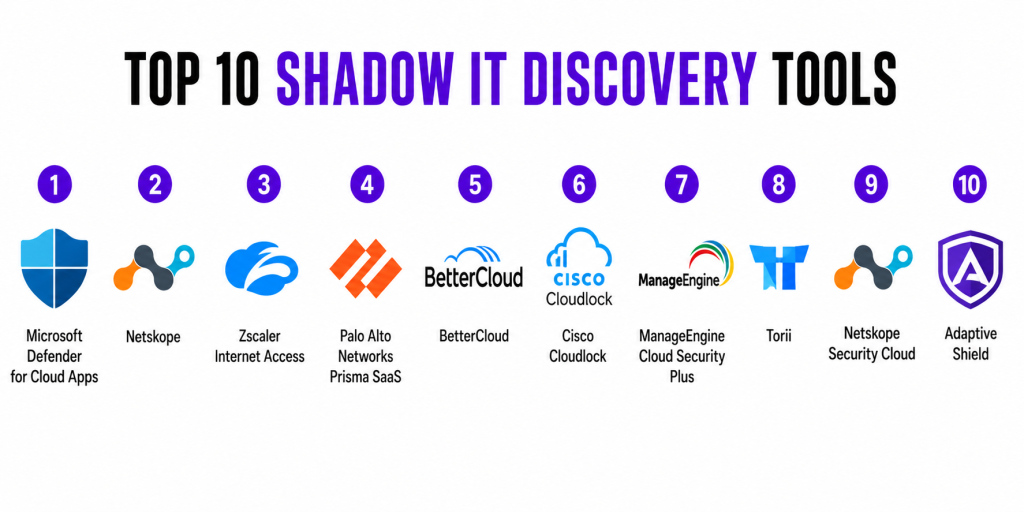
Top 10 Shadow IT Discovery Tools
1 — Microsoft Defender for Cloud Apps
Short description:
Microsoft Defender for Cloud Apps is a cloud access security broker solution that helps organizations discover, monitor, and control shadow IT usage. It identifies SaaS applications accessed within the organization and evaluates their risk levels. The platform is widely used in Microsoft-centric security environments. It provides visibility into user activity across cloud applications. It helps enforce policies for SaaS usage and data protection. It is suitable for enterprises managing hybrid and cloud-first environments.
Key Features
- Shadow IT discovery and classification
- SaaS risk scoring and assessment
- User activity monitoring
- Data protection policies
- Cloud app governance controls
- Threat detection for SaaS usage
- Integration with Microsoft security stack
Pros
- Strong enterprise visibility
- Deep Microsoft ecosystem integration
- Good SaaS risk analysis
Cons
- Best value in Microsoft environments
- Requires configuration for full capabilities
- Complex for small teams
Platforms / Deployment
- Web
- Cloud
Security & Compliance
Supports SSO, MFA, RBAC, audit logs, encryption, and policy-based access control.
Integrations & Ecosystem
- Microsoft Entra ID
- Microsoft Defender suite
- SaaS applications
- SIEM tools
- APIs
- Security operations platforms
Support & Community
Strong enterprise documentation, support, and Microsoft ecosystem community.
2 — Netskope
Short description:
Netskope is a cloud security platform that provides deep visibility into shadow IT and SaaS application usage. It helps organizations identify unsanctioned applications and control data movement across cloud services. The platform is widely used for cloud access security and data protection. It enables real-time monitoring of SaaS usage and risk assessment. Netskope is suitable for enterprises with large cloud adoption. It is known for strong cloud-native security capabilities.
Key Features
- SaaS discovery and classification
- Real-time user activity monitoring
- Data loss prevention for cloud apps
- Risk scoring for applications
- Cloud traffic inspection
- Policy enforcement engine
- Behavioral analytics
Pros
- Strong cloud-native architecture
- Excellent SaaS visibility
- Real-time monitoring
Cons
- Complex deployment
- Enterprise-focused pricing
- Requires security maturity
Platforms / Deployment
- Web
- Cloud
Security & Compliance
Supports encryption, RBAC, MFA, audit logs, and enterprise policy controls.
Integrations & Ecosystem
- SaaS applications
- SIEM tools
- CASB systems
- Identity providers
- APIs
- Security platforms
Support & Community
Enterprise-grade support and strong technical documentation.
3 — Zscaler Internet Access
Short description:
Zscaler Internet Access is a cloud security platform that provides visibility into shadow IT and SaaS usage through secure internet traffic inspection. It helps organizations monitor applications used by employees and enforce security policies. The platform is widely used in Zero Trust architectures. It provides real-time insights into SaaS usage across networks. Zscaler is suitable for large enterprises with distributed workforces. It helps reduce risk from unmanaged application usage.
Key Features
- Shadow IT discovery through traffic analysis
- SaaS usage monitoring
- Cloud firewall and security policies
- Data protection controls
- Web and SaaS filtering
- Risk-based application classification
- Zero Trust enforcement
Pros
- Strong Zero Trust integration
- High visibility into internet traffic
- Scalable enterprise architecture
Cons
- Requires network-level deployment
- Complex for small organizations
- Best suited for large environments
Platforms / Deployment
- Web
- Cloud
Security & Compliance
Supports encryption, RBAC, MFA, audit logging, and policy enforcement.
Integrations & Ecosystem
- Identity providers
- SIEM tools
- Endpoint security systems
- Cloud platforms
- APIs
- Security orchestration tools
Support & Community
Strong enterprise support and global deployment assistance.
4 — Palo Alto Networks Prisma SaaS
Short description:
Prisma SaaS helps organizations discover and control shadow IT by monitoring SaaS application usage and evaluating risk. It provides visibility into unsanctioned cloud applications. The platform is widely used in enterprise security environments. It enables policy enforcement for SaaS usage and data protection. Prisma SaaS is suitable for organizations with multi-cloud environments. It supports governance across SaaS ecosystems.
Key Features
- SaaS application discovery
- Risk assessment and scoring
- Data protection policies
- User activity monitoring
- Threat detection
- Policy enforcement
- Cloud app governance
Pros
- Strong enterprise security model
- Good SaaS governance visibility
- Integrated security ecosystem
Cons
- Complex configuration
- Enterprise-focused
- Requires skilled management
Platforms / Deployment
- Web
- Cloud
Security & Compliance
Supports MFA, RBAC, encryption, audit logs, and compliance controls.
Integrations & Ecosystem
- Palo Alto security suite
- SIEM platforms
- Identity providers
- SaaS applications
- APIs
- Cloud environments
Support & Community
Enterprise support and security-focused documentation.
5 — BetterCloud
Short description:
BetterCloud is a SaaS operations platform that helps organizations manage SaaS applications and detect shadow IT usage. It provides visibility into application usage and helps enforce security policies. The platform is widely used for SaaS governance and automation. It helps reduce risk from unmanaged SaaS tools. BetterCloud is suitable for IT operations and security teams. It focuses on workflow automation and SaaS control.
Key Features
- SaaS discovery and monitoring
- Shadow IT detection
- User lifecycle automation
- Policy enforcement
- Workflow automation
- SaaS governance dashboards
- Security alerts
Pros
- Strong SaaS automation features
- Good visibility into usage
- Easy workflow management
Cons
- Requires setup effort
- Best for structured IT teams
- Limited deep network-level visibility
Platforms / Deployment
- Web
- Cloud
Security & Compliance
Supports MFA, RBAC, audit logs, and encryption.
Integrations & Ecosystem
- Google Workspace
- Microsoft 365
- SaaS applications
- Identity providers
- APIs
- ITSM systems
Support & Community
Good enterprise onboarding and documentation.
6 — Cisco Cloudlock
Short description:
Cisco Cloudlock is a cloud access security platform that provides shadow IT discovery and SaaS security monitoring. It helps organizations identify risky applications and enforce security policies. The platform is used in enterprise security environments. It provides visibility into SaaS usage and user behavior. Cloudlock is suitable for organizations adopting cloud-first security models. It integrates with broader Cisco security solutions.
Key Features
- SaaS discovery and monitoring
- Risk scoring for applications
- User behavior analytics
- Data loss prevention
- Policy enforcement
- Cloud security controls
- Threat detection
Pros
- Strong Cisco ecosystem integration
- Good SaaS visibility
- Enterprise-grade controls
Cons
- Limited standalone flexibility
- Requires Cisco ecosystem adoption
- Complex configuration
Platforms / Deployment
- Web
- Cloud
Security & Compliance
Supports RBAC, MFA, encryption, and audit logging.
Integrations & Ecosystem
- Cisco security suite
- SaaS applications
- SIEM tools
- Identity providers
- APIs
- Cloud services
Support & Community
Enterprise support and Cisco documentation ecosystem.
7 — ManageEngine Cloud Security Plus
Short description:
ManageEngine Cloud Security Plus provides visibility into SaaS usage and shadow IT detection. It helps organizations monitor cloud application activity and enforce security policies. The platform is used by IT teams to improve SaaS governance. It provides logs and insights into application usage. It is suitable for mid-market organizations. It helps reduce risk from unmanaged cloud applications.
Key Features
- SaaS discovery
- Activity monitoring
- Shadow IT detection
- Log analysis
- Security reporting
- User behavior tracking
- Compliance reporting
Pros
- Affordable for mid-market
- Easy deployment
- Good log visibility
Cons
- Limited advanced analytics
- Smaller ecosystem
- Not enterprise-grade depth
Platforms / Deployment
- Web
- Cloud
Security & Compliance
Supports RBAC, encryption, and audit logs.
Integrations & Ecosystem
- ITSM tools
- SaaS applications
- Identity providers
- APIs
Support & Community
Standard support and documentation.
8 — Torii
Short description:
Torii is a SaaS management platform that provides strong shadow IT discovery capabilities. It helps organizations track SaaS applications and usage across departments. The platform focuses on automation and SaaS lifecycle management. It provides visibility into unmanaged applications. Torii is suitable for growing SaaS-driven companies. It helps reduce shadow IT risk through discovery and control.
Key Features
- SaaS discovery engine
- Shadow IT detection
- License tracking
- Workflow automation
- Usage analytics
- SaaS lifecycle management
- Integration management
Pros
- Strong automation features
- Good SaaS visibility
- Easy workflow setup
Cons
- Limited deep security features
- Requires integration setup
- Mid-market focus
Platforms / Deployment
- Web
- Cloud
Security & Compliance
Supports MFA, RBAC, and encryption.
Integrations & Ecosystem
- SaaS applications
- HR systems
- ITSM tools
- Finance systems
- APIs
Support & Community
Good onboarding and customer support.
9 — Netskope Security Cloud
Short description:
Netskope Security Cloud provides advanced shadow IT discovery and SaaS monitoring capabilities. It gives organizations visibility into cloud application usage and data flow. The platform is widely used in enterprise cloud security strategies. It helps enforce Zero Trust policies. Netskope is suitable for organizations with large-scale SaaS usage. It provides deep cloud traffic analysis.
Key Features
- Shadow IT detection
- SaaS usage monitoring
- Cloud traffic inspection
- Data protection policies
- Risk scoring
- Behavioral analytics
- Policy enforcement
Pros
- Strong cloud visibility
- Advanced analytics
- Good enterprise scalability
Cons
- Complex deployment
- Enterprise-focused pricing
- Requires security expertise
Platforms / Deployment
- Web
- Cloud
Security & Compliance
Supports encryption, MFA, RBAC, audit logs, and policy enforcement.
Integrations & Ecosystem
- SIEM tools
- Identity systems
- SaaS applications
- APIs
- Cloud environments
- Security platforms
Support & Community
Enterprise support and strong documentation.
10 — Adaptive Shield
Short description:
Adaptive Shield is a SaaS security platform focused on SaaS posture management and shadow IT discovery. It provides visibility into SaaS application usage and configuration risks. The platform is used by security teams to reduce SaaS-related vulnerabilities. It helps identify unsanctioned applications and misconfigurations. Adaptive Shield is suitable for enterprises with strong SaaS adoption. It focuses on SaaS security posture management.
Key Features
- SaaS discovery and mapping
- Shadow IT detection
- SaaS security posture management
- Risk assessment
- Configuration monitoring
- Compliance reporting
- Security dashboards
Pros
- Strong SaaS security focus
- Good posture management
- Clear risk visibility
Cons
- Limited general ITAM scope
- Requires SaaS-heavy environment
- Enterprise-oriented
Platforms / Deployment
- Web
- Cloud
Security & Compliance
Supports RBAC, encryption, audit logs, and SaaS security policies.
Integrations & Ecosystem
- SaaS platforms
- Identity providers
- Security tools
- APIs
- SIEM systems
Support & Community
Enterprise support and security-focused documentation.
Comparison Table
| Tool Name | Best For | Platforms | Deployment | Standout Feature | Public Rating |
|---|---|---|---|---|---|
| Microsoft Defender for Cloud Apps | Enterprise Microsoft environments | Web | Cloud | SaaS risk detection | N/A |
| Netskope | Cloud security | Web | Cloud | Real-time SaaS monitoring | N/A |
| Zscaler Internet Access | Zero Trust security | Web | Cloud | Traffic-based discovery | N/A |
| Prisma SaaS | Enterprise SaaS governance | Web | Cloud | Risk scoring engine | N/A |
| BetterCloud | SaaS operations | Web | Cloud | Workflow automation | N/A |
| Cisco Cloudlock | Cisco ecosystems | Web | Cloud | SaaS security integration | N/A |
| ManageEngine Cloud Security Plus | Mid-market IT teams | Web | Cloud | Log-based discovery | N/A |
| Torii | SaaS automation | Web | Cloud | SaaS lifecycle automation | N/A |
| Netskope Security Cloud | Enterprise cloud security | Web | Cloud | Deep traffic analysis | N/A |
| Adaptive Shield | SaaS security posture | Web | Cloud | SaaS risk visibility | N/A |
Evaluation & Scoring of Shadow IT Discovery Tools
| Tool Name | Core (25%) | Ease (15%) | Integrations (15%) | Security (10%) | Performance (10%) | Support (10%) | Value (15%) | Total |
|---|---|---|---|---|---|---|---|---|
| Microsoft Defender for Cloud Apps | 9.5 | 8.6 | 9.5 | 9.4 | 9.3 | 9.0 | 8.7 | 9.1 |
| Netskope | 9.4 | 8.2 | 9.3 | 9.5 | 9.4 | 9.0 | 8.4 | 9.0 |
| Zscaler | 9.2 | 8.3 | 9.2 | 9.4 | 9.4 | 8.9 | 8.3 | 8.9 |
| Prisma SaaS | 9.1 | 8.1 | 9.0 | 9.3 | 9.2 | 8.8 | 8.2 | 8.8 |
| BetterCloud | 9.0 | 8.6 | 9.0 | 9.0 | 8.8 | 8.9 | 8.7 | 8.8 |
| Cisco Cloudlock | 8.8 | 8.3 | 8.8 | 8.9 | 8.8 | 8.7 | 8.3 | 8.6 |
| ManageEngine | 8.2 | 8.8 | 8.0 | 8.4 | 8.3 | 8.2 | 8.9 | 8.4 |
| Torii | 8.5 | 9.0 | 8.6 | 8.4 | 8.5 | 8.4 | 8.8 | 8.6 |
| Netskope Security Cloud | 9.3 | 8.1 | 9.2 | 9.4 | 9.3 | 9.0 | 8.3 | 8.9 |
| Adaptive Shield | 9.0 | 8.2 | 8.9 | 9.2 | 8.8 | 8.7 | 8.4 | 8.7 |
These scores are comparative and based on visibility depth, security capabilities, integration strength, and enterprise readiness.
Which Shadow IT Discovery Tool Is Right for You?
Solo / Freelancer
Most tools are enterprise-focused, but ManageEngine provides simpler visibility for smaller setups.
SMB
Torii and ManageEngine are easier to deploy and manage for smaller IT teams.
Mid-Market
BetterCloud and Torii provide a balance of automation and visibility.
Enterprise
Netskope, Microsoft Defender for Cloud Apps, Zscaler, and Prisma SaaS are strong enterprise options.
Budget vs Premium
- Budget: ManageEngine, Torii
- Mid-range: BetterCloud
- Premium: Netskope, Zscaler, Prisma SaaS
Feature Depth vs Ease of Use
- Deepest security: Netskope, Zscaler
- Easiest to use: ManageEngine, Torii
- Balanced: BetterCloud
Integrations & Scalability
Microsoft Defender for Cloud Apps and Netskope offer the strongest enterprise integration ecosystems.
Security & Compliance Needs
Netskope, Prisma SaaS, and Zscaler are best for regulated environments requiring strong security controls.
Frequently Asked Questions
1. What is shadow IT?
Shadow IT refers to software and applications used inside an organization without IT approval.
It often includes SaaS tools, cloud apps, or file-sharing services.
Employees use them for productivity but create security risks.
Discovery tools help identify and control them.
2. Why is shadow IT dangerous?
It can expose sensitive data without security controls.
It increases compliance risks and audit failures.
It creates unmanaged access points for attackers.
It reduces IT visibility across the organization.
3. How do shadow IT discovery tools work?
They analyze network traffic, SaaS integrations, and user activity.
They detect unknown or unsanctioned applications.
They classify applications by risk level.
They provide visibility dashboards for IT teams.
4. Are these tools suitable for small companies?
Some tools are too complex for small teams.
Lightweight solutions like ManageEngine or Torii are better.
Enterprise tools may require dedicated security teams.
Selection depends on SaaS usage scale.
5. Do these tools integrate with SIEM systems?
Yes, most enterprise tools support SIEM integration.
They provide logs and alerts for monitoring.
Integration improves security visibility.
It helps in incident response workflows.
6. What is the difference between CASB and shadow IT tools?
CASB tools enforce cloud security policies.
Shadow IT tools focus on discovering unknown apps.
Many modern platforms combine both capabilities.
They complement each other in security strategy.
7. Can these tools block unauthorized apps?
Yes, many platforms allow policy-based blocking.
They can restrict access to risky applications.
Some tools only monitor without enforcement.
Capability varies by vendor.
8. How long does deployment take?
Simple setups may take days or weeks.
Enterprise deployments can take longer.
Integration complexity is the main factor.
Network visibility setup affects timeline.
9. What are common mistakes when using these tools?
Ignoring integration setup reduces visibility.
Failing to act on discovered apps reduces effectiveness.
Not classifying risk leads to poor decisions.
Lack of governance limits ROI.
10. Can shadow IT tools improve compliance?
Yes, they help identify unauthorized software usage.
They support audit and reporting requirements.
They improve visibility for compliance teams.
They are widely used in regulated industries.
Conclusion
Shadow IT Discovery Tools are essential for organizations managing large SaaS ecosystems where employees frequently adopt applications independently. These tools provide visibility, reduce security risks, and improve governance across IT environments.The best solution depends on company size, security maturity, and integration needs. Enterprises benefit from Netskope, Microsoft Defender for Cloud Apps, and Zscaler, while mid-market and SMB organizations may prefer Torii or ManageEngine.A practical next step is to shortlist , validate integration with existing SaaS and security systems, run a pilot deployment, and measure visibility improvements before full rol
