Introduction
Spend Analytics Tools help organizations collect, normalize, and analyze procurement and expenditure data to gain actionable insights. They provide a clear view of spending patterns, supplier performance, and compliance, enabling businesses to optimize budgets, reduce maverick spend, and strengthen supplier negotiations.
In , the emphasis on AI-driven analytics, real-time dashboards, and predictive procurement insights has increased. Businesses now expect automated anomaly detection, multi-source data integration, and advanced forecasting capabilities. Organizations leveraging Spend Analytics Tools gain both operational efficiency and strategic insights into cost optimization.
Real-world use cases include:
- Procurement teams identifying overspending across departments.
- Finance teams reconciling invoices with contracts for accurate reporting.
- Enterprises evaluating supplier performance for risk mitigation.
- Strategic sourcing teams driving cost reduction initiatives.
- Businesses monitoring compliance with budgetary guidelines.
Evaluation criteria for buyers:
- Data integration flexibility
- AI and predictive analytics capabilities
- Usability and dashboard clarity
- Reporting and visualization options
- Security and compliance features
- Scalability across multiple entities
- Supplier performance tracking
- Budgeting and forecasting support
- Automation of approvals and workflows
- Total cost of ownership
Best for: Medium to large enterprises, procurement and finance teams, organizations seeking cost visibility, and companies with multi-source vendor ecosystems.
Not ideal for: Very small businesses with minimal procurement complexity, teams seeking only basic reporting, or companies with limited data sources where simple spreadsheet tracking suffices.
Key Trends in Spend Analytics Tools
- Growing adoption of AI and machine learning to detect anomalies and predict spend trends.
- Real-time dashboards and mobile-friendly interfaces for on-the-go decision-making.
- Enhanced integration ecosystems connecting ERPs, accounting systems, and contract repositories.
- Increased focus on supplier risk scoring and ESG compliance tracking.
- Shift towards cloud-native deployments for scalability and lower IT overhead.
- Emergence of self-service analytics empowering non-technical teams to run queries.
- Advanced visualizations including heat maps, drill-down charts, and spend trend graphs.
- Automation of procurement workflows and approval routing based on analytics insights.
- Adoption of predictive budgeting and forecasting to improve planning accuracy.
- Emphasis on data security and compliance with multi-region privacy laws.
How We Selected These Tools (Methodology)
- Evaluated market adoption and mindshare in procurement and finance sectors.
- Reviewed feature completeness, including analytics depth, dashboards, and predictive capabilities.
- Considered reliability and performance, including uptime and system responsiveness.
- Assessed security posture, covering encryption, SSO, MFA, and compliance frameworks.
- Analyzed integrations and ecosystem compatibility with ERPs, accounting software, and BI tools.
- Reviewed customer fit across segments: SMB, mid-market, and enterprise.
- Considered vendor support quality including onboarding, training, and community resources.
- Prioritized tools with practical ROI based on spend optimization potential.
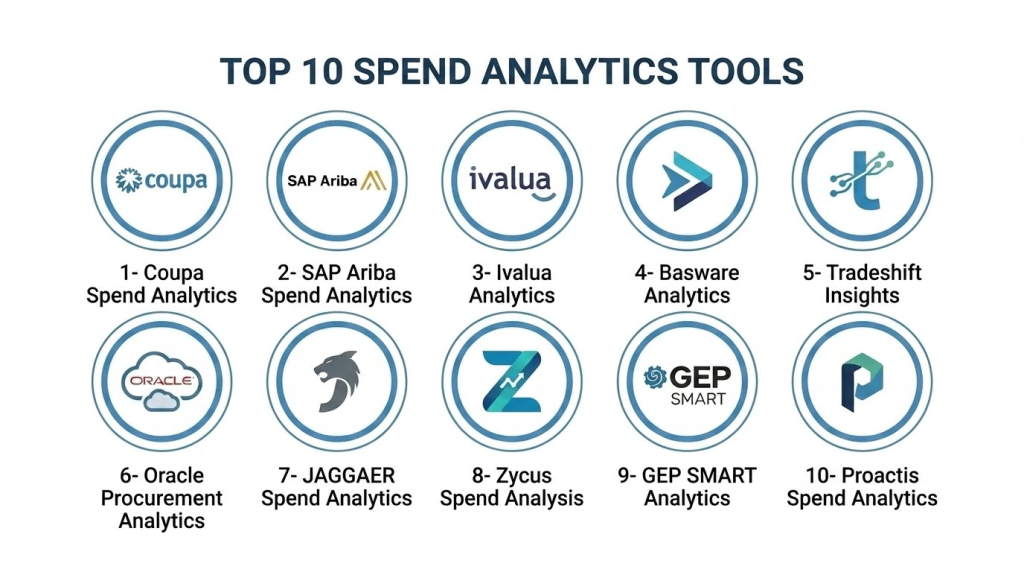
Top 10 Spend Analytics Tools
1- Coupa Spend Analytics
Short description: Coupa provides a comprehensive spend analytics platform designed for enterprises seeking centralized visibility. It’s suitable for finance and procurement teams managing multi-source spend data.
Key Features
- Real-time dashboards and interactive reporting
- AI-driven anomaly detection and predictive insights
- Supplier segmentation and risk scoring
- Integration with major ERPs and accounting platforms
- Automated spend categorization
Pros
- Strong AI analytics capabilities
- Scalable for large enterprises
- Robust supplier performance tracking
Cons
- Higher cost for smaller businesses
- Learning curve for non-technical users
- Customization may require vendor support
Platforms / Deployment
- Web, Cloud
Security & Compliance
- SSO/SAML, MFA, encryption, audit logs
- SOC 2, GDPR
Integrations & Ecosystem
Coupa connects broadly across ERP and procurement ecosystems.
- SAP, Oracle, NetSuite integrations
- REST API for custom connectors
- BI tool connectors (Power BI, Tableau)
Support & Community
- Extensive documentation and training resources
- Multi-tiered support packages
- Active customer community
2- SAP Ariba Spend Analytics
Short description: SAP Ariba offers a spend analytics solution embedded in its procurement suite. It supports enterprises in consolidating global spend data and enabling strategic sourcing decisions.
Key Features
- Supplier spend visibility and segmentation
- Benchmarking against industry metrics
- Predictive spend modeling
- AI-powered trend analysis
- Integration with Ariba procurement workflows
Pros
- Seamless Ariba ecosystem integration
- Strong predictive analytics
- Global spend tracking capabilities
Cons
- Complexity may overwhelm SMBs
- Costly licensing model
- Some features require SAP ERP presence
Platforms / Deployment
- Web, Cloud
Security & Compliance
- SSO/SAML, encryption
- GDPR, ISO 27001
Integrations & Ecosystem
Integrates tightly with SAP suite and supports ERP connectors.
- SAP ERP, S/4HANA
- Ariba Network
- Analytics export to BI tools
Support & Community
- SAP Help Portal
- Dedicated account management
- Active SAP Ariba community forums
3- Ivalua Analytics
Short description: Ivalua provides unified spend insights with AI-assisted analytics, aimed at mid-to-large enterprises seeking spend optimization and supplier risk insights.
Key Features
- AI-driven category insights
- Supplier segmentation and performance tracking
- Customizable dashboards
- Multi-currency and multi-region support
- Automated spend classification
Pros
- Highly configurable reporting
- Strong supplier risk monitoring
- Supports global enterprise operations
Cons
- Steeper implementation curve
- Requires technical expertise for advanced analytics
- May be resource-intensive for small teams
Platforms / Deployment
- Web, Cloud
Security & Compliance
- SSO/SAML, encryption
- GDPR, Not publicly stated
Integrations & Ecosystem
Connects with ERPs, procurement, and BI tools.
- Oracle, SAP, NetSuite
- API access for custom reporting
- Integration with Tableau and Power BI
Support & Community
- Vendor-led onboarding
- Dedicated customer success teams
- Community forums and knowledge base
4- Basware Analytics
Short description: Basware offers spend visibility and analytics for organizations looking to optimize procurement and invoice processes with actionable insights.
Key Features
- Automated spend classification
- Supplier performance dashboards
- Budget variance analysis
- Predictive analytics for procurement planning
- Integration with AP automation
Pros
- Strong invoice and procurement insights
- Supports global operations
- Effective cost-saving identification
Cons
- May require Basware ecosystem adoption
- Limited standalone BI features
- Customization can be complex
Platforms / Deployment
- Web, Cloud
Security & Compliance
- SSO, encryption
- GDPR, Not publicly stated
Integrations & Ecosystem
- ERP connectors (SAP, Oracle)
- BI tool exports
- Procurement workflow integration
Support & Community
- Knowledge base and documentation
- Customer support tiers
- Community engagement limited
5- Tradeshift Insights
Short description: Tradeshift Insights provides spend visibility for global procurement teams, emphasizing supplier collaboration and cloud-based analytics.
Key Features
- Supplier performance tracking
- Category-level spend insights
- AI-assisted anomaly detection
- Custom dashboards and reporting
- Cloud-native deployment
Pros
- Strong collaboration features
- Flexible cloud deployment
- Real-time spend visibility
Cons
- Requires integration with other systems for full ROI
- Can be complex to configure
- Smaller user community
Platforms / Deployment
- Web, Cloud
Security & Compliance
- SSO/SAML, MFA, encryption
- GDPR
Integrations & Ecosystem
- ERP integrations: SAP, Oracle
- API support for custom apps
- Export to analytics tools
Support & Community
- Vendor-led training and support
- Limited public community
6- Oracle Procurement Analytics
Short description: Oracle provides spend analytics as part of its procurement suite, enabling enterprises to monitor, forecast, and optimize global spending patterns.
Key Features
- Centralized spend repository
- Predictive procurement insights
- Supplier segmentation and benchmarking
- Integration with Oracle ERP modules
- Multi-currency and regional analytics
Pros
- Tight integration with Oracle ecosystem
- Strong forecasting and predictive tools
- Enterprise-scale deployment
Cons
- Complex setup
- Best suited for Oracle users
- Licensing costs can be high
Platforms / Deployment
- Web, Cloud
Security & Compliance
- SSO/SAML, encryption, audit logs
- GDPR, Not publicly stated
Integrations & Ecosystem
- Oracle ERP and SCM modules
- BI tool connectors
- API for custom integrations
Support & Community
- Oracle Support Services
- Training and onboarding programs
- Enterprise customer community
7- JAGGAER Spend Analytics
Short description: JAGGAER provides end-to-end spend visibility with advanced analytics, ideal for procurement and finance teams managing diverse supplier bases.
Key Features
- Real-time dashboards
- Supplier performance tracking
- Predictive spend forecasting
- Automated classification and reporting
- Category management analytics
Pros
- Highly configurable dashboards
- Strong predictive insights
- Scalable across global operations
Cons
- Learning curve for new users
- Limited small-business focus
- Some features require full JAGGAER suite
Platforms / Deployment
- Web, Cloud
Security & Compliance
- SSO/SAML, encryption
- GDPR
Integrations & Ecosystem
- ERP connectors: SAP, Oracle
- API support for analytics
- BI tool integrations
Support & Community
- Vendor-led onboarding and support
- Documentation and knowledge base
- User forums
8- Zycus Spend Analysis
Short description: Zycus offers AI-enabled spend analytics focusing on cost reduction and supplier optimization for enterprise procurement teams.
Key Features
- AI-assisted spend categorization
- Supplier and contract analytics
- Custom dashboards
- Predictive and prescriptive insights
- Benchmarking and reporting
Pros
- Strong AI analytics
- Flexible reporting and dashboards
- Effective supplier management
Cons
- Enterprise focus may not suit SMBs
- Requires integration for full potential
- Customization can take time
Platforms / Deployment
- Web, Cloud
Security & Compliance
- SSO/SAML, encryption
- GDPR
Integrations & Ecosystem
- ERP integrations: SAP, Oracle
- API support
- BI tool connectors
Support & Community
- Documentation and training resources
- Customer support tiers
- Active enterprise community
9- GEP SMART Analytics
Short description: GEP SMART provides spend analysis within a unified procurement platform, designed for mid-to-large enterprises seeking strategic sourcing optimization.
Key Features
- Multi-source data aggregation
- Supplier performance insights
- Category and sub-category spend analytics
- Predictive savings analysis
- Integration with procurement workflows
Pros
- Unified platform for procurement
- Strong analytics and insights
- AI-driven forecasting
Cons
- Best for enterprise deployment
- Integration may be complex
- Customization requires support
Platforms / Deployment
- Web, Cloud
Security & Compliance
- SSO/SAML, encryption
- GDPR
Integrations & Ecosystem
- ERP connectors: SAP, Oracle, NetSuite
- BI tool support
- API for custom integrations
Support & Community
- Vendor-led onboarding
- Knowledge base and documentation
- Limited public forums
10- Proactis Spend Analytics
Short description: Proactis provides spend visibility, reporting, and analytics, focusing on cost control and procurement optimization for global organizations.
Key Features
- Spend categorization and analysis
- Supplier performance dashboards
- Budget variance reporting
- Predictive spend modeling
- Integration with procurement and finance systems
Pros
- Easy-to-use dashboards
- Strong supplier insights
- Predictive spend analytics
Cons
- SMB deployment limited
- Some features require full Proactis suite
- Custom reporting setup may be needed
Platforms / Deployment
- Web, Cloud
Security & Compliance
- SSO/SAML, encryption
- GDPR
Integrations & Ecosystem
Proactis integrates with ERP and finance systems for comprehensive spend insights.
- SAP, Oracle, Microsoft Dynamics
- API for reporting
- BI tool connectors
Support & Community
- Vendor documentation and support
- Onboarding and training programs
- Community forums vary / Not publicly stated
Comparison Table (Top 10)
| Tool Name | Best For | Platform(s) Supported | Deployment | Standout Feature | Public Rating |
|---|---|---|---|---|---|
| Coupa | Enterprise procurement teams | Web | Cloud | AI-driven anomaly detection | N/A |
| SAP Ariba | Global enterprises | Web | Cloud | Industry benchmarking insights | N/A |
| Ivalua Analytics | Mid-to-large enterprises | Web | Cloud | Configurable dashboards | N/A |
| Basware Analytics | Finance & procurement teams | Web | Cloud | Invoice-linked spend insights | N/A |
| Tradeshift Insights | Collaborative enterprises | Web | Cloud | Supplier collaboration dashboards | N/A |
| Oracle Procurement | Oracle ecosystem users | Web | Cloud | Predictive procurement insights | N/A |
| JAGGAER Spend Analytics | Global procurement teams | Web | Cloud | Predictive spend forecasting | N/A |
| Zycus Spend Analysis | Enterprise sourcing teams | Web | Cloud | AI-assisted spend categorization | N/A |
| GEP SMART Analytics | Mid-to-large enterprises | Web | Cloud | Multi-source aggregation | N/A |
| Proactis Spend Analytics | Global organizations | Web | Cloud | Predictive spend modeling | N/A |
Evaluation & Scoring of Spend Analytics Tools
| Tool Name | Core (25%) | Ease (15%) | Integrations (15%) | Security (10%) | Performance (10%) | Support (10%) | Value (15%) | Weighted Total (0–10) |
|---|---|---|---|---|---|---|---|---|
| Coupa | 9 | 8 | 9 | 8 | 9 | 8 | 7 | 8.6 |
| SAP Ariba | 9 | 7 | 8 | 8 | 9 | 7 | 7 | 8.3 |
| Ivalua | 8 | 7 | 8 | 8 | 8 | 7 | 7 | 7.8 |
| Basware | 7 | 8 | 7 | 7 | 8 | 7 | 7 | 7.5 |
| Tradeshift | 7 | 7 | 7 | 7 | 7 | 7 | 7 | 7.0 |
| Oracle Proc. | 9 | 7 | 8 | 8 | 8 | 7 | 7 | 8.0 |
| JAGGAER | 8 | 7 | 8 | 8 | 8 | 7 | 7 | 7.8 |
| Zycus | 8 | 7 | 7 | 8 | 8 | 7 | 7 | 7.6 |
| GEP SMART | 8 | 7 | 8 | 8 | 8 | 7 | 7 | 7.8 |
| Proactis | 7 | 8 | 7 | 7 | 7 | 7 | 7 | 7.3 |
Interpretation: Weighted totals reflect comparative performance across core functionality, usability, integration, security, and cost/value. Higher scores indicate more comprehensive and reliable spend analytics capabilities.
Which Spend Analytics Tool Is Right for You?
Solo / Freelancer
Basic dashboards and expense tracking may suffice. Tools like Proactis or Tradeshift provide lightweight analytics for small-scale projects.
SMB
Tools like Basware or Zycus offer solid insights without the full enterprise complexity, balancing cost and usability.
Mid-Market
Ivalua, JAGGAER, and GEP SMART support multi-department spend visibility and predictive analytics, ideal for scaling businesses.
Enterprise
Coupa, SAP Ariba, Oracle Procurement provide full-scale, AI-driven spend optimization for global operations with extensive integration and compliance features.
Budget vs Premium
Smaller budgets benefit from Proactis or Tradeshift; enterprises seeking depth and AI features may prefer Coupa or SAP Ariba.
Feature Depth vs Ease of Use
GEP SMART and Ivalua strike a balance; Coupa offers advanced AI insights but may require more training.
Integrations & Scalability
Oracle, SAP Ariba, and Coupa provide seamless ERP integration and global scalability for multi-region operations.
Security & Compliance Needs
Enterprise tools like Coupa and SAP Ariba maintain strong compliance with SSO, MFA, audit logs, and GDPR; essential for regulated industries.
Frequently Asked Questions (FAQs)
1- What are the pricing models for Spend Analytics Tools?
Pricing varies by vendor, often subscription-based, sometimes tiered by number of users, spend volume, or analytics depth. Custom quotes are common for enterprises.
2- How long does implementation take?
Small deployments can take a few weeks, while enterprise-scale tools may require several months due to integrations, data normalization, and user training.
3- Can these tools integrate with existing ERPs?
Yes, most provide connectors for SAP, Oracle, NetSuite, and other ERPs. APIs allow for custom integration with BI tools and internal systems.
4- How secure is spend data?
Enterprise tools use encryption, SSO/SAML, MFA, and audit logs. Compliance with GDPR and SOC 2 is common; check each vendor for detailed certifications.
5- What are common mistakes during deployment?
Skipping data cleansing, underestimating integration complexity, or not training users properly can reduce ROI and delay adoption.
6- Can SMBs benefit from these tools?
Yes, but simpler deployments like Proactis or Tradeshift are often more cost-effective, whereas enterprise tools may be overkill.
7- How do these tools support predictive analytics?
AI modules analyze historical spend patterns to forecast budgets, identify anomalies, and suggest supplier or category optimizations.
8- Is vendor support sufficient for complex deployments?
Most offer tiered support, including onboarding, training, and account management. Enterprise vendors often provide dedicated success managers.
9- How easy is it to switch between tools?
Migration can be complex due to data normalization, integration, and reporting structures. Planning and vendor support are critical for smooth transition.
10- Are there alternatives to Spend Analytics Tools?
Yes, basic ERP reporting, Excel spreadsheets, or BI platforms can provide partial insights, but lack predictive and AI-driven optimization.
Conclusion
Spend Analytics Tools provide essential insights into procurement and expenditure, enabling organizations to optimize budgets, manage suppliers, and ensure compliance. The right tool depends on company size, complexity, budget, and integration needs. Enterprises benefit from AI-driven platforms like Coupa and SAP Ariba, while SMBs may find Proactis or Tradeshift suffici
