Introduction
Supply Chain Management (SCM) Suites are software platforms designed to manage and optimize the end-to-end supply chain processes, from procurement and production to distribution and logistics. These platforms help businesses coordinate suppliers, manufacturers, warehouses, and distribution channels, ensuring that products move efficiently and cost-effectively. In , SCM suites have evolved to integrate AI-driven analytics, real-time monitoring, and predictive insights, enabling faster, smarter decision-making in complex supply networks.
Real-world use cases include:
- Optimizing inventory across multiple warehouses to reduce holding costs.
- Predicting supply chain disruptions using AI and historical data.
- Automating procurement workflows to improve efficiency and reduce manual errors.
- Enhancing logistics planning and route optimization for timely deliveries.
- Collaborating with suppliers and partners via centralized dashboards for transparency.
Evaluation Criteria for Buyers:
- Core SCM features (inventory, procurement, logistics, order management)
- AI and predictive analytics capabilities
- Ease of use and user interface quality
- Integration options with ERP, CRM, and other enterprise systems
- Deployment flexibility (cloud, on-premise, hybrid)
- Security and compliance features
- Performance and reliability metrics
- Vendor support and community engagement
- Pricing and value for money
- Scalability for future business growth
Best for: mid-market and enterprise organizations, supply chain managers, procurement teams, logistics operators, manufacturers, and e-commerce businesses that need comprehensive oversight of their supply chains.
Not ideal for: very small businesses or startups with limited supply chain complexity, or companies looking for lightweight inventory-only solutions.
Key Trends in Supply Chain Management Suites
- AI-driven demand forecasting for accurate inventory and production planning.
- Real-time supply chain visibility using IoT sensors and logistics tracking.
- Predictive maintenance integration for equipment and transport assets.
- Automated procurement and ordering workflows to reduce manual intervention.
- Cloud-native and hybrid deployments to support remote teams and scalability.
- Interoperability with ERP, CRM, and third-party logistics platforms.
- Blockchain for traceability in sourcing and product verification.
- Advanced analytics dashboards with KPI monitoring and reporting.
- Sustainability tracking for ESG compliance and green logistics.
- Flexible subscription and pricing models to cater to SMBs and enterprises alike.
How We Selected These Tools (Methodology)
- Reviewed market adoption and mindshare across industries.
- Evaluated feature completeness, including core SCM modules and AI capabilities.
- Assessed reliability and performance signals, including uptime and processing speed.
- Verified security posture such as encryption, SSO, and compliance standards.
- Examined integrations and ecosystem flexibility for ERP, CRM, and logistics tools.
- Considered customer fit across segments, from SMBs to global enterprises.
- Factored in ease of implementation and onboarding experience.
- Cross-checked vendor support, training, and community engagement.
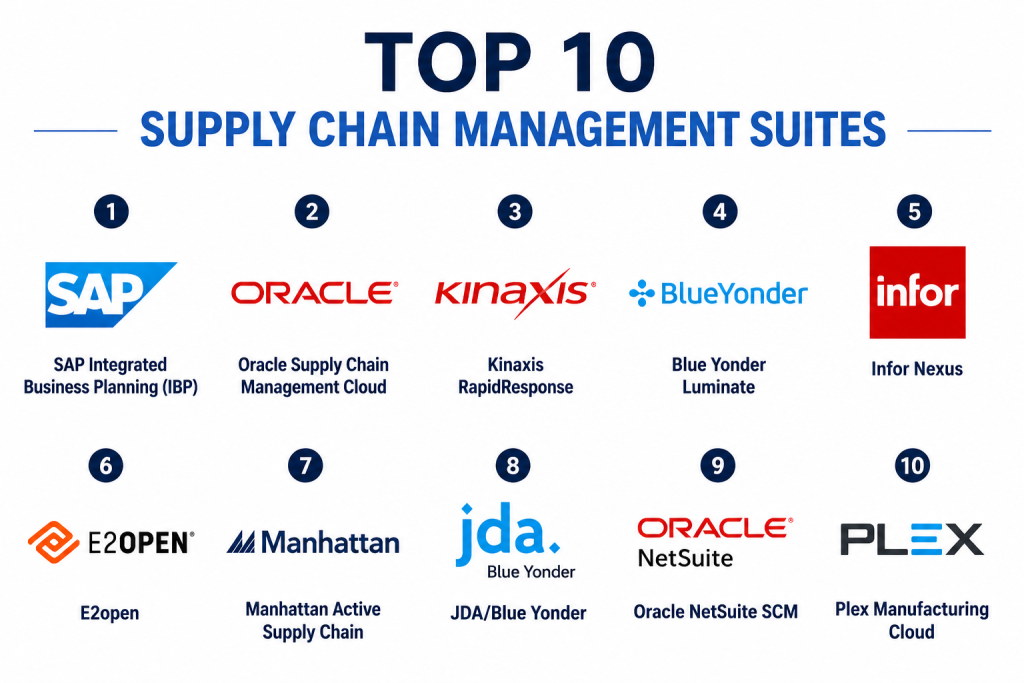
Top 10 Supply Chain Management Suites
1- SAP Integrated Business Planning (IBP)
Short description: SAP IBP provides a cloud-based SCM platform designed for enterprises needing integrated demand planning, inventory optimization, and supply network visibility. It is suited for global manufacturers and retailers aiming to align supply with demand efficiently.
Key Features
- Demand planning and forecasting
- Inventory optimization
- Supply network visualization
- Sales and operations planning (S&OP)
- Predictive analytics
- Collaboration portals for suppliers
Pros
- Enterprise-grade scalability
- Deep integration with SAP ERP
Cons
- Complexity may require dedicated training
- Higher cost for smaller organizations
Platforms / Deployment
- Web / Cloud
Security & Compliance
- SSO/SAML, MFA, encryption, audit logs
- SOC 2, ISO 27001, GDPR
Integrations & Ecosystem
Enterprise ERP integration, logistics platforms, analytics tools
- SAP ERP, Ariba, Concur
- Third-party logistics APIs
- BI and analytics platforms
Support & Community
Comprehensive documentation, SAP support tiers, active global community.
2- Oracle Supply Chain Management Cloud
Short description: Oracle SCM Cloud is a modular cloud platform offering end-to-end supply chain solutions including procurement, logistics, and order management for large enterprises across industries.
Key Features
- Procurement and sourcing automation
- Order management and fulfillment
- Logistics and transportation management
- AI-driven demand forecasting
- Supply chain network modeling
Pros
- Comprehensive modular design
- Strong AI and analytics capabilities
Cons
- Can be complex to configure
- Cost may be prohibitive for SMBs
Platforms / Deployment
- Web / Cloud
Security & Compliance
- SSO/SAML, MFA, encryption, RBAC
- ISO 27001, SOC 2, GDPR
Integrations & Ecosystem
Connects to Oracle ERP, cloud analytics, and third-party logistics
- Oracle ERP Cloud
- Analytics and BI tools
- Third-party supply chain APIs
Support & Community
Robust support tiers, detailed documentation, Oracle community forums.
3- Kinaxis RapidResponse
Short description: Kinaxis RapidResponse specializes in real-time supply chain planning and analytics, enabling companies to respond quickly to demand changes and supply disruptions.
Key Features
- Integrated planning and S&OP
- Scenario simulation
- Demand and supply balancing
- Cloud-native analytics dashboards
- AI-based anomaly detection
Pros
- Fast scenario modeling
- Real-time visibility into supply chain
Cons
- Steep learning curve for non-technical users
- Limited offline capabilities
Platforms / Deployment
- Web / Cloud
Security & Compliance
- SSO/SAML, encryption
- Not publicly stated on certifications
Integrations & Ecosystem
Supports ERP and logistics integrations
- SAP, Oracle ERP
- API connectivity for logistics
- BI and analytics tools
Support & Community
Strong onboarding support, active community, regular webinars.
4- Blue Yonder Luminate
Short description: Blue Yonder Luminate delivers AI-driven supply chain solutions, including demand sensing, warehouse optimization, and logistics automation for retailers and manufacturers.
Key Features
- Demand sensing and forecasting
- Warehouse and inventory optimization
- Transportation and logistics automation
- AI-driven insights
- Supplier collaboration tools
Pros
- Strong AI forecasting engine
- Real-time logistics visibility
Cons
- Complex implementation
- Premium pricing
Platforms / Deployment
- Web / Cloud
Security & Compliance
- Encryption, RBAC
- Not publicly stated
Integrations & Ecosystem
Connects to ERP, logistics, analytics platforms
- SAP, Oracle, JDA ERP
- Third-party shipping and analytics APIs
Support & Community
Varies / Not publicly stated; includes customer success programs.
5- Infor Nexus
Short description: Infor Nexus focuses on multi-tier supply chain visibility, helping global businesses manage suppliers, production, and distribution networks efficiently.
Key Features
- Supplier network collaboration
- Order management and tracking
- Inventory visibility
- Financial settlement automation
- Predictive analytics for risk
Pros
- Excellent multi-tier visibility
- Strong supplier collaboration
Cons
- Interface can be complex
- Requires training for advanced analytics
Platforms / Deployment
- Web / Cloud
Security & Compliance
- SSO, encryption
- SOC 2, GDPR
Integrations & Ecosystem
Integrates with ERP, logistics, analytics
- SAP, Oracle ERP
- Logistics management platforms
- BI tools
Support & Community
Comprehensive documentation and support services.
6- E2open
Short description: E2open provides a cloud-based SCM suite designed for collaborative planning, intelligent logistics, and real-time decision-making for global supply networks.
Key Features
- Collaborative planning
- Intelligent logistics and route planning
- Inventory optimization
- Demand forecasting
- Supplier and partner network collaboration
Pros
- Strong collaboration features
- Real-time analytics
Cons
- Can be complex for small teams
- Learning curve for advanced modules
Platforms / Deployment
- Web / Cloud
Security & Compliance
- Encryption, MFA
- Not publicly stated
Integrations & Ecosystem
ERP, logistics, analytics, and supplier portals
- SAP, Oracle, Microsoft ERP
- BI and analytics tools
- API for third-party logistics
Support & Community
Varies / Not publicly stated; includes onboarding services.
7- Manhattan Active Supply Chain
Short description: Manhattan Active offers an integrated platform for inventory, warehouse, and transportation management, targeting large-scale distribution and retail operations.
Key Features
- Warehouse management system (WMS)
- Transportation management system (TMS)
- Inventory and order management
- Demand forecasting and replenishment
- Analytics dashboards
Pros
- Integrated WMS and TMS
- Strong analytics and reporting
Cons
- Complex deployment
- May require dedicated support
Platforms / Deployment
- Web / Cloud / Hybrid
Security & Compliance
- Encryption, RBAC
- SOC 2
Integrations & Ecosystem
ERP and logistics connectivity
- SAP, Oracle, Microsoft ERP
- Analytics and BI tools
- API support
Support & Community
Extensive documentation, customer support tiers, active user community.
8- JDA/Blue Yonder
Short description: JDA, now part of Blue Yonder, offers end-to-end supply chain planning solutions, emphasizing AI-driven forecasting and inventory optimization.
Key Features
- Demand and supply planning
- Inventory optimization
- AI-driven forecasting
- S&OP capabilities
- Supplier collaboration
Pros
- AI forecasting improves accuracy
- End-to-end planning coverage
Cons
- High implementation complexity
- Expensive for SMBs
Platforms / Deployment
- Web / Cloud
Security & Compliance
- Encryption, MFA
- Not publicly stated
Integrations & Ecosystem
ERP and logistics platforms
- SAP, Oracle ERP
- Analytics tools
- Supplier network APIs
Support & Community
Varies / Not publicly stated; customer success programs available.
9- Oracle NetSuite SCM
Short description: NetSuite SCM provides cloud-native supply chain management for SMBs and mid-market companies, offering inventory, order, and procurement management with real-time dashboards.
Key Features
- Inventory and warehouse management
- Procurement automation
- Order management and fulfillment
- Analytics and reporting
- Supplier management
Pros
- Cloud-native, easy to deploy
- Suitable for SMBs and mid-market
Cons
- Limited enterprise-level modules
- Customization may require professional services
Platforms / Deployment
- Web / Cloud
Security & Compliance
- Encryption, SSO
- SOC 2, GDPR
Integrations & Ecosystem
ERP, accounting, e-commerce, logistics
- NetSuite ERP
- Shopify, Magento
- Third-party logistics APIs
Support & Community
Strong documentation, support tiers, active user community.
10- Plex Manufacturing Cloud
Short description: Plex offers a cloud-based platform focused on manufacturing operations, combining SCM, MES, and quality management for production-centric businesses.
Key Features
- Supply chain and inventory management
- Manufacturing execution system (MES)
- Quality and compliance tracking
- Analytics and reporting
- Supplier collaboration
Pros
- Integrated manufacturing and SCM
- Cloud-native with real-time data
Cons
- Manufacturing focus may limit non-production SCM
- Higher cost for small manufacturers
Platforms / Deployment
- Web / Cloud
Security & Compliance
- Encryption, SSO
- SOC 2, ISO 27001
Integrations & Ecosystem
ERP, MES, quality management systems
- SAP, Oracle ERP
- BI and analytics
- Supplier portals
Support & Community
Varies / Not publicly stated; includes professional services.
Comparison Table (Top 10)
| Tool Name | Best For | Platform(s) Supported | Deployment | Standout Feature | Public Rating |
|---|---|---|---|---|---|
| SAP IBP | Large enterprises | Web | Cloud | Integrated S&OP and inventory optimization | N/A |
| Oracle SCM Cloud | Enterprise | Web | Cloud | Modular end-to-end SCM | N/A |
| Kinaxis RapidResponse | Global manufacturers | Web | Cloud | Real-time scenario simulation | N/A |
| Blue Yonder Luminate | Retailers & manufacturers | Web | Cloud | AI-driven demand sensing | N/A |
| Infor Nexus | Global multi-tier supply chains | Web | Cloud | Supplier collaboration | N/A |
| E2open | Enterprise networks | Web | Cloud | Real-time decision-making | N/A |
| Manhattan Active Supply Chain | Large distribution & retail | Web | Cloud/Hybrid | Integrated WMS/TMS | N/A |
| JDA / Blue Yonder | Large enterprises | Web | Cloud | End-to-end planning with AI | N/A |
| Oracle NetSuite SCM | SMB & mid-market | Web | Cloud | Cloud-native SCM | N/A |
| Plex Manufacturing Cloud | Manufacturing-focused | Web | Cloud | MES + SCM integration | N/A |
Evaluation & Scoring of SCM Suites
| Tool Name | Core (25%) | Ease (15%) | Integrations (15%) | Security (10%) | Performance (10%) | Support (10%) | Value (15%) | Weighted Total (0–10) |
|---|---|---|---|---|---|---|---|---|
| SAP IBP | 9 | 7 | 9 | 9 | 9 | 8 | 7 | 8.6 |
| Oracle SCM Cloud | 9 | 7 | 9 | 8 | 9 | 8 | 7 | 8.5 |
| Kinaxis RapidResponse | 8 | 7 | 8 | 7 | 8 | 7 | 8 | 7.7 |
| Blue Yonder Luminate | 8 | 6 | 8 | 7 | 8 | 7 | 7 | 7.5 |
| Infor Nexus | 7 | 6 | 7 | 7 | 7 | 6 | 7 | 7.0 |
| E2open | 7 | 7 | 7 | 6 | 7 | 6 | 7 | 6.9 |
| Manhattan Active | 8 | 7 | 8 | 7 | 8 | 7 | 7 | 7.6 |
| JDA / Blue Yonder | 8 | 6 | 7 | 7 | 8 | 7 | 7 | 7.4 |
| NetSuite SCM | 7 | 8 | 7 | 7 | 7 | 7 | 8 | 7.5 |
| Plex Manufacturing Cloud | 7 | 7 | 7 | 8 | 7 | 6 | 7 | 7.2 |
Interpretation: Higher scores indicate better overall suitability for enterprise SCM needs, but individual priorities such as ease, integration, or AI capabilities should guide final selection.
Which Supply Chain Management Tool Is Right for You?
Solo / Freelancer
- Typically, lightweight SCM like NetSuite may suffice if supply chain operations are simple.
SMB
- Cloud-native platforms like NetSuite SCM or E2open offer scalability and affordable deployment.
Mid-Market
- Manhattan Active or Kinaxis RapidResponse balances feature depth with cost and performance.
Enterprise
- SAP IBP, Oracle SCM Cloud, or Blue Yonder Luminate provide comprehensive coverage and AI-driven insights for complex global operations.
Budget vs Premium
- NetSuite SCM and E2open suit budget-conscious teams; SAP IBP and Oracle target premium enterprise deployments.
Feature Depth vs Ease of Use
- RapidResponse, Blue Yonder, and Plex offer deep features but require training; NetSuite prioritizes usability.
Integrations & Scalability
- Enterprises need SAP or Oracle for seamless ERP/logistics integration; SMBs can leverage cloud-native modular platforms.
Security & Compliance Needs
- SOC 2, ISO 27001, and GDPR-compliant platforms are critical for regulated industries; ensure the vendor meets requirements.
Frequently Asked Questions (FAQs)
1- What pricing models are typical for SCM suites?
Most vendors offer subscription-based pricing with tiered modules. Enterprise implementations may involve upfront fees and professional services.
2- How long does implementation typically take?
Implementation varies by complexity, ranging from a few weeks for SMBs to 6–12 months for global enterprise deployments.
3- Can SCM suites integrate with existing ERP systems?
Yes, most leading SCM platforms offer prebuilt integrations with SAP, Oracle, Microsoft Dynamics, and other ERPs.
4- How secure are these platforms?
Security features typically include SSO, MFA, encryption, and audit logs. Compliance with SOC 2, ISO 27001, and GDPR is common in enterprise-grade solutions.
5- Are AI features included?
Many modern SCM suites provide AI-driven demand forecasting, anomaly detection, and predictive analytics to improve decision-making.
6- What common mistakes should be avoided during deployment?
Avoid underestimating change management, insufficient training, and skipping integration testing. Clear objectives and phased rollout are recommended.
7- Can SCM suites scale with business growth?
Yes, cloud-native and hybrid platforms are designed to scale from SMB to enterprise operations, accommodating expanding supply networks.
8- How easy is onboarding for new users?
Ease varies; platforms like NetSuite are user-friendly, while SAP IBP or Kinaxis may require dedicated training and professional services.
9- What alternatives exist if SCM suites are too complex?
Smaller businesses may consider inventory-only systems, ERP-native supply chain modules, or spreadsheet-based management for simplicity.
10- How do I switch SCM platforms?
Switching requires data migration, integration reconfiguration, and retraining. Vendor support and professional services are often needed for smooth transition.
Conclusion
Choosing the right Supply Chain Management Suite depends on business size, complexity, and specific operational needs. While enterprise-grade platforms like SAP IBP and Oracle SCM Cloud offer comprehensive coverage and AI insights, cloud-native solutions like NetSuite SCM provide agility and lower entry barriers for SMBs. Buyers should evaluate features, integration capabilities, and compliance requirements carefully.shortlist based on priority needs, run a pilot to validate integrations and usability, and scale deployment while monitoring performance and security.
