Introduction
Tenant Experience Platforms are digital solutions that enhance how tenants interact with buildings, property managers, and real estate operators. These platforms focus on improving communication, service delivery, engagement, and convenience for residents, office tenants, and mixed-use communities. Instead of relying on phone calls, emails, and fragmented systems, tenants can access everything through a unified mobile or web application.
In and beyond, real estate is shifting from traditional property management to experience-driven operations. Tenants now expect digital-first services such as instant maintenance requests, real-time building updates, mobile payments, and smart building integrations. Tenant experience platforms are designed to meet these expectations while improving operational efficiency for property managers.
These tools are widely used in residential apartments, commercial office buildings, co-living spaces, student housing, and smart building ecosystems.
Real-world use cases include:
- Mobile tenant apps for rent payments and invoices
- Maintenance and service request tracking
- Community announcements and building communication
- Amenity booking (gyms, meeting rooms, parking spaces)
- Smart building integrations (IoT, access control, energy systems)
- Tenant engagement and retention programs
What buyers should evaluate:
- Mobile app experience and usability
- Communication and notification systems
- Maintenance workflow automation
- Integration with property management systems
- Smart building and IoT compatibility
- Payment and billing features
- Community engagement tools
- Analytics and tenant insights
- Security and data privacy compliance
- Scalability across multiple properties
Best for: Property managers, real estate operators, commercial buildings, residential societies, and smart building developers.
Not ideal for: Small landlords with single properties and minimal tenant interaction requirements.
Key Trends in Tenant Experience Platforms
- AI-powered tenant engagement and personalized experiences
- Smart building integration with IoT sensors and automation systems
- Unified tenant super-apps combining payments, services, and communication
- Predictive maintenance notifications based on sensor data
- Digital concierge services powered by AI assistants
- ESG and sustainability tracking dashboards for buildings
- Real-time energy and utility monitoring for tenants
- Blockchain-based identity and access control (emerging)
- Hyper-personalized tenant communication workflows
- Deep integration with property management and ERP systems
How We Selected These Tools (Methodology)
- Market adoption in residential and commercial real estate sectors
- Tenant engagement and digital experience capabilities
- Integration with property management systems (PMS)
- Smart building and IoT ecosystem compatibility
- Communication and workflow automation strength
- Mobile app usability and UX quality
- Scalability for multi-property portfolios
- Security, compliance, and data protection standards
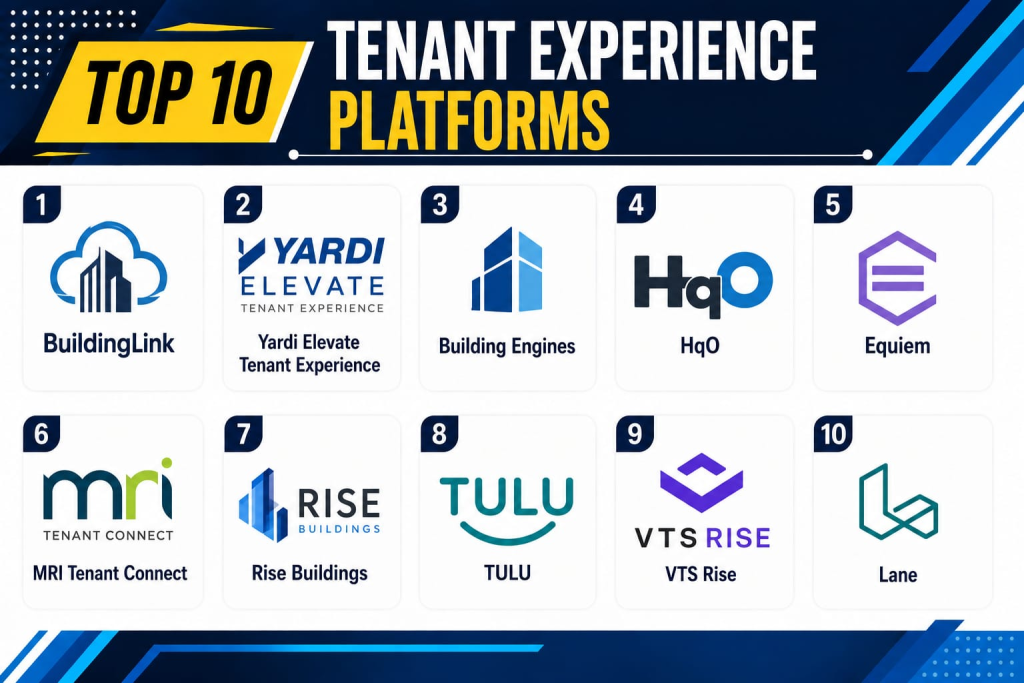
Top 10 Tenant Experience Platforms
1- BuildingLink
Short description:
BuildingLink is one of the most widely used tenant experience platforms for residential buildings, luxury apartments, and condominiums. It provides a centralized system for communication, maintenance requests, package tracking, and building announcements. The platform is designed to improve resident satisfaction and streamline property operations. It is widely used in high-end residential communities. BuildingLink is known for its reliability and feature-rich tenant portal. It is ideal for residential property managers.
Key Features
- Tenant communication portal
- Maintenance request tracking
- Package and delivery management
- Building announcements
- Amenity booking system
- Resident directory
- Reporting dashboards
Pros
- Strong residential focus
- Easy tenant communication
- Reliable feature set
Cons
- Limited enterprise customization
- UI feels traditional
- Not ideal for commercial offices
Platforms / Deployment
- Web / Mobile
- Cloud
Security & Compliance
- SSO/SAML
- MFA
- Encryption
- Audit logs
- RBAC
Integrations & Ecosystem
- Property management systems
- Payment platforms
- APIs
- Access control systems
- Maintenance tools
- Email systems
Support & Community
Strong residential property management support.
2- Yardi Elevate Tenant Experience
Short description:
Yardi Elevate Tenant Experience is part of the Yardi ecosystem designed for commercial and residential real estate operators. It enables tenant engagement, service requests, communication, and building operations. The platform integrates deeply with Yardi property management systems. It is widely used in enterprise real estate portfolios. Yardi is known for its strong financial and operational integration. It is ideal for large property operators.
Key Features
- Tenant communication tools
- Service request management
- Lease and billing integration
- Building announcements
- Amenity booking
- Analytics dashboards
- Mobile tenant portal
Pros
- Strong enterprise integration
- Deep Yardi ecosystem support
- Scalable architecture
Cons
- Complex setup
- High cost
- Requires ecosystem adoption
Platforms / Deployment
- Web / Mobile
- Cloud
Security & Compliance
- SSO
- MFA
- Encryption
- Audit logs
- RBAC
Integrations & Ecosystem
- Yardi Voyager
- ERP systems
- Payment systems
- APIs
- CRM tools
- Smart building systems
Support & Community
Strong enterprise real estate support.
3- Building Engines
Short description:
Building Engines is a tenant experience and property operations platform designed for commercial real estate. It helps manage service requests, tenant communication, inspections, and building operations. The platform is widely used in office buildings and commercial properties. It focuses on operational efficiency and tenant satisfaction. Building Engines is known for its strong facility management capabilities. It is ideal for commercial property managers.
Key Features
- Service request management
- Tenant communication tools
- Work order tracking
- Building operations dashboard
- Mobile tenant app
- Vendor coordination
- Reporting tools
Pros
- Strong commercial focus
- Good operational efficiency tools
- Easy service tracking
Cons
- Limited residential features
- UI can feel outdated
- Basic customization
Platforms / Deployment
- Web / Mobile
- Cloud
Security & Compliance
- SSO
- MFA
- Encryption
- Audit logs
Integrations & Ecosystem
- Property management systems
- ERP platforms
- APIs
- Maintenance systems
- CRM tools
- Building automation systems
Support & Community
Good commercial real estate support.
4- HqO
Short description:
HqO is a modern tenant experience platform focused on commercial office buildings and workplace engagement. It provides tenant apps for communication, amenities booking, and workplace services. The platform is widely used in corporate real estate and smart office environments. It helps improve tenant engagement and workplace satisfaction. HqO is known for its modern UX and engagement tools. It is ideal for enterprise office buildings.
Key Features
- Tenant engagement app
- Amenity booking
- Workplace services
- Communication tools
- Event management
- Building analytics
- Digital concierge
Pros
- Modern user experience
- Strong workplace engagement features
- Good analytics
Cons
- Premium pricing
- Limited residential use
- Requires integration setup
Platforms / Deployment
- Web / Mobile
- Cloud
Security & Compliance
- SSO
- MFA
- Encryption
- Audit logs
- RBAC
Integrations & Ecosystem
- Smart building systems
- ERP tools
- APIs
- CRM platforms
- Access control systems
- IoT devices
Support & Community
Strong enterprise workplace support.
5- Equiem
Short description:
Equiem is a tenant experience platform designed for commercial real estate owners and operators. It focuses on tenant engagement, community building, and workplace services. The platform is widely used in office towers and corporate buildings. It enables seamless communication between tenants and property managers. Equiem is known for its engagement-driven features. It is ideal for commercial real estate portfolios.
Key Features
- Tenant mobile app
- Communication system
- Amenity booking
- Event management
- Service requests
- Digital concierge
- Analytics dashboard
Pros
- Strong engagement features
- Good commercial real estate fit
- Easy tenant communication
Cons
- Limited residential use
- Premium pricing
- Requires setup effort
Platforms / Deployment
- Web / Mobile
- Cloud
Security & Compliance
- SSO
- MFA
- Encryption
- Audit logs
Integrations & Ecosystem
- Property management systems
- ERP tools
- APIs
- CRM systems
- Smart building platforms
- Access control systems
Support & Community
Strong enterprise real estate support.
6- MRI Tenant Connect
Short description:
MRI Tenant Connect is part of MRI Software’s ecosystem designed to improve tenant experience in residential and commercial properties. It provides communication, payments, and service request management. The platform integrates deeply with MRI property management systems. It is widely used in enterprise real estate operations. MRI Tenant Connect is known for flexibility and scalability. It is ideal for large property portfolios.
Key Features
- Tenant communication portal
- Rent and payment management
- Maintenance requests
- Lease information access
- Reporting dashboards
- Mobile tenant app
- Notifications system
Pros
- Strong enterprise integration
- Flexible platform
- Good scalability
Cons
- Complex setup
- Requires MRI ecosystem
- UI not very modern
Platforms / Deployment
- Web / Mobile
- Cloud / On-prem
Security & Compliance
- SSO
- MFA
- Encryption
- Audit logs
- RBAC
Integrations & Ecosystem
- MRI Software suite
- ERP systems
- Payment gateways
- APIs
- CRM systems
- Building systems
Support & Community
Strong enterprise support.
7- Rise Buildings
Short description:
Rise Buildings is a modern tenant experience platform focused on residential and commercial properties. It offers mobile-first engagement tools for tenants and property managers. The platform supports communication, service requests, and amenity booking. It is widely used in luxury residential buildings. Rise Buildings is known for its clean interface and ease of use. It is ideal for modern residential communities.
Key Features
- Tenant mobile app
- Communication tools
- Service requests
- Amenity booking
- Building updates
- Resident engagement
- Reporting tools
Pros
- Very modern UI
- Easy tenant engagement
- Good residential focus
Cons
- Limited enterprise features
- Not suitable for large commercial portfolios
- Basic integrations
Platforms / Deployment
- Web / Mobile
- Cloud
Security & Compliance
- SSO
- MFA
- Encryption
- Audit logs
Integrations & Ecosystem
- Property management systems
- APIs
- CRM tools
- Payment systems
- Smart building tools
- Email systems
Support & Community
Good residential support.
8- TULU
Short description:
TULU is a unique tenant experience platform focused on shared building services and equipment rentals. It allows tenants to access shared items like appliances, tools, and lifestyle products via a smart app and IoT-enabled lockers. The platform is widely used in modern residential and co-living spaces. It enhances tenant convenience and reduces costs. TULU is known for its innovation in shared economy models. It is ideal for smart residential buildings.
Key Features
- Shared amenities access
- Smart locker system
- Mobile app interface
- Usage tracking
- Tenant engagement tools
- IoT integration
- Analytics dashboard
Pros
- Innovative shared services model
- Strong tenant convenience
- IoT-enabled experience
Cons
- Limited traditional property features
- Requires hardware setup
- Not suitable for all properties
Platforms / Deployment
- Web / Mobile
- Cloud + IoT
Security & Compliance
- SSO
- MFA
- Encryption
- Access controls
- Audit logs
Integrations & Ecosystem
- IoT devices
- Property systems
- APIs
- Payment systems
- Smart building platforms
- CRM tools
Support & Community
Growing innovation-focused support.
9- VTS Rise
Short description:
VTS Rise is a tenant experience platform designed for commercial real estate and office buildings. It focuses on tenant engagement, communication, and building operations. The platform is widely used in enterprise office portfolios. It integrates with leasing and property management systems. VTS Rise is known for strong data-driven insights. It is ideal for commercial real estate operators.
Key Features
- Tenant engagement tools
- Communication system
- Service requests
- Amenity booking
- Analytics dashboards
- Mobile tenant app
- Building updates
Pros
- Strong commercial focus
- Data-driven insights
- Good tenant engagement
Cons
- Premium pricing
- Limited residential use
- Requires ecosystem integration
Platforms / Deployment
- Web / Mobile
- Cloud
Security & Compliance
- SSO
- MFA
- Encryption
- Audit logs
Integrations & Ecosystem
- VTS platform
- ERP systems
- CRM tools
- APIs
- Smart building systems
- Access control
Support & Community
Strong enterprise support.
10- Lane
Short description:
Lane is a modern tenant experience platform focused on residential and co-living communities. It provides communication, services, and community engagement tools. The platform is widely used in shared living environments. It enhances tenant experience through digital engagement. Lane is known for its modern design and simplicity. It is ideal for co-living and residential communities.
Key Features
- Tenant communication app
- Community engagement tools
- Service requests
- Event management
- Amenity booking
- Notifications system
- Resident profiles
Pros
- Strong community focus
- Modern UI
- Easy adoption
Cons
- Limited enterprise features
- Not suitable for large commercial portfolios
- Basic integrations
Platforms / Deployment
- Web / Mobile
- Cloud
Security & Compliance
- SSO
- MFA
- Encryption
- Audit logs
Integrations & Ecosystem
- Property systems
- APIs
- CRM tools
- Payment systems
- Smart building tools
- Email systems
Support & Community
Good residential community support.
Comparison Table
| Tool Name | Best For | Platform(s) Supported | Deployment | Standout Feature | Public Rating |
|---|---|---|---|---|---|
| BuildingLink | Residential buildings | Web/Mobile | Cloud | Tenant portal | N/A |
| Yardi Elevate | Enterprise real estate | Web/Mobile | Cloud | Yardi integration | N/A |
| Building Engines | Commercial offices | Web/Mobile | Cloud | Service requests | N/A |
| HqO | Workplace engagement | Web/Mobile | Cloud | Workplace experience | N/A |
| Equiem | Commercial portfolios | Web/Mobile | Cloud | Tenant engagement | N/A |
| MRI Tenant Connect | Enterprise portfolios | Web/Mobile | Cloud | MRI integration | N/A |
| Rise Buildings | Residential luxury | Web/Mobile | Cloud | Modern UX | N/A |
| TULU | Smart buildings | Web/Mobile + IoT | Cloud + IoT | Shared services | N/A |
| VTS Rise | Office buildings | Web/Mobile | Cloud | Data-driven insights | N/A |
| Lane | Co-living spaces | Web/Mobile | Cloud | Community engagement | N/A |
Evaluation & Scoring of Tenant Experience Platforms
| Tool Name | Core | Ease | Integrations | Security | Performance | Support | Value | Weighted Total |
|---|---|---|---|---|---|---|---|---|
| BuildingLink | 9.0 | 9.0 | 9.0 | 9.0 | 8.5 | 8.5 | 9.0 | 8.8 |
| Yardi Elevate | 9.5 | 8.0 | 9.5 | 9.5 | 9.0 | 9.0 | 8.0 | 8.9 |
| Building Engines | 9.0 | 8.5 | 9.0 | 9.0 | 8.5 | 8.5 | 9.0 | 8.8 |
| HqO | 9.5 | 8.5 | 9.5 | 9.5 | 9.0 | 9.0 | 8.5 | 9.0 |
| Equiem | 9.0 | 8.5 | 9.0 | 9.0 | 8.5 | 8.5 | 8.5 | 8.7 |
| MRI Tenant Connect | 9.0 | 8.0 | 9.5 | 9.5 | 9.0 | 9.0 | 8.0 | 8.8 |
| Rise Buildings | 8.5 | 9.5 | 8.5 | 8.5 | 8.5 | 8.5 | 9.0 | 8.6 |
| TULU | 9.0 | 9.0 | 9.0 | 9.0 | 8.5 | 8.5 | 8.5 | 8.7 |
| VTS Rise | 9.0 | 8.5 | 9.0 | 9.0 | 8.5 | 8.5 | 8.5 | 8.8 |
| Lane | 8.5 | 9.5 | 8.5 | 8.5 | 8.5 | 8.5 | 9.0 | 8.6 |
These scores highlight a clear divide between enterprise commercial platforms (Yardi, HqO, VTS Rise) and residential-focused solutions (BuildingLink, Rise Buildings, Lane). The right choice depends on property type, tenant expectations, and ecosystem integration needs.
Frequently Asked Questions (FAQs)
1. What is a tenant experience platform?
It is software that improves how tenants interact with property managers and buildings through digital tools.
2. Who uses these platforms?
Property managers, real estate operators, landlords, and building developers.
3. Do they support mobile apps?
Yes, most platforms provide mobile tenant applications.
4. Can tenants pay rent through these apps?
Yes, many platforms include integrated payment systems.
5. Are they suitable for commercial buildings?
Yes, many tools are designed specifically for office and commercial real estate.
6. Do they integrate with property management systems?
Yes, integration is a core feature of these platforms.
7. Can they manage maintenance requests?
Yes, service request tracking is a standard feature.
8. Do they support smart buildings?
Yes, advanced platforms integrate with IoT systems.
9. Are they secure?
Yes, enterprise platforms include encryption, MFA, and audit logs.
10. What is the biggest benefit?
The biggest benefit is improved tenant satisfaction and retention.
Conclusion
Tenant Experience Platforms are transforming real estate operations by shifting focus from property management to tenant engagement and experience. Platforms like HqO, Yardi Elevate, VTS Rise, and Building Engines deliver powerful enterprise-grade engagement tools, while BuildingLink, Rise Buildings, and Lane provide modern, user-friendly solutions for residential communities. The right choice depends on property type, tenant expectations, and integration needs. A practical next step is to shortlist platforms, test tenant engagement workflows, evaluate mobile experience, and validate integration with property management systems before full deployment.
