Introduction
Trade Compliance Software (TCS) is designed to help businesses manage and automate the complex rules, regulations, and documentation associated with importing and exporting goods across borders. These platforms ensure compliance with customs, trade laws, embargoes, and sanctions, while reducing risks of fines, penalties, or shipment delays. In , global supply chains are more complex, with heightened regulatory scrutiny and increased digital documentation requirements, making trade compliance software essential for multinational companies and logistics providers.
Real-world use cases include:
- Automating customs documentation and filings for import/export shipments.
- Screening partners and transactions against restricted parties lists and sanctions.
- Managing HTS (Harmonized Tariff Schedule) codes and duty calculations.
- Ensuring regulatory compliance across multiple countries or regions.
- Generating audit-ready records to reduce penalties and inspections.
Evaluation Criteria for Buyers:
- Automated customs filing and documentation
- Trade compliance screening and restricted party checks
- Duty and tax calculation accuracy
- Real-time visibility into shipments and compliance status
- Integration with ERP, TMS, and WMS systems
- Multi-country and multi-modal support
- Reporting and audit capabilities
- Security and regulatory compliance
- Ease of use and adoption
- Vendor support and training resources
Best for: trade compliance officers, logistics managers, import/export teams, multinational enterprises, 3PLs, and companies handling high-volume international shipments.
Not ideal for: small shippers with limited cross-border activity or single-country operations, where manual compliance checks may suffice.
Key Trends in Trade Compliance Software
- AI-driven trade screening to flag high-risk shipments or partners automatically.
- Automated customs filings integrated with national customs portals.
- Real-time compliance monitoring for multi-country operations.
- Integration with ERP, TMS, and WMS for seamless supply chain operations.
- Predictive analytics for duty, tax, and trade cost forecasting.
- Cloud-native and hybrid deployment models for global accessibility.
- Digital document management including e-signatures and audit trails.
- Blockchain and secure data exchange for traceable compliance records.
- Continuous updates for trade regulations and tariffs across regions.
- Flexible pricing models to accommodate SMBs to large enterprises.
How We Selected These Tools (Methodology)
- Evaluated market adoption and industry presence among import/export organizations.
- Assessed feature completeness, including screening, filing, and reporting capabilities.
- Reviewed performance and reliability, including uptime, speed, and error handling.
- Verified security posture, including encryption, MFA, SSO, and audit logging.
- Examined integration ecosystem with ERP, TMS, WMS, and accounting systems.
- Considered customer fit across segments, from SMBs to multinational enterprises.
- Analyzed ease of use, user interface, and onboarding requirements.
- Factored in support, training, and community resources for effective adoption.
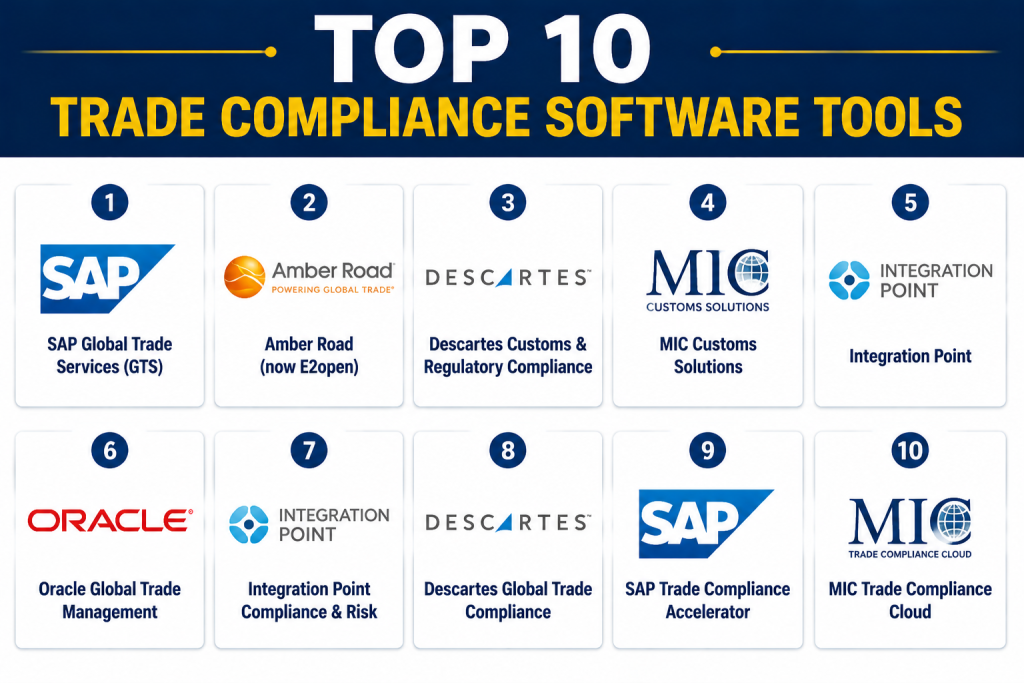
Top 10 Trade Compliance Software Tools
1- SAP Global Trade Services (GTS)
Short description: SAP GTS provides an enterprise-grade platform for global trade compliance, automating customs filings, partner screening, and compliance reporting. Best suited for multinational corporations managing complex international operations.
Key Features
- Automated customs filings and declarations
- Sanction and restricted party screening
- Duty and tax calculation
- Compliance risk management dashboards
- Trade document management
- Integration with SAP ERP
Pros
- Comprehensive compliance coverage
- Deep integration with ERP and supply chain systems
Cons
- Complex implementation
- High cost for smaller organizations
Platforms / Deployment
- Web / Cloud / On-premises
Security & Compliance
- SSO, encryption, audit logs
- ISO 27001, SOC 2
Integrations & Ecosystem
Integrates seamlessly with SAP ERP and logistics tools:
- SAP Supply Chain and ERP
- TMS and WMS connectors
- API support for third-party logistics
Support & Community
Comprehensive documentation, SAP support tiers, and an active global community.
2- Amber Road (now E2open)
Short description: Amber Road automates trade compliance processes including export/import filings, partner screening, and regulatory reporting. Ideal for enterprises with multi-country operations.
Key Features
- Trade compliance screening
- Automated customs documentation
- Duty and tax calculation
- Restricted party list management
- Global regulatory updates
Pros
- Reduces manual errors and compliance risk
- Supports global operations
Cons
- May require technical integration
- Premium pricing for SMBs
Platforms / Deployment
- Web / Cloud
Security & Compliance
- Encryption, SSO
- SOC 2, Not publicly stated
Integrations & Ecosystem
- ERP and TMS integration
- API support for customs filings
- Analytics dashboards
Support & Community
Varies / Not publicly stated; professional onboarding available.
3- Descartes Customs & Regulatory Compliance
Short description: Descartes provides a cloud-based solution for customs filing, trade compliance, and duty management. Designed for shippers and 3PLs managing multiple international trade lanes.
Key Features
- Automated customs filings
- Regulatory compliance management
- Restricted party screening
- Duty and tax calculation
- Compliance reporting and analytics
Pros
- Cloud-native for scalability
- Supports multi-country trade operations
Cons
- May require training for advanced features
- Limited offline functionality
Platforms / Deployment
- Web / Cloud
Security & Compliance
- Encryption, MFA
- Not publicly stated
Integrations & Ecosystem
- ERP and TMS connectors
- Accounting system integration
- API support for analytics
Support & Community
Documentation and support tiers included; active user community varies.
4- MIC Customs Solutions
Short description: MIC offers trade compliance automation, including customs filings, restricted party screening, and document management. Suitable for mid-market and enterprise shippers.
Key Features
- Automated filings and declarations
- Restricted party and sanction screening
- Regulatory compliance management
- Duty/tariff management
- Audit-ready documentation
Pros
- Streamlines compliance processes
- Reduces risk of fines and penalties
Cons
- Implementation can be time-intensive
- Integration setup may require technical support
Platforms / Deployment
- Web / Cloud
Security & Compliance
- Encryption, SSO
- Not publicly stated
Integrations & Ecosystem
- ERP and TMS integration
- API support for customs filings
- Reporting and analytics tools
Support & Community
Varies / Not publicly stated; professional services available.
5- Integration Point
Short description: Integration Point provides a trade compliance platform automating global filings, partner screening, and duty calculations. Ideal for multinational enterprises and 3PLs.
Key Features
- Export and import compliance automation
- Restricted party screening
- Harmonized tariff code management
- Duty and tax calculations
- Audit and reporting dashboards
Pros
- Supports complex multi-country trade
- Real-time compliance monitoring
Cons
- Premium pricing
- Integration may require professional services
Platforms / Deployment
- Web / Cloud
Security & Compliance
- Encryption, MFA
- Not publicly stated
Integrations & Ecosystem
- ERP and TMS connectors
- Analytics dashboards
- API support for partners
Support & Community
Documentation and onboarding resources included.
6- Oracle Global Trade Management
Short description: Oracle GTM helps enterprises automate trade compliance, customs filings, and partner screening for global supply chains.
Key Features
- Automated customs documentation
- Trade compliance screening
- Duty and tax calculation
- Regulatory updates
- Multi-modal and multi-country support
Pros
- Integrates with Oracle ERP
- Reduces manual compliance tasks
Cons
- Implementation complexity
- Premium pricing
Platforms / Deployment
- Web / Cloud
Security & Compliance
- SSO, encryption, audit logs
- Not publicly stated
Integrations & Ecosystem
- Oracle ERP and supply chain modules
- TMS and logistics connectors
- API support
Support & Community
Professional services and dedicated support tiers available.
7- Integration Point Compliance & Risk
Short description: Offers trade compliance risk management, including partner screening, classification, and auditing. Suited for enterprises needing comprehensive compliance oversight.
Key Features
- Partner risk assessment
- Restricted party screening
- Compliance reporting
- HTS classification management
- Audit-ready documentation
Pros
- Improves compliance accuracy
- Reduces financial and legal risks
Cons
- Premium solution; may be complex for SMBs
- Integration requires IT support
Platforms / Deployment
- Web / Cloud
Security & Compliance
- Encryption, audit logs
- Not publicly stated
Integrations & Ecosystem
- ERP, TMS, and accounting connectors
- API for reporting
- Analytics dashboards
Support & Community
Varies / Not publicly stated.
8- Descartes Global Trade Compliance
Short description: Descartes GTC provides automated compliance checks, customs filing, and reporting for enterprises managing global trade.
Key Features
- Automated customs declarations
- Restricted party screening
- Trade document management
- Duty and tax calculation
- Multi-country compliance
Pros
- Cloud-based scalability
- Reduces compliance errors
Cons
- May require training
- Premium pricing
Platforms / Deployment
- Web / Cloud
Security & Compliance
- Encryption, SSO
- Not publicly stated
Integrations & Ecosystem
- ERP and TMS integration
- API support for logistics
- Analytics dashboards
Support & Community
Documentation and professional support included.
9- SAP Trade Compliance Accelerator
Short description: SAP’s Trade Compliance Accelerator streamlines global trade operations by automating filings, screening, and reporting for multinational shippers.
Key Features
- Customs filing automation
- Restricted party and sanctions checks
- Duty/tariff calculations
- Compliance reporting
- Audit-ready records
Pros
- Tight integration with SAP ERP
- Comprehensive compliance coverage
Cons
- High implementation complexity
- Cost-prohibitive for SMBs
Platforms / Deployment
- Web / Cloud / On-premises
Security & Compliance
- SSO, encryption, audit logs
- SOC 2, ISO 27001
Integrations & Ecosystem
- SAP ERP integration
- TMS and logistics connectors
- API support
Support & Community
SAP documentation, support tiers, active community.
10- MIC Trade Compliance Cloud
Short description: Cloud-based trade compliance platform offering automated filings, partner screening, and regulatory updates. Designed for mid-market and enterprise shippers.
Key Features
- Customs filings automation
- Restricted party screening
- Multi-country regulatory updates
- Duty and tax calculation
- Compliance reporting
Pros
- Cloud-native and scalable
- Reduces manual compliance work
Cons
- Premium pricing
- Integration may require technical support
Platforms / Deployment
- Web / Cloud
Security & Compliance
- Encryption, MFA
- Not publicly stated
Integrations & Ecosystem
- ERP and TMS connectors
- API support
- Reporting dashboards
Support & Community
Documentation and professional onboarding services included.
Comparison Table (Top 10)
| Tool Name | Best For | Platform(s) Supported | Deployment | Standout Feature | Public Rating |
|---|---|---|---|---|---|
| SAP GTS | Multinational enterprises | Web | Cloud / On-premises | Automated customs filings | N/A |
| Amber Road | Enterprise import/export | Web | Cloud | Partner screening & filing | N/A |
| Descartes Customs & Regulatory | 3PLs & shippers | Web | Cloud | Multi-country compliance | N/A |
| MIC Customs Solutions | Mid-market & enterprise | Web | Cloud | Automated filings & reporting | N/A |
| Integration Point | Multinational enterprises | Web | Cloud | Real-time compliance & audit | N/A |
| Oracle GTM | Enterprise supply chains | Web | Cloud | ERP integration & filings | N/A |
| Integration Point Compliance & Risk | Enterprise risk management | Web | Cloud | Partner screening & audit | N/A |
| Descartes GTC | Global shippers | Web | Cloud | Compliance automation | N/A |
| SAP Trade Compliance Accelerator | SAP ERP users | Web | Cloud / On-premises | Tight ERP integration | N/A |
| MIC Trade Compliance Cloud | Mid-market & enterprise | Web | Cloud | Cloud-native compliance | N/A |
Evaluation & Scoring of Trade Compliance Tools
| Tool Name | Core (25%) | Ease (15%) | Integrations (15%) | Security (10%) | Performance (10%) | Support (10%) | Value (15%) | Weighted Total (0–10) |
|---|---|---|---|---|---|---|---|---|
| SAP GTS | 9 | 7 | 9 | 9 | 9 | 8 | 7 | 8.3 |
| Amber Road | 8 | 7 | 8 | 7 | 8 | 7 | 7 | 7.5 |
| Descartes Customs | 8 | 8 | 7 | 7 | 8 | 7 | 7 | 7.6 |
| MIC Customs | 7 | 7 | 7 | 6 | 7 | 7 | 7 | 7.0 |
| Integration Point | 8 | 7 | 8 | 7 | 8 | 7 | 7 | 7.6 |
| Oracle GTM | 8 | 7 | 8 | 7 | 8 | 7 | 7 | 7.6 |
| Integration Point Compliance | 8 | 7 | 7 | 7 | 8 | 7 | 7 | 7.5 |
| Descartes GTC | 7 | 8 | 7 | 7 | 7 | 7 | 7 | 7.1 |
| SAP Trade Compliance Accelerator | 9 | 7 | 9 | 9 | 9 | 8 | 7 | 8.3 |
| MIC Trade Compliance Cloud | 7 | 8 | 7 | 6 | 7 | 6 | 7 | 7.0 |
Interpretation: Higher weighted totals indicate stronger overall capability, but buyer priorities such as ERP integration, multi-country compliance, or predictive AI features should guide final selection.
Which Trade Compliance Tool Is Right for You?
Solo / Freelancer
- TCS is typically unnecessary unless managing international shipments; manual or lightweight ERP solutions may suffice.
SMB
- MIC Trade Compliance Cloud or MIC Customs Solutions provide scalable, affordable compliance automation.
Mid-Market
- Descartes Customs, Integration Point, or Oracle GTM balance automation, reporting, and multi-country support.
Enterprise
- SAP GTS, Amber Road, and SAP Trade Compliance Accelerator provide comprehensive multi-country filings, partner screening, and ERP integration.
Budget vs Premium
- MIC solutions suit cost-conscious mid-market companies; SAP and Amber Road cater to premium enterprise deployments.
Feature Depth vs Ease of Use
- Enterprise tools provide deeper features but require training; SMB-focused tools prioritize usability and quicker onboarding.
Integrations & Scalability
- Enterprises need TCS platforms integrated with ERP, TMS, and accounting systems; SMBs can use simpler API-based connectors.
Security & Compliance Needs
- Ensure SOC 2, ISO 27001, MFA, encryption, and audit logs for sensitive trade and financial data.
Frequently Asked Questions (FAQs)
1- What pricing models are typical?
Subscription-based, tiered by features or shipment volume; enterprise implementations may include setup fees.
2- How long does implementation take?
SMBs can implement in a few weeks; enterprises require 3–6 months including ERP/TMS integration.
3- Can TCS integrate with ERP or TMS?
Yes, leading platforms offer prebuilt connectors and APIs for ERP, TMS, and accounting systems.
4- Are AI features common?
AI features include automated anomaly detection, predictive duty calculations, and partner risk scoring.
5- Can these platforms manage multi-country operations?
Yes, enterprise-grade TCS supports compliance across multiple countries and trade regions.
6- How secure are TCS platforms?
Security includes encryption, SSO/MFA, RBAC, and audit logs. SOC 2 and ISO 27001 are common among enterprise solutions.
7- Do TCS platforms provide reporting?
Yes, most offer dashboards and analytics to monitor compliance, audit readiness, and spend impact.
8- Can these tools scale with business growth?
Cloud-native platforms scale from mid-market operations to global enterprise compliance.
9- What mistakes should be avoided?
Avoid underestimating integration complexity, skipping training, or neglecting data validation.
10- Are TCS platforms necessary for small shippers?
Not always; low-volume shippers may manage compliance manually or with lightweight ERP features.
Conclusion
Trade Compliance Software is essential for managing global shipments, automating filings, and ensuring regulatory compliance. Enterprise solutions like SAP GTS, Amber Road, and SAP Trade Compliance Accelerator provide advanced automation, multi-country support, and ERP integration, while mid-market solutions like MIC Trade Compliance Cloud offer affordability and usability. shortlist based on trade volume and geographic footprint, run a pilot to validate automation and reporting features, and scale deployment while monitoring compliance, efficiency, and risk mitigation.
